


More news on this day
Thousands of air travelers stranded by cancellations this year are discovering that being stuck at the airport does not always mean a cash payout, as airlines point to weather, air-traffic problems and other “extraordinary circumstances” that fall outside formal compensation rules.
Get the latest news straight to your inbox!
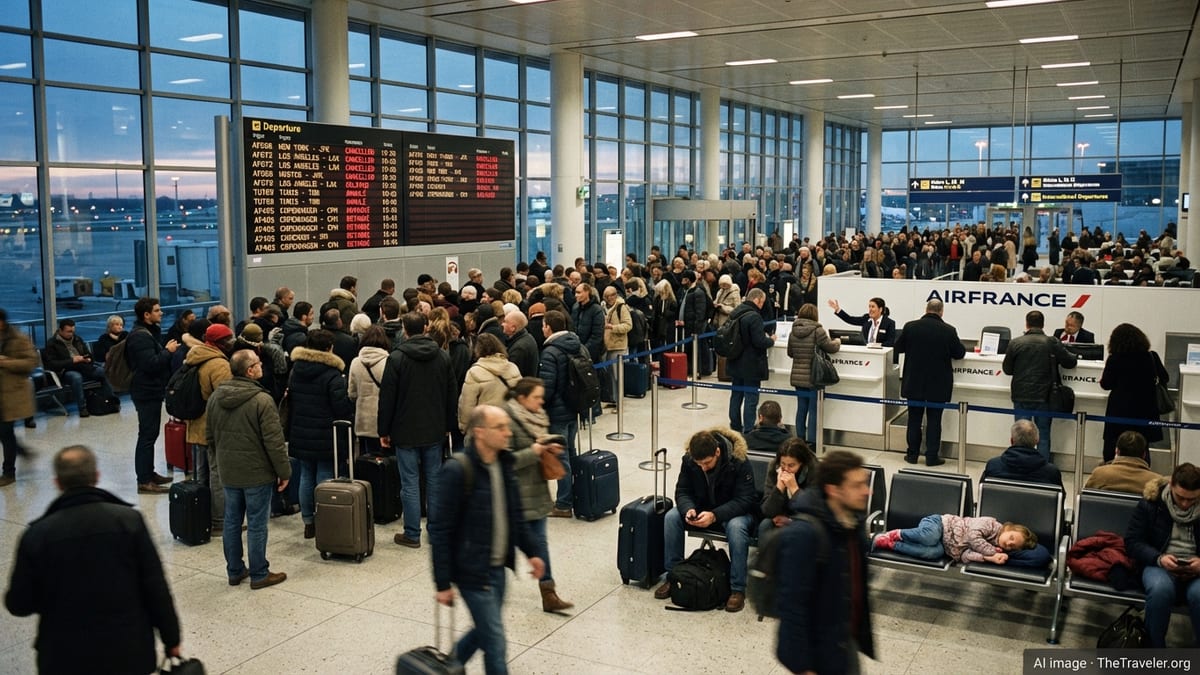
Complex Rules Limit Who Qualifies for Cash Compensation
In both the United States and the United Kingdom, passenger protections distinguish between a right to a refund and a right to additional compensation, and that distinction is at the heart of why many stranded travelers are being told they will not be paid. In the US, federal rules require airlines to refund customers when a flight is cancelled or significantly changed and the passenger chooses not to travel, regardless of the reason for the disruption. Public guidance from the US Department of Transportation explains that this refund entitlement exists even when weather or air-traffic problems are to blame.
Cash compensation beyond a refund, however, is not guaranteed in US law. Most additional payments or vouchers are based on each airline’s voluntary customer service plan, which often limits benefits when a disruption is outside the carrier’s control. Regulatory documents note that some contracts of carriage exclude hotels, meals and other amenities if the original cause of the cancellation is weather or air traffic, even if secondary factors are involved.
In the UK, compensation is governed by UK261, the retained version of the EU’s Regulation 261/2004. Government guidance says passengers can claim fixed-sum compensation when a flight departing from the UK, or operated into the UK by a UK or EU carrier, is cancelled with less than 14 days’ notice and the airline is responsible for the disruption. Official summaries make clear that compensation is not due when cancellations stem from events outside the airline’s control, such as severe weather, air-traffic control restrictions or political instability.
That framework means many passengers who endure long waits, missed connections and unexpected hotel nights still fall outside compensation rules, even if they are entitled to care, rebooking or a refund of the unused portion of their ticket.
Weather and Air-Traffic Problems Frequently Cited
Recent disruption highlights how often airlines rely on weather and air-traffic issues when rejecting compensation claims. Guidance from the UK Civil Aviation Authority lists air-traffic control restrictions and technical failures in national systems as examples of “extraordinary circumstances” that remove the obligation to pay fixed-sum compensation, though airlines must still provide assistance such as food, accommodation and rebooking when passengers are stranded.
A report on the passenger experience during the major UK air-traffic control outage of August 2023 describes large numbers of delays and cancellations, with travelers stuck for hours or forced to wait days for alternative flights. Follow up consumer research found that while many passengers were rerouted or refunded, they were told the incident would not trigger compensation because it stemmed from a failure in the national air-navigation systems rather than airline operations.
More recent CAA travel advice for summer 2026 again warns that there are circumstances where, despite a delay or cancellation, UK passenger rights legislation does not entitle travelers to fixed-sum compensation. The agency’s published material stresses that eligibility depends on the length of delay, the route, the operating airline and, critically, whether the cause is considered within the carrier’s control.
US filings show a similar pattern, with air-traffic and weather frequently used as reasons to deny additional support. A federal discussion paper on airline passenger rights notes that some airlines design their customer service commitments so that hotels and meals are only guaranteed when delays and cancellations are under the carrier’s control, leaving travelers with fewer options during storms or traffic-management initiatives.
Refunds and “Duty of Care” Still Apply in Many Cases
Even when airlines deny compensation, passengers often retain other important rights. In the US, transportation officials have repeatedly reminded carriers that a cancelled flight requires a refund if the passenger decides not to travel, whether or not the disruption is controllable. Refund-focused rules and guidance state that airlines must return money paid for the ticket, and for any extra services such as seat selection or Wi-Fi that were not provided, within set time frames once a refund is due.
In the UK, regulators emphasize a concept often referred to as “duty of care.” CAA guidance explains that, after a cancellation, airlines must provide meals and refreshments appropriate to the waiting time, hotel accommodation and transport to that hotel when an overnight stay is necessary, as well as rebooking at the earliest opportunity. These obligations apply even when the underlying cause is an extraordinary circumstance like a power failure at an airport or a nationwide air-traffic problem.
Consumer advice services in the UK point out that this distinction between care and compensation is a key source of confusion. Publicly available guidance from Citizens Advice notes that passengers can be legally entitled to food, accommodation and rebooking while simultaneously being told they are not eligible for cash compensation because the cancellation was not the airline’s fault. Travelers sometimes only discover this after submitting detailed claims that are ultimately rejected.
Regulators in both countries have encouraged passengers who believe their rights were not respected to escalate complaints. In the UK, unresolved claims can be referred to alternative dispute resolution schemes or to the CAA itself, while US passengers can file complaints with the Department of Transportation’s aviation consumer office when refunds or promised amenities are not provided.
Regulators Consider Stronger Passenger Protections
Ongoing policy debates suggest that the current wave of stranded passengers being turned down for compensation may influence future rules. In the US, the Department of Transportation has proposed making compensation and amenities mandatory when cancellations and significant delays are under airline control, moving away from a patchwork of voluntary commitments. Explanatory materials for the proposal indicate that lawmakers have also instructed major carriers to establish clear policies for reimbursing hotel, meal and transport costs when disruptions are directly attributable to the airline.
At the same time, regulators have been examining how airlines communicate the reasons for cancellations. A recent federal discussion on passenger rights raises the question of whether it is unfair or deceptive to attribute a disruption solely to weather when other factors, such as crew or maintenance issues, are also involved, given that weather-related events often limit contractual obligations for compensation and amenities.
In the UK, the CAA continues to update public guidance on flight delays and cancellations and has issued situation specific statements after large scale disruptions. These documents reiterate that extraordinary circumstances generally remove the requirement to pay fixed-sum compensation, but also underline that passengers remain free to challenge an airline’s interpretation, including through the courts, if they believe a cancellation labeled as outside the carrier’s control was in fact avoidable.
For now, however, the legal landscape means that many travelers caught in sudden airport shutdowns, national air-traffic outages or severe storms are being told they have no right to cash compensation, even as they queue for vouchers, hotel rooms and scarce replacement seats.
Confusion Persists Despite Growing Awareness
Survey work published by the UK Civil Aviation Authority suggests that confusion about the difference between refunds, care and compensation remains widespread. Recent research for the regulator found that only a minority of passengers who experienced travel problems recalled being informed about their rights, although awareness has been slowly improving. The findings note that eligibility for compensation or support depends on factors that may not be immediately clear to travelers at the airport, including the precise cause of disruption and the operating carrier’s identity on codeshare routes.
Consumer campaigners point out that online forums and social media are increasingly filled with reports from passengers whose compensation claims have been turned down after cancellations attributed to air-traffic control, airport power outages or security restrictions. In some cases, travelers share responses stating that the airline is not “legally liable for compensation,” even where regulators later stress that duty of care obligations still applied.
Official passenger rights pages in both the US and UK encourage travelers to check their airline’s policies and the relevant national rules before assuming they will receive a payout. With summer travel volumes remaining high and aviation systems under strain, experts expect the number of passengers left stranded by cancellations to remain significant, even as many learn that compensation is reserved for a narrower set of circumstances than the inconvenience they have experienced.
UK Civil Aviation Authority: Cancellations and passenger rights
UK government air passenger rights guide
US DOT guidance on automatic airline refunds
US DOT discussion on airline passenger rights and compensation