


More news on this day
Passengers at Reno–Tahoe International Airport faced cascading delays and cancellations on November 13 after a nationwide Federal Aviation Administration ground stop abruptly halted most departing flights, stranding travelers across the Mountain West and rippling through evening schedules.
Get the latest news straight to your inbox!
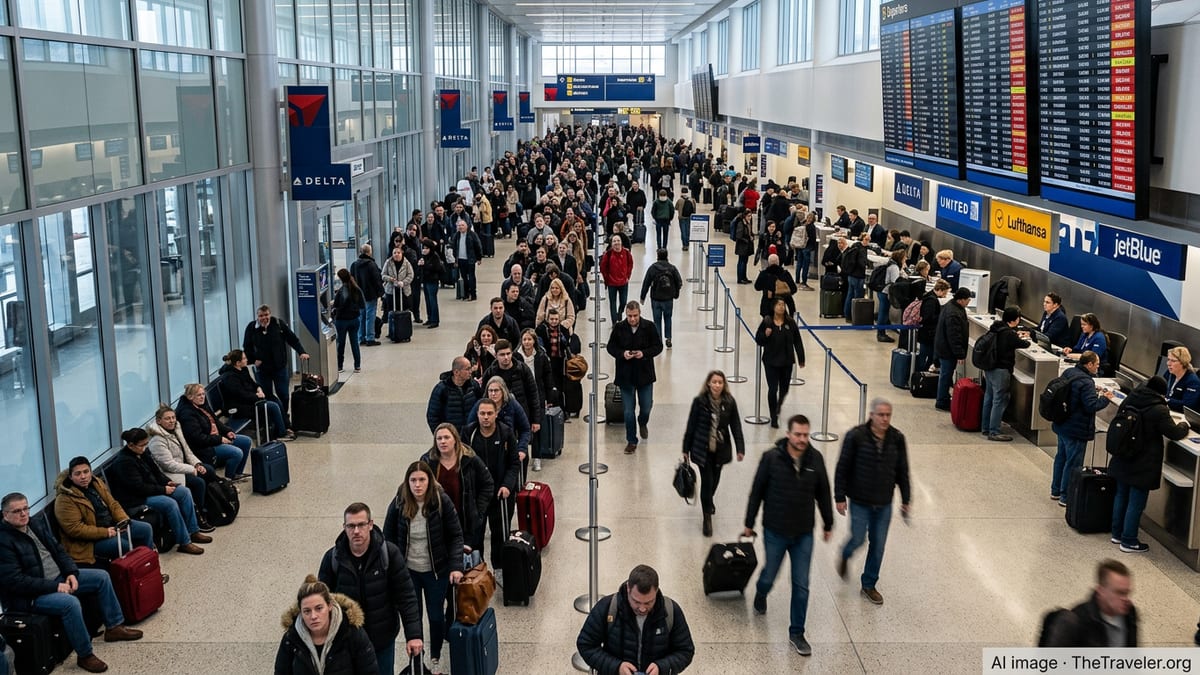
Reno–Tahoe departures halted as nationwide order takes effect
Publicly available information from the Federal Aviation Administration shows that a rare nationwide ground stop was issued on Friday, November 13, pausing most departures from airports across the United States while air traffic controllers worked through a significant communications failure. Reno–Tahoe International Airport and nearby Reno–Stead Airport were among the facilities instructed to hold outbound flights until further notice.
Local coverage in northern Nevada indicates that the order reached Reno–Tahoe early in the afternoon Pacific time, just as the airport was entering one of its busy departure banks toward Las Vegas, Phoenix, Denver and West Coast hubs. Airport updates described all departing flights as being put on hold under the FAA directive, with airlines warning passengers that they could not provide new departure times until the federal stop was lifted.
Regional reporting from the Mountain West points to at least eight cancellations and nearly 30 delays at Reno–Tahoe tied to the nationwide disruption, a significant impact for a mid-sized airport that typically handles a few dozen departures per day in November. Airlines serving the airport, including Southwest, Alaska, United, Delta and American, were forced to reshuffle aircraft and crews in response to the sudden halt.
While the FAA later lifted the ground stop and allowed departures to resume in phases, the pause created a backlog of aircraft waiting for gates and takeoff slots, leaving many Reno-bound and Reno-originating travelers facing missed connections and overnight stays.
Stranded travelers contend with missed connections and limited options
Published accounts from passengers and regional outlets describe long lines at airline counters in Reno as travelers tried to reroute around the outage. With the ground stop affecting airports nationwide, alternatives such as flying through Sacramento, San Francisco or Salt Lake City offered limited relief, as those hubs were experiencing their own queues of delayed aircraft.
Some travelers arriving in Reno during the outage reported that their inbound flights were able to land but then waited for gates to open while earlier departures remained parked. This left connecting passengers in the terminal with little clarity about when they might be able to continue on to smaller markets in Nevada, California and the interior West.
The timing of the disruption on a Friday worsened the strain on inventory. By late afternoon, booking tools showed same-day seats from Reno to major hubs in California and the Pacific Northwest in short supply or sold out, particularly on low-cost carriers that operate only a handful of frequencies each day. Travelers with nonrefundable tickets were dependent on each airline’s irregular-operations policies to secure hotel vouchers or rebooking without additional fees.
Reports from other Mountain West airports illustrate how quickly options disappeared. As Denver, Salt Lake City and Las Vegas coped with their own ground delays, connections that typically allow Reno passengers to reach the Midwest and East Coast became unreliable, complicating plans for weddings, sporting events and international departures scheduled for the weekend.
Mountain West particularly exposed to nationwide disruptions
Data compiled by regional public media and aviation tracking services show that airports across the Mountain West region experienced hundreds of delays on November 13, with effects felt from Wyoming and Montana to Nevada and Utah. For Reno–Tahoe, which relies heavily on connections through larger hubs for long-haul travel, a nationwide halt removed most of the redundancy usually built into the system.
Reno–Tahoe typically offers nonstop service to a mix of West Coast cities and select inland hubs, with a November schedule that includes links to Seattle, Portland, Denver, Phoenix, Los Angeles and several Bay Area airports. When those hubs are constrained by a ground stop, passengers originating in northern Nevada have few alternatives beyond driving several hours to Sacramento or the San Francisco Bay Area, which in this case were affected by the same federal order.
The region’s geography also limits rail and bus alternatives during sudden aviation outages. While Amtrak and intercity bus operators provide service through Reno, published accounts during the November 13 event point to heavy online traffic and phone inquiries as airline passengers looked for last-minute seats, echoing patterns seen during previous large-scale aviation disruptions.
Travel industry analysts note that leisure-focused markets such as Reno, which combine tourism to Lake Tahoe with regional business travel, can see disproportionate effects when a single day’s flying program is heavily disrupted. Visitors may lose entire weekend trips, and conferences or sporting events can see attendance drop when connecting flights from multiple regions fail to arrive.
How the outage unfolded and when flights began to move again
National coverage of the November 13 incident indicates that the ground stop was triggered after communications problems emerged at major air traffic control centers serving Chicago, prompting the FAA to extend restrictions to all U.S. airports as a safety measure. The action was significant because systemwide ground stops have been used only a handful of times in modern U.S. aviation, including after the September 11 attacks and during a critical systems failure in January 2023.
According to timelines published by major national outlets, the FAA began easing the order later in the day, allowing departures to resume in controlled waves as communication links were stabilized and tested. At Reno–Tahoe, local advisories shifted from a full hold on departures to warnings of “significant delays,” with airlines urging passengers to monitor flight status apps and airport boards closely.
Even after the national ground stop was formally lifted, operations did not return to normal immediately. Aircraft and crews were out of position, and some flights that had been scheduled to depart Reno earlier in the day were ultimately canceled because they would have arrived too late at their destination to operate within crew duty limits or local nighttime restrictions.
By late evening, tracking services showed a gradual reduction in the number of grounded aircraft at Reno–Tahoe, but residual delays carried into the weekend as airlines rebuilt their schedules. Some passengers with multi-leg itineraries were rebooked onto flights on November 14 or 15, extending the disruption well beyond the hours when the ground stop was technically in place.
What Reno–Tahoe passengers can do after a systemwide disruption
Consumer advocates and travel experts point to several steps that can help Reno–Tahoe passengers recover more quickly from a nationwide disruption of this kind. First, they recommend checking flight status directly with the airline, either through mobile apps or text alerts, rather than relying solely on airport displays that may lag behind real-time schedule changes.
When a ground stop affects large portions of the national airspace system, many airlines activate flexible rebooking policies that waive change fees and fare differences for a limited period. Information posted publicly by carriers during the November 13 event encouraged travelers to switch to later dates or different routings online, reducing the need to wait in long lines at airport counters.
For those stranded overnight in Reno, local hotel shuttles operating from the curb outside the main terminal offered a key link to last-minute accommodation, though availability can tighten quickly during major disruptions. Travelers are often advised to contact properties directly and confirm shuttle schedules, as services may vary late at night.
The November 13 ground stop also highlighted the value of travel insurance or credit card protections that cover trip interruption and additional expenses. Policy terms differ, but many plans consider widespread air traffic control failures to be covered events, allowing passengers to file claims for meals, hotels or alternative transportation after the fact if receipts are retained.