


More news on this day
Passengers at Reno-Tahoe International Airport faced hours of disruption on Friday as a rare nationwide ground stop ordered by the Federal Aviation Administration halted all departing flights, stranding travelers across northern Nevada and the wider Mountain West.
Get the latest news straight to your inbox!
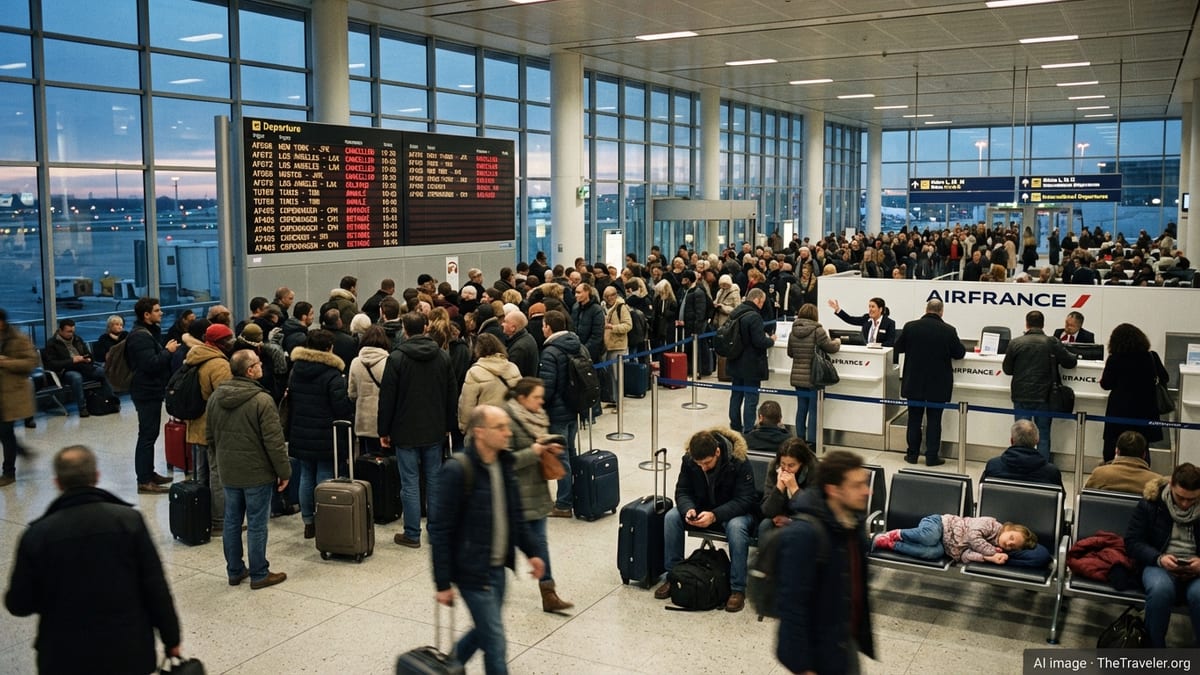
Nationwide FAA order brings Reno departures to a standstill
Publicly available information from the Federal Aviation Administration shows that on Friday, November 13, 2026, the agency issued a nationwide ground stop for all U.S. airports, citing “extraordinary circumstances and for reasons of safety.” Departing flights were ordered to remain on the ground while air traffic control centers worked through a significant communications outage affecting multiple facilities.
Regional coverage indicates that Reno-Tahoe International Airport, listed under the code RNO, and nearby Reno-Stead Airport both implemented the directive, holding all outbound flights until further notice from federal air traffic managers. Airport updates relayed through local media described a full pause on departures rather than a partial slowdown, putting northern Nevada in line with larger hubs across the country.
Tracking data compiled for the Mountain West suggests that the disruption was substantial for a mid-sized facility such as RNO. One regional outlet reported at least 21 cancellations and 48 delays linked to the ground stop at Reno-Tahoe alone, as the order rippled through airline schedules that connect Reno to major hubs in California, the Pacific Northwest, the Southwest, and beyond.
Although the nationwide halt was eventually lifted later on Friday, the interruption lasted long enough to create a backlog that could take many hours, and in some cases longer, for airlines to unwind. For passengers hoping to start ski trips at Lake Tahoe, weekend getaways to Las Vegas, or business connections through Denver, the halt translated into missed connections and unplanned overnights.
Scenes inside Reno-Tahoe: long waits and frayed itineraries
Accounts shared in local coverage and on public social media posts from northern Nevada describe crowded gate areas at Reno-Tahoe International as departure boards slowly shifted from scheduled to delayed. With flights barred from taking off, aircraft already at the gates could not be turned around, limiting the ability of airlines to reboard passengers even after the federal order began to ease.
Travelers reported lining up at service counters to be rebooked, with priority given to same-day connections, families, and those with international onward travel. Others resorted to airline mobile apps, which at times struggled under heavy traffic as passengers nationwide tried to check status and change itineraries at the same time.
Some flights to and from Reno that were already in the air when the command center order took effect were permitted to continue and land, consistent with national coverage describing how inbound operations were handled on a case-by-case basis. Those passengers often found themselves arriving to a terminal where outbound movement had largely stopped, leaving anyone with a tight onward connection effectively stranded in Reno.
Within the terminal, reports indicate that many travelers sought out charging points and floor space as they prepared for waits of several hours. Unlike more localized weather-related disruptions, the fact that airports nationwide were affected appeared to limit options for rerouting, since hubs such as Denver, Phoenix, Los Angeles, and San Francisco were simultaneously contending with their own queues of delayed departures.
How a national ground stop hits a regional hub
Reno-Tahoe International functions as a critical regional hub for northern Nevada and the eastern Sierra, with scheduled nonstop services to major West Coast cities and several interior U.S. hubs according to its published November 2026 flight schedule. When the FAA’s ground stop took effect nationally, that role meant the airport not only saw its own departures frozen but also felt the knock-on effect from delays at larger connecting airports.
Publicly available on-time performance summaries for RNO show that the airport typically operates without significant national airspace restrictions. The sudden ground stop therefore represented an abrupt break from usual patterns, with delays that could not be mitigated simply by switching routings or waiting out a brief local weather cell.
Because Reno-Tahoe connects ski destinations, conferences, and seasonal tourism flows, the timing of the order on a Friday in mid-November was especially disruptive. Many passengers heading to early-season snow at Lake Tahoe resorts or returning home after workweek travel found their plans upended, with some reports indicating that travelers opted to drive several hours to the Bay Area or Sacramento in search of alternative flights once conditions allowed.
The halt also affected cargo operations that move through Reno, a growing logistics gateway for northern Nevada. While comprehensive data on freight delays is not yet available, national coverage of the outage describes both passenger and cargo flights as subject to the same federal directives, likely slowing shipments of time-sensitive goods bound for regional distribution centers.
After the order lifts, lingering delays and what passengers can do
By Friday evening, federal aviation updates and multiple national outlets reported that the FAA had lifted the nationwide ground stop, allowing airports to begin launching departures again under normal air traffic control procedures. For Reno-Tahoe travelers, however, the end of the order did not translate into an immediate return to normal schedules.
Airlines needed time to reposition aircraft and crew that had been stranded in various parts of the network while the pause was in effect. For some Reno passengers, particularly those with late-night departures or red-eye connections through West Coast hubs, this meant waiting for newly assigned aircraft, overnighting in the region, or accepting itineraries that would not deliver them to their final destination until well into the weekend.
Guidance highlighted in airport and airline advisories around the Mountain West emphasizes that passengers should continue to monitor their flight status directly with carriers rather than relying on earlier printed boarding passes or third-party booking confirmations. Same-day schedule changes, rolling delays, and gate swaps are expected as airlines try to absorb the backlog created during the hours when no aircraft were allowed to depart.
Travel news coverage of the outage also notes that travelers affected by lengthy delays or cancellations may be eligible for rebooking, meal vouchers, or hotel accommodations depending on the airline’s policies and the specific terms of their tickets. However, because the disruption stemmed from a federal air traffic control issue rather than an individual carrier’s operations, compensation practices may vary, and passengers are being encouraged to review official policy statements before making claims.
Broader implications for U.S. air travel reliability
The Reno-Tahoe disruptions form part of a much larger national picture that saw thousands of flights delayed or canceled across the United States on November 13. Published analyses comparing the event to the January 2023 outage of a pilot notification system highlight that full nationwide ground stops remain extremely rare, underscoring the significance of this week’s order for both travelers and aviation planners.
Early public reporting on the cause of the 2026 communications failure points to a telecommunications issue that interfered with radar and controller communications across multiple air route traffic control centers. Officials in post-event briefings, as reflected in national media coverage, have stressed that there is no indication of a malicious cyberattack, but detailed technical investigations are expected to continue.
For airports such as Reno-Tahoe, the incident may accelerate ongoing efforts to communicate more rapidly with passengers during irregular operations. Existing emergency contingency plans, including those publicly filed to address tarmac delays and extended onboard waits, are likely to be revisited in light of the complexities presented by a nationwide outage that affects every major hub simultaneously.
As the busy winter and holiday travel season approaches, the experience of being stranded at RNO during the FAA ground stop is likely to remain fresh for northern Nevada travelers. How quickly confidence in the resilience of the national airspace system is restored could influence booking patterns, with some passengers potentially building longer connection windows or favoring earlier-in-the-day departures to hedge against future disruptions.