


More news on this day
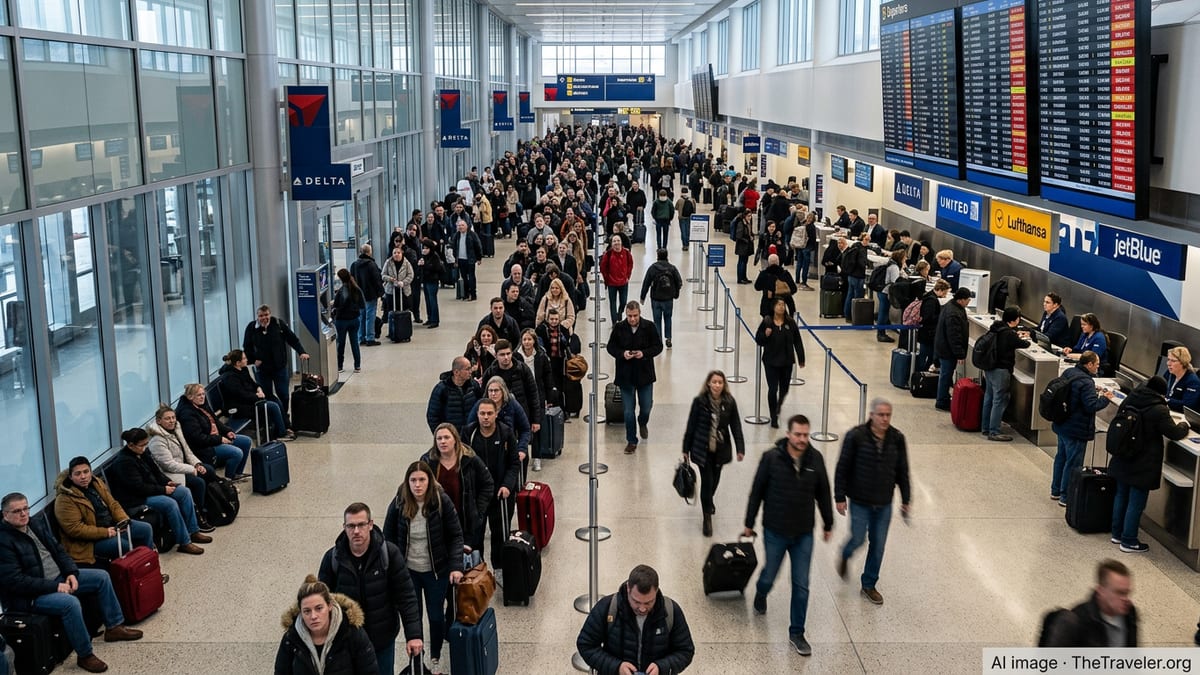
A rare nationwide ground stop ordered by the Federal Aviation Administration on Friday, November 13, 2026, halted most departures at U.S. airports for more than four hours, stranding tens of thousands of travelers and triggering cascading delays and cancellations that are expected to disrupt flight schedules through the weekend.
Get the latest news straight to your inbox!
Telecommunications Outage Triggers First Nationwide Halt Since 2023
According to a public statement released by the Federal Aviation Administration, the ground stop was issued on Friday afternoon after communication problems affected multiple Air Route Traffic Control Centers, which manage high-altitude traffic across wide swaths of U.S. airspace. The agency described the disruption as a temporary telecommunications outage and ordered all departing flights nationwide to remain on the ground while contingency measures were put in place.
Publicly available information from the FAA indicates the order was issued shortly after 4 p.m. Eastern time and remained in place for roughly four to five hours before being lifted Friday evening. During that period, only a limited number of international arrivals and safety-critical operations were permitted to continue, while most domestic departures were held at gates or on taxiways.
Flight-tracking services cited in national broadcast coverage reported that more than 3,000 aircraft bound for U.S. destinations were already airborne when the stop took effect, forcing air traffic managers to keep those flights flowing into an airport system that could not send out new departures. By the time the restriction was lifted, data compiled by outlets drawing on services such as FlightAware and Flightradar24 showed more than 10,000 delays and several thousand cancellations across the country.
Reports from major news organizations note that this is the first nationwide halt to U.S. air traffic since January 2023, when a malfunction in the FAA’s Notice to Air Missions system prompted a temporary pause in domestic departures, and only the second such systemwide stoppage since the September 11, 2001, attacks.
Airports From New York to San Francisco Feel the Impact
Large hub airports experienced some of the most visible disruption. Coverage from New York regional outlets described LaGuardia, John F. Kennedy International and Newark Liberty International with departure boards dominated by red lines of delays and cancellations while the stop was in effect. At LaGuardia, only a small number of international arrivals continued to land while outbound passengers were held in terminals.
On the West Coast, live local coverage from the San Francisco Bay Area reported stranded travelers at Oakland International Airport and additional disruptions at San Francisco International and San Jose. As the ground stop continued into the evening rush, airport operators advised passengers to expect extended waits and urged people to confirm their flight status directly with airlines before traveling to the airport.
In the Midwest, regional television reports from Chicago indicated that O’Hare International and Midway together saw hundreds of delayed or canceled flights, with some passengers told their departure times were on hold until further notice. Similar scenes were documented at Dallas Fort Worth, Denver, Atlanta, Los Angeles and other large hubs, where long lines formed at airline service counters as travelers attempted to rebook.
Smaller and medium-size airports were not spared. Local news from cities such as Milwaukee, Charlotte and Phoenix described passengers learning about the nationwide order from departure board updates and gate announcements, often with little immediate information about how long the disruption would last.
Thousands of Travelers Stranded and Itineraries Upended
The cascading effect of the nationwide stop was felt most acutely by passengers already in motion. Publicly available information from national and local outlets indicates that tens of thousands of travelers were stranded on Friday, either in airport terminals or at their destinations without clear return options.
At some airports, travelers reported waiting in security queues only to discover once they cleared screening that nearly all outbound flights were delayed indefinitely. Others described sitting on board aircraft that had pushed back from the gate just before the ground stop, only to remain parked on taxiways while crews waited for clearance to depart.
Published coverage from multiple cities highlighted international passengers connecting through U.S. hubs who faced missed onward flights and limited same-day alternatives. In Los Angeles, regional reporting noted that some travelers arriving from Mexico and other international points were told the next available flights to their final destinations might not depart until late in the weekend.
With aircraft and flight crews knocked out of position, airlines began issuing broad waivers allowing customers booked on affected routes to change their travel dates without standard change fees or fare differences in certain fare classes. However, consumer advocates cited in national coverage emphasized that because the disruption was attributed to an air traffic control system issue rather than airline operations, carriers were generally not required to provide hotel vouchers or meal compensation, leaving many travelers to absorb those costs themselves.
Operations Resume but Weekend Disruptions Expected
By Friday night, the FAA reported that the telecommunications problem had been contained and that general air traffic was permitted to resume, though with gradual ramp-up as systems were checked and staffing and traffic flows were realigned. Airlines began restarting departures from major hubs, but schedules remained heavily backlogged with aircraft, crews and passengers out of place.
National television networks reported that, by late evening, U.S. airports were showing roughly 5,000 cancellations and many more delays for the day, with additional disruptions expected to spill into Saturday, November 14. Aviation analysts interviewed on air suggested that some routes, particularly late-night and early-morning flights with limited frequency, might not normalize until late in the weekend.
Public schedules showed that several professional and collegiate sports teams, including basketball, hockey and college football programs, were forced to alter their travel arrangements. Some teams shifted to charter buses where feasible, and game start times in certain conferences were pushed back to allow additional travel time once the ground stop lifted.
For individual travelers, the practical advice highlighted across airline and airport channels remained consistent: monitor flight status directly on airline apps or websites, keep an eye on email and text notifications for automatic rebooking options, and avoid heading to the airport until a revised departure time is confirmed.
Renewed Focus on Aging Infrastructure and Future Resilience
The incident immediately renewed attention on the resilience of the U.S. air traffic system. Recent government reports and industry analyses have detailed long-running modernization efforts, including the gradual replacement of decades-old communication and data systems that support air traffic control. Public information released this month outlined plans to transition away from older technologies at more than 400 facilities by 2028, backed by multibillion-dollar federal investments.
Commentary in major national outlets linked Friday’s telecommunications outage to broader concerns about the vulnerability of key infrastructure to single points of failure, whether through cable cuts, software problems or overloaded network equipment. Recent FAA advisories circulated to airports have referenced prior regional disruptions traced to damaged fiber optic lines near major hubs, which in some cases have led to local ground stops or diversions.
While early public statements from federal transportation leaders indicated there was no evidence of a malicious cyberattack, reviews are expected to focus on how communication routes were configured, why backup pathways did not fully prevent the need for a nationwide halt, and what additional redundancy may be required as traffic volumes continue to grow.
For travelers, the latest ground stop serves as a reminder that even with modern aircraft and sophisticated routing tools, relatively invisible systems on the ground can still bring the national air network to a standstill. Industry observers note that the findings from this outage, once made public, are likely to shape how airlines, airports and federal agencies plan for future contingencies and communicate with passengers during major disruptions.