


More news on this day
US airspace has reopened after an hours long nationwide ground stop halted departures across the country, yet airports remain choked with stranded travelers as airlines struggle to restart operations and clear a mounting backlog of canceled and delayed flights.
Get the latest news straight to your inbox!
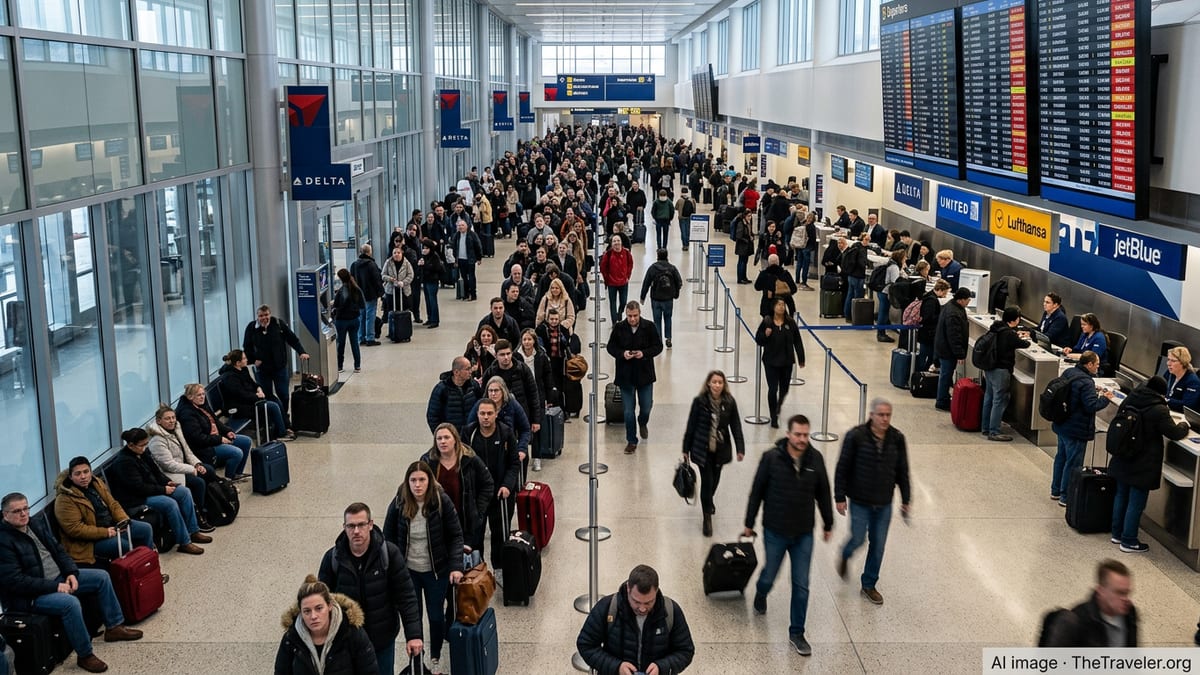
Longest nationwide shutdown since 2001 ripples into weekend travel
Publicly available information shows that the Federal Aviation Administration lifted its national ground stop on Friday evening, allowing flights to resume after a communications failure at multiple air route traffic control centers forced a rare halt to all departures. The disruption has been described in several outlets as the longest shutdown of US airspace since the attacks of September 11, 2001.
Transportation briefings and media reports indicate that airspace was formally reopened at approximately 8:15 p.m. Eastern time, several hours after the initial order that froze departing flights nationwide. Arriving flights were generally allowed to continue landing during the stoppage, creating severe gate and parking constraints at major hubs once the system restarted.
Data cited by multiple aviation trackers suggests that thousands of flights were canceled and many more delayed on Friday into Saturday, affecting well over a million seat reservations. At some of the country’s busiest airports, including Chicago O’Hare, Dallas Fort Worth, and Atlanta, departure boards remained heavily red on Saturday morning, with airlines warning that irregular operations could persist for days.
Travel industry analysts note that the timing, just ahead of the busy Thanksgiving period, compounds the impact. Seats on remaining flights are already tight, leaving many passengers with limited options beyond lengthy layovers, overnight airport stays, or multi day rebookings.
Stranded passengers face rolling delays, missed connections and scarce rebooking options
Scenes from airports across the United States show concourses packed with travelers sleeping on the floor, lines stretching through terminals, and departure boards filled with rolling delays. Coverage from major broadcast and digital outlets describes passengers at hubs such as Los Angeles International, New York’s LaGuardia, and Boston Logan being advised to prepare for waits of six hours or more before updated departure times.
Because the ground stop disrupted departures rather than en route flights, aircraft and crews ended the day badly out of position. Airline operations teams must now shuffle planes and staff back into place, a process that can take several days even under ideal conditions. Reports from carrier statements indicate that some travelers have been rebooked to flights one or two days later, particularly on longer haul and transatlantic routes.
At the same time, federal rules limiting pilot and flight attendant duty hours restrict how quickly crews can be reassigned after unexpected disruptions. With many employees already near their maximum permitted hours at the end of a long operational day, airlines have had to cancel additional flights simply because no rested crew is available, further delaying stranded passengers.
Travelers attempting to salvage their plans are turning to rental cars, intercity buses, and regional trains where available. However, on popular corridors such as the Northeast, reports suggest that demand surged quickly, with many same day options sold out or sharply more expensive than usual by Friday night.
What triggered the ground stop and what is known about safety
According to widely circulated federal briefings and press conferences, the ground stop was prompted by a failure in communications systems that connect air traffic control centers and relay critical information between controllers and aircraft. Officials have publicly stated that early reviews point to a mechanically driven network problem, with particular attention on overloaded or malfunctioning routers, rather than a confirmed cyberattack or a link to a recent high profile software outage.
The Federal Aviation Administration framed the decision to halt departures as a precaution to avoid placing aircraft into airspace where reliable communication could not be guaranteed. Emergency medical flights and some limited operations reportedly continued, but the vast majority of scheduled commercial departures were held on the ground until controllers confirmed that communications had been restored.
Homeland security briefings cited in multiple outlets emphasize that there is currently no evidence of a deliberate attack, although cyber and technology specialists continue to examine logs and equipment. Aviation commentators note that a series of recent incidents, including previous regional disruptions linked to severed cables and aging infrastructure, have highlighted vulnerabilities in the national air traffic management network.
The episode has also renewed scrutiny of the long running modernization of US air traffic control systems. Recent coverage of the FAA’s shift away from legacy hardware, including systems that until recently relied on floppy disks and other outdated media, underlines the scale and complexity of the upgrades still underway. Analysts warn that, until modernization is complete, major outages tied to legacy components or integration issues may remain a risk.
Airlines roll out waivers as crews and aircraft remain out of position
Major US carriers have begun publishing travel waivers that allow affected passengers to rebook without change fees and, in some cases, fare differences when traveling within a defined date range. Publicly posted advisories from several airlines explain that customers whose flights were canceled are being rebooked automatically on the next available itinerary, but space is limited on many routes.
Some carriers have also announced limited offers of meal vouchers, hotel discounts, or reimbursement policies for extended overnight delays, although the specifics vary widely by airline and by the cause of the disruption. Consumer advocates point out that, because this incident stems from an air traffic control system failure rather than an airline specific problem, traditional compensation rules may not apply in the same way they would for issues like crew shortages or mechanical breakdowns.
Operationally, airlines now face the complex task of repositioning aircraft that diverted or terminated early during the ground stop, while also bringing crews back into compliance with mandatory rest rules. At hub airports, arrivals on Friday evening and early Saturday filled many available gates, leaving limited space for new departures and forcing some aircraft to wait on remote stands or tarmacs until positions opened up.
Low cost and regional carriers, which typically operate tighter schedules with fewer spare aircraft, may feel the effects longest. Travel planners caution that even travelers whose flights are still listed as on time over the next 24 to 48 hours should expect a heightened risk of schedule changes as airlines adjust their networks.
What travelers should know in the coming days
Passenger advocacy groups and travel specialists are urging travelers with upcoming flights to monitor their reservations closely through airline apps and email alerts, rather than relying solely on airport departure boards. With aircraft and crews still misaligned, published coverage suggests that day of schedule changes and last minute cancellations are likely as airlines work to untangle the network.
For those already stranded, on the spot rebooking at airport customer service desks may be challenging due to long lines. Many airlines are encouraging passengers to use digital channels or phone centers for changes, though call wait times have also increased. Travelers with time sensitive needs, such as medical requirements or international connections, are being advised by consumer advocates to contact airlines as early as possible and to document any additional expenses incurred.
Experts also highlight the importance of understanding the limits of existing passenger protection rules in the United States. Unlike in some regions, federal regulations do not require airlines to provide cash compensation for most delays or cancellations, particularly when disruptions are attributed to external factors such as air traffic control system failures. However, many carriers have internal policies for hotel or meal support during overnight disruptions, which may be applied on a case by case basis.
With the root cause investigation still underway and key modernization projects yet to be completed, analysts caution that travelers should be prepared for intermittent disruptions linked to air traffic system resilience in the coming months. For now, even as US airspace reopens, the immediate reality for many passengers is a prolonged wait for a seat and a renewed reminder of how fragile the aviation system can be when a single point of failure ripples across the network.