


More news on this day
A rare nationwide ground stop by the Federal Aviation Administration has left thousands of passengers across the United States facing mass delays, cancellations and missed connections. As travelers rush to rebook plans after an air traffic control communications failure, questions are mounting about what airlines are legally required to provide and what help is offered only as a courtesy.
Get the latest news straight to your inbox!
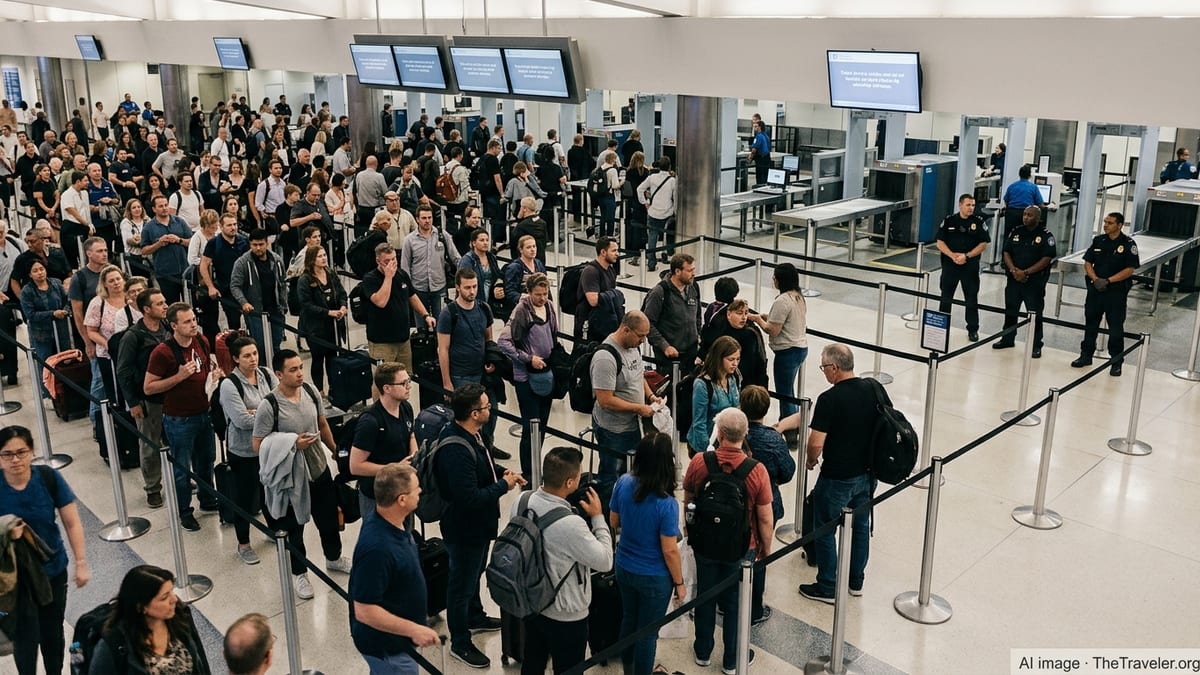
Why FAA Ground Stops Are Different From Routine Delays
The latest nationwide ground stop was triggered on November 13, 2026, when an FAA communications outage affected multiple Air Route Traffic Control Centers and led regulators to pause most departures for safety reasons. Publicly available coverage indicates that it was only the third such nationwide halt in U.S. history, after the September 11, 2001 shutdown and a 2023 system failure affecting pilot notification systems.
Ground stops of this kind are ordered by the FAA, not by individual airlines, and are categorized as outside an airline’s control in federal consumer information. The Department of Transportation’s customer service dashboard and related guidance list air traffic control instructions and FAA ground stops alongside severe weather and security events as examples of disruptions that airlines do not cause and cannot avoid through normal operations.
That distinction matters because most of the voluntary promises airlines make about hotel vouchers, meal credits or cash-like compensation apply only when a disruption is within the carrier’s control, such as mechanical issues, crew staffing, or problems with aircraft preparation. When the FAA orders a ground stop, U.S. rules generally treat it more like a weather shutdown than an airline-caused breakdown.
Even so, many carriers announced short-notice travel waivers during the November 2026 stoppage, allowing customers on affected routes to change flights or dates without standard change fees or fare differences for a limited window. Those waivers are policy choices, not legal entitlements, and they can differ significantly by airline and by ticket type.
When You Are Entitled To a Cash Refund
Under federal regulations administered by the Department of Transportation, passengers are entitled to a refund of the unused portion of their ticket if a flight to, from, or within the United States is canceled for any reason and the traveler decides not to fly. This right applies regardless of whether the cause is a government-ordered ground stop, weather, a mechanical issue or another disruption.
DOT’s refund rules also cover flights that are “significantly changed” by a carrier, such as being moved to a much later day, rerouted to or from a different airport, or shifted to times that meet specific thresholds. The current regulation on cancelations and significant schedule changes requires airlines and ticket agents to return the fare in cash or to the original form of payment when a traveler declines the changed itinerary rather than accepting alternative travel or a voucher.
Updated regulations published in 2024 further require airlines and ticket agents to issue these refunds automatically when they determine that a cancellation or qualifying schedule change has occurred and the passenger does not accept an alternative. Consumers do not have to know the rule number or use legal language in order to be eligible, but they may still need to confirm with the airline that they prefer a cash refund instead of a credit.
When passengers voluntarily choose a travel credit or voucher in place of a refund that would otherwise be owed, federal rules now require that the voucher or credit remain valid for at least five years from the date of issue. That long validity period applies to both airline-caused disruptions and government-ordered events such as FAA ground stops, provided the voucher is presented instead of a legally required refund.
What Airlines Do Not Have To Cover During a Ground Stop
While refunds are clearly defined, there are few federal guarantees for out of pocket costs when disruption is outside an airline’s control. Public guidance from the Department of Transportation and consumer advocacy groups states that U.S. carriers are not legally required to pay for hotels, meals, ground transportation, or prepaid activities when delays or cancellations result from events such as air traffic control outages or FAA ground stops.
Similarly, there is no U.S. requirement for airlines to provide financial compensation for lost time in the way that some European regulations do for qualifying delays and cancellations. Even in Europe, air traffic control restrictions and closures of airspace are generally treated as “extraordinary circumstances,” which can exempt carriers there from paying fixed cash compensation, illustrating how government-imposed groundings are handled differently from airline-controlled problems.
Airlines in the United States retain flexibility to offer goodwill assistance during large scale disruptions. During the November 2026 ground stop, published coverage showed several large carriers offering meal vouchers, hotel discounts or limited complimentary accommodation on a discretionary basis, and in some cases waiving fare differences for rebooking within a defined time frame. These policies were not uniform, and they were framed as temporary waivers rather than standing legal obligations.
For travelers who decide to book alternate transportation on their own, such as purchasing a same day ticket on a different carrier or switching to rail or rental car travel, federal rules do not require the original airline to reimburse those costs when the original disruption was outside its control. Any such reimbursement would generally come only as a matter of the airline’s goodwill or through separate travel insurance coverage, if purchased.
Your Rights If You Are Stuck On the Tarmac
A separate set of rules, often called the tarmac delay regulations, applies when passengers are kept on board an aircraft that is unable to take off or return to the gate. These rules apply at U.S. airports regardless of whether the underlying cause is a carrier issue, severe weather, or a government imposed restriction such as an FAA ground stop.
Under current DOT regulations, most U.S. and foreign carriers operating in the United States must allow passengers on domestic flights to deplane before a tarmac delay reaches four hours, and to provide food, water, and functioning lavatories after specific time thresholds. For international flights departing from or arriving at U.S. airports, the maximum permitted tarmac delay before allowing passengers to leave is typically slightly longer, subject to safety, security and air traffic control considerations.
There are limited exceptions. Airlines do not have to let passengers off if the pilot determines there is a direct safety or security reason not to return to the gate, or if air traffic control advises that returning to a gate or another disembarkation point would significantly disrupt airport operations. However, carriers are required to maintain comfortable cabin temperatures and to provide medical attention if needed during long waits.
These tarmac protections offer some of the clearest federal standards for passenger treatment during a ground stop. They do not guarantee compensation for lost time, but they do place time limits on how long travelers can be kept aboard without the option to return to the terminal, which became important as flights queued on taxiways during the nationwide halt in November 2026.
How To Protect Yourself When Flights Are Halted Nationwide
Consumer advocates and transportation agencies emphasize that the single most important step for stranded travelers is to clearly state whether they want a refund or wish to keep their ticket and be rebooked. Once a passenger accepts a new itinerary, voucher, miles or other alternative form of compensation, it can be more difficult to later claim a cash refund based on the original disruption, especially if the alternative meets the carrier’s definition of a completed trip.
Publicly available guidance recommends that travelers avoid canceling their own reservation online during a government ordered ground stop if the airline has not yet canceled the flight. If a passenger cancels first under a standard nonrefundable fare, they may be left only with a credit that is subject to the airline’s usual restrictions, rather than the stronger refund rights that apply when the carrier cancels or significantly changes the flight.
During the November 2026 outage, several airlines encouraged customers to use mobile apps or websites to self service rebooking within specific date ranges covered by their travel waivers. However, passengers whose plans were completely ruined, such as those missing once a year events, often had better outcomes when they spoke with an agent, explained that the trip no longer made sense, and specifically requested a refund of the unused portion of their ticket.
For travelers who believe they were denied a refund they were entitled to, the Department of Transportation’s Office of Aviation Consumer Protection accepts complaints through an online form, by mail, or by phone. Past enforcement actions show that airlines can be required to change their practices and issue refunds retroactively when DOT determines that rules were not followed during major disruptions, including those related to federal air traffic control issues.