


More news on this day
Heavy snowfall at Khunjerab Pass on the Pakistan–China border has stranded passengers, tourists and cargo vehicles on the Karakoram Highway, disrupting a key trade and travel corridor at the start of the winter season.
Get the latest news straight to your inbox!
Early Winter Storm Hits High Karakoram
Reports from Gilgit-Baltistan on 14 November 2026 indicate that sustained snowfall and rain over the past 24 hours have turned the Karakoram Highway near Khunjerab Pass into a hazardous route. Coverage from national and regional outlets describes a sudden change in conditions at high altitude, with snow accumulating on the roadway and reducing visibility along the final approach to the border.
Publicly available information notes that several buses, smaller passenger vehicles and cargo trucks became stuck in snow and ice near Khunjerab Top, the highest point of the highway at more than 4,600 metres above sea level. At least three container trucks are reported to have skidded off the road after losing traction on slippery sections, though initial coverage indicates their drivers were rescued without loss of life.
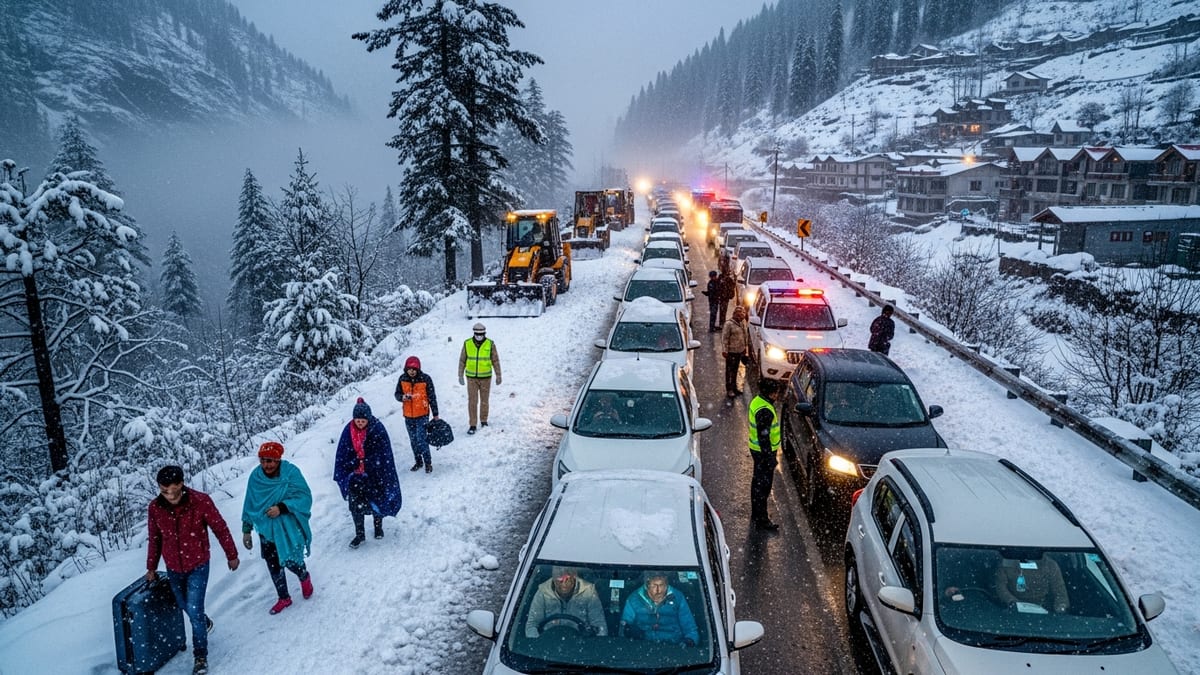
Traffic north from Sost, the last Pakistani town before the border, slowed to a standstill for hours as conditions worsened. Travellers attempting day trips from Hunza to the pass, as well as cross-border traders, were caught in long queues in sub-zero temperatures while road crews assessed the situation.
The snowfall follows days of colder, unsettled weather across Gilgit-Baltistan, where forecasts had already warned of wintry conditions on mountain routes. Meteorological bulletins in recent days highlighted fresh snow on nearby high passes, including Babusar Top, which has been closed to traffic and has already diverted more vehicles onto the Karakoram Highway.
Khunjerab’s Strategic Role for Trade and Tourism
Khunjerab Pass is the highest paved international border crossing in the world and the northern terminus of Pakistan’s N-35, better known as the Karakoram Highway. The road links Hasan Abdal near Islamabad with Gilgit, Hunza and onward to the Chinese region of Xinjiang, where it connects to China National Highway 314. It is the only modern-day road border crossing between Pakistan and China, making any closure especially significant for both countries.
The highway carries a mix of long-distance cargo convoys, regional passenger transport and tourism traffic. Since the easing of pandemic-era restrictions and an improvement in domestic security, operators have promoted the route as a gateway to some of Pakistan’s most dramatic landscapes, with Khunjerab Pass frequently highlighted in itineraries for Hunza and upper Hunza.
In recent years, Pakistan and China have moved toward year-round trade operations at Khunjerab, adjusting earlier seasonal opening schedules that traditionally shut the pass to traffic during the coldest months. However, publicly available reference material and recent travel advisories continue to warn that heavy snow, avalanches and ice can still force temporary closures with little notice, particularly from late autumn through early spring.
The latest disruption underscores how quickly conditions can change in the high Karakoram. Even when the border is administratively open, access on the Pakistani side remains vulnerable to localised storms, landslides and snowfalls that affect steep approaches and narrow river gorges along the Karakoram Highway.
Passengers Stranded in Remote High-Altitude Conditions
Accounts compiled from local media and road-status updates describe passengers waiting for extended periods in exposed locations between Sost and the border gate. Travellers reported long stretches of stationary traffic as vehicles queued on snow-covered asphalt in an area with limited roadside facilities, few permanent settlements and rapidly falling afternoon temperatures.
The elevation of Khunjerab Top, combined with wind chill and early winter weather, means that even relatively short delays can quickly become uncomfortable. Publicly accessible travel guidance for November in Hunza and upper Hunza notes that Khunjerab can experience sudden snow squalls, and that temperatures can plunge well below freezing after sunset, making warm clothing and contingency supplies essential for anyone attempting the journey.
Road cameras and photographs circulating on news and social platforms on 14 November show trucks, buses and private cars lined up on a snow-dusted roadway, with plumes of exhaust visible as drivers kept engines running for heat. Some travellers reportedly turned back toward Sost when conditions permitted, while others remained in place awaiting clearance.
The incident comes at a time when other routes into Gilgit-Baltistan are also under pressure. Recent snowfall has already closed the Babusar Pass route linking Kaghan Valley with Chilas, pushing more intercity buses and private vehicles onto the longer Karakoram Highway. This concentration of traffic increases the impact when weather affects high sections of the road near Khunjerab.
Road-Clearing Efforts and Evolving Winter Operations
Information published by infrastructure and engineering bodies over the past year highlights continuing work to keep the Karakoram Highway operational during winter months. Reports describe the use of specialised snow-clearing machinery and heavy equipment to remove accumulations, as well as the construction of protective galleries and shelters in some of the most exposed sections.
Despite these efforts, analysts of the route note that the combination of high altitude, steep slopes and active geology means that snowstorms and associated avalanches can still close parts of the highway for hours or days. Studies of hazards along the Karakoram Highway point to snowfall, rockfall and landslides as persistent threats that require constant monitoring and rapid response.
In the current episode, crews have been working to stabilise the slippery surface near Khunjerab Top and to recover stranded vehicles. Publicly available road-status dashboards and local travel advisories on 14 November still listed the main Karakoram Highway as open overall, but with warnings about weather-related disruptions at higher elevations and a strong emphasis on checking conditions before departure.
Observers of transport operations in Gilgit-Baltistan note that winter weather events like this often lead to short-lived blockages rather than prolonged, weeks-long closures. However, the timing of storms, especially around major holidays in either Pakistan or China, can significantly affect the movement of goods and tourists through the region.
Implications for Travellers Planning Northern Pakistan Trips
For travellers, the Khunjerab snowfall serves as a reminder that November sits at the transition between the popular autumn season and the onset of winter in northern Pakistan. Travel guides focusing on Hunza and Gilgit-Baltistan caution that while valley floors can still be accessible, high passes such as Khunjerab and Babusar may experience sudden weather changes, with closures that are often decided locally rather than through national-level announcements.
Current advice from regional road and tourism resources encourages visitors to build flexibility into itineraries, allowing extra days in case of delays on the Karakoram Highway. Travellers are urged to monitor reliable road-status services, check with bus companies or tour operators shortly before departure, and carry appropriate cold-weather gear, food and water for any journey toward Khunjerab Top.
Those planning cross-border journeys between Pakistan and China are particularly affected, as there are no alternative land crossings available. Travel forums and recent discussions among overland travellers repeatedly stress the importance of confirming both immigration operating hours and real-time road conditions, given that heavy snowfall can interrupt access to the border even when formal facilities remain open.
With winter only just beginning in the high Karakoram, the latest snowfall-related disruption at Khunjerab suggests that anyone considering late-season trips to this remote frontier should treat weather and road updates as essential pre-departure checks, rather than afterthoughts, when travelling the Karakoram Highway.