


More news on this day
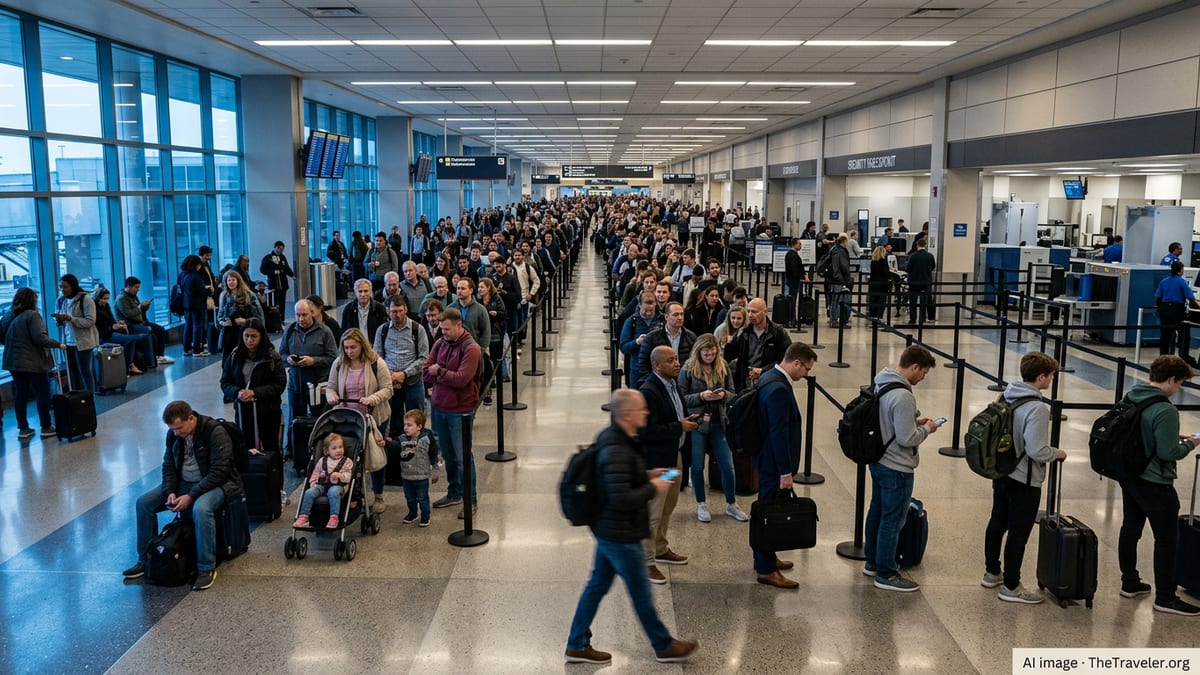
A rare nationwide ground stop by the Federal Aviation Administration brought New York’s John F. Kennedy International Airport to a standstill, leaving passengers in tears, scrambling for information and wondering when they would get off the terminal floor and back into the air.
Get the latest news straight to your inbox!
A nationwide halt ripples through JFK
The nationwide order pausing most departing flights across the United States went into effect late Friday, following what federal agencies described in public statements as a major communications failure affecting multiple Air Route Traffic Control Centers. At JFK, one of the country’s busiest international gateways, the impact was immediate and highly visible as departure boards flipped from scheduled to delayed and lines began to lengthen across terminals.
Publicly available air traffic data showed thousands of flights delayed or canceled nationwide as a result of the ground stop, which was lifted only after several hours. Reports indicate that carriers with large operations at JFK, including JetBlue and major U.S. legacy airlines, struggled to reset their evening schedules once the pause ended, leading to rolling disruptions that stretched late into the night.
Coverage from national outlets described this as the first coast to coast halt of U.S. departures since a systems failure in January 2023, and one of only a handful of times in modern aviation history that domestic air travel has been curtailed on such a scale outside of extreme weather or security events. For travelers on the ground in Queens, those comparisons did little to ease the stress of missed connections, abandoned hotel reservations and looming work or family commitments.
At JFK, the impact went beyond the departure gates. Taxi lines snaked outside terminals as some travelers gave up on flying and tried to get back into the city, while ride share pickup zones were clogged with vehicles circling in stop and go traffic. Inside, concession areas grew crowded with passengers camped out at charging stations and restaurant tables as they rebooked flights and watched social media for clues about what might happen next.
‘I called my mom and cried’: human toll of a frozen sky
In an interview originally published by Business Insider and widely republished by outlets including AOL and international news sites, 24 year old traveler Holmes described being stranded at JFK with little clarity on when a flight might depart. “I called my mom and cried,” Holmes said, capturing the emotional strain many passengers reported as the hours wore on and delay estimates slipped further into the night.
Similar accounts compiled in television segments and online coverage from across the country described parents trying to keep children calm on the terminal floor, elderly travelers hunting for wheelchairs and quieter corners, and international visitors fighting jet lag while listening for garbled loudspeaker announcements. At JFK, where long haul flights to Europe, the Middle East and Latin America converge, uncertainty over missed onward connections compounded the anxiety.
Reports from local New York newscasts and national broadcasters showed scenes of travelers staring up at dense delay grids on terminal monitors, periodically cheering when an isolated flight flipped from delayed to boarding. Others described passengers in tears at customer service counters as they tried to salvage trips for weddings, funerals or once in a lifetime vacations.
The emotional toll was not confined to those departing New York. Accounts gathered by broadcasters and digital outlets from major hubs such as Los Angeles, Denver and Philadelphia highlighted a common theme: travelers were less frustrated by the idea of a safety driven pause than by the difficulty of getting timely, consistent information. For many stuck at JFK, that information gap was the most stressful part of the evening.
Communication breakdowns fuel confusion
According to public briefings and subsequent reporting, the root of the nationwide disruption lay in a significant communications problem affecting the network that links air traffic control centers across the country. Transportation officials speaking to national media pointed to an overload in aging systems during the rollout of new air traffic management technology, which triggered safety protocols and the sweeping ground stop.
While the technical failure occurred within the national system, communication challenges inside airport terminals were often more immediate for passengers. Reports from local outlets covering JFK and other New York area airports described long stretches with few clear public announcements, leaving travelers to piece together the situation from airline apps, social platforms and conversations with front line staff who themselves had limited information.
Travelers posting on social media and speaking to television crews outside JFK recounted receiving text messages from airlines that conflicted with what airport screens showed, or seeing a flight still listed as “on time” even as neighboring departures rolled into multi hour delays. Some online discussions referencing JFK flights suggested that passengers headed to the airport were unsure whether to proceed, as airline systems had not yet fully reflected the FAA wide halt.
Industry analysts quoted in national coverage noted that such communication gaps are a recurring challenge during irregular operations, when airlines and airports must coordinate rapidly evolving information across multiple platforms. At JFK, where several carriers share terminals and gate areas, that complexity was magnified, leaving many travelers unsure which line to join or whom to ask for the latest update.
New York’s gateway airports strain under pressure
JFK was not alone in New York. Nearby LaGuardia Airport and Newark Liberty International also experienced cascading disruptions, with local broadcast reports describing packed gate areas and sitting room only terminals as flights stalled. In a statement highlighted in regional coverage, JetBlue announced that it was canceling all remaining domestic flights for the evening, keeping only Europe bound departures from JFK and Boston in operation in a bid to stabilize its schedule.
For the wider New York metropolitan area, the ground stop came at a time of already high demand, with many travelers positioned for weekend trips, business travel and sporting events in other cities. Publicly available flight tracking data showed limited spare capacity later in the evening, meaning that once the ground stop lifted, it was not simply a matter of sliding every flight back by a few hours. Crews timed out, aircraft were out of position, and runways faced a rush of departures all vying for limited takeoff slots.
Travel commentary and analysis pieces published in the hours after the disruption emphasized that New York’s trio of major airports operate near capacity even on a normal day. When a national systems issue abruptly freezes departures, that tight margin leaves little room to absorb the shock. For passengers at JFK, that translated into longer delays, more missed connections, and in many cases overnight stays either at airport hotels or back at home to try again the next day.
Photographs distributed by wire services and local outlets showed Terminal 4 and other concourses at JFK dotted with makeshift camps of travelers using jackets as pillows and luggage as barricades, as they waited for updated departure times or morning rebookings. For international visitors unfamiliar with New York’s transit options, the choice between waiting it out in the terminal or attempting a late night journey into Manhattan, Queens or Brooklyn added another layer of stress.
What the chaos means for future travelers
Opinion and analysis pieces published after the ground stop raised broader questions about the resilience of America’s air traffic control infrastructure and the readiness of airlines and airports to handle rare but high impact events. Commentators in major magazines and newspapers pointed to the incident as a warning sign that technology upgrades must be paired with investment in legacy systems, and that contingency planning needs to account for nationwide disruptions, not just local storms.
For travelers, one immediate takeaway from the JFK chaos is the value of flexible tickets and contingency plans. Travel experts quoted across various outlets suggested that, during major irregular operations, passengers may benefit from monitoring both airline apps and independent flight tracking tools, signing up for all available notification channels, and keeping essential items such as medications and chargers in carry on bags in case they are separated from checked luggage.
Consumer advocates interviewed in national coverage also noted that passengers affected by widespread system failures should review airline policies on rebooking, vouchers and hotel accommodations. While compensation rules differ by carrier and by whether the cause of disruption is considered within an airline’s control, large scale outages often prompt airlines to offer additional flexibility, even when not strictly required by regulations.
In the wake of the latest ground stop, policymakers have publicly discussed the need for additional funding to modernize air traffic systems and reduce the risk of similar nationwide halts. For travelers passing through JFK and other major hubs, those conversations may feel abstract compared with the immediate memory of crowded terminals and anxious hours. Yet the voices of passengers who, like the young traveler who called her mother in tears, found themselves overwhelmed in one of the world’s most important aviation gateways are already shaping the debate over how to keep the nation’s skies open and its airports moving.