


The Acropolis crowns the skyline of Athens and sits at the top of most travelers’ wish lists. Yet it is also one of the easiest major sights in Europe to miss because of changing hours, last-minute heat-wave closures, and strict last-entry rules. This guide explains how Acropolis opening times work through the year, what can unexpectedly shut the gates, and how to double-check the schedule before you climb the hill.
Get the latest updates straight to your inbox!
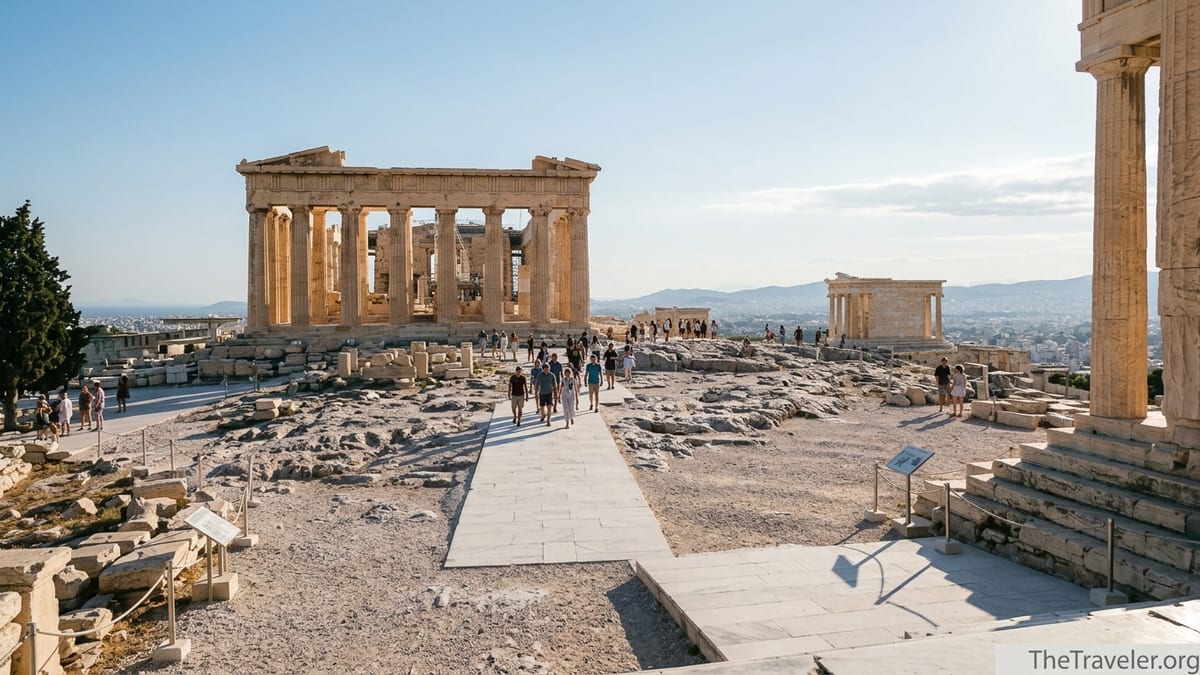
How Acropolis opening hours work through the year
The Acropolis of Athens follows a seasonal timetable set by the Hellenic Ministry of Culture. In practice this means longer hours in the warm, busy months and shorter days in winter. In recent years, the typical pattern has been an extended summer schedule from roughly April to late October, and a winter schedule from late October to the end of March, with exact dates adjusted slightly each year. On the ground, travelers usually find the gates opening around 8:00 in the morning and closing between 18:00 and 20:00 in summer, with winter closing times often an hour or two earlier.
For example, during a recent summer season, the Acropolis ran approximately 8:00 to 20:00 with the final admission 30 minutes before closing. In winter, hours were reduced to about 8:00 to 17:00. Ticket offices and the e-ticket booking system are aligned to these official hours, so time slots in the late afternoon simply disappear from sale once the seasonal switch has been made. Travelers planning an October or early April visit often notice that one week they can book a 19:00 entry slot, but a few weeks later the latest option might be 16:00 or 17:00 instead.
The reason for the strict schedule is partly conservation and partly safety. Staff must clear the hill and its steep paths before nightfall, and maintenance crews need time to work once visitors have left. That is why you cannot simply remain at the top after the official closing time, even on clear summer evenings when the Parthenon is beautifully lit and the sky is still bright.
Since these seasonal transitions do not always fall on the exact same calendar date every year, it is important to check the current timetable close to your departure. Online articles, guidebooks and even blog posts labeled “updated for 2024” may already be out of date by summer 2026. Treat any printed opening hours as a starting point, not a guarantee.
Summer vs winter: what to expect in each season
Visiting the Acropolis feels quite different in July compared with January, and the schedule reflects that. In high season, typically from April through October, expect extended hours, larger crowds and a much stronger emphasis on heat management. Many travelers choose the earliest slots between 8:00 and 9:00 to avoid the worst of the temperatures and the lines. In July and August, it is not unusual to see queues outside the main entrance by 7:45, especially when cruise ships are in port at Piraeus.
In winter, the atmosphere changes. With a typical closing time around 17:00, your practical visiting window is shorter, especially if you are combining the Acropolis with the Acropolis Museum. On a clear January day, the sun can set before 17:30, so staff begin ushering visitors down from the top well before the gates close. The upside is fewer crowds and milder temperatures. Many visitors in February or early March report having space to linger by the Parthenon or the Erechtheion without the shoulder-to-shoulder experience of mid-summer.
Another seasonal factor is daylight. In June, the long evenings allow late-afternoon entries that still offer plenty of time for photos and sweeping city views. A 18:30 or 19:00 arrival in early July can give you gentle light and a chance to see the city begin to glow. In contrast, a 15:30 entry slot in December already puts you on the clock, with shadows lengthening and the site gradually emptying as staff prepare for closing.
Practical planning often comes down to your style of travel. Families with younger children or older travelers may prefer late spring or early autumn, when hours are still long but heat is less severe. Winter travelers should build in an extra day in Athens if the Acropolis is a priority, both to account for shorter hours and for possible weather-related interruptions like strong winds or heavy rain.
Last entry rules and how much time you really need
The single most common surprise for visitors is the last-entry rule. The Acropolis typically stops admitting visitors 30 minutes before the official closing time. If the posted schedule lists closing at 20:00, the last ticketed entry is usually at 19:30. Arrive at the gate after that cut-off and you will be turned away, even if the sky is bright and there are still plenty of people inside.
In practice, you should aim to arrive significantly earlier than last entry if the Acropolis is a priority. Security screening, ticket scanning and the steep walk to the top all take time. Travelers who reached the entrance at 19:20 on a busy summer evening have described waiting ten minutes in line, which left them with only a short window at the summit before guards began directing everyone back down. By contrast, visitors who entered around 18:00 on the same day had time to climb at a comfortable pace, take photos around the Parthenon and still enjoy a relaxed descent.
How long you need at the site depends on your interest and mobility. Most travelers should allow around two hours for a standard visit. This includes time to walk from the gate up to the Propylaea, explore the Parthenon and surrounding monuments, take photos of the views over Plaka and the Temple of Olympian Zeus, and then descend. Those with mobility challenges or traveling with young children might want closer to three hours to move at an easy pace and rest in shaded spots on the way up.
Remember that last entry is not the same as last ticket sold online. Some visitors notice that the official e-ticketing platform shows no availability for the final 30 minutes before closing. That is because time slots stop at the last permitted entry time. If you walk up and try to purchase an on-the-spot ticket after that cut-off, the staff cannot override the rule. This is particularly important for cruise passengers on tight schedules who might be tempted to “squeeze in” a quick stop at the end of the day.
Holiday closures and reduced hours to watch for
Beyond the regular seasonal pattern, several Greek public holidays bring full closures or reduced hours at the Acropolis. The most predictable complete closures are on New Year’s Day (1 January), Greek Independence Day (25 March), Orthodox Easter Sunday, May 1 (Labour Day), and Christmas Day (25 December). On these dates, travelers arriving at the gates will find them locked, even if the weather is perfect and Athens feels otherwise open for business.
There are also holidays where sites may close early, especially on the evenings of major religious observances. Around Orthodox Easter, for example, the Acropolis may close earlier than usual on Good Friday or Holy Saturday to allow staff to participate in church services and processions. In December, many travelers find that museums and shops shorten their hours on Christmas Eve and New Year’s Eve, though the exact closing times vary from year to year.
Another subtle factor is the free-entrance days offered at state archaeological sites. Several dates through the year, such as March 6 and October 28, and selected Sundays in the low season, see large increases in local visitor numbers because Greek and EU residents can enter without charge. On these days the Acropolis remains open, but the site is noticeably busier, and lines can form at both entrances from early morning. Travelers who prize a quieter experience may prefer to avoid these dates or plan to arrive right at opening.
It is also worth noting that holiday closures of the Acropolis are often stricter than those of private attractions. On Christmas, for instance, some restaurants in central Athens still serve lunch and dinner, and many kiosks and bakeries remain open. The Acropolis, however, will be locked. Travelers who land in Athens on 24 December and plan to visit the hill on 25 December frequently discover this only when a taxi drops them at the closed gate.
Heat-wave and weather-related closures: why they happen
In recent summers Greece has experienced more frequent and intense heat waves, and the Acropolis has responded with temporary closures during the hottest hours of the day. When forecasts predict temperatures above roughly 40 degrees Celsius, authorities may decide to shut the site from midday until late afternoon. In July 2023, for example, visitors arriving around lunchtime found the gates closed between 12:00 and 17:00, with Red Cross staff distributing water and paramedics treating cases of heat exhaustion outside the entrance.
Similar measures have appeared in other recent years. In June 2024 and again in July 2025, Athens saw early and prolonged heat events that led to partial or full daytime closures of the Acropolis for several hours. Announcements often come only a day or two in advance, and sometimes on the morning of the closure itself. Travelers with pre-booked timed tickets for midday slots have been diverted to cooler hours when possible, and in some instances have had to request refunds through the official e-ticketing system after leaving Greece.
The reasoning is straightforward: the climb from the main gate to the Parthenon is steep, mostly exposed and paved with slippery marble. When temperatures soar, the risk of fainting, dehydration and falls rises sharply, particularly among older visitors and those with underlying health conditions. Crowds can also slow movement, making it harder for medical staff to reach people in distress. Closing the site during peak heat is a safety decision, not a sign that authorities want to limit tourism.
Weather can also cause shorter interruptions in other seasons. Strong winds occasionally lead to brief closures or restricted access to certain viewpoints, especially around scaffolding or restoration works. Heavy rain can make the marble steps treacherous. These disruptions are less common than heat-wave closures, but they are another reason to avoid scheduling your only possible Acropolis visit for your final half-day in Athens.
Planning sunset and evening visits without getting caught out
Many travelers dream of watching the sun sink over Athens from the Acropolis itself. While you cannot remain on the hill after closing time, a late-afternoon visit can still give you golden light and soft shadows, followed by views of the glowing Parthenon from nearby vantage points. The key is to match your entry slot to both the season and the closing hour.
In high summer, when the site may close around 20:00, a 18:00 or 18:30 entry often works well. You will climb in the heat, but by the time you reach the top the worst of the sun will have passed. You can photograph the Parthenon as the light softens, then descend as staff begin gently directing visitors toward the exits. From there, many travelers continue on foot to Aeropagus Hill or Philopappos Hill to watch the city lights come on and the Parthenon glow against the darkening sky.
In spring and autumn, you may want to choose a slightly earlier slot. If closing time is 19:00 with last entry at 18:30, a 17:00 or 17:30 ticket gives you enough time to explore without rushing. By the time you descend, the sky may already be streaked with color. In winter, sunset often falls well before closing, and the Acropolis itself may feel atmospheric in low, golden light around 15:00 or 16:00. Just remember that temperatures can drop quickly once the sun is low, especially with wind at the top of the hill.
Another evening strategy is to separate your museum and hill visits. The Acropolis Museum in central Athens operates on a different schedule and often stays open later than the archaeological site, especially on Fridays and during special events. Travelers frequently spend the cooler morning on the hill, then visit the museum in the late afternoon or evening. This split schedule reduces your exposure to midday heat and makes better use of the hours when each attraction is open.
Why you must always verify today’s hours before you go
Even the best guidebook or blog post cannot keep pace with every tweak to the Acropolis schedule. Construction works, staff shortages, cultural events and extreme weather all shape when the gates open and close, and decisions can be made on short notice. This is why travelers who treat any fixed timetable they find online as unchangeable often end up disappointed at a locked gate or a “last entry already passed” sign.
The most reliable approach is to double-check hours as close as possible to your planned visit. Within Greece, that can mean asking your hotel reception to call the Acropolis information line on the morning you intend to go, or checking the latest announcements from the Ministry of Culture. If you are staying in an apartment, you might stop at a nearby travel agency or tourist information kiosk and ask staff to confirm the day’s schedule. Many Athens hotels proactively inform guests of heat-wave closures at breakfast during the summer.
It is equally important to verify hours again if your plans change mid-trip. Perhaps you originally booked for a Tuesday morning but decide to switch to Wednesday after a late night in Plaka. If a heat wave builds or a public holiday falls midweek, Wednesday’s hours might differ from Tuesday’s. A quick check before buying new tickets can save you both money and frustration. Travelers who rebooked their Acropolis visit during the July 2023 closure, for instance, often succeeded in moving to early-morning slots the following day once they knew the midday hours were suspended.
Finally, remember that your airline or cruise line is not responsible for local schedule changes at individual sights. If a ship’s shore excursion to the Acropolis is canceled because of a heat closure, you may receive a refund for the excursion fee, but the line cannot reopen the hill. Independent travelers who book their own timed tickets should keep confirmation emails and screenshots handy so they can request refunds or rebooking through the official ticketing platform if the site closes unexpectedly.
FAQ
Q1. What are the usual opening hours of the Acropolis in summer?
In recent years the Acropolis has generally opened around 8:00 and closed between 18:00 and 20:00 in summer, with last entry 30 minutes before closing. Exact times can shift slightly each season, so you should confirm the current schedule shortly before your visit.
Q2. How do Acropolis hours change in winter?
In winter the site usually keeps shorter days, often around 8:00 to 17:00 with last entry 30 minutes before closing. With earlier sunsets and cooler weather, your practical visiting window is tighter, so it is wise to plan a morning or early afternoon visit rather than leaving the hill for late in the day.
Q3. Which public holidays is the Acropolis most likely to be closed?
The Acropolis is typically closed on major national and religious holidays such as New Year’s Day, Greek Independence Day on 25 March, Orthodox Easter Sunday, May 1 Labour Day and Christmas Day on 25 December. There may also be shortened hours on days like Christmas Eve or New Year’s Eve, so check the precise schedule for the year you are visiting.
Q4. What is the last entry time and what happens if I arrive after it?
Last entry is usually 30 minutes before the posted closing time. If the schedule lists closing at 20:00, you must pass through the gate by around 19:30. Visitors who arrive even a few minutes after last entry are not admitted, regardless of having a ticket or seeing people still inside.
Q5. Can heat waves really cause the Acropolis to close during the day?
Yes. During severe heat waves, authorities may close the Acropolis for several midday hours, for example from around 12:00 to 17:00, to protect visitors and staff. These closures are often announced only shortly in advance, so it is important to monitor local news or ask your hotel to check if extreme heat is forecast during your stay.
Q6. How much time should I allow for a visit to the Acropolis?
Most travelers should plan on about two hours at the Acropolis, which allows time to walk up from the gate, explore the monuments on top, enjoy the views and descend safely. Those who prefer a gentler pace or are visiting with young children or older relatives might want closer to three hours.
Q7. Is a sunset visit to the Acropolis possible?
You cannot stay on the hill after closing, but a late-afternoon visit in summer can still give you warm light and views as the sun lowers over Athens. In practice, entering around 18:00 or 18:30 on a long summer day can offer a sunset-like atmosphere, after which you can move to nearby viewpoints such as Aeropagus Hill to watch the Parthenon light up.
Q8. Are Acropolis hours the same as the Acropolis Museum hours?
No. The Acropolis archaeological site and the Acropolis Museum operate on different schedules. The museum, located near the base of the hill, often stays open later into the evening and has its own seasonal timetable. Many visitors tour the hill in the cool of the morning and visit the museum later in the day.
Q9. What should I do if the Acropolis closes unexpectedly on the day of my ticket?
If the Acropolis closes because of extreme heat or severe weather during your booked time slot, keep your ticket confirmation and any closure notices you receive. You can then contact the official ticketing platform or the point of purchase to request a rebooking or refund. Policies can vary, so you should start this process as soon as practical after the missed visit.
Q10. How can I check today’s Acropolis opening hours while in Athens?
The most reliable method is to ask your hotel, guesthouse or a local travel agency to confirm the schedule with the authorities on the day you plan to visit. You can also monitor local news for announcements about heat-wave closures or holiday changes. Because hours can change at short notice, especially in summer, confirming on the same morning is strongly recommended.