


More news on this day
Aegean Airlines has reported a 5 percent increase in full-year revenue and a 6 percent rise in passenger numbers for 2025, reinforcing the carrier’s role as a bellwether for Greece’s fast‑expanding tourism sector amid a challenging European aviation environment.
Get the latest news straight to your inbox!
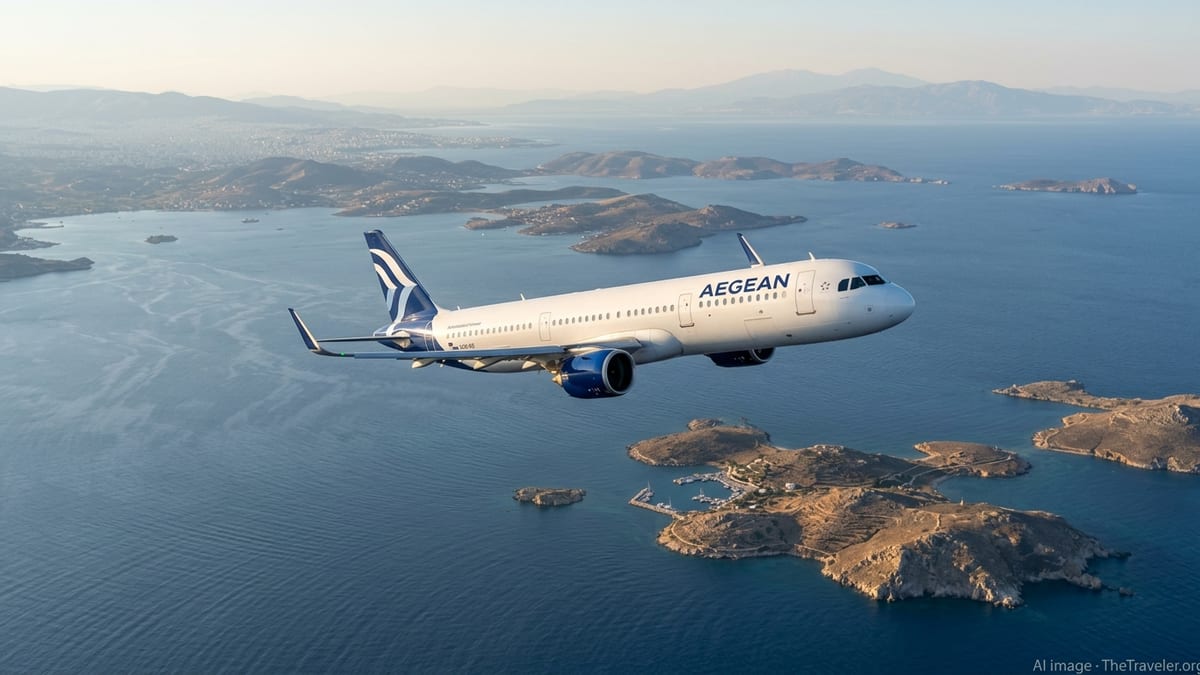
Solid 2025 Results Mark Another Record Year
According to publicly available financial statements, Aegean Airlines generated consolidated revenue of about 1.86 billion euros in 2025, around 5 percent higher than in 2024. Passenger numbers rose to roughly 17.3 million, a 6 percent year‑on‑year increase and a new record for the Athens‑based carrier.
The performance extends a strong rebound that had already pushed Aegean beyond pre‑pandemic levels in 2024, when the airline passed 16 million annual passengers and delivered record turnover. The additional gains in 2025 indicate that demand for air travel to and within Greece remained robust even as wider European traffic growth moderated.
Reports on the company’s full‑year results note that profitability also stayed healthy, supported by disciplined capacity management and the continued rollout of more efficient Airbus A320neo and A321neo aircraft. While cost pressures from fuel and inflation persisted, operating margins remained broadly in line with other successful mid‑sized European carriers.
Analysts view the 2025 figures as confirmation that Aegean has moved from recovery phase into a more mature growth cycle, with incremental gains in both revenue and traffic built on a structurally larger network than before the pandemic.
Passenger Growth Anchored in Tourism and Network Expansion
The 6 percent increase in passenger traffic in 2025 was driven by both domestic and international routes, with particularly strong volumes on services connecting major European cities to popular Greek islands. Industry coverage highlights that Aegean offered more seats than ever before in the peak summer months, focusing on high‑demand leisure destinations such as Crete, Rhodes, Santorini and Corfu.
Third‑quarter data for 2025, traditionally the airline’s strongest period, showed seat capacity up about 5 percent compared with the previous year, while passengers carried in the quarter rose around 6 percent. Load factors remained at high levels, indicating that the additional capacity was largely absorbed by market demand rather than discount‑driven oversupply.
In parallel, Aegean continued to expand its international reach through new routes and higher frequencies to Western and Central Europe, as well as selective connections to the Middle East and North Africa. The deployment of larger A321neo aircraft on busy leisure and city‑pair routes enabled the carrier to grow volumes without a proportionate rise in operating costs per seat.
Domestic traffic also benefited from Greece’s broadening tourism footprint beyond the traditional summer season. More travelers are combining city breaks in Athens or Thessaloniki with island hopping, reinforcing Aegean’s role as a connector between international gateways and secondary regional airports across the country.
Barometer for Greece’s Tourism‑Driven Economy
Because of its scale and network focus, Aegean’s annual performance is widely regarded as a proxy for the health of Greek tourism. The 5 percent revenue increase and 6 percent passenger growth recorded in 2025 suggest that inbound travel to Greece continued to expand, even after several years of strong recovery and new highs in visitor arrivals.
Tourism is a key pillar of Greece’s economy, and air connectivity plays a central role in sustaining that momentum. Aegean’s results indicate that demand was not only strong from traditional source markets such as Germany, the United Kingdom and Italy, but also increasingly diversified across Central and Eastern Europe, where rising disposable incomes and improved connectivity are supporting outbound leisure travel.
Industry reports note that Aegean has been particularly active in deepening its presence at regional Greek airports, aligning its schedule with the needs of tour operators and independent travelers seeking access to less saturated island destinations. This approach supports local economies across the archipelago while spreading visitor traffic beyond the busiest hotspots.
For policymakers and tourism officials tracking the sector’s trajectory, the airline’s 2025 performance underscores the importance of continued investment in airport infrastructure, air traffic management and destination marketing to sustain growth without overburdening popular locations.
Competitive Positioning in a Shifting European Market
Aegean’s 2025 results come at a time when many European carriers are grappling with softer yields, capacity constraints and geopolitical disruptions. Publicly available industry analysis shows that European passenger traffic growth slowed compared with 2024, while costs related to fuel, staff and operational disruptions remained elevated.
Against that backdrop, Aegean’s ability to deliver revenue and passenger gains is being interpreted as evidence of a resilient business model built around a focused regional strategy rather than a broad global network. The airline competes with low‑cost carriers on price‑sensitive routes, yet differentiates itself through schedule breadth in Greece and connectivity via its Athens hub.
Fleet renewal has been another pillar of its competitive strategy. The gradual transition to new‑generation Airbus aircraft has improved fuel efficiency and range, enabling longer sectors and denser configurations on high‑demand routes. These efficiencies are particularly important in a period of fluctuating fuel prices and environmental scrutiny across the aviation sector.
At the same time, Aegean’s membership in a major global airline alliance supports inbound tourism by offering smoother connections from long‑haul markets via partner hubs. This combination of regional specialization and alliance‑driven feed has positioned the carrier as a key gateway into Greece for travelers from North America, the Middle East and Asia who connect through European capitals.
Outlook: Capacity Discipline Amid Ongoing Uncertainties
Looking ahead from the vantage point of early 2026, publicly available commentary on Aegean’s guidance suggests a cautious but positive outlook. The airline has indicated plans to modestly increase capacity, with additional seats concentrated in core leisure markets and on routes where tourism demand remains structurally strong.
However, management signals referenced in financial coverage also acknowledge persistent uncertainties, including volatile fuel prices, evolving geopolitical tensions in parts of the Eastern Mediterranean and the risk of softer consumer spending in key European economies. In that context, maintaining flexibility in fleet deployment and schedule planning is seen as essential.
Early data for the first quarter of 2026 show that Aegean continued to post higher revenue and passenger numbers, even as seasonal losses widened due to fuel and currency effects. Analysts interpret this as evidence that underlying demand remains robust, but that earnings may be more sensitive to external cost shocks in the near term.
For Greece’s tourism sector, Aegean’s 2025 performance and cautious expansion plans in 2026 point to a market that is still growing, but in a more measured fashion. With air connectivity firmly restored and visitor appetite for Greek destinations undiminished, the airline’s revenue and passenger gains in 2025 underline its central role in carrying the country’s tourism expansion into the next phase.