


More news on this day
Air Serbia is preparing to expand its presence in southern Serbia with new routes linking Niš Constantine the Great Airport to Vienna and Malta from October 2026, in a move that will further integrate the country’s secondary city into European air networks.
Get the latest news straight to your inbox!
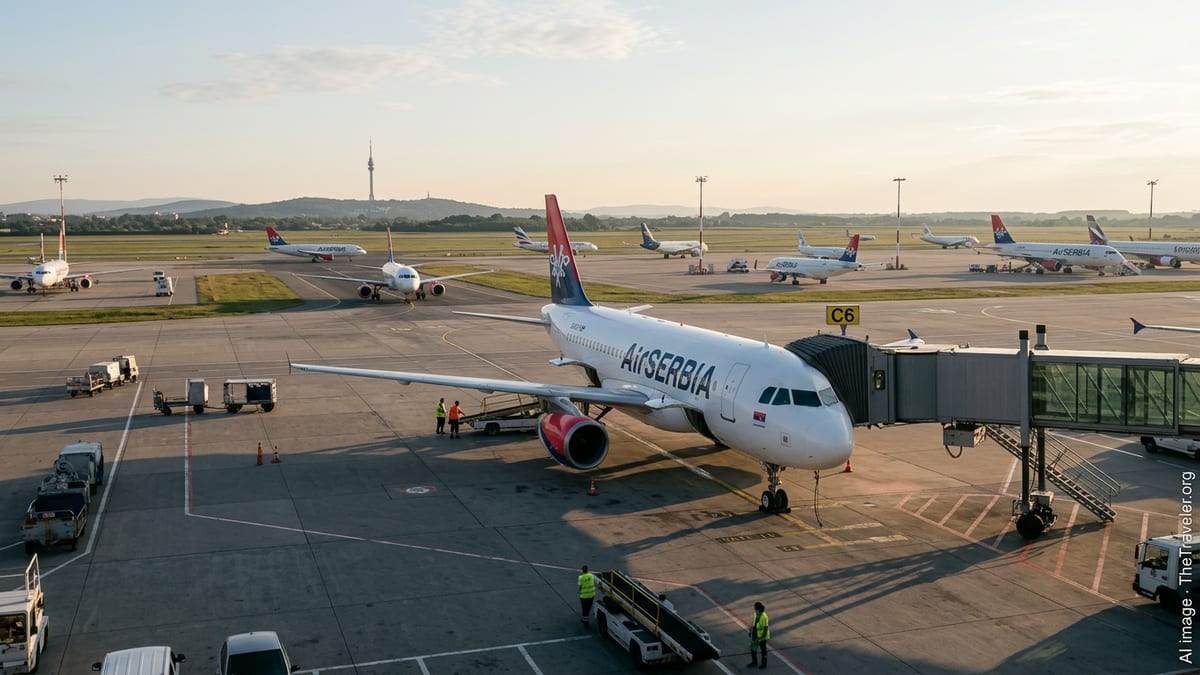
New Links From Niš to Austria and the Mediterranean
The planned Niš to Vienna and Niš to Malta services are set to begin in October 2026, according to publicly available scheduling data and regional aviation reports. The additions will connect Niš directly with one of Central Europe’s key hubs and with a growing leisure destination in the central Mediterranean.
Vienna is already among Air Serbia’s established destinations from Belgrade, while Malta has been part of the carrier’s wider network from the Serbian capital as well. Extending both routes to Niš aligns with the airline’s broader strategy of developing its operations at secondary airports and widening access beyond Belgrade.
Both routes are expected to operate several times per week, providing new options for business and leisure travelers who currently rely heavily on flights from Belgrade or on low cost carriers. Exact frequencies and schedules are likely to be refined closer to the start date as slot coordination and seasonal demand projections are finalized.
The October 2026 launch timing positions the new services at the start of the winter timetable, traditionally a period when airlines reassess network performance and introduce schedule adjustments that can be sustained year round.
Strengthening Niš as Serbia’s Second Air Gateway
Niš Constantine the Great Airport has evolved in recent years from a small regional facility into a developing secondary gateway for Serbia. Publicly available information indicates that Air Serbia already serves several destinations from Niš, complementing operations by low cost competitors and charter carriers.
Adding Vienna and Malta would broaden the mix of destinations on offer from Niš, which has primarily focused on point to point links in the region and to selected leisure markets. Vienna brings an additional layer of connectivity, given its role as a major Central European hub with onward connections throughout Europe and beyond.
From a local perspective, the new flights are likely to appeal to travelers across southern and southeastern Serbia, as well as neighboring parts of North Macedonia and western Bulgaria for whom Niš can be more accessible than Belgrade. The services may also support inbound tourism flows to the region, including city breaks and nature tourism in areas surrounding Niš.
Air Serbia has previously highlighted the role of Niš and Kraljevo’s Morava Airport as focus cities within its network, and the latest additions would reinforce that strategic emphasis on decentralizing air access within the country.
Competitive Context in Vienna and Malta
Vienna International Airport is one of Central Europe’s busiest hubs, with strong competition among legacy and low cost carriers. Air Serbia already serves Vienna from Belgrade, and the extension from Niš would add an additional origin point from the same national market without directly overlapping the existing Belgrade operation.
For the Vienna route, travelers from southern Serbia could gain faster access to the Austrian capital compared with connecting via Belgrade or traveling overland. The service also has potential to attract members of the Serbian diaspora in Austria who originate from Niš and neighboring regions.
In Malta, Air Serbia would enter a market that has seen a steady mix of full service and low cost operators connecting the island with the Balkans and Central Europe. Existing links between Malta and Serbia have typically centered on Belgrade, while Niš connections have been dominated by low cost carriers. A direct service from Niš by the Serbian flag carrier would broaden the competitive landscape and may encourage additional fare and schedule options.
The Malta route is expected to cater primarily to leisure demand, including outbound tourism from Serbia to the Mediterranean and inbound traffic to Niš and the wider region. Seasonal peaks around school holidays and summer travel patterns are likely to shape capacity decisions after the initial launch.
Implications for Serbia’s Wider Air Network
The planned Niš to Vienna and Niš to Malta flights come amid broader growth in Air Serbia’s international network. Published data shows that by 2026 the airline serves more than 80 destinations across Europe, the Middle East, North America and parts of Asia, with Belgrade remaining the primary hub and Niš and Morava developed as secondary bases.
Expanding direct international links from Niš aligns with Serbia’s broader transport policy goals of improving connectivity and supporting regional economic development. Easier access to Vienna could benefit trade, education and cultural exchanges, while a direct Malta service supports tourism diversification and new partnership opportunities in the Mediterranean.
The new routes may also help to rebalance traffic flows within Serbia, reducing some of the pressure on Belgrade Nikola Tesla Airport and encouraging more even distribution of air travel demand. As Niš grows its role, airport authorities and local stakeholders are expected to continue investments in terminal facilities, ground transport links and tourism infrastructure.
Detailed schedules, aircraft types and fare structures for the Niš to Vienna and Niš to Malta services are expected to become available as October 2026 approaches, but current indications point to a further deepening of Air Serbia’s regional strategy and a significant enhancement of international travel options for southern Serbia.