


More news on this day
Airlines are gradually restoring a patchwork of flights across the Middle East after widespread suspensions linked to the Iran conflict, but fragmented schedules, rerouted long-haul services and lingering safety advisories mean disruption for travelers is far from over.
Get the latest news straight to your inbox!
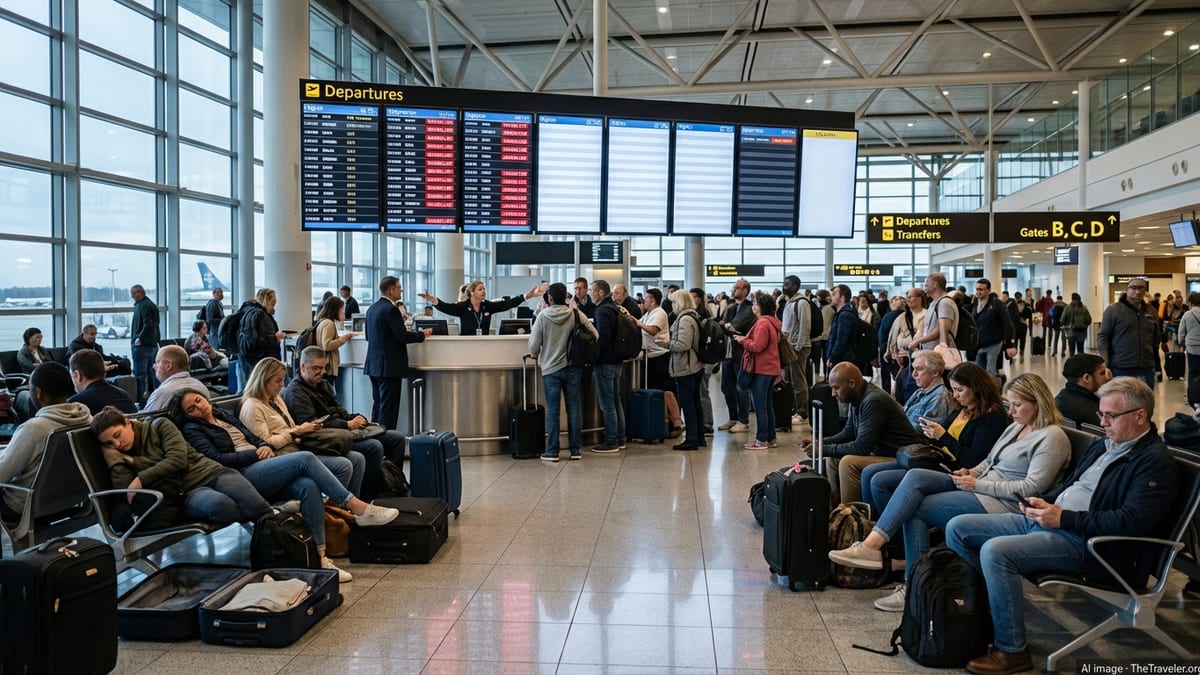
Selective Restarts After Wartime Shutdowns
Publicly available information shows that a growing number of carriers have begun reinstating flights into major Gulf and Levant hubs following the early-2026 strikes on Iran and the subsequent closure of large swathes of regional airspace. Dubai, Doha and Abu Dhabi, which collectively handle a significant share of global long-haul traffic, are again seeing more arrivals and departures, though not yet at pre-war levels.
Coverage of recent airline updates indicates that flagship Gulf carriers were among the first to rebuild their networks once limited operations resumed from Dubai and other key airports in March. Schedules have been rebuilt gradually, with capacity focused on trunk routes linking Europe and Asia, as well as high-demand connections to South Asia and Africa.
By contrast, many non-Gulf airlines adopted a slower, more cautious return. European and Asian carriers that had suspended services to destinations such as Dubai, Doha, Tel Aviv and Riyadh began announcing phased resumptions from late May and June, often with fewer weekly frequencies and tighter aircraft rotations. This staggered approach has created a patchwork of options for passengers rather than a full-scale restoration.
Industry trackers and aviation data cited in recent media coverage underline that even where flights have restarted, they often operate on modified routings and with reduced loads, reflecting both operational constraints and persistent security considerations around certain air corridors.
Key Routes Back, But Capacity Remains Tight
Recent factbox-style reporting highlights that some of the region’s busiest city pairs are again accessible, albeit with thinner schedules. Services linking major European hubs to Dubai and Doha, for example, are returning, while select flights to Tel Aviv, Kuwait City and other gateways in the eastern Mediterranean and Gulf are being restored on a route-by-route basis.
In several cases, airlines that paused operations entirely are now planning limited daily services instead of the pre-war pattern of multiple flights per day. Some carriers have publicly outlined plans to prioritize a single daily rotation into strategic markets such as Dubai, Doha, Riyadh and Tel Aviv, consolidating demand onto fewer departures and freeing aircraft for alternative routings elsewhere.
Other operators have used the disruption to restructure their Middle East portfolios. According to published coverage, at least one major European airline intends to permanently drop Jeddah from its network once broader services resume, reallocating that capacity to long-haul markets in India and Africa where demand remains strong and operational risk is perceived to be lower.
Capacity constraints are further compounded by aircraft and crew positioning challenges following months of diversions. Aviation analyses show that some long-haul fleets remain tied up on lengthened routings that bypass higher-risk airspace, which in turn limits how quickly normal frequencies can be restored into Middle Eastern hubs.
Rerouted Long-Haul Flights Extend Journey Times
Even where carriers do not serve the Middle East directly, global travel continues to feel the effects of altered airspace. Guidance from European and international aviation safety bodies, as summarized in recent reports, still advises heightened caution or avoidance of skies above parts of Iran, Iraq, Israel, Syria and neighboring states, driving airlines to adopt longer detours.
Europe to Asia routes are particularly affected. Flight tracking data cited in specialist coverage shows that many services that once transited the Gulf or eastern Mediterranean are now operating via more northerly or southerly tracks. These diversions add significant flying time and fuel burn, and can trigger knock-on delays when aircraft miss their planned turnaround slots.
For passengers, the changes often translate into extended journey times, irregular departure hours and more frequent missed connections, even when ticketed on routes that technically remain “operational.” Carriers have been adjusting schedules and padding block times to accommodate the longer legs, reducing aircraft utilization and tightening already limited seat availability during peak travel periods.
Logistics and supply-chain bulletins focused on the region also describe continuing strain on cargo capacity, particularly on lanes linking Europe, the Gulf and South Asia. With freighter and belly-hold operations still constrained by routing limits and airport throughput, shippers face higher rates and longer transit times, which further complicates airline scheduling.
Travelers Face Patchwork of Suspensions and Advisories
For would-be visitors and transit passengers, the evolving situation has resulted in a complex and sometimes confusing set of options. Comparative airline updates compiled by travel industry groups show that, while some carriers have fully resumed service to select Middle East destinations, others maintain complete suspensions into the same cities well into late summer or early autumn 2026.
Examples cited in recent coverage include European and Asian airlines that have pushed back their planned return to Dubai or Doha until early autumn, as well as carriers that continue to avoid airspace over Iran, Iraq or parts of the eastern Mediterranean even on overflight-only routes. In some cases, services to Tel Aviv, Beirut or Kuwait City remain on hold despite a partial reopening of airspace and airports in the wider region.
National travel advisories in North America, Europe and parts of Asia also contribute to the uneven picture. While most do not explicitly forbid travel, updated bulletins typically recommend that operators maintain robust contingency planning for flights touching Bahrain, Kuwait, Israel, Jordan, Qatar, Oman, the United Arab Emirates and Saudi Arabia. The emphasis on risk assessment helps explain the wide variation in airline decisions on when and how to return.
Travel forums and passenger reports reflect this uncertainty, with some travelers describing relatively smooth journeys through Gulf hubs, while others recount last-minute cancellations, involuntary reroutings and multi-day delays as individual airlines reassess operations in real time.
Outlook: Gradual Normalization, Ongoing Volatility
Aviation analysts following the Iran conflict’s economic impact broadly describe a trajectory of gradual normalization tempered by the possibility of renewed shocks. Data cited in recent assessments suggests that overall activity in Middle Eastern airspace is rising from the lows seen immediately after the strikes, but remains materially below prior-year levels, particularly for carriers based outside the region.
For airlines, the key variables over the coming months are likely to include the durability of the current ceasefire, the stability of critical infrastructure at major hubs, and the stance taken by regulators on overflight risk. Any renewed escalation or additional restrictions on regional airspace could quickly unwind the tentative gains made in restoring long-haul connectivity.
For travelers, industry observers recommend building extra flexibility into itineraries that rely on Middle East connections, especially for complex multi-leg journeys between Europe, Africa and Asia. With some airlines already signaling that reduced schedules to Dubai, Doha, Riyadh and Tel Aviv will persist at least into early autumn, tight connections and last-seat availability are expected to remain a feature of the market.
While the reopening of key hubs marks an important milestone, the patchwork nature of resumed services and the continued rerouting of long-haul flights underline that the region’s aviation system is still operating in recovery mode, rather than on a fully stable footing.