


More news on this day
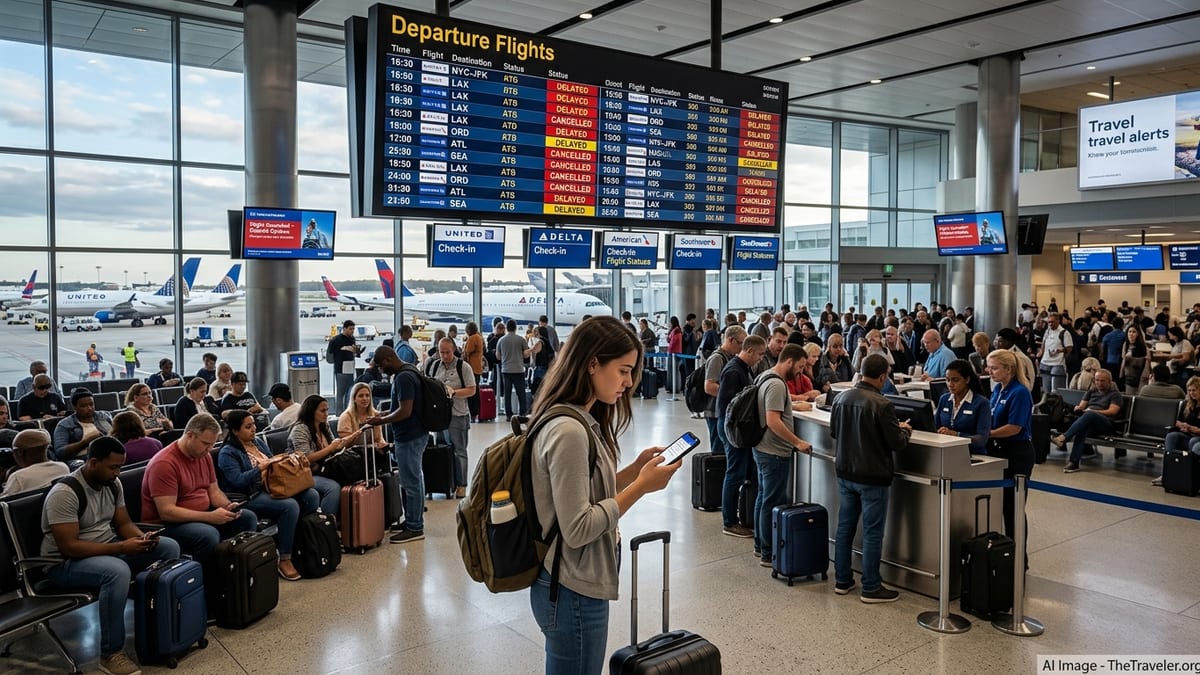
Days after a rare nationwide Federal Aviation Administration ground stop and separate technology failures at United Airlines and Delta Air Lines, U.S. air travel is heading into one of its busiest Thanksgiving periods in years, with officials racing to shore up critical systems and travelers urged to prepare for possible delays and disruptions.
Get the latest news straight to your inbox!
What went wrong in November and why it matters for Thanksgiving
The most disruptive event came on Friday, November 13, 2026, when a telecommunications failure in the FAA’s air traffic control network led the agency to order a nationwide ground stop for several hours while systems were stabilized. According to the FAA and the U.S. Department of Transportation, the outage affected communication and radar systems used by controllers, prompting thousands of cancellations and delays across the country before the ground stop was lifted later that day and the network was gradually restored over the weekend.
The FAA describes the November 13 action as an exceptional safety measure and notes that a nationwide ground stop has been used only a handful of times in modern U.S. aviation, including after the September 11, 2001 attacks and a Notice to Air Missions system failure in January 2023. The agency has since said that instability in legacy telecommunications equipment contributed to the failure and that engineers moved quickly to reroute traffic and bring backup systems online before allowing departures to resume.
As airlines worked through the backlog from the FAA outage, United Airlines reported its own system problem on Monday, November 16. The carrier temporarily halted many departures while troubleshooting what it described as a technology issue affecting performance data used before takeoff. United later said the outage lasted around an hour and that there was no indication of a cybersecurity attack, but the disruption still delayed hundreds of flights as crews waited for updated figures and airports managed congestion from aircraft out of position.
The most recent incident came on Sunday, November 22, when Delta Air Lines experienced a malfunction in its automated weight and balance system used to calculate how passengers, cargo and fuel are distributed on each aircraft. Delta and the FAA confirmed that flights across the United States, including at the airline’s Atlanta hub, were delayed while the carrier shifted to manual procedures and the system was restored. Flight-tracking services recorded more than a thousand Delta delays that day, with the airline indicating that roughly 70 percent of its reported delays and cancellations were linked to the automation problem and the remainder largely to weather.
While all three issues have been resolved, they occurred within nine days of each other and just ahead of a peak Thanksgiving travel window. Forecasts from industry groups and booking data suggest U.S. air travel for the holiday period will approach or exceed recent records, meaning even localized disruptions could ripple quickly through the network. For travelers, the immediate implication is not that flights are unsafe, but that schedules may be less predictable than timetables suggest, particularly on the busiest days around Thanksgiving Day.
How authorities and airlines are responding
In the wake of the November 13 outage, the White House and the Department of Transportation said they convened a cross-agency team including senior officials from the FAA, the Pentagon and the intelligence community to examine what went wrong and how to reduce the risk of another nationwide disruption. According to public statements, the group has been meeting regularly to identify vulnerabilities in the federal air traffic control infrastructure, review backup paths for critical data and prioritize modernization work on older systems that proved most sensitive during the failure.
The FAA has published a question-and-answer summary of the incident outlining the basic timeline and confirming that the ground stop was triggered after instability appeared in key telecommunications links. The document notes that the agency chose to halt departures nationwide “out of an abundance of caution” while it verified that controllers could safely manage airborne traffic and new flights. It also indicates that the FAA is working with outside vendors and other federal agencies to harden the network and has commissioned internal reviews aimed at preventing similar failures.
Airlines, for their part, have stressed that their own November outages were unrelated to the federal telecommunications failure, even though they compounded the effect on passengers. United has said that its November 16 disruption stemmed from an internal technology problem that interfered with the performance calculations pilots use to verify safe takeoff under given runway and weather conditions. The airline has not publicly detailed the specific cause but said it quickly restored systems and that operations returned to normal later that day.
Delta has described its November 22 problem as a failure in the automated system that generates aircraft weight and balance instructions, a core safety step that must be completed before every departure. The airline told passengers and media it moved to manual procedures and coordinated with the FAA, which briefly issued a ground stop and then a ground delay program for Delta flights into Atlanta from the rest of the country. Delta has said that its automation is now functioning again and that it assisted travelers who required hotel rooms or meals as a result of missed connections and extended delays.
Federal officials have emphasized that, based on current information, none of the November aviation disruptions have been attributed to cyberattacks. Instead, they point to stresses on complex, aging technology systems across both government and private operators, some of which still rely on older hardware or software. Several investigations remain open, however, and agencies have said they will publish additional findings as technical reviews conclude, meaning further details on root causes and long-term fixes may emerge after the Thanksgiving travel period.
Practical steps travelers can take to reduce disruption
For passengers preparing to fly around Thanksgiving, the main advice from travel experts and consumer advocates is to assume that delays are possible even if no major failure occurs and to build in extra time and backup options. One of the simplest steps is to download the mobile app of the airline operating your flight and enable push notifications for schedule changes, gate updates and rebooking offers. Airline apps typically receive operational updates before departure boards or third-party services, and many now allow passengers to change flights or join standby lists without waiting in an airport queue.
Flight-tracking websites and apps such as FlightAware and Flightradar24 can add another layer of awareness by showing where your inbound aircraft is coming from and whether it is already running late because of weather or congestion elsewhere. If the plane operating your flight is delayed leaving a previous city, that often signals a knock-on delay even if your departure status still shows on time. Monitoring these details before heading to the airport can help travelers decide whether to leave earlier, adjust ground transport plans or proactively seek alternate routings.
Consumer advocates note that one of the most powerful tools travelers have is researching alternative flights in advance. Knowing which earlier or later departures, or nearby airports, are realistic options makes it easier to request a specific solution if your original flight is canceled or heavily delayed. In some cases, travelers with urgent plans choose to book a fully refundable backup ticket on a different airline at roughly the same time as their main itinerary, then cancel the extra reservation once they are confident the primary flight will operate. That strategy can provide a safety net but requires tying up additional funds temporarily and carefully checking refund rules and cutoff times before purchase.
Scheduling decisions can also materially affect how vulnerable a trip is to disruption. Nonstop flights reduce the risk of missed connections compared with itineraries that require a change of planes. When a connection is unavoidable, building a longer layover than the legal minimum can give a cushion if the first flight is late. Travelers with flexibility may benefit from choosing flights earlier in the day, when aircraft and crew are more likely to be in position and there is still space later on the schedule to rebook if necessary, rather than relying on the last departure of the evening on a busy route.
Preparing hand luggage for the possibility of an extended delay or overnight disruption can also make an out-of-schedule event more manageable. Keeping essential medications, chargers, important documents and at least a basic change of clothes in a carry-on bag ensures that, if a flight misconnects or a checked bag is delayed, travelers still have what they immediately need. In colder destinations, having warm layers and basic toiletries at hand can be especially helpful if an unexpected overnight stay near the airport becomes necessary.
What U.S. rules actually guarantee when flights go wrong
Despite recent high-profile disruptions, U.S. passenger protections remain focused on refunds rather than compensation. Under long-standing Department of Transportation rules and enforcement policy guidance updated in 2023, passengers are generally entitled to a refund of the ticket price if their flight is canceled or significantly changed and they choose not to travel. The department defines a significant change for most itineraries as an arrival at the final destination three or more hours later than originally scheduled on a domestic ticket, or six or more hours later on an international ticket, among other criteria such as unexpected additional connections.
If a traveler accepts rebooking and completes the trip, they typically cannot also demand a refund of the original fare on top of the transportation they received. Additional assistance, such as meal vouchers or hotel accommodation, depends on both the cause of the disruption and the policies of the specific airline. When the problem is within the carrier’s control, including certain mechanical issues or crew staffing problems, most major U.S. airlines now publicly commit to providing meals for significant delays and overnight hotel stays when a passenger is stranded away from home.
By contrast, when delays or cancellations result from weather, air traffic control decisions or other factors outside a carrier’s control, there is generally no regulatory requirement for airlines to provide hotels or meals, and many do not. Passengers can compare what each airline promises in different scenarios using the Department of Transportation’s online airline cancellation and delay dashboard, which summarizes commitments for accommodations, ground transport and rebooking assistance across U.S. carriers.
Because official protections are limited, documentation can be crucial if travelers later seek reimbursement or file a complaint. Keeping screenshots or emails that show cancellation notices, long delays or involuntary schedule changes, as well as receipts for hotels, meals and ground transportation, can support requests for goodwill compensation from airlines or claims against standalone travel insurance policies. Some premium credit cards also include trip delay and interruption coverage when the fare is purchased with the card, subject to specific conditions such as a minimum delay length and covered causes.
Passengers should exercise caution when trying to reach airlines during mass disruptions. Regulators and consumer groups have warned that scammers sometimes publish fake customer service phone numbers or social media profiles designed to intercept desperate travelers and collect payment or personal information. To reduce this risk, experts recommend using only contact details listed inside the airline’s official app, on its printed boarding pass or on its own website, rather than numbers surfaced via search engines or third-party platforms.
How reliable different airlines have been in 2026 and what to watch next
Recent operational statistics provide some context for what travelers might expect during the rest of the year, though they do not yet fully capture the impact of the November technology failures. The Department of Transportation’s Air Travel Consumer Reports through September 2026 show variation in performance among U.S. carriers on both cancellations and on-time arrivals, based on data they are required to submit. Those figures cover January through September and therefore exclude the November FAA outage and the latest United and Delta problems.
Across the first three quarters of 2026, major network airlines such as American, Delta, United and Southwest reported differing cancellation rates when their own operations and those of regional affiliates were combined. The data also show that JetBlue, a smaller carrier included in the same comparison group, recorded a higher percentage of canceled flights than most of its peers over that period. On-time arrival performance likewise varied, with some airlines delivering a greater share of flights within 15 minutes of scheduled arrival than others. The raw numbers are updated monthly and can be downloaded from the Transportation Department for passengers who want to examine individual carriers before booking.
It is important to remember, however, that systemwide shocks such as the November 13 ground stop or a major technology outage at a large carrier can temporarily distort year-to-date figures. A single day of heavy cancellations concentrated at a few hubs can shift an airline’s monthly reliability metrics even if underlying day-to-day operations remain steady. As a result, analysts will need several more months of data to assess how much the November events truly altered performance trends for 2026.
For travelers focused on the immediate Thanksgiving period, the most practical step is to monitor conditions closely in the 24 to 48 hours before departure. That includes watching weather forecasts along the route, checking for any new FAA advisories affecting particular airports and reviewing messages from airlines about anticipated delays or flexible rebooking options. While federal agencies and carriers have said they are working to strengthen systems after the recent outages, both have also cautioned that no complex network can be completely immune from disruption, especially during peak travel periods when even small problems can quickly cascade.
Looking ahead, the FAA has signaled that modernizing aged infrastructure exposed by the November 13 failure will be a multiyear effort, subject to funding and procurement timelines. Airlines are likewise evaluating their own technology resilience, including backup procedures for critical systems such as performance calculations and weight and balance automation. In the meantime, passengers heading out for Thanksgiving and the year-end holidays can reduce some of their personal risk by building flexibility into itineraries, knowing their rights before they fly and staying informed as conditions evolve in the days leading up to their trip.