


More news on this day
When flights across the United States were briefly grounded on November 13 after a federal router failure, thousands of travelers were reminded how quickly air travel can unravel and how confusing the rules are about who pays when trips fall apart. With new federal refund requirements now in effect but a separate plan for cash compensation abandoned in 2025, understanding what you can and cannot claim after a cancellation or long delay has become essential for U.S. flyers.
Get the latest news straight to your inbox!
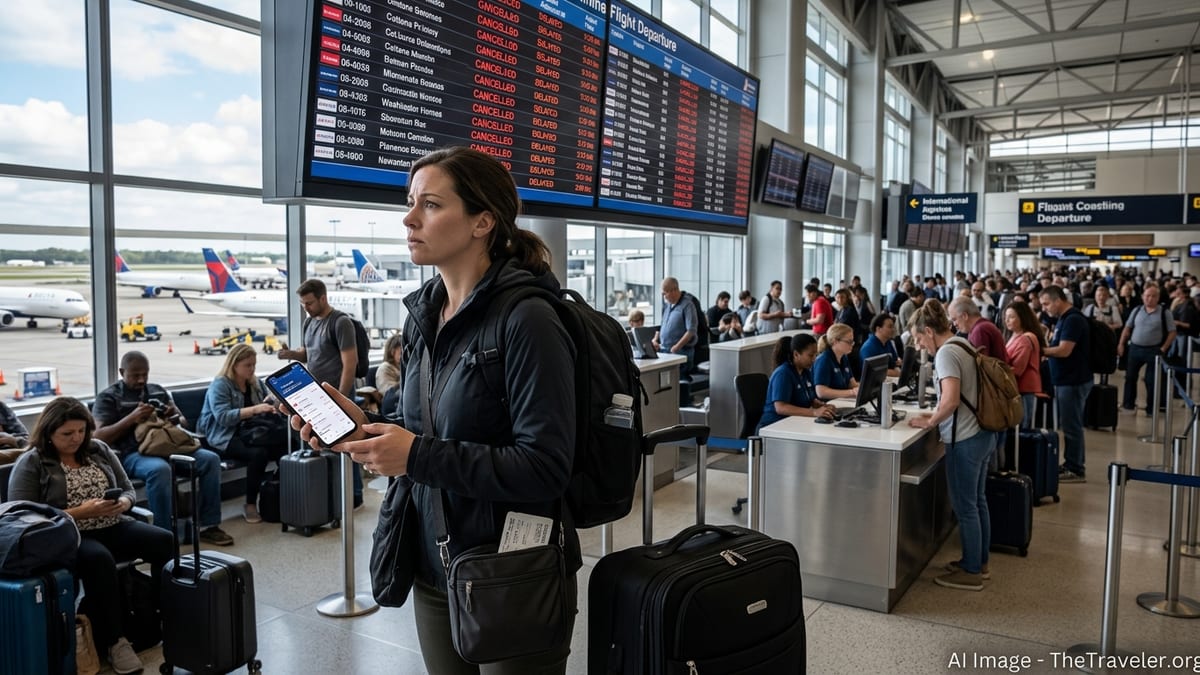
What federal refund rules guarantee when flights fall apart
Under rules that took full effect in 2024, passengers now have clearer federal rights to refunds when airlines cancel a flight or make a significant schedule change and the traveler decides not to continue the trip. Those protections apply to flights to, from or within the United States, including many operated by foreign carriers, as long as they are sold to the public and not charters or private services.
The U.S. Department of Transportation defines a cancellation as a published flight that is not operated at all, and a significant change as a substantial alteration to what was sold, such as a long schedule shift, a major change in connections, or a downgrade to a much lower class of service. For delays, regulatory guidance ties the idea of a significant delay to time: from May 16, 2024, a delay of at least three hours for domestic flights or six hours for international flights is the benchmark that usually triggers refund eligibility if the traveler chooses not to fly.
In those cases, if you decline the airline’s alternatives and do not travel, the carrier must return what you paid for the affected flight, including government taxes and mandatory carrier-imposed charges. If a ticket was bought with a credit card, the refund must be processed within seven business days; for cash or other payment methods, the timeline is 20 calendar days. The refund is separate from any credits or vouchers the airline may offer and has to be paid in cash or cash equivalent, such as a card refund, bank transfer, check or widely usable prepaid card.
Crucially, these rules apply regardless of why the flight fell apart. Whether the cause is severe weather, a technical issue within the airline’s control, a staffing problem, a ground stop triggered by the Federal Aviation Administration or, as seen on November 13, a failure in federal routing equipment, the trigger for a refund is the effect on your flight and your decision not to travel, not who caused the disruption. If you accept a rebooking and take the trip, federal law does not entitle you to a refund based solely on the delay, even if the disruption was lengthy.
Why meals and hotel costs remain largely a matter of airline policy
Federal rules stop at guaranteeing refunds for unused transportation and some related fees. They do not require U.S. airlines to provide food, hotel rooms or ground transportation when flights are disrupted, even when the disruption is clearly within the airline’s control. Whether you receive those amenities instead depends on the commitments written into each carrier’s customer service plan and contract of carriage.
In recent years, major U.S. airlines have voluntarily published clearer promises about what they will do during controllable disruptions, such as mechanical problems, scheduling mistakes or certain crew issues. For example, some large carriers commit to offering meal vouchers when a controllable delay stretches beyond three hours and to arranging hotel rooms and airport transfers if an overnight stay becomes necessary away from home. Those benefits are usually limited to situations the airline defines as within its control and can exclude events such as weather, air traffic control programs and security incidents, even when the result for passengers is similar.
Delta Air Lines illustrates how these voluntary policies work. In its customer commitment, Delta says that if a disruption within the airline’s control leaves a traveler stranded overnight away from home and not yet at their destination, it will provide complimentary hotel accommodation when rooms are available through its systems and pay for ground transportation between the airport and the hotel. The airline also indicates that if it cannot secure a room through its own network, it will reimburse reasonable hotel and transport expenses when customers make their own arrangements. Separate operational policies describe how agents can issue meal vouchers during irregular operations and outline limits and expiration dates for those vouchers.
Other major U.S. carriers publish their own standards, which can differ in important details such as the minimum delay time that triggers a benefit, whether vouchers are issued automatically or only on request, and what happens when a city’s hotels are full. Because these commitments are policy rather than federal law, airlines can revise them, and the exact wording of each promise matters. Travelers who find themselves stranded generally need to rely first on what their specific carrier has committed to provide, and to keep receipts if they pay out of pocket and later seek reimbursement for expenses the airline says it will cover in certain circumstances.
How credit card protections can fill some of the remaining gaps
For many travelers, the most important protection beyond airline and government rules comes quietly from the credit card used to buy the ticket. A number of general travel and premium rewards cards marketed in the United States include trip delay, trip interruption and trip cancellation benefits, administered by separate insurance providers, provided that the card was used for the fare and sometimes for taxes and fees as well.
Trip delay coverage typically reimburses necessary expenses such as meals, local transport and sometimes lodging when a traveler is delayed beyond a set number of hours, often six, eight or twelve, due to reasons listed in the policy. Delays caused by weather, airline maintenance issues, crew problems or air traffic control programs are commonly included, although exact terms and exclusions vary by issuer and card product. Reimbursement is usually capped at a fixed dollar amount per ticket or per covered person for each claim period, and travelers must submit receipts and documentation showing the cause and length of the delay.
Trip interruption coverage is generally broader and is triggered when a covered trip has to be cut short because of qualifying reasons such as serious illness, injury, certain family emergencies or, in some cases, severe weather that makes continuing the trip impossible. In those situations, the benefit can reimburse the nonrefundable portion of prepaid travel arrangements and additional transportation costs needed to return home. Some cards also include trip cancellation coverage before departure for similar covered reasons, though most policies do not treat airline scheduling changes alone as a valid reason for canceling unless they meet specific thresholds defined in the policy.
Because these protections sit on top of what federal rules and airline policies provide, the order in which travelers seek compensation matters. A card administrator will usually reduce or deny a claim to the extent that costs are refundable directly from the airline or another travel provider. That makes it important to first confirm whether you are entitled to a cash refund under federal rules because of a cancellation or significant delay, or whether your airline has agreed in writing to reimburse things like hotels during a controllable disruption, before turning to card coverage to fill any remaining gaps.
Why plans for mandatory cash compensation were dropped
For a time, it appeared that U.S. rules might go further than refunds and require airlines to pay travelers cash when significant controllable disruptions occurred. In late 2024, the Department of Transportation under President Joe Biden circulated a proposal for public comment that would have required cash compensation for passengers whose domestic flights arrived three to six hours late for reasons the airline controlled, such as internal mechanical or staffing issues. The concept also floated higher cash amounts for domestic delays of nine hours or more and parallel compensation tiers for many international flights touching the United States, along with mandatory coverage of related meals, hotel stays and ground transport when the airline was at fault.
That effort did not survive the change in administration. In September 2025, officials in the Trump administration announced that the department would not move forward with the Biden-era plan. Public documents explaining the decision cited concerns about the cost of compliance for airlines and the potential that mandatory payouts would ultimately be passed on to customers through higher fares or reduced service. As a result, the United States did not adopt a national system of cash compensation for airline-caused delays and cancellations similar to those in some other jurisdictions.
The decision to halt that rulemaking left the legal framework much as it had been: passengers are guaranteed refunds when they choose not to travel after certain cancellations or significant changes, and airlines can voluntarily offer credits, vouchers, meals and hotels, but they are not obligated by federal law to pay additional cash compensation solely because a flight was late or canceled for reasons within their control. For travelers, the practical effect is that the size and certainty of any help beyond a refund still depend heavily on which airline they chose, what policies were in force on the day of travel, and what card benefits or private insurance coverage they may have layered on top.
What travelers should check and document after a disruption
The mix of federal rights, airline-specific promises and financial-product protections means that travelers stuck by a cancellation or long delay need to act methodically to avoid leaving money on the table. The first step is to clarify whether the situation meets the federal criteria for a refund: has the flight been canceled outright, or has the schedule changed or delay length reached the point that the carrier itself classifies it as significant? If so, and if you decide not to take any alternative transportation the airline offers, you should be eligible for a prompt cash refund of the unused portion of your ticket rather than only a voucher.
Next, it is important to ask the airline to specify how it is classifying the cause of the disruption and what its customer commitment provides in that scenario. Carriers often distinguish between controllable and uncontrollable events when deciding whether to issue meal or hotel vouchers, and front-line staff may not always volunteer all available options. Reviewing the airline’s published customer service plan and contract of carriage while speaking with agents, and keeping copies or screenshots of any written offers, can help if questions arise later. Receipts for any out-of-pocket expenses, especially lodging and ground transportation, should be retained in case the airline offers reimbursement in situations where it cannot directly arrange services.
Finally, travelers should review the benefits linked to the card used to purchase the ticket or any standalone travel insurance policy bought for the trip. If the disruption does not qualify for airline-provided lodging or if federal rules only secure a refund of airfare, card-based trip delay or interruption coverage can sometimes cover meals, hotels and alternative transport that would otherwise be the traveler’s responsibility. Filing such claims usually requires detailed documentation of the delay or cancellation, evidence of the cause where available, proof of card payment and itemized receipts.
Because policies, card benefits and airline commitments can change, especially after high-profile events like the November 13 nationwide ground stop, travelers planning holiday or peak-season trips may want to verify current rules shortly before departure. Checking the Department of Transportation’s latest guidance, confirming the specific obligations in the airline’s current customer service plan and reviewing the fine print of any card or insurance protections can make it easier to respond quickly and confidently if the next disruption strands them away from home.