


More news on this day
American Airlines is accelerating its push toward a fully digital travel experience, adding Venmo as a payment option, expanding automated disruption rebooking tools in its app, and rolling out TSA PreCheck Touchless ID to 60 airports across the United States.
Get the latest news straight to your inbox!
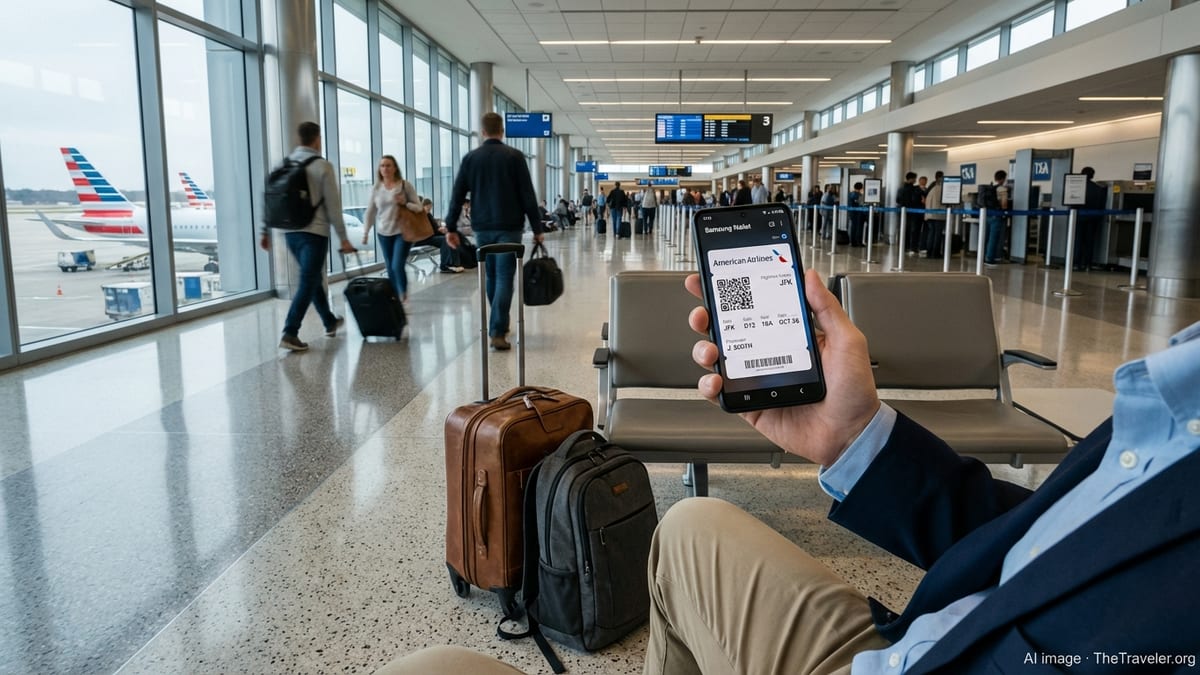
New Payment Options Bring Venmo to Flight Bookings
American Airlines is broadening how customers can pay for flights and ancillary products by incorporating Venmo into its digital checkout options. The move reflects a wider shift among U.S. carriers to mirror the payment habits travelers already use in their day-to-day lives, particularly among younger customers who favor app-based wallets over traditional credit cards.
Reports indicate that Venmo is being added alongside existing digital methods such as major credit cards and other mobile wallet services within American’s website and mobile app. The integration is designed to streamline purchases, enabling travelers to complete bookings, seat upgrades, and other add-ons without repeatedly entering card details.
Industry coverage suggests that American views additional payment flexibility as a way to reduce friction during booking and to encourage customers to manage more of their journey within the airline’s own digital channels. By aligning with widely used consumer platforms like Venmo, the carrier is also positioning itself to capture smaller, last-minute transactions such as preferred seating or same-day changes that may have been abandoned in more cumbersome payment flows.
The Venmo rollout complements a broader investment by American in its digital ecosystem, in which the app increasingly functions as the primary interface for planning, paying for, and adjusting trips. The carrier’s technology leaders have publicly emphasized that user-friendly tools are intended to make the airline’s platforms feel closer to mainstream consumer apps rather than legacy travel systems.
Automated Disruption Rebooking Moves Into the Mainstream
Alongside the new payment options, American is leaning more heavily on automation to handle irregular operations such as delays and cancellations. Publicly available information from the airline’s customer guidance and technology updates shows that American now uses automated reaccommodation systems to identify affected travelers and propose new itineraries when schedules are disrupted.
These tools work in tandem with the American Airlines app and website, enabling many customers to accept rebooking offers, search alternative flights, or adjust same-day travel without waiting in line at the airport or calling customer service. The systems are designed to monitor flight status, seat inventory, and connection feasibility, then push options directly to travelers’ devices when disruptions occur.
According to recent corporate communications on technology and artificial intelligence, American’s disruption tools draw on machine learning models that help match passengers with new routing options more quickly. The airline has also been testing conversational assistants that guide customers through rebooking flows, adding another layer of automation on top of existing self-service features.
Operational documentation indicates that automated reaccommodation can now extend across American’s own network and, in some cases, to select partner airlines when that results in earlier arrivals. While human agents still handle complex or exceptional cases, the carrier’s stated objective is for the majority of disruption scenarios to be resolved digitally, with hotel, meal, and transport vouchers added automatically to eligible trips inside the app.
TSA PreCheck Touchless ID Reaches 60 U.S. Airports
American’s digital strategy also extends to the airport security checkpoint through an expanded deployment of TSA PreCheck Touchless ID. According to recent updates from the airline and travel industry coverage, the program is now live at all of American’s hub airports and at 60 U.S. airports in total where the carrier operates, marking a significant step toward a more contact-light airport journey.
TSA PreCheck Touchless ID allows eligible AAdvantage members who are enrolled in TSA PreCheck to verify their identity using a facial scan at dedicated lanes, instead of presenting a physical boarding pass and government ID. When the system confirms a match between a live image and existing government-held photos associated with the traveler, the customer can proceed through an expedited security lane.
American’s public-facing guidance explains that participation is voluntary and requires travelers to opt in through their AAdvantage account by saving a Known Traveler Number and valid passport details, then enabling Touchless ID in the secure traveler settings. Once activated, the feature can appear automatically on boarding passes for flights departing from participating airports with the necessary TSA infrastructure.
The expansion to 60 locations follows a multi-year rollout that began with trials at a limited set of airports and gradually extended to large hubs such as Dallas Fort Worth, Charlotte, Chicago O’Hare, Miami, Phoenix, Los Angeles, New York, and Washington, D.C. The latest phase effectively brings the technology to most of American’s key domestic gateways, giving frequent flyers a more consistent experience across the network.
Building a Connected, App-First Passenger Journey
By pairing new payment options with advanced disruption management and biometric security features, American is assembling what amounts to a connected digital passenger ecosystem. The airline’s public messaging around artificial intelligence and customer tools frames these changes as part of a long-term effort to relocate more touchpoints to its app and website, from trip planning through day-of-travel recovery.
Within this ecosystem, the American Airlines app functions as the central hub. Customers can search and purchase tickets using traditional cards or Venmo, store identification and TSA credentials, receive proactive notifications when weather or operational issues arise, and respond immediately with rebooking choices or voucher claims. Security, meanwhile, is increasingly anchored by credentials stored digitally and verified biometrically at participating airports.
Analysts note that this integration benefits airlines operationally by reducing pressure on call centers and airport counters during peak disruption events. It also provides carriers with more granular data on how travelers respond to schedule changes, which flights they prefer as alternatives, and how frequently they accept or decline digital rebooking offers. Over time, such insight can help refine algorithms to make proposed itineraries more appealing and efficient.
For passengers, the greatest impact is felt when things go wrong. Instead of queuing at crowded service desks, many customers can now open the app to find new flights already suggested, compensation preloaded where applicable, and digital credentials prepared for a faster trip through security. As Venmo and other wallet options become commonplace in airline checkouts and Touchless ID spreads to more airports, American’s latest moves indicate that the smartphone will remain at the center of the modern travel experience.