


More news on this day
When American Airlines flight 718 touched down at New York’s LaGuardia Airport on December 29, 2020, the Boeing 737 MAX at its controls carried more than passengers and baggage. It represented the United States’ first commercial return of the once-grounded jet, a symbolic test of public confidence in modern aviation safety and regulatory oversight.
Get the latest news straight to your inbox!
A Flight That Marked a Turning Point
American Airlines designated Flight 718, operating from Miami to New York, as the carrier’s first scheduled passenger service using the Boeing 737 MAX after the aircraft’s 20-month grounding. Publicly available flight data show the service departed Miami late that morning and arrived at LaGuardia early in the afternoon, following a journey of roughly two and a half hours.
Published coverage describes the landing at LaGuardia as a carefully watched moment, with the airline positioning the flight as a high-visibility demonstration that the aircraft, its pilots, and new safety protocols were ready for routine service. The use of a busy, slot-constrained airport such as LaGuardia underscored the significance of the milestone, putting the MAX under the spotlight of one of the country’s most scrutinized air travel markets.
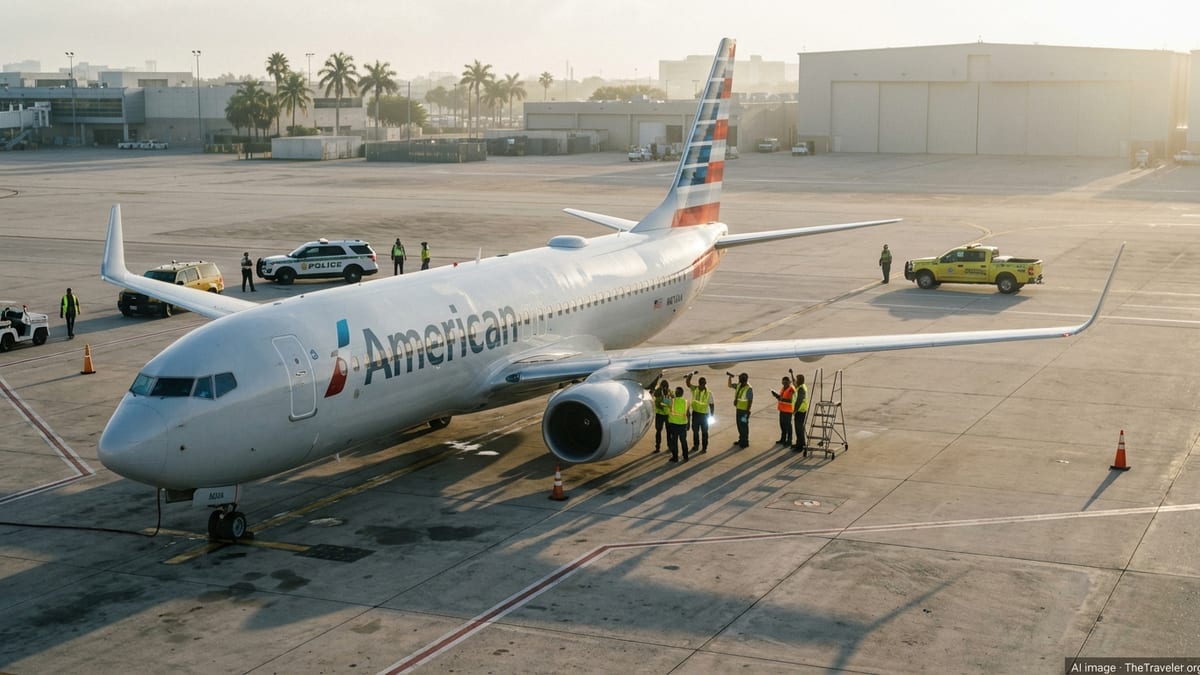
In photographs distributed to news outlets, the jet is shown on final approach and rolling out at LaGuardia, framed by the dense urban backdrop of New York City. The images have since become widely referenced file photos when media report on the MAX, American Airlines, or broader U.S. aviation safety policy.
Flight 718’s arrival did not itself introduce new destinations or schedules, but it reintroduced a controversial aircraft type to the country’s busiest air corridors. For airline planners and regulators, the flight served as a practical benchmark for how quickly the MAX could be reintegrated into the U.S. fleet.
From Grounding Orders to Regulatory Clearance
The context behind Flight 718’s file photo stretches back to March 2019, when regulators around the world halted Boeing 737 MAX operations following two fatal crashes involving foreign carriers. Investigations focused on flight control software, pilot training, and design assumptions, leading to one of the most extensive safety reviews in modern commercial aviation.
According to published regulatory documents and industry reporting, U.S. authorities ultimately required multiple hardware and software changes to the aircraft, revisions to flight manuals, and additional simulator-based training for pilots. The process also triggered broader reviews of how new aircraft systems are certified and how responsibilities are divided between manufacturers and regulators.
By November 2020, U.S. regulators cleared the MAX to return to service, subject to each airline completing mandated modifications and training. American Airlines moved quickly to position itself as the first U.S. carrier to restore commercial MAX service, setting the stage for Flight 718’s high-profile operation into LaGuardia the following month.
Industry analysts noted that the long grounding forced airlines to reshuffle fleets, delay route plans, and absorb financial losses. The eventual return of the MAX was therefore both a safety story and an economic one, as carriers sought to recapture the fuel efficiency and range advantages the aircraft promised before its grounding.
Managing Passenger Confidence on a High-Profile Route
The Miami–LaGuardia corridor is one of American Airlines’ key business and leisure markets, making it a deliberate choice for the first MAX flight. Reports from the time indicate that the airline used the route to showcase the aircraft’s performance to a cross-section of customers likely to be sensitive to safety messaging and schedule reliability.
Publicly available accounts describe a range of passenger reactions ahead of the flight, from curiosity and cautious acceptance to concern about boarding a jet type associated with highly publicized accidents. Consumer surveys cited in media coverage suggested that some travelers preferred to avoid the MAX initially, even as airlines emphasized the regulatory scrutiny applied to its return.
American’s decision to feature Flight 718 prominently, and its subsequent landing at LaGuardia without incident, became part of a broader campaign to normalize the aircraft in passengers’ minds. Aviation commentators observed that repeated successful operations on familiar routes would likely be the most effective tool to rebuild trust.
Over time, as additional flights operated on the MAX and other carriers brought the type back into service, the specific number 718 faded from daily schedules into the background of routine operations. The LaGuardia file photo, however, remains a visual shorthand for that transitional period in which passenger confidence was actively being rebuilt.
LaGuardia’s Role in a Changing U.S. Aviation Landscape
LaGuardia Airport has long been a strategic hub for U.S. airlines, serving dense business and short-haul markets along the East Coast and into the Midwest. American Airlines maintains a significant presence at the airport, competing alongside other major carriers for limited takeoff and landing slots that dictate access to the New York market.
The arrival of Flight 718 placed the 737 MAX in an environment where operational reliability, noise considerations, and tight scheduling are especially critical. LaGuardia’s shorter runways and complex airspace management make it a proving ground for aircraft performance and airline planning, particularly during peak hours and challenging weather conditions common to the Northeast.
In the years since the MAX’s return, additional file photos from LaGuardia have captured American Airlines and its regional affiliates operating a mix of narrowbody aircraft across a modernized terminal complex. The airport itself has undergone a significant redevelopment effort, with new concourses, improved passenger facilities, and upgraded taxiway configurations designed to ease congestion and enhance safety.
These infrastructure upgrades, coupled with airlines’ evolving fleets, have helped reshape how passengers experience one of the country’s most heavily trafficked urban airports. The familiar image of an American jet lining up against New York’s skyline continues to symbolize both the challenges and resilience of U.S. air travel.
Legacy of Flight 718 in Aviation Safety Discourse
Although Flight 718 operated as a single regularly scheduled flight in December 2020, its landing at LaGuardia has taken on a broader symbolic role in discussions around aviation safety, certification, and corporate accountability. The file photo associated with the flight is frequently reused by news organizations when covering subsequent developments related to the MAX, Boeing, American Airlines, and regulatory oversight.
Analysts point out that the episode reinforced how technical design issues, training standards, and communication between manufacturers, regulators, and operators are interconnected in determining public trust. The protracted grounding and staged return highlighted the extent to which aviation safety depends not just on engineering solutions but also on transparent processes that passengers can understand.
As airlines and regulators continue to adapt to new technologies such as increasingly automated cockpit systems and more efficient engines, the story of Flight 718 serves as a reference point for how the industry responds to crisis. The sight of the aircraft landing at LaGuardia, recorded as a quiet end to a closely watched flight, represents both a restoration of normalcy and a reminder of the scrutiny that accompanies each new phase in commercial aviation.
For travelers passing through New York today, the specific flight number may not stand out among the dozens of daily departures and arrivals. Yet the widely circulated image of American Airlines flight 718 over LaGuardia remains part of the visual record of how modern air travel confronts, and gradually moves past, moments of intense public concern.