


More news on this day
American Airlines is contending with a new wave of operational disruption at Dallas Fort Worth International Airport after internal scheduling decisions reportedly blocked 1,128 days of flight attendant and pilot flying in a single month, constraining crew availability and contributing to delays across its largest hub.
Get the latest news straight to your inbox!
Internal Scheduling Decisions Under Scrutiny
Reports from union communications and industry analysis indicate that managers overseeing crew schedules at American Airlines recently denied or removed a cumulative 1,128 days of flying from pilot and flight attendant rosters within a single bid month. In airline staffing terms, that figure represents the equivalent of dozens of full-time crew members being sidelined from the operation at a time when Dallas Fort Worth is already under heavy weather and congestion pressure.
While the airline has not publicly detailed the specific routes or sequences affected, the blocked days appear tied to schedule adjustments, attendance actions and trip removals that prevent crews from operating flights they were initially awarded. At a tightly banked hub like Dallas Fort Worth, where arrivals and departures are clustered into intense bursts of activity, even small reductions in crew availability can cascade quickly into rolling delays, missed connections and aircraft out of position for subsequent flights.
Publicly available information shows that American has been working to refine its Dallas Fort Worth schedule to deliver more predictable connectivity and reduce chokepoints. However, the newly disclosed volume of blocked crew flying suggests an internal tug-of-war between efforts to tighten attendance policies and the operational need to keep as many qualified crews in the rotation as possible during peak summer travel.
Industry observers note that federal duty-time limits for pilots and flight attendants already cap the number of hours crews can legally work in a given period. When airline managers additionally remove hundreds of days of flying through schedule interventions, the margin of error narrows further, increasing the risk that storms, air traffic control initiatives or maintenance issues will leave aircraft without legal crews to operate them.
Dallas Fort Worth Hub Feels the Impact
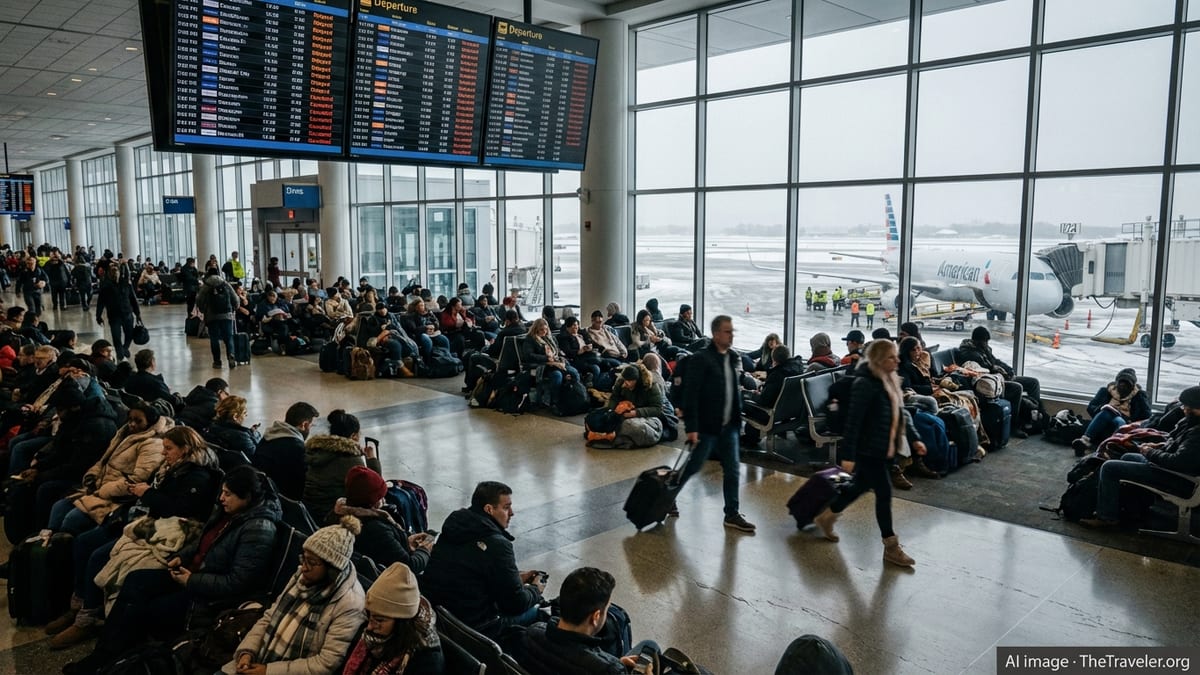
Dallas Fort Worth is American Airlines’ largest hub and one of the busiest connecting airports in the world, which makes it particularly sensitive to any weakening of crew staffing. Operational data and traveler accounts from recent weeks describe long tarmac waits, rolling departure pushes in 30-minute increments and late-night cancellations as flights lose their legal crews after extended ground holds.
According to published coverage, American has already experienced multiple severe disruption events at Dallas Fort Worth during the current travel year, especially around peak holiday and storm periods. In those situations, flight banks compress as thunderstorms or air traffic flow programs slow arrivals and departures, forcing large numbers of passengers into the terminal at once and demanding rapid crew reassignments to salvage the schedule.
When crew availability is constrained by internal blocking of flying days, those recovery efforts become more difficult. Flights that might otherwise depart late with reassigned crews risk cancellation if no legal pilot or flight attendant team can be assembled in time. Passengers then face missed connections, overnight stays and lost business or vacation time, feeding broader frustration with the carrier’s reliability at its home hub.
Travelers connecting through Dallas Fort Worth have taken to social platforms and aviation forums to describe being held in remote parking areas while waiting for gates, sprinting between distant terminals during rapid-fire gate changes and watching departure times move repeatedly forward without clear indication of when a crew will materialize. These accounts reflect how quickly a banked hub can struggle when both weather and staffing flexibility are under strain.
Union Pressure and Management Strategy Collide
The newly reported figure of 1,128 blocked days of crew flying emerges against a backdrop of deepening tension between American Airlines management and its front-line unions. The Association of Professional Flight Attendants, which represents roughly 28,000 flight attendants at the carrier, has for months highlighted staffing shortfalls, aggressive attendance policies and what it describes as an overreliance on crew reassignments to protect the schedule.
Pilot groups have raised analogous concerns, pointing to legal duty limits and fatigue rules that already restrict how far management can stretch available crews during irregular operations. When managers preemptively pull trips or deny schedule flexibility that could keep more crew members flying, union leaders argue that the operation is left brittle, particularly in high-traffic periods such as summer, major holidays and long weekends.
Public union briefings show that Dallas Fort Worth and other major bases have been preparing for a high-stakes summer in which performance at American will be closely watched by investors, regulators and frequent flyers alike. The disclosure that more than a thousand days of flying were effectively taken out of the system in a single month has intensified questions about whether management is prioritizing internal policy enforcement over operational resilience.
For their part, American’s leaders have emphasized in public materials that they are focused on consistency and reliability, touting schedule refinements at Dallas Fort Worth and other hubs designed to smooth passenger flows. The challenge now is to reconcile those goals with staffing practices that, according to union data, are limiting the number of crews actually available to fly the airline’s published timetable.
Regulatory Limits and Operational Realities
U.S. aviation regulations set strict ceilings on the number of hours pilots and flight attendants can be on duty or in the air over specified periods, with the intent of reducing fatigue and enhancing safety. These rules mean that every delay has a compounding effect: a crew held on the ground for hours during a thunderstorm may time out just as skies clear, leaving an aircraft ready to go but legally unstaffed.
Analysts note that when an airline’s internal decisions remove additional flying days beyond what federal law already restricts, the operation becomes more vulnerable to exactly these sorts of timing mismatches. Instead of having reserve crews or flexible pairings to step in, dispatchers and planners may find themselves with parked aircraft and stranded passengers, particularly at complex hubs like Dallas Fort Worth where weather and air traffic constraints are frequent.
Industry commentary also points to American’s recent history with tarmac delays and ground holds at Dallas Fort Worth, which has drawn regulatory scrutiny in prior years. The carrier’s published contingency plans pledge to provide food, water and timely information during long delays, but the underlying driver of many disruptions remains the interplay of storms, gate constraints and crew legality.
In this context, the reported 1,128 days of blocked flying are being viewed by some analysts as a self-imposed tightening of an already constrained system. While such actions may be intended to enforce attendance policies, manage costs or align staffing with anticipated demand, the resulting lack of slack in the system can leave customers at Dallas Fort Worth bearing the brunt when adverse conditions arise.
What Travelers Through DFW Can Expect
For passengers traveling through Dallas Fort Worth while American Airlines works through the effects of the blocked crew flying days, the most immediate impact is likely to be schedule unpredictability. Even if a flight initially shows on time, late-arriving inbound aircraft, storms in key corridors or last-minute crew legality issues can trigger a series of short rolling delays that extend into multi-hour waits.
Travel experts and frequent flyers who monitor operational data recommend building longer connection windows at Dallas Fort Worth during periods of unsettled weather or peak holiday travel, given the hub’s sensitivity to disruption. They also note that morning departures often have a higher chance of leaving relatively close to schedule, because crews and aircraft are starting the day rather than inheriting earlier problems.
American’s own customer service materials emphasize that travelers experiencing significant delays or cancellations may request rebooking or, in some cases, refunds for unused portions of their tickets. However, those remedies do not eliminate the inconvenience of missed events, lost work time or additional hotel and meal costs when disruptions stretch into overnight periods.
As the airline, its unions and regulators continue to assess the operational and staffing choices that led to more than 1,100 days of blocked crew flying in a month, passengers moving through Dallas Fort Worth are likely to remain acutely aware of every rolling delay board update. The episode underlines how decisions made far from the gate podium about crew scheduling, attendance policy and hub structure can quickly translate into hours of real-world waiting for travelers on the concourses of American’s largest hub.