


Anse Chastanet is one of St. Lucia’s most distinctive places to stay and play, set on a lush 600 acre estate just north of Soufrière with views of the iconic Pitons. For first-time visitors, the mix of steep jungle roads, black sand beaches, and upscale yet low key resorts can feel a little mysterious. This guide breaks down exactly what to expect at Anse Chastanet and nearby Anse Mamin, how day visitors can enjoy the area, and how to plan a smooth first trip to this corner of southwest St. Lucia.
Get the latest updates straight to your inbox!
Getting Oriented: Location, Layout, and First Impressions
Anse Chastanet sits on St. Lucia’s southwest coast near the small town of Soufrière, about a 60 to 75 minute drive from Hewanorra International Airport in Vieux Fort and around 75 to 90 minutes from George F. L. Charles Airport near Castries. The final approach is part of the experience: a narrow, steep, and bumpy hillside road leads down through the forest to the resort and public beach. First timers are often surprised by how remote it feels compared with the busier Rodney Bay area, but that seclusion is a large part of the appeal.
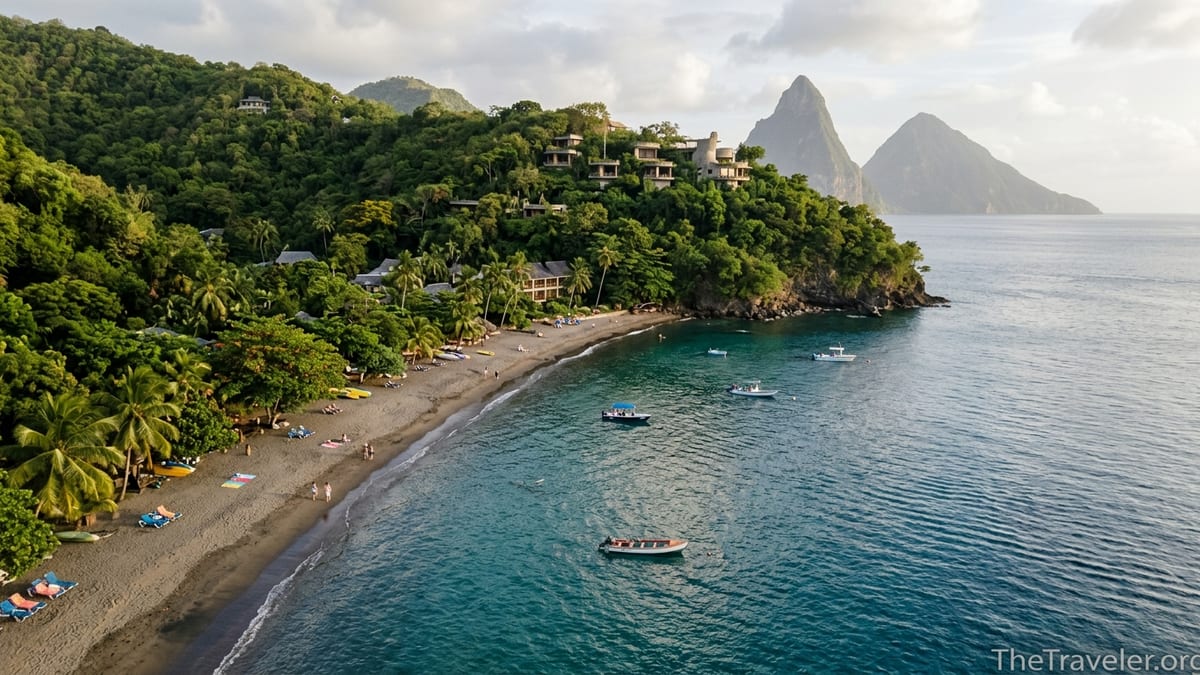
The beachfront area is dominated by Anse Chastanet resort, which spreads from the black sand shoreline up the hillside in a series of cottages and low rise structures tucked into the greenery. Above it, rising out of the same private estate, is Jade Mountain, the famous luxury resort with open walled suites and private infinity pools that look out over the Pitons. Both properties share the same estate, beaches, and much of the infrastructure, so even if you are not staying there it is useful to think of Anse Chastanet as part of a wider resort complex.
From the sand, you can clearly see the Pitons to the south on a clear day, but they are not directly in front of the beach the way they are at Sugar Beach further down the coast. Instead, the bay is framed by steep green headlands and volcanic rock formations, with moored dive boats and local fishing skiffs bobbing just offshore. The atmosphere is relaxed and relatively quiet, more about snorkeling, scuba diving, and reading under almond trees than loud music or watersports.
Although the beach in front of the resort feels exclusive, all beaches in St. Lucia are legally public. In practice, the resort manages the loungers and services, and space for non guests is limited, especially on busy days. Day trippers typically base themselves at the far ends of the sand, near the pier or close to the cliff path toward Anse Mamin, and then wander over to the water sports hut or beachside bar as needed.
The Beach and Marine Reserve: What to Expect on the Shore and in the Water
Anse Chastanet beach is a classic volcanic Caribbean cove, with dark, soft sand that can feel quite warm in midday sun. The resort provides cushioned loungers and shade umbrellas to in house guests, while day visitors generally spread towels on the sand or negotiate for any spare loungers if available. The water usually shelves off gently, though it becomes deep enough for good swimming within a short distance of the shore.
The big draw here is the house reef, part of a protected marine reserve that stretches along the coast near Soufrière. Snorkelers can enter directly from the beach in front of the resort’s scuba center or from near the pier, and within a few fin kicks they are over coral heads and rocky outcrops frequented by parrotfish, sergeant majors, trumpetfish, and occasional turtles. Visibility varies with weather and sea conditions, but travelers often describe the area as one of the better shore snorkeling spots on the island compared with beaches near Castries or Rodney Bay where reefs are more sparse.
Snorkel gear can be rented from the on site dive operation for a session or a day, and hotel guests sometimes receive complimentary or discounted use depending on their package. A typical setup includes mask, snorkel, and fins sized on the spot. If you bring your own equipment, you can simply wade in at the marked entries near the reef buoys. For new snorkelers, joining a brief guided session can help with understanding currents and the best sections of reef to explore within the designated swim areas.
The beach itself has basic amenities such as freshwater showers, restrooms, and a water sports shack where staff coordinate kayaks and small sailing dinghies. Motorized water sports like jet skis are not a feature here, which helps keep the bay relatively peaceful. Lifeguards are not always present, so strong swimmers should keep an eye on changing conditions, particularly on days when a swell rolls in.
Staying at Anse Chastanet vs. Jade Mountain
Most people who stay overnight in this bay choose either Anse Chastanet or its ultra luxury sister property Jade Mountain. Anse Chastanet itself offers a mix of hillside and beachside rooms, many with wide open louvered windows, fans, and mosquito netting rather than sealed, air conditioned boxes. The design leans toward natural materials, local art, and open layouts that make you feel close to the forest and sea. Guests often comment that they hear tree frogs and waves at night, which feels romantic to some and too rustic to others.
Jade Mountain sits higher above the bay and is known for its “sanctuaries,” expansive suites with open fourth walls that frame the Pitons and Caribbean Sea. Each has a private infinity pool, and the overall experience is intentionally high end and secluded, with butler style service and a dedicated restaurant. Guests at Jade Mountain have full access to Anse Chastanet’s beach, dive shop, and additional restaurants, reached either by a short walk down a series of stairs and paths or by a shuttle arranged through the property.
In practical terms, first time visitors deciding between the two should think about how much time they plan to spend in the room versus on the beach and exploring. Travelers who prioritize direct beach access and a more traditional Caribbean resort feel often choose Anse Chastanet, while those looking for a once in a lifetime honeymoon style stay with dramatic views tend to book Jade Mountain and then come down to the beach each day. It is also common for couples to split a stay, spending a few nights at Anse Chastanet followed by a shorter splurge at Jade Mountain.
Booking patterns change with the season, but in high demand months like January through March and during North American school holidays, both properties can fill well in advance. Many repeat guests reserve the same hillside room at Anse Chastanet year after year, valuing the familiar views and easy relationships with staff. If you are sensitive to steps or steep paths, it is worth requesting a lower level room and confirming your mobility needs with the resort before arrival, since the property is built vertically into the hillside.
Anse Mamin: The Quieter Sister Beach
Just north of Anse Chastanet lies Anse Mamin, a smaller black sand bay backed by dense rainforest and the remains of an old sugar plantation. You can reach it by walking roughly 5 to 10 minutes along a flat coastal path that begins near the far end of Anse Chastanet beach, skirting the rocky headland. Some visitors also arrive by boat or via a rough access road that approaches from behind, but for most first timers the scenic walk is part of the charm.
Anse Mamin feels noticeably quieter and more remote than Anse Chastanet, even though it is part of the same resort estate. There are usually fewer people in the water at any given time, and the soundscape is mostly waves and birds. The resort operates a small beach bar and grill here, often referred to as the Jungle Grill, which typically opens around midday for burgers, grilled fish, salads, and cold drinks. Overnight guests can sign charges to their room, while day visitors can pay by card or cash.
Services are more limited than on the main beach, with a smaller number of loungers and umbrellas, especially in peak season. Because Anse Mamin is also public, people staying in guesthouses in Soufrière sometimes visit via water taxi and set up towels at the edges of the managed area. The bay offers decent snorkeling along the rocky sides, although the main reef structure tends to be more developed in front of Anse Chastanet itself, so serious snorkeling enthusiasts usually swim or boat back there for the best coral.
The forest just behind Anse Mamin includes simple walking and biking trails that trace old plantation roads. These are sometimes offered as guided excursions from the resort, with rental mountain bikes and a guide explaining the history of the estate and pointing out local trees and birds. If you prefer to stay on the sand, Anse Mamin is still worth at least half a day for its calmer vibe and slightly wilder setting compared with the busier main beach.
Snorkeling, Diving, and Water Activities
The Soufrière coastline is widely regarded as the best region in St. Lucia for snorkeling and diving, and Anse Chastanet sits right on top of that reef system. The resort’s on site dive center, often referred to as Scuba St. Lucia in traveler reports, runs daily boat dives to nearby sites as well as shore dives and snorkel trips. Popular locations include the reef just off the bay, coral gardens near the Pitons, and walls that drop away into deeper blue water a short boat ride south.
For first time visitors, a typical pattern is to spend one day snorkeling off the beach to get comfortable, then book a half day snorkel boat excursion that stops at two different sites along the marine reserve. These trips often depart directly from the Anse Chastanet pier in the morning and return around lunchtime, which makes planning easy if you are not renting a car. Certified divers can sign up for two tank morning dives and optional afternoon or night dives, with rental gear and nitrox usually available at an additional cost.
Conditions in this part of St. Lucia vary but are often calmest earlier in the day, with trade winds picking up in the afternoon. Water temperatures generally feel warm to most visitors from North America and Europe, though some divers prefer a short wetsuit for comfort, especially in winter months. Marine life highlights reported by recent travelers include colorful sponges, schooling fish, and occasional sightings of seahorses and frogfish on certain dive sites near Soufrière.
Beyond snorkeling and diving, the water sports hut on Anse Chastanet beach typically offers sea kayaks and stand up paddleboards for exploring the shoreline close to the resort. The currents around the headlands can be stronger, so it is important to check with staff about safe boundaries before paddling off. Motorized activities are limited, which suits visitors who prefer a quieter, more nature focused beach environment.
Dining, Drinks, and Nearby Soufrière
Anse Chastanet’s estate includes several restaurants and bars that give first time visitors more variety than you might expect in such a secluded setting. On or just above the beach, casual venues serve grilled seafood, salads, and Caribbean inspired dishes at lunch, with cocktails and cold Piton beers flowing through the afternoon. Higher up, hillside dining rooms offer broader menus and more formal dinners, including a focus on local produce and contemporary Caribbean cuisine.
Vegetarian and plant forward options are more available here than at many traditional Caribbean resorts, with one restaurant concept on the estate focusing specifically on meat free dishes. Travelers who have dietary restrictions, from gluten free to dairy free, frequently note that the kitchen is accustomed to handling special requests, although it remains important to flag your needs at booking and again at check in.
If you are curious to experience local life beyond the resort, Soufrière town is only a short drive or boat ride away. A typical day trip might involve taking a morning taxi into town to stroll along the waterfront, visit the small central square, and pick up basic groceries or snacks. Several small restaurants and rum shops line the streets, serving Creole dishes like stewed chicken, green fig and saltfish, and roti. While the selection is modest compared with larger Caribbean capitals, prices are often lower than resort dining, and it gives a glimpse of everyday St. Lucian life.
Many guests combine a town visit with nearby attractions such as the drive in volcano area, sulfur springs, or botanical gardens, then return to Anse Chastanet by late afternoon in time for sunset drinks on the beach. If you plan to stay out after dark, arranging a taxi through the resort or a trusted local driver is recommended, as road signage is limited and the access road to the estate is steep and poorly lit at night.
Getting There and Getting Around: Transportation Logistics
Reaching Anse Chastanet for the first time can be one of the most intimidating aspects of planning, but it becomes straightforward once you know the options. Most visitors arrive at Hewanorra International Airport in the south and either book a private taxi through the resort or arrange one at the airport taxi desk. Prices change over time, but many travelers report that the one way fare for a private car from Hewanorra to the Anse Chastanet area is typically quoted in the range you would expect for a 60 to 75 minute resort transfer in St. Lucia, with higher rates for luxury vehicles or vans.
Another option, available at certain times, is to combine a brief helicopter transfer from the south to a landing pad on the estate’s hillside with a short ground ride down to the resort. This is very much a splurge, appealing more to honeymooners and those keen to see the Pitons and coastline from the air. If you are arriving on an evening flight or concerned about motion sickness, many repeat visitors recommend sticking with a ground transfer and requesting a driver experienced with the winding west coast road.
Once at Anse Chastanet, some guests are content to stay within the estate for most of their trip, especially on shorter stays. Others hire local drivers or arrange water taxis for day trips to Sugar Beach, Hummingbird Beach, or other points along the coast. Boat transfers, often booked through small independent operators based in Soufrière, are a practical way to move between beaches without dealing with steep roads and parking shortages. Prices vary based on distance and negotiation, so it helps to ask the resort concierge or fellow travelers for up to date figures.
If you prefer full independence, renting a car is possible, but you should be comfortable with driving on the left, navigating narrow mountain roads, and managing limited parking in Soufrière. Many people who rent choose a small SUV rather than a compact car to give extra ground clearance on the bumpy estate road. Regardless of your transport choice, it is wise to pad your schedule with extra time when heading back to the airport, as traffic delays between Soufrière and Castries can occur, especially when cruise ships are in port.
Day Visits and How Non Guests Can Enjoy Anse Chastanet
You do not need to be an overnight guest to experience Anse Chastanet and Anse Mamin, although the experience is different from staying on site. For day visitors based in Soufrière or arriving by boat from elsewhere on the island, the simplest approach is to come by water taxi and land directly on the beach. From there, you can set up on the sand at the edges of the resort loungers, snorkel along the house reef, and have lunch or drinks at the beach bar.
On busier days, staff may ask non guests to pay a fee for use of loungers or to keep certain sections of the beach prioritized for in house guests. Policies and prices can shift with demand and season, so it is useful to bring your own towels and be prepared to relax without a lounger if necessary. Even with limited shade, many travelers still rank a few hours of snorkeling and swimming at Anse Chastanet as a highlight of their trip compared with more built up beaches elsewhere on the island.
From Anse Chastanet, day visitors can also walk over to Anse Mamin to experience its quieter setting and Jungle Grill. Because this beach sees fewer organized excursions, it often feels more relaxed, and there is usually more open sand for people who are not staying at the resort. Again, it is important to respect any clearly marked private areas and follow staff guidance about where to set up and which facilities are reserved for hotel guests.
If you are arriving with your own rental car, be aware that the access road is rough and parking near the resort entrance can be tight. Many self drivers choose to park in Soufrière and hire a short taxi or water taxi to avoid the last stretch of road. As always, do not leave valuables in vehicles, keep a close hold on your belongings on the beach, and be aware of occasional licensed vendors who may approach with crafts or services. A polite “no thank you” is generally respected if you are not interested.
Planning Your First Trip: Timing, Budget, and Practical Tips
When planning your first visit to Anse Chastanet, timing plays a key role in shaping your experience. The island’s drier, busier period typically runs from about mid December through April, when hotel rates are higher and snorkeling conditions can be particularly pleasant. Shoulder seasons such as late April through early June and November often bring slightly lower prices and fewer crowds, though short tropical showers remain possible throughout the year.
For budget planning, it can help to think in terms of what you value most. Travelers who prioritize room quality and privacy often allocate more of their budget toward accommodation at Anse Chastanet or Jade Mountain and then keep restaurant spending moderate by mixing resort meals with occasional simpler lunches in Soufrière. Those focused on activities might choose a more modest room category and dedicate funds to several dive days, a boat excursion to other beaches, and a guided trip to attractions like the sulfur springs, botanical gardens, or rainforest hikes.
Packing wise, sturdy sandals or water shoes are useful for walking the rocky path to Anse Mamin and for getting in and out of the water over occasional stones near the beach. Because the sand is dark and can heat quickly, lightweight beach mats or thicker towels help for lying directly on the shore if loungers are not available. Reef safe sunscreen, rash guards, and sun hats are strongly recommended, both for comfort and to minimize impact on the marine reserve’s coral.
Finally, first time visitors should be prepared for the unique character of Anse Chastanet’s estate. The very features that make it memorable, such as steep paths, open air architecture, and a location away from major towns, can surprise those expecting a conventional beachfront resort strip. Approaching it as a nature oriented, slightly adventurous base with strong snorkeling and a range of dining options helps set expectations. With that mindset, many travelers find themselves returning to this tucked away corner of St. Lucia again and again.
FAQ
Q1. Is Anse Chastanet beach open to the public if I am not staying at the resort?
Yes. All beaches in St. Lucia are public, so anyone can visit Anse Chastanet and Anse Mamin. The resort manages loungers and some facilities for in house guests, but day visitors are free to use the sand and sea, dine at the beach restaurant, and snorkel the house reef.
Q2. How hard is the drive to Anse Chastanet for first time visitors?
The final stretch to Anse Chastanet is on a narrow, steep, and bumpy road that can feel challenging if you are not used to mountain driving. Many first timers choose to book a taxi transfer from the airport or Soufrière rather than driving themselves, especially if they arrive after dark or are unfamiliar with driving on the left.
Q3. Can I walk safely between Anse Chastanet and Anse Mamin?
Yes. A relatively flat coastal path connects the two beaches in about 5 to 10 minutes at a relaxed pace. The path is well used by resort guests and day visitors during daylight hours. It is best to make the walk in proper sandals or shoes rather than bare feet, as some sections pass over rocks and roots.
Q4. Do I need to stay at Jade Mountain to use its facilities if I book Anse Chastanet?
No. Guests staying at Anse Chastanet do not automatically have access to Jade Mountain’s guest only areas, such as its infinity pool sanctuaries or main restaurant. However, Jade Mountain guests enjoy full access to Anse Chastanet’s beach, restaurants, and dive shop. If you are interested in experiencing Jade Mountain, you can inquire about dining reservations or spa treatments, which may be possible for non residents at certain times.
Q5. Is snorkeling good enough from the beach or do I need to join a boat tour?
Snorkeling directly from Anse Chastanet beach is one of the highlights of staying or visiting here, with a house reef close to shore. Many people find this shore snorkeling more than sufficient for several days. Boat trips add variety by visiting additional sites along the coast, so serious enthusiasts often do both beach snorkeling and at least one dedicated snorkel excursion.
Q6. What should I wear and bring for a day visit to Anse Chastanet?
For a day trip, bring a swimsuit, light cover up, reef safe sunscreen, sun hat, and sandals suitable for the rocky path to Anse Mamin. A dry change of clothes for the ride back, some cash or a card for food and drinks, and a lightweight beach mat or towel are also useful, especially if loungers are reserved for hotel guests.
Q7. Are there restaurants or bars within walking distance outside the resort?
There are no independent restaurants immediately next to Anse Chastanet on foot, so for off property dining you need to go into Soufrière or to other resorts reachable by taxi or water taxi. Within the estate itself, you will find multiple dining options and bars at both beach and hillside level, which cover casual lunches, cocktails, and more formal dinners.
Q8. Is Anse Chastanet suitable for families with young children?
Families with young children do stay at Anse Chastanet, but it is not a typical large scale family resort with water parks or kids’ clubs. The terrain involves many steps and steep paths, and the beach shelves into relatively deep water. Parents who value nature, snorkeling, and quiet time often enjoy bringing older children here, while those with toddlers may find other parts of St. Lucia more convenient.
Q9. How many days should a first time visitor plan at Anse Chastanet?
A stay of four to six nights works well for many first timers. This allows time to settle into the beach rhythm, do at least one or two snorkel or dive days, take a day trip to Soufrière and nearby attractions, and still have downtime. Shorter two or three night stays can work as part of a wider St. Lucia itinerary that includes other regions of the island.
Q10. Can I visit the Pitons easily from Anse Chastanet?
Yes. The Pitons are a short drive or boat ride away. Many guests book a half day or full day excursion from the resort that combines photo stops near the peaks, a visit to the sulfur springs or botanical gardens, and time at another beach such as Sugar Beach closer to the base of the mountains.