


For many cruise passengers calling at Castries, the dream is to spend their short day in port on a classic Saint Lucian beach with Piton views and great snorkeling. Anse Chastanet, just outside Soufrière on the island’s west coast, fits that brief almost perfectly. The challenge is making the 25-mile journey from Castries and still leaving enough time to relax, swim, and get back to the ship without stress. This guide explains your real-world options for reaching Anse Chastanet, what they cost, how long they take, and how to combine beach time with Soufrière’s headline attractions on a tight cruise schedule.
Get the latest updates straight to your inbox!
Understanding the Route from Castries to Anse Chastanet
Castries cruise port sits on the northwestern side of Saint Lucia, while Anse Chastanet lies near the town of Soufrière on the southwest coast. By road, the distance is not especially long, but the route follows a narrow, twisting two-lane highway through rainforest-covered hills. Typical driving time between Castries and Soufrière is about 1.5 hours each way in normal traffic, sometimes a little less early in the morning or on a Sunday. Add another 15 to 20 minutes for the slow side road down to Anse Chastanet itself.
The steep access road from Soufrière down to Anse Chastanet is paved but can be rough and narrow in places, with speed bumps and sharp bends. Local drivers and resort shuttles use it all day, but visiting cruisers usually find it more comfortable to hire an experienced taxi or book a tour that includes beach time rather than attempt the drive themselves in a rental on a tight schedule.
Because of the island’s horseshoe shape and the position of the Pitons, the sea route effectively cuts across the curve of the coastline. Fast boats running from the Castries harbor area down the west coast can cover the distance to Soufrière in roughly 45 to 60 minutes in typical conditions, meaning that private water taxis and catamaran excursions are often the most time-efficient and scenic way for cruise visitors to reach the Anse Chastanet area.
Whichever route you choose, remember that cruise ships usually require passengers to be back on board at least 30 to 60 minutes before published sailing time. If your ship is scheduled to depart at 5 p.m., you should treat 4 p.m. as your true cutoff and plan your return journey from Soufrière or Anse Chastanet around that buffer.
Taxi, Private Driver and Road Transfers
The most straightforward option from Castries cruise port is to hire a licensed taxi directly from the pier. Official taxis queue outside the terminal with fixed, posted fares for popular destinations across the island. For a private round trip to the Soufrière and Anse Chastanet area, cruise passengers typically pay in the range of about 150 to 200 US dollars for a half-day charter for two to four people, depending on negotiation, vehicle type, and whether the driver adds sightseeing stops along the way.
In practice, many drivers offer an informal “Soufrière highlights plus beach” loop. A common pattern is to leave the port mid-morning, stop at one or two west coast viewpoints above Marigot Bay, continue to Soufrière for a quick photo stop with the Pitons in the background, then drive up to the Sulphur Springs geothermal area or a waterfall, before heading down the Anse Chastanet road. At the beach, your driver will agree on a pickup time and wait in the car park or return later, giving you two to three hours of free time to swim and snorkel.
This type of road-based excursion works best for small groups who value flexibility: families with kids who may want shade and rest stops, or couples who prefer air conditioning and the option to leave early if the sea is choppy. The downside is time spent in the vehicle; between Castries traffic, scenic pauses, and the state of the Anse Chastanet access road, you can easily spend three hours or more of a port day just in transit.
For independent travelers on a tight budget, local minibuses link Castries to Soufrière from the central bus terminal. These are not designed with cruise schedules in mind, and departures depend on filling the seats. Combined with the extra taxi needed from Soufrière down to Anse Chastanet, this route is risky for same-day cruise visitors and is generally recommended only for those staying on the island overnight, not for passengers tied to a departure time.
Water Taxi and Boat Options from Castries
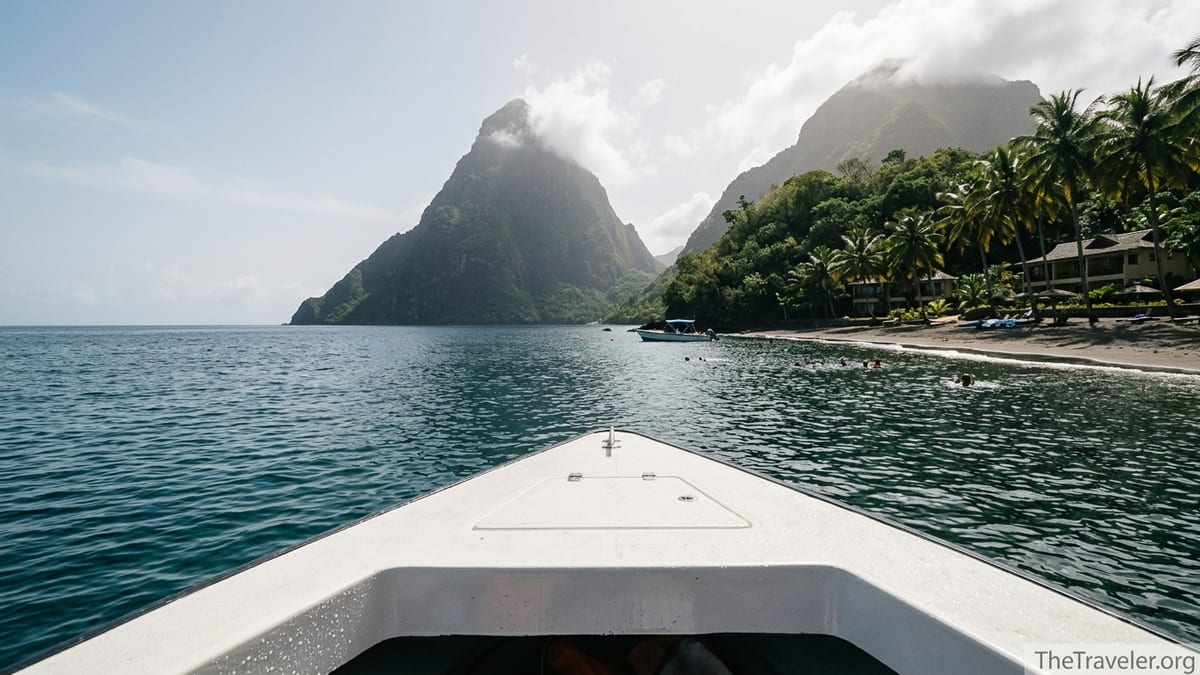
For cruise passengers who prioritize maximizing beach and water time, a boat transfer along the west coast is often the most appealing option. Independent operators based in Soufrière or Marigot Bay frequently advertise private water taxi services that can collect guests from the Castries harbor area and carry them directly south by sea. These boats typically follow the scenic coastline past fishing villages like Anse La Raye and Canaries before entering Soufrière Bay under the looming Pitons.
Pricing for a private boat charter varies with group size and itinerary. A typical arrangement for cruise visitors is a custom half-day charter that includes round-trip transfer between Castries and the Soufrière area, a snorkeling stop at a reef site such as Anse Chastanet or a nearby marine reserve, plus optional time ashore for lunch. For a small group of four to six passengers, total costs often fall somewhere in the region of 400 to 700 US dollars, shared among the group. For couples, some operators offer smaller speedboats at lower per-person rates while still keeping the flexibility of a private schedule.
Large catamaran excursions sold through the cruise line or major tour companies are the other common sea-based choice. These trips typically run as “Soufrière by Land and Sea” experiences: you board a catamaran near the cruise port, cruise down the coast with commentary, disembark near Soufrière for bus transfers to the Sulphur Springs, a waterfall, or a plantation, then return to the boat for a short beach or snorkel stop before sailing back to Castries. These excursions generally cost around 100 to 150 US dollars per adult through the ship, with the advantage of guaranteed return and minimal planning effort.
The main trade-off with big-boat tours is that time at any single beach, including Anse Chastanet if included, may be limited to an hour or less, and you share the experience with several dozen other passengers. Private water taxis and small-group boats offer more control over snorkel duration and crowd levels but require you to track the clock and communicate clearly with your captain about your ship’s all-aboard time.
Travel Times, Port-Day Timing and Return Buffers
Most ships calling at Castries arrive between 7 and 9 a.m. and depart in the late afternoon. If you are planning to reach Anse Chastanet independently, a realistic framework for timing is essential. From first step onto the pier to stepping into a taxi or small boat usually takes at least 20 to 30 minutes, more if you wait to clear the initial rush. If you disembark at 8:30 a.m., for example, you might reasonably be on the road or water by about 9 a.m.
By road, you should expect to arrive in the Soufrière and Anse Chastanet area around 10:30 a.m. with light stops, or closer to 11 a.m. if there is traffic or you pause for multiple viewpoints. That means that on a ship departing at 5 p.m., you could enjoy roughly three hours of relaxed time in the Soufrière region before beginning the return drive no later than 2 to 2:30 p.m. Boat transfers are typically quicker; leaving Castries around 9 a.m., many cruisers reach Soufrière Bay by 10 a.m., allowing slightly longer at the beach before the return leg.
A useful rule of thumb for cruise passengers is to build in at least a one-hour cushion beyond the expected journey time for your return from Soufrière. For example, if your boat captain says the ride back to Castries takes 50 minutes, agree to depart Soufrière no later than 2.5 hours before all-aboard. That way, minor delays from afternoon chop, passing rain showers, or a slower walking pace through the terminal are absorbed without turning the end of your port day into a sprint.
Weather and sea conditions are another factor. On most dry-season days, the west coast sea remains relatively calm, but during squalls or in the wet season there can be short, steep waves that slow smaller boats. A reputable operator will keep a close eye on the forecast and may suggest leaving a little earlier if the afternoon looks gusty. Similarly, on the road, extra time should be allowed if there have been recent heavy rains, as surface water and cautious drivers can reduce speeds on the hillside route.
Snorkeling and Beach Time at Anse Chastanet
Anse Chastanet is known across Saint Lucia as one of the island’s better easy-access snorkeling beaches. The dark volcanic sand slopes into clear water, and a protected reef begins just offshore, so even novice snorkelers can wade in from the beach and see coral formations and reef fish within a short swim. Because the reef sits within a designated marine reserve, motorized water sports are kept away from the main snorkeling area, which helps maintain a calmer surface and more relaxed feel.
The beachfront is fronted by Anse Chastanet Resort, but like all beaches in Saint Lucia the sand and sea are open to the public. Day visitors can typically use a section of the beach free of charge if they bring their own towels and snorkel gear. Those who want sun loungers, shaded palapas, or access to resort facilities may purchase a day package directly from the hotel, which usually includes a credit for drinks or lunch along with use of loungers and non-motorized water sports like kayaks and snorkel equipment. Prices change over time, but cruise visitors commonly report paying in the low three-figure range per person for full resort-style access.
For many cruise guests, the simplest approach is to treat Anse Chastanet as a casual beach day: step off your taxi or boat, walk along the shoreline to an open area, and set up your towel. You can then rent snorkel sets from the on-site dive shop if you do not have your own. Because the reef sits close to shore, you can enjoy short, frequent snorkel sessions spaced with rest in the shade, rather than feeling pressure to stay out for a long boat-based snorkel trip.
If you have extra time and enjoy quieter sands, it is possible to walk from Anse Chastanet along a short coastal path to neighboring Anse Mamin, another beach backed by forest that is also associated with the resort. Some private boat tours will also split time between Anse Chastanet and another snorkel site under the Pitons or near Sugar Beach, offering slightly different underwater scenery while still keeping you within a comfortable radius for your return to Castries.
Combining the Beach with Soufrière’s Attractions
Many travelers want to see more than just the beach on their short day in port, and the Soufrière area offers several standout attractions within a relatively small radius. The most famous is the so-called drive-in volcano at Sulphur Springs, where visitors can walk near steaming vents and, in a separate area, bathe in mineral-rich mud pools. Nearby waterfalls such as Toraille or Diamond Falls offer quick visits where you can stand under a cascade or admire lush botanical gardens between photo stops.
A typical combined itinerary might look like this: depart Castries by road or catamaran in the morning, reach Soufrière late morning, then use a private taxi for a two-hour loop through Sulphur Springs and one waterfall, followed by a transfer down to Anse Chastanet for two to three hours of beach and snorkel time. After a late, casual lunch at the beach restaurant, you meet your driver or boat mid-afternoon for the return to Castries, aiming to be back at the pier with at least an hour to spare.
Cruise line excursions that package these elements generally move in a similar order, though with larger groups and more structured timing. For instance, a land and sea tour sold through a major cruise operator might start with a scenic bus ride down the west coast, stop for photos over Marigot Bay, visit Sulphur Springs and a plantation or gardens, then break for a buffet lunch before sailing back north on a catamaran with a brief swim stop at a west coast beach. In such programs, your time actually on the sand may be limited to around an hour, so if extended snorkeling and sunbathing are the top priorities, an independent beach-focused tour or taxi arrangement may suit better.
If you are particularly interested in the Pitons, consider asking your driver or boat operator for the best vantage points for photography. Some road-based tours stop at a classic lookout above Soufrière where both Gros Piton and Petit Piton frame the bay below. Others weave in a quick detour to the Tet Paul nature trail, which offers a relatively short, guided walk to a viewpoint platform with sweeping Piton views. These add-ons do use up precious minutes of a port day, so they are most appropriate when your ship has a longer call in Castries.
Costs, Booking Choices and Practical Tips
When comparing costs, it helps to think in terms of per-person value as well as total spend. A ship-organized land and sea excursion priced around 120 to 150 US dollars per adult may initially seem expensive compared with a taxi quote, but it bundles transfers, attraction entry fees, and sometimes lunch, plus the peace of mind that the ship will wait if the tour runs late. This style of booking particularly suits first-time visitors or those uncomfortable negotiating independently on the pier.
By contrast, a private taxi charter for around 180 US dollars total for four passengers works out closer to 45 dollars per person for transport, with attraction entry fees and lunch paid separately. A private speedboat charter might run 500 US dollars for a small group, but divided among six friends or family members, the per-person cost becomes comparable to, or even cheaper than, some ship tours while offering far more control over the day’s pace.
In all cases, discuss the details before committing. Clarify whether quoted prices are in US dollars or Eastern Caribbean dollars, whether entrance fees to Sulphur Springs, waterfalls or gardens are included, and exactly how much time you will have at Anse Chastanet. It is also wise to confirm whether snorkel gear is provided on boat trips or whether you should bring your own, and whether soft drinks or bottled water are included for the journey.
Practical preparation also makes a difference. The sun on Saint Lucia’s west coast can be intense even when clouds drift in and out, so reef-safe sunscreen, a wide-brimmed hat, and a rash guard or swim shirt are helpful. Closed-toe sandals or water shoes are useful if you plan to visit sulphur mud baths or walk on rocky sections of shoreline, and a light change of clothes makes the ride back to Castries more comfortable after swimming. Keeping a simple waterproof bag for your phone, cruise card, and some cash in small denominations simplifies purchases at beach bars, local craft kiosks, or roadside fruit stands along the way.
The Takeaway
Reaching Anse Chastanet from Castries cruise port in a single day is entirely realistic, provided you are deliberate about your transport choice and timing. Road transfers by taxi or private driver offer flexibility and the opportunity to see the island’s interior and coastal viewpoints, while boat transfers along the west coast maximize scenery and can shave valuable minutes off the journey. In both cases, planning with a generous return buffer and clear communication with your driver or captain is the key to a relaxed day.
For travelers who dream of snorkeling over a Caribbean reef and feeling the Pitons rise dramatically on the horizon, Anse Chastanet remains one of the most satisfying options accessible from Castries within standard cruise hours. Whether you opt for a ship-sponsored land and sea tour, a private water taxi with custom snorkel stops, or a hybrid taxi-and-beach arrangement, a bit of advance thought about costs, schedules, and your own priorities will help you turn a short call in port into a full-feeling Saint Lucian adventure.
FAQ
Q1. Is it realistic to visit Anse Chastanet from Castries on a typical cruise day?
Yes, most ships in Castries allow enough time to reach Anse Chastanet and return, as long as you leave early, choose a reliable transport option, and build in at least an hour of buffer before all-aboard.
Q2. How long does the drive from Castries cruise port to Anse Chastanet usually take?
Plan on about 1.5 hours from Castries to Soufrière plus roughly 15 to 20 minutes down the access road to Anse Chastanet, longer if you add scenic or shopping stops along the way.
Q3. Is a water taxi faster than a road transfer from Castries?
Often yes. Private speedboats and small tour boats can usually cover the Castries to Soufrière route in about 45 to 60 minutes in calm conditions, which is typically quicker than driving, though actual times depend on sea state and the exact boat.
Q4. Do I need to book a cruise line excursion to be sure I get back to the ship on time?
No, many travelers successfully use independent taxis or private boats, but ship excursions do provide added peace of mind since the vessel will coordinate with its contracted tours if there are delays.
Q5. Can non-resort guests use the beach at Anse Chastanet?
Yes, the beach itself is public. Day visitors may lay towels on the sand, swim, and snorkel. Resort amenities such as loungers and some facilities are reserved for guests or those purchasing a day package.
Q6. Is the snorkeling at Anse Chastanet suitable for beginners?
Generally yes. The reef begins close to shore in a protected bay, so newcomers can start in shallow water and gradually explore further out, provided they are comfortable swimmers and follow local safety advice.
Q7. How much should I expect to pay for a private taxi from Castries to the Soufrière area and back?
Approximate prices for a private half-day or customized round trip for two to four people often fall around 150 to 200 US dollars, with exact amounts depending on stops, vehicle type, and negotiation.
Q8. Can I combine Sulphur Springs and a waterfall with time at Anse Chastanet in one day?
Yes, many itineraries do exactly that. A common pattern is to visit Sulphur Springs and a nearby waterfall first, then finish with two to three hours at Anse Chastanet before returning to Castries.
Q9. Are there food and drink options at Anse Chastanet for day visitors?
Yes, there are beachfront restaurants and bars where both resort guests and day visitors can purchase meals, snacks, and drinks, though prices reflect the resort setting and are higher than local cafes in Soufrière.
Q10. What should I bring from the ship for a day at Anse Chastanet?
Bring reef-safe sunscreen, swimwear, a towel if you do not plan to buy a day pass, some cash in small bills, a hat, a reusable water bottle, and any snorkel gear you prefer to use personally.