


For travelers based in Florence, Arezzo offers a compact Tuscan hill town rich in Renaissance art, Romanesque churches and month‑end antiques treasures. The city sits directly on the main railway line toward Rome, which makes it an easy, low‑stress escape for a single day or a full weekend. The decision to visit as a day trip or to stay overnight depends largely on how deeply you want to explore Piero della Francesca’s masterpiece cycle in the Basilica di San Francesco, how many museums you plan to enter, and whether your visit coincides with the busy Fiera Antiquaria market weekend.
Get the latest updates straight to your inbox!
Reaching Arezzo from Florence by Train
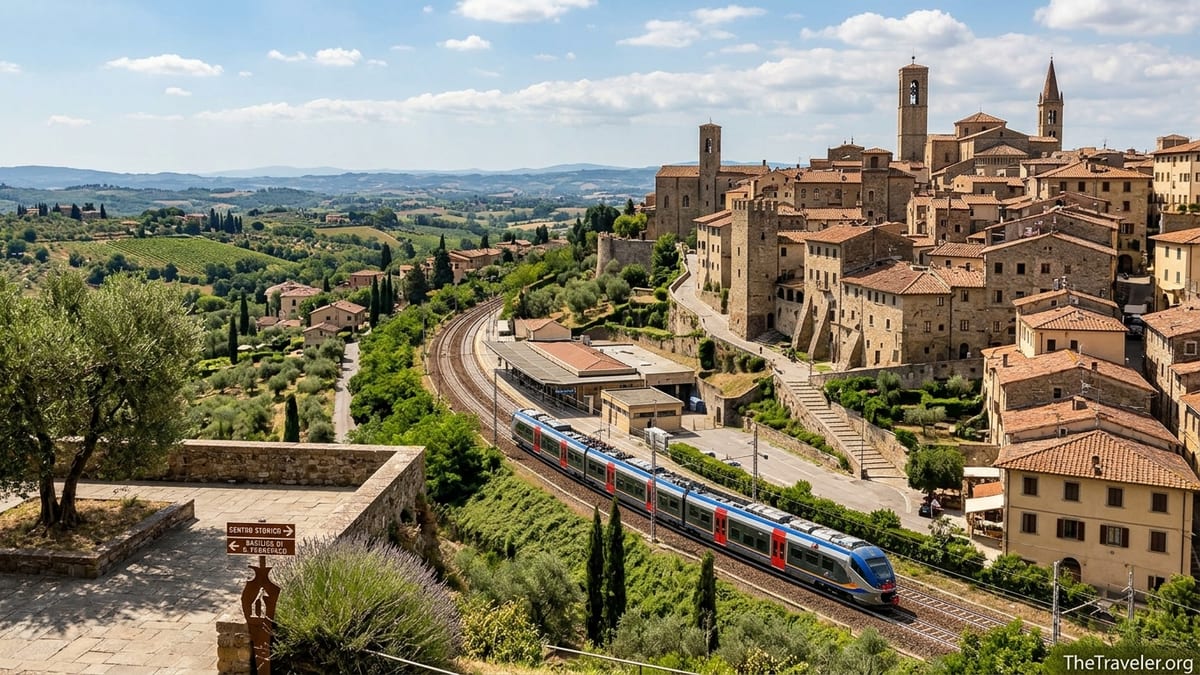
Arezzo lies around 80 kilometres southeast of Florence on the main rail corridor toward Rome, served by a mix of Trenitalia regional trains and faster Intercity and Frecciarossa services. On a typical weekday in late 2026, the direct regional journey from Firenze Santa Maria Novella to Arezzo takes roughly 1 hour 10 minutes to 1 hour 30 minutes, while some Regionale Veloce and Intercity departures from Firenze Campo di Marte cover the distance in about 55 minutes. Travelers who leave early from Florence can easily reach Arezzo in time for a mid‑morning coffee in Piazza San Francesco.
From Firenze Santa Maria Novella, Trenitalia operates frequent Regionale and Regionale Veloce trains toward Arezzo. Sample schedules show direct Regionale Veloce services covering the trip in about 1 hour 2 minutes to 1 hour 15 minutes, while all‑stops regional trains are closer to 1 hour 30 or a little more. From Firenze Campo di Marte, which is one short local hop or a city bus ride from the historic center, selected Regionale Veloce departures take just under an hour to reach Arezzo, and some Intercity or high‑speed trains that are continuing toward Rome can be even faster, sometimes around 50 to 55 minutes when booked for the Arezzo segment.
Ticket prices vary by train category. In late 2026, a standard adult Regionale or Regionale Veloce ticket between Florence and Arezzo typically costs around 10 euro in second class when bought through Trenitalia’s official channels or at station ticket machines. Because regional fares are set on a fixed tariff, the price does not change if you buy a few days in advance or just before departure. Faster Intercity and Frecciarossa trains require advance purchase for the best value and use dynamic pricing; for these, non‑refundable Super Economy offers can sometimes fall in the 12 to 20 euro range if booked early, while last‑minute fares are usually higher. As a practical benchmark, most visitors planning a budget‑conscious day trip opt for the regional trains.
Frequency of service makes Arezzo very feasible as a day excursion. On most days there are at least two or three direct departures per hour from Florence in the peak morning period if you consider both Santa Maria Novella and Campo di Marte. Returning in the late afternoon and evening, there are again multiple direct Regionale and Regionale Veloce options between about 16:00 and 21:00, so you can decide spontaneously how long to stay in town. Travelers should always verify exact times and platforms on the official Trenitalia website or app for their specific travel date, especially around timetable changes in June and December.
From Arezzo Station to the Hilltop Sights on Foot
Arezzo’s historic center rises directly above the railway station, and most visitors make the climb on foot. As you exit the station, you emerge onto Piazza della Repubblica. From here, the simplest route starts along Via Guido Monaco and then up Corso Italia, the main shopping street that cuts through the lower town. Corso Italia slopes gently at first as it passes clothing stores, cafes and pasticcerie, and after around 8 to 10 minutes you reach the church of San Francesco on your left, where Piero della Francesca’s frescoes are located.
Continuing uphill, Corso Italia grows steeper as it approaches Piazza Grande, the city’s most atmospheric square. The walk from the station to Piazza Grande takes roughly 15 to 20 minutes at a moderate pace, with several short, sharp sections of incline and stone paving. Piazza Grande opens up suddenly on your right, surrounded by medieval towers, stone palaces and the loggias designed by Giorgio Vasari. During the Fiera Antiquaria, market stalls fill the square with antique furniture, paintings, silver and vintage curios, but on an ordinary weekend the space remains relatively open, with only a handful of cafe terraces spilling into the sloping pavement.
From Piazza Grande, the cathedral and Medici Fortress sit slightly higher on the hill. To reach them, walk up Via Ricasoli or one of the narrow lanes heading north. The Duomo of Arezzo, dedicated to San Donato, crowns the ridge in a quiet piazza with views back over the town. Just beyond, landscaped paths lead into the Parco del Prato and the remains of the Medici Fortress, a green vantage point for panoramic views over the Valdarno and Casentino countryside. Expect another 5 to 10 minutes of uphill walking from Piazza Grande to the cathedral area. The total climb from the station to the fortress involves noticeable gradients and uneven stone, which can be taxing for those with mobility issues.
Accessibility is the main caveat when planning an Arezzo visit. While the town center is relatively compact and distances are short, wheelchair users and anyone with limited mobility should be prepared for cobbled stretches, slopes and occasional stairs. Taxis wait outside the station and can shorten the climb to Piazza Grande or the cathedral. Inside the historic core, some museums and churches have ramps or lifts, but not all heritage buildings are fully step‑free. For travelers who prefer slower pacing or need frequent breaks, an overnight stay allows more time to tackle the hills with less pressure to rush between sights.
Piero della Francesca and Booking the Bacci Chapel
The single most important decision when planning an Arezzo trip concerns the Bacci Chapel in the Basilica di San Francesco, where Piero della Francesca painted the celebrated cycle of frescoes known as the Legend of the True Cross. The chapel is small and heavily protected, and access is tightly controlled. Entry to the chapel is only possible with a timed ticket and a reservation is effectively obligatory, as the number of visitors per time slot is capped and visiting times are organized in short, strictly defined sessions.
Current arrangements, confirmed by local cultural authorities, state that admission to the Bacci Chapel is managed through fixed time slots with capacity limits in order to protect the delicate frescoes. Visitors are grouped for a set period, often around 25 to 30 minutes inside the chapel area, though the precise viewing time can change depending on conservation needs. Tickets are sold as a combined package that may include other civic museums, and there is usually a small additional booking fee on top of the base museum charge. Standard full‑price combined tickets advertised for the network that includes San Francesco and other sites are around 12 euro in late 2026, with possible reductions for young people, groups and certain categories of visitors.
Because capacity is low and slots often sell out on busy weekends, especially when the antiques fair is in town or during spring and autumn holiday periods, you should treat the Bacci Chapel reservation as the anchor for your whole Arezzo schedule. It is advisable to book a morning slot if you are attempting a day trip from Florence, to allow for any minor train delays. If you prefer to book on arrival, be aware that same‑day availability is not guaranteed and you may have to settle for a late afternoon slot or another day, which favors those staying overnight.
Guided visits to the Bacci Chapel are possible through official local operators and licensed guides, who often combine an explanation of the Piero della Francesca cycle with a wider walking tour of Arezzo’s churches and palaces. These guided tours can significantly deepen your understanding of the complex narrative scenes and symbolism but need to be coordinated with the chapel’s strict time slot system, so advance communication is essential. Temporary closures for conservation work or religious functions occasionally affect access, particularly outside high season; travelers should always check the latest information from the Basilica di San Francesco and the Arezzo museum network before committing to non‑refundable train tickets.
Fitting Vasari’s House and Museums into One Day
Once you have secured a timed entry for the Bacci Chapel, the next question is how much more art you can realistically see during a day trip. Arezzo’s main cultural sights beyond San Francesco are the Vasari House Museum, the Museum of Medieval and Modern Art, the archaeological museum built into the former Roman amphitheater, and smaller sites such as the Fraternita dei Laici overlooking Piazza Grande. With an early start from Florence and a well‑timed return train, you can, in principle, visit the Piero frescoes plus one significant museum and still have time for lunch and a short stroll around the upper town.
Casa Vasari, located along Via XX Settembre on the slope between the lower town and the cathedral, preserves the painted residence of Giorgio Vasari and an important collection of drawings and documents. Information from the Arezzo museum system indicates that joint or cumulative tickets are available, which cover San Francesco, Casa Vasari, the Museum of Medieval and Modern Art and the archaeological museum. The combined ticket mentioned earlier around 12 euro illustrates how these sites are bundled, though exact offers and opening times may change by season and should be verified close to your visit date. Visiting Casa Vasari typically takes around 45 minutes to an hour for a careful look at the frescoed rooms and exhibits.
The Museum of Medieval and Modern Art contains paintings and sculptures from the region, including more works by Vasari and local masters. A focused visit can be achieved in about an hour, but art lovers may prefer longer. Adding both the Vasari House and this museum to the Bacci Chapel visit makes for a dense day that leaves limited time for leisurely wandering, shopping or cafe breaks. For this reason, many travelers who want to go beyond a single museum choose to stay overnight in Arezzo rather than rush to fit everything into a tight day trip schedule.
On balance, if your primary interest is Piero della Francesca’s Legend of the True Cross and you are content with a general walk around Piazza Grande and the cathedral without entering more than one extra museum, then a single long day from Florence is workable. If, however, you also want to explore Casa Vasari, linger in the Museum of Medieval and Modern Art, or include a guided tour along the city walls and Medici Fortress park, you will benefit from at least one overnight stay. This allows you to distribute museum visits across two mornings when light crowds and cooler temperatures enhance the experience.
Fiera Antiquaria: Antiques Weekends and the September Move
Arezzo’s Fiera Antiquaria is one of Italy’s most famous open‑air antiques markets and transforms the feel of the city on the first weekend of every month. The fair takes place on the first Sunday and the preceding Saturday throughout the year, filling Piazza Grande and the surrounding streets with hundreds of stalls selling everything from 18th‑century furniture and old prints to vintage costume jewelry and industrial lighting. In some months, such as May or December, local authorities add a Friday opening or coordinate the fair with special events, but the core pattern remains a Saturday and Sunday market.
During most months the fair occupies Piazza Grande and neighboring streets in the medieval center. The notable exception is September, when the Fiera Antiquaria moves uphill to the Prato park area near the Medici Fortress. This shift occurs because Piazza Grande hosts the Giostra del Saracino and related historical events in early September, so the antique stalls are temporarily relocated to the broad green space above the cathedral. For visitors, this September move changes the atmosphere of the fair: instead of browsing under the steep stone square, you wander among trees with wide views over the valley, and the routes between the market and the main shopping streets adjust accordingly.
Seasonal crowds at the Fiera Antiquaria vary. Winter editions in January or February are generally quieter, with fewer casual visitors, while spring and autumn weekends see larger crowds of collectors and tourists. Summer markets attract a mix of domestic and international visitors, particularly in July and August when Tuscany is at its busiest. Local tourism boards and travel outlets note that hotel and guesthouse prices in Arezzo often rise for the antiques weekend, especially for rooms in or near the historic center. By contrast, ordinary non‑fair weekends tend to offer more availability and lower nightly rates, making them attractive for travelers primarily interested in art and architecture rather than shopping.
Choosing between an antiques weekend and an ordinary weekend depends on your priorities. On Fiera Antiquaria weekends, visitors gain the unique experience of seeing Piazza Grande or the Prato filled with antiques, design pieces and vintage curios, along with a livelier street atmosphere and longer opening hours for some cafes and restaurants. At the same time, the city becomes busier, parking space for those arriving by car is tighter, and restaurants around Piazza Grande and Corso Italia may require reservations for Saturday evening. On normal weekends, by contrast, you can expect a calmer old town, more uncluttered views of the square, and easier last‑minute dining and hotel planning, which may suit first‑time visitors who prefer a more relaxed pace.
Eating in Arezzo: Local Food, Wines and Budgets
Arezzo belongs to the same gastronomic landscape as the rest of inland Tuscany, with an emphasis on grilled meats, hearty soups and robust red wines. One of the local specialties you are likely to encounter on menus is Chianina beef, originating from the Val di Chiana near Arezzo. This pale, lean breed is the classic base for bistecca alla fiorentina, the large T‑bone steak served by weight and typically cooked very rare. In traditional trattorie, a portion for two people might cost in the region of 45 to 70 euro depending on size and cut, and it is often shared alongside contorni such as cannellini beans in olive oil and grilled vegetables.
Other regional dishes worth seeking out include tagliatelle with wild boar ragù, ribollita vegetable and bread soup, and crostini topped with chicken liver paté. House wines often come from the nearby Chianti and Valdichiana appellations, with glasses of simple red or white starting around 4 to 6 euro in many casual restaurants. A mid‑range trattoria meal consisting of a pasta course, main dish and shared dessert, with water and a glass of wine, usually falls between 25 and 40 euro per person if you avoid the most expensive cuts of steak.
In practical terms, day‑trippers from Florence might budget around 12 to 15 euro for a light lunch in the lower town, such as a panino filled with local cold cuts and cheese, plus coffee and a pastry. A sit‑down lunch in the historic center, including a primo and a glass of wine in a traditional setting close to Piazza Grande or Via dei Pileati, is more likely to be in the 20 to 30 euro range. Coffee bars in and around Corso Italia charge roughly 1.30 to 2 euro for an espresso at the counter and slightly more if you sit at an outdoor table.
For wine enthusiasts, Enoteca bars near Piazza Grande and Corso Italia serve tasting flights of Tuscan reds and local appellations such as Chianti dei Colli Aretini. Expect to pay from about 7 to 12 euro for a tasting of three small glasses, with prices climbing for premium labels. When planning a weekend stay, a realistic daily food and drink budget that allows for one restaurant meal, one cafe stop and some snacks would be around 45 to 60 euro per person, depending on the style of dining you choose.
Where to Stay: Station, Corso Italia or Upper Historic Center
Hotel geography in Arezzo divides roughly into three zones: near the railway station, around Corso Italia in the lower center, and in the upper historic core close to Piazza Grande and the cathedral. Properties near the station offer the easiest arrival and departure for train travelers, with rolling luggage or heavy bags. From some business‑style hotels and guesthouses on the streets surrounding the station square, you can reach your room within minutes of stepping off the train. Nightly rates in this area are often competitive compared with the hilltop center, and you are close to supermarkets and casual eateries, though views and historical atmosphere are more limited.
Accommodation along or near Corso Italia places you midway up the hill and within comfortable walking distance of both the station and the principal churches and museums. This area offers a good compromise between convenience and character, with many small boutique hotels and bed and breakfasts occupying restored townhouses behind discreet portals. From here, you can stroll downhill to catch a morning train or head uphill to Piazza Grande in under 10 minutes, passing cafes and shops en route. Noise levels vary, as Corso Italia is a commercial artery, but evenings are generally quieter than in larger Tuscan cities.
Staying in the upper historic center around Piazza Grande, the cathedral and the Prato provides the most atmospheric experience. Some guesthouses here overlook the sloping square or sit just behind medieval alleys, and during the Fiera Antiquaria you can step directly into the market in the morning. However, hilltop locations demand more effort when arriving with luggage, and the climb back to your room after a long day of walking can feel steep. Taxis from the station mitigate this but add a small cost. Room rates in the upper center tend to be higher than in the station area, especially on antiques weekends and during major events like the Giostra del Saracino in June and September.
By late 2026, typical mid‑range double rooms in Arezzo often fall in a band around 90 to 140 euro per night, with simpler guesthouses and rooms near the station occasionally dropping below 80 euro in low season, and more design‑oriented or historic properties in the upper town frequently exceeding 150 euro during peak weekends. Because the antiques fair raises demand on the first weekend of each month, travelers prioritizing budget and space may prefer ordinary weekends, while antiques enthusiasts should book well in advance and expect higher nightly rates, particularly for properties steps from Piazza Grande.
Suggested Itineraries: One, Two or Three Days
A well‑planned one‑day excursion from Florence begins with an early Regionale Veloce or Intercity train that arrives in Arezzo by around 9:30. After the uphill walk along Corso Italia, you might schedule a 10:30 or 11:00 timed entry to the Bacci Chapel in the Basilica di San Francesco. Before or after your visit, enjoy coffee and a sweet pastry near Piazza San Francesco, then continue uphill to Piazza Grande for photos and exploration. After a relaxed lunch in a trattoria off the main square, you can walk to the cathedral and Medici Fortress park for late‑afternoon views before heading back down to the station for a return train leaving between 17:30 and 19:00.
A relaxed two‑day weekend allows a more balanced rhythm. On the first day, after arrival and check‑in, focus on the lower center: visit the Bacci Chapel, explore Corso Italia’s shops, and linger in San Francesco’s surroundings. Spend the evening with an unhurried dinner featuring Chianina beef or local pasta dishes, then enjoy a passeggiata back through the illuminated streets. The second day can be dedicated to Casa Vasari, the Museum of Medieval and Modern Art, the cathedral and the Medici Fortress park. With this pacing, you avoid museum fatigue, build in time for shopping and cafe stops, and reduce stress if your Bacci Chapel slot is rescheduled or affected by a temporary closure.
An optional third day opens the possibility of a side trip by train to Cortona or another nearby town. From Arezzo, regional trains connect toward Cortona‑Camucia station in around 30 to 40 minutes, after which a short bus or taxi ride climbs up to the hilltop center of Cortona. This makes a combined Arezzo and Cortona weekend feasible without returning to Florence between towns. Other destinations reachable by regional rail include Castiglion Fiorentino and the wine country around Montevarchi and Figline Valdarno, though these require more careful planning and connections. A three‑day stay based in Arezzo suits travelers who want a quieter base than Florence while still using the rail network to explore southeastern Tuscany.
For budgeting purposes, a typical one‑day excursion from Florence using regional trains might involve roughly 20 euro for round‑trip train tickets, 12 euro for the combined museum ticket that covers the Bacci Chapel and selected museums, 20 to 30 euro for lunch and another 10 to 15 euro for coffee breaks or a glass of wine, for a total around 60 to 80 euro per person. A two‑day weekend with one hotel night in a mid‑range double room, four regional train segments if you return to Florence, museum tickets and meals is more likely to fall in the 180 to 260 euro per person range, depending on accommodation choice and dining style.
Day Trip or Overnight: Who Should Stay Longer
Deciding whether Arezzo merits a day trip or an overnight stay depends on your travel style and interests. For art lovers who wish to absorb Piero della Francesca’s Legend of the True Cross in a calm setting, visit at least one additional museum, and spend time sketching or photographing architectural details around Piazza Grande and the cathedral, an overnight stay is strongly recommended. This extra time provides a cushion if your Bacci Chapel reservation falls in the late afternoon or if you prefer to visit early the following morning when the chapel may feel quieter.
Antiques shoppers, especially those targeting the Fiera Antiquaria, benefit from an entire weekend in town. Arriving on Friday evening or early Saturday for the first‑Sunday market allows you to explore stalls as they open, take a midday break, and return on Sunday to negotiate for pieces that remain unsold. Because crowds build up across the weekend and carrying fragile purchases back to Florence in the evening can be cumbersome, sleeping in Arezzo simplifies logistics and reduces pressure. Keep in mind that hotel prices near Piazza Grande and the Prato rise on these weekends, so book well ahead.
First‑time visitors to Tuscany who are using Florence as a base and have limited time might treat Arezzo as a focused day trip, especially if they are already visiting other hill towns such as Siena or San Gimignano. In this case, securing a mid‑morning Bacci Chapel slot and planning a simple walking route from the station to San Francesco, Piazza Grande and the cathedral provides a clear structure for the day. Those with additional days in their itinerary, or who prefer smaller, less touristed cities as overnight bases, will find that Arezzo rewards a slower stay with quiet evening streets, uncrowded restaurants and easy onward rail connections.
In summary, for travelers intent on a single highlight and a taste of a Tuscan hill town, an Arezzo day trip from Florence by train is entirely practical. For art enthusiasts wanting to do justice to Piero della Francesca, for collectors drawn to the antiques fair, and for visitors who appreciate lingering in historic squares after day‑trippers have left, at least one overnight stay transforms Arezzo from a quick excursion into a rewarding, layered Tuscan experience.