


Landing at Athens International Airport Eleftherios Venizelos (ATH) is often the first real taste of Greece for many visitors. The airport is modern and generally easy to navigate, but knowing exactly what happens after touchdown can save you time, stress and money. This guide walks you through every key step on arrival, from passport control and baggage claim to customs, cash, SIM cards and getting into central Athens or the islands beyond.
Get the latest updates straight to your inbox!
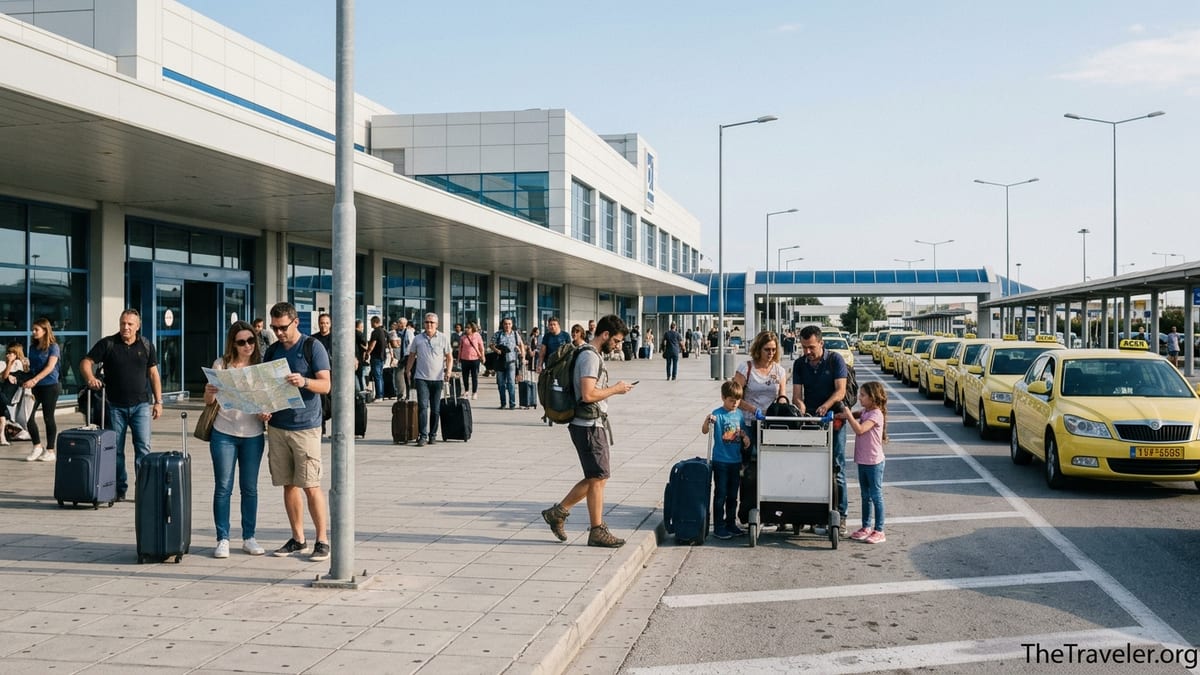
Understanding the Layout and First Steps Off the Plane
Athens International Airport has one main terminal building with separate levels for arrivals and departures. Most international flights, including those from North America, the UK and outside the Schengen Area, arrive into the non Schengen section known as Area A. European Schengen flights usually arrive into Area B. In both cases, you disembark, follow the yellow and black “Arrivals” signs and are channelled either directly to baggage claim or to passport control first, depending on where you are flying from.
The walk from gate to passport control or baggage claim is straightforward, typically 5 to 10 minutes. Moving walkways help on longer corridors, and signage is clear in both Greek and English. If you are connecting on a single ticket with checked baggage through a Schengen hub such as Frankfurt or Paris and your last flight is to Athens, you will usually arrive as a Schengen passenger and bypass passport control in Athens. If Athens is your first point of entry into the Schengen Area, you will clear passport control here before collecting your luggage.
As soon as you leave the jet bridge, check the monitors showing “Arrivals” to confirm your baggage belt number and whether you are a Schengen or non Schengen arrival. This will determine whether you turn toward passport control booths or go straight down into the baggage hall. Airport staff in blue or high visibility vests are stationed at key junctions and are used to answering basic questions like “Baggage claim?” or “Metro?” so do not hesitate to ask if you feel unsure.
Families with young children, passengers with mobility needs and those with tight onward connections can request assistance from their airline in advance; you will typically be met at the aircraft door or just outside and escorted through to arrivals. Wheelchairs, baby changing rooms and elevators are well signposted throughout the arrivals route.
Passport Control and the New EU Entry/Exit System
If you are arriving from a non Schengen country and Athens is your first point of entry to the Schengen zone, you must clear passport control before baggage claim. There are separate queues for EU/EEA/Swiss passengers and for all other nationalities. Since the EU’s new Entry/Exit System went fully live in 2026, first time entry for non EU travelers can take longer than in previous years, especially at peak summer times.
On a typical morning in June or July, waits can range from 20 minutes to over an hour depending on how many wide body flights land at once. You join a roped queue, then an officer scans your passport, takes fingerprints and may capture a facial image if it is your first EES registration. On subsequent trips, your crossing is usually quicker as your biometric data is already on file. Officers may ask simple questions such as where you are staying in Athens, the length of your trip and whether you have a return or onward ticket, so it helps to have your hotel details and itinerary to hand.
Holders of EU and some other biometric passports can sometimes use automated e gates when available, but staff regularly open and close these depending on traffic. Families with children are often directed to the manned booths together, as young children may not be able to use the e gates. If you have a tight onward domestic connection to islands such as Santorini or Chania booked on a separate ticket, allow generous time between flights. In high season, experienced travelers now recommend leaving at least three hours between an intercontinental arrival and a separate domestic departure from Athens, to cover possible EES queues and baggage delays.
Once your passport is stamped and you are through the control line, you follow signs down to the baggage claim level. There is a short corridor where duty free outlets, restrooms and water fountains are available before you enter the main carousel area. This is your last chance before customs to buy duty free items such as local wine or Greek olive oil, subject to your home country’s import limits.
Baggage Claim, Customs and Meeting Points
The baggage claim hall at Athens International Airport is on the arrivals level, with a series of numbered carousels. Electronic boards list flights and the belt number in Greek and English. Luggage from a full long haul flight usually starts appearing about 15 to 30 minutes after landing, though this can be longer at peak hours. Baggage trolleys are free and easy to find along the walls near each carousel.
If your bag does not arrive, stay in the baggage hall and go directly to your airline’s ground handling desk, usually positioned behind or beside the carousels. For example, Aegean Airlines and Olympic Air are handled by Goldair, while many other carriers use Swissport or Skyserv. Staff will file a Property Irregularity Report and provide a reference number so you can track your case. Do not exit through customs until you have reported missing baggage; once you leave the secure area it is harder to get back in.
Customs in Athens for most arriving tourists is straightforward. Coming from within the EU you typically walk straight through the green lane unless you have goods to declare. From non EU countries, you choose between the green channel “Nothing to declare” and the red channel if you exceed duty free allowances or are carrying restricted items such as large quantities of alcohol or tobacco. Random checks do happen, so keep receipts for high value electronics or luxury goods you already owned before travel.
Immediately after customs you emerge into the public arrivals hall on the ground floor. This is where you find official taxi ranks, car rental counters, travel agency desks, hotel meet and greet signs and family or driver pickup points. Many private transfer companies, such as Welcome Pickups or local limousine services, instruct you to meet their driver just outside Exit 3 or 4 at the arrivals level. The exit doors are clearly numbered above; check your confirmation message so you head to the correct door.
Cash, ATMs, SIM Cards and Essential Services
Once in the public arrivals area you have several practical tasks you might want to tackle before heading into the city: getting euros in cash, buying a Greek SIM or eSIM, grabbing a snack or coffee and perhaps using a restroom after a long flight. Major banks operate ATMs along the arrivals hall and near exits to the transport hub. These machines accept Visa, Mastercard and most international debit cards, and allow withdrawals in euros. Local banks usually apply standard fees; foreign banks may add their own charges, so it is often cheaper to withdraw a larger amount once instead of many small withdrawals.
Currency exchange kiosks are also present, but rates at airport counters are often less favorable than withdrawing from an ATM or changing money in central Athens at a bank or a reputable exchange bureau. If your home bank offers fee free ATM withdrawals abroad, using a machine clearly branded with a Greek bank name is typically the most economical choice. As card payments are widely accepted in Athens, especially in hotels, restaurants and transport ticket machines, many visitors find they can manage with a combination of cards and a modest amount of cash for small purchases.
For mobile data, you have two main options: purchase a physical SIM at the airport or activate an eSIM before or shortly after landing. In the arrivals hall and at the departure level above, you will usually find branded counters or kiosks for major Greek providers such as Cosmote, Vodafone Greece and Nova, along with international roaming SIM brands that partner with them. A typical tourist package might offer around 20 to 30 GB of data for 10 to 20 days at a cost in the region of 15 to 25 euros, sometimes including domestic call minutes. These bundles change regularly, so check the small print. Staff can help insert the SIM and ensure your phone connects before you leave the counter.
If your device supports eSIM, many travelers now prefer purchasing a regional Europe eSIM via an app before arrival; you simply switch on data roaming once you land at Athens and skip the physical SIM queue. Free Wi Fi is widely available throughout the terminal and is enough for messaging, map checks and rideshare bookings. For other needs, arrivals offers cafes with quick options such as coffee, sandwiches and pastries, small convenience stores selling bottled water, snacks and Greek SIM starter packs, and a pharmacy for basic medicines or travel health supplies.
Metro, Suburban Railway and Buses to Central Athens
The most popular public transport options from Athens Airport into the city are the metro, the suburban railway and the 24 hour express buses. All are accessed from the same transport hub just outside the terminal. From the arrivals hall, follow the blue and white signs for “Trains / Buses.” You cross a short covered pedestrian bridge or walkway above the road to reach the combined metro and suburban rail station. This walk typically takes 5 to 7 minutes with luggage.
Metro Line 3, the blue line, runs directly from Athens Airport to central stations including Syntagma and Monastiraki. In 2026 a standard one way metro ticket from the airport costs around 9 euros per adult, with discounts for some categories such as children and seniors. Trains run roughly every 30 minutes, usually from about 6:30 in the morning until around 11:30 at night, with slightly extended hours on weekends. The ride to Syntagma Square in the city center takes about 40 minutes. At the airport station you buy your ticket from machines or a staffed booth, then tap it to enter the platform area. Keep your ticket until you exit at your destination, as inspectors do carry out spot checks.
The suburban railway, operated by Hellenic Train, shares the same station at the airport and uses similar ticketing but follows different routes. Some trains head toward Athens’ main rail hub at Larissa Station, useful if you are connecting to intercity trains for destinations like Thessaloniki or Kalambaka for Meteora. Others travel toward Piraeus port, though schedules change, and at busy times it can be easier to use the express bus X96 to reach the port directly. Journey times on suburban rail are comparable to the metro but can offer more space for luggage in off peak periods.
Airport express buses are the most budget friendly way to reach the city, and they operate 24 hours a day. The best known is the X95, which runs from the airport to Syntagma Square, the heart of Athens. As of 2026, a one way ticket on the express bus costs around 5.50 to 6 euros. Other key routes include the X96 between the airport and Piraeus port, the X93 to the Kifisos and Liosion intercity bus stations and the X97 to Elliniko in Athens’ southern suburbs. Bus tickets are sold at the kiosk just outside the arrivals level near the bus stops or via machines; you must validate your ticket on board using the card readers at the doors.
Metro and bus choices often come down to timing and comfort. If you arrive in the middle of the night or very early morning when the metro is not running, the X95 bus is the default public option to the city center. During the day, the metro is faster and free of traffic, whereas buses can be delayed on the highway into Athens at rush hour. If you are staying near Monastiraki or Syntagma, many visitors choose the metro for the straightforward ride and easy connections to other lines.
Taxis, Rideshares and Private Transfers
Official yellow taxis line up outside the arrivals level, with a clearly signposted rank. For trips between the airport and central Athens there is a fixed tariff that includes luggage and tolls, varying by time of day. In 2026, the daytime flat fare to or from the city center sits around 40 euros, while the night time fixed rate, typically from midnight to early morning, is higher, close to 55 euros. These amounts may fluctuate slightly over time, so confirm with the information boards near the rank before you board. You pay at the end of the ride and can usually use either cash or card, though asking about card acceptance at the start is wise.
Rideshare services operate in Greece but are regulated differently than in some other countries. International apps often connect you to licensed taxis rather than private cars, with pricing similar to or slightly higher than the street taxi rate. For travelers who prefer a guaranteed pickup with a driver holding a sign, prebooked private transfers are widely available and popular with families or those arriving late at night. Companies such as Welcome Pickups and many local operators offer fixed prices that are competitive with taxi fares, especially when shared by several people.
If you have booked a transfer through your hotel, check your confirmation email carefully. Many Athens hotels partner with local drivers and may ask you to meet at a specific exit door in the arrivals hall, for example Exit 3 outside the international arrivals area. Drivers monitor flight numbers in real time and adjust pickup times if your flight arrives early or late. If you cannot find your driver on arrival, most companies provide a local emergency number to call once you connect to Wi Fi or mobile data.
When using any taxi or transfer, confirm the destination address clearly and have it written down in Greek as well if possible, especially for smaller guesthouses in neighborhoods like Koukaki, Exarchia or Pangrati. Athens street names can be similar, and it is easy for a driver to mishear a hotel name in noisy traffic. Always ensure the meter is running if you are traveling on a non flat fare route, and avoid accepting unsolicited offers from people who approach you inside the terminal, rather than at the official taxi rank or a prearranged meeting point.
Onward Travel: Ferries, Domestic Flights and Regional Connections
Athens Airport is the main gateway not only to the capital but also to the Greek islands and mainland regions. Many travelers connect immediately to domestic flights. Aegean Airlines and its subsidiary Olympic Air operate frequent services to popular islands such as Santorini, Mykonos, Rhodes, Chania and Heraklion. If you have booked a through ticket from your home country to one of these islands with a single airline or alliance, your luggage is usually checked through, and you follow transfer signage without exiting to the public arrivals hall. If you bought separate tickets, however, you must collect your bags, exit customs and then go upstairs to departures to check in again.
For travelers heading straight to the islands by ferry, Piraeus and Rafina are the two main ports accessible from the airport. Piraeus, the larger and busier port, is connected by the X96 express bus which runs day and night and takes roughly 60 to 90 minutes depending on traffic. Rafina, smaller but convenient for some Cyclades routes such as Andros, Tinos and Mykonos, can be reached by KTEL regional buses or by taxi and prebooked transfer. Many visitors arriving on morning flights choose to head directly to Piraeus for afternoon ferries, but it is sensible to leave a generous buffer; Greek summer traffic and port security queues can both cause delays.
If your plan is to explore mainland Greece by bus, the KTEL intercity bus network radiates from Athens’ main bus terminals. The X93 express bus runs between the airport and the Kifisos and Liosion bus stations, where you can connect to coaches bound for cities such as Patras, Nafplio, Ioannina or Volos. Tickets for these buses are not sold at the airport itself; you pay at the bus station ticket office or book online in advance. For travelers continuing by train, the suburban railway and metro line 3 both offer connections toward Larissa Station, from where intercity rail services depart.
Some visitors prefer to spend at least one night in Athens before moving on, particularly after a long haul flight. In that case, you can choose either to stay in the city center for easy sightseeing or at an airport hotel for convenience. Several branded hotels sit within a short shuttle ride of the terminal, and there is also a hotel directly opposite the terminal building, connected by a pedestrian bridge, which is particularly useful if you land late and fly out early the next morning.
The Takeaway
Arriving at Athens International Airport does not need to be stressful if you understand the basic flow: follow signs to passport control if Athens is your first Schengen stop, collect your luggage, walk through customs and then choose the onward transport that matches your budget and schedule. The airport is compact and clearly signed in English, with free Wi Fi, multiple ATMs and several options for SIM cards and snacks before you leave.
For many visitors, the most efficient combination is to withdraw a modest amount of cash from a bank branded ATM, pick up either a local SIM or activate an eSIM, and then head for Metro Line 3 or the X95 bus into the city. Those arriving late at night, traveling as a family or carrying heavy luggage often find a prebooked taxi or transfer from the arrivals level simplest, especially with the fixed fare system to central Athens. Whatever you choose, building in a little extra time, especially in summer when passport control lines can lengthen, will help ensure that your first hours in Greece are smooth rather than rushed.
FAQ
Q1. How long does it usually take to get through Athens Airport after landing?
In normal conditions many travelers clear passport control, baggage claim and customs in 45 to 75 minutes, but in peak summer or with the new EU Entry/Exit checks it can stretch closer to 2 hours.
Q2. Is it better to take the metro or the X95 bus from the airport to central Athens?
The metro is faster and more predictable, taking about 40 minutes to Syntagma, while the X95 bus is cheaper and runs 24 hours but can be delayed by traffic.
Q3. Where exactly is the metro station at Athens Airport?
The metro and suburban railway share a station across the road from the terminal. Follow signs for “Trains,” then use the covered pedestrian bridge or walkway from the arrivals level to reach the station building.
Q4. How much does a taxi from Athens Airport to the city center cost?
There is a fixed fare for official yellow taxis between the airport and central Athens, generally around 40 euros in daytime and higher at night, with tolls included.
Q5. Can I buy a SIM card on arrival at Athens Airport?
Yes. Mobile operators and third party kiosks in the arrivals and departures halls sell tourist SIM packages that usually include several gigabytes of data and local calls.
Q6. Are there ATMs and is it better to use them or currency exchange desks?
Several bank branded ATMs are available in arrivals and near exits. For most travelers, withdrawing euros from an ATM with a card is better value than using airport currency exchange counters.
Q7. How late does the metro from the airport run?
Metro Line 3 normally operates between early morning, around 6:30, and late evening, around 23:30. Outside these hours, the express buses, especially the X95, are the main public option.
Q8. What is the best way to reach Piraeus port from Athens Airport?
For many travelers the X96 express bus is the simplest door to door option. Depending on traffic it usually takes between 60 and 90 minutes from the airport to Piraeus.
Q9. Do I have to go through customs at Athens if I am just connecting?
If you are on a single ticket and remain airside between flights, you typically follow transfer signs and may pass only through security and passport control, not full customs. On separate tickets you must collect bags, clear customs and check in again.
Q10. Is it easy to find my prebooked driver in the arrivals area?
Yes. Most transfer companies instruct drivers to wait in the public arrivals hall by a specific exit door, holding a sign with your name. Check your confirmation for the exact meeting point and contact number.