


Landing in Mexico City for the first time can feel intense. The capital’s main hub, Mexico City International Airport (AICM, airport code MEX), is busy, sprawling and constantly under construction. With some preparation, though, it is a straightforward airport to arrive, depart and connect through. This guide walks you through the essentials of Terminals 1 and 2, immigration and customs, transport options like taxis, Uber and Metrobus, and key safety and money tips tailored to first-time visitors.
Get the latest updates straight to your inbox!
Understanding AICM: Layout, Terminals and What to Expect
Mexico City International Airport sits on the east side of the city and is divided into two terminals. Terminal 1 is the older and larger terminal, serving many international and domestic airlines, including several U.S. carriers and low-cost Mexican airlines. Terminal 2 is newer, more compact and used primarily by Aeroméxico and some SkyTeam partners, along with a few other carriers. Both terminals operate 24 hours, but most services like cafés and currency exchange counters keep roughly 05:00 to 23:00 hours.
Terminals 1 and 2 are connected by an official inter-terminal train called the Aerotrén as well as a free shuttle bus. The Aerotrén runs airside and is available only for passengers with a same-day boarding pass, typically every few minutes during the day. If you arrive on a U.S. airline in Terminal 1 and connect onward on Aeroméxico from Terminal 2, you will likely use this train. The free landside bus is useful if you are meeting someone in another terminal or arriving very late at night when the train runs less frequently.
Wayfinding inside the airport is bilingual. Most signs are in Spanish and English, with clear color-coded arrows to “Llegadas” (Arrivals), “Salidas” (Departures), “Conexiones” (Connections), taxis and public transport. Even so, corridors can be long and crowded. From some distant international gates in Terminal 1, it can take 10 to 15 minutes of brisk walking to reach immigration, and another 10 minutes from baggage claim to the taxi counters. Build this into your time budget, especially if you have a tight connection.
The airport feels safe but hectic. You will encounter aggressive sales pitches for tours, shuttles and timeshares immediately after customs, particularly in Terminal 1. These vendors are usually inside glassed-in booths or standing in the main corridor. For ground transport, ignore them and instead follow signs to official city taxis, Metrobus and rideshare pick-up areas. This small bit of discipline goes a long way to ensuring a smooth arrival.
Arrivals, Immigration, Customs and Baggage Claim
Upon arrival from abroad, you will first go through immigration. Since 2022, most foreign visitors from countries like the United States and Canada no longer fill out the old paper immigration form; immigration officers now register your entry electronically and stamp your passport with the number of days granted, typically up to 180 days for tourists but sometimes less. When the officer stamps your passport, discreetly check the handwritten or printed number of days and take a photo on your phone. This matters later if you extend your stay or face a random check.
After immigration, you move to baggage claim. Carousels are shared among several flights, and baggage can take anywhere from 15 to 45 minutes. Screens above each belt show your flight number. While you wait, this is a good time to connect to the free airport Wi-Fi, which is usually named something recognizable like “AICM” followed by the terminal number. Speeds vary, but it is often sufficient to order an authorized taxi online or message your hotel that you have landed.
Customs comes next. You may still see older instructions about pushing a “red/green” button to determine inspection, but procedures are increasingly moving toward risk-based screening. In practice, many passengers walk straight through after placing bags briefly on a scanner belt. Officers are strict about fruits, vegetables and meat products. A sealed bag of coffee beans is typically fine; a bag of fresh apples is not. If you bring electronics like cameras or laptops, they are usually allowed for personal use without extra declaration, as long as the quantities are reasonable.
Once you pass customs, you exit through sliding doors into the public arrivals hall. Here you face a gauntlet of drivers holding signs, tour salespeople and private shuttle vendors. Keep walking with confidence until you see overhead signage for “Taxis Autorizados,” “Transporte Público / Metrobús,” or “Salidas” if you are connecting. For a seamless experience, many first-time visitors walk straight to the authorized taxi booths located just beyond the crowd on either side of the hallway.
Departures, Check-in and Security for Leaving Mexico City
For outbound flights, arrive at AICM early. For flights to the United States or Canada, arriving at least 3 hours before departure is a sensible rule of thumb, and 2 hours for domestic flights. At peak times, such as weekday mornings between 06:00 and 09:00 and Sunday evenings, lines for check-in and security can be long. If you are flying a popular route like Mexico City to Los Angeles or New York, build in extra buffer time.
Check-in counters are organized by airline. In Terminal 1, the departure hall is very long and can feel chaotic. You might arrive via Uber at Door 2, only to find that your airline checks in closer to Door 6, a 5 to 10 minute walk with luggage. Overhead monitors show airline names and door numbers. In Terminal 2, the layout is more compact; Aeroméxico dominates the central hall, and check-in desks are easier to find. Many airlines allow online check-in and mobile boarding passes, but some U.S.-bound flights still require a document check at the counter, so stop by even if you have checked in online.
Security works similarly to many international airports: remove laptops and larger electronics, empty your pockets and put liquids under 100 milliliters in a transparent bag. Mexico security typically does not require shoes off unless specifically requested. Lines can snake back and forth, but they tend to move steadily. There are no TSA PreCheck or Global Entry lanes, so all passengers use the same checkpoints. Once through security, both terminals offer a mix of cafés, fast-food outlets and sit-down restaurants, ranging from local tacos to international chains.
When departing, remember that most shops and food options inside security accept credit cards, but some smaller snack stands still prefer cash in Mexican pesos. A typical coffee in a chain café inside the terminal runs around 60 to 80 pesos, and a simple sit-down meal might cost between 200 and 350 pesos per person before tip, similar to mid-range city prices. If you are tight on time, grab a sandwich or bottled water before heading to your gate; some remote gates in Terminal 1 have minimal services.
Getting Into the City: Authorized Taxis, Rideshare and Private Transfers
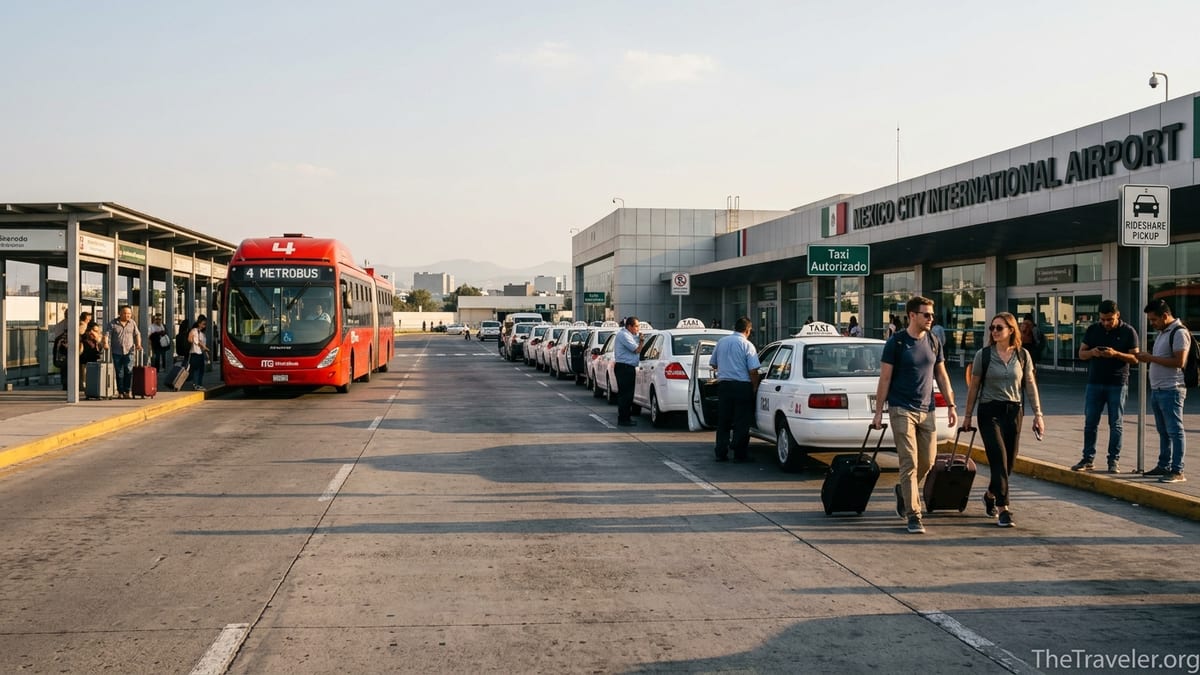
Most first-time visitors will leave AICM by authorized taxi, rideshare app or private transfer. The airport and government stress that only “taxis autorizados” are officially permitted to pick up passengers at the terminals. These are operated by several companies, including well-known brands such as Yellow Cab, Nueva Imagen, Porto Taxi and Confort, all of which sell fixed-price tickets from booths inside the terminal. These companies run fleets of white vehicles, sedans or minivans rather than the pink-and-white city street taxis you see elsewhere in Mexico City.
To use an authorized taxi, you go to one of the official booths in the arrivals hall or just outside the customs exit. An attendant will ask for your destination and quote a fixed fare based on zones. For example, in mid-2026 a typical daytime fare to Roma Norte or Condesa lands in the ballpark of 400 to 550 pesos for a sedan, and slightly more for a larger vehicle. You pay at the booth by cash or, in most cases, card, and receive a printed ticket. Then you walk to the designated taxi line outside, hand the ticket to the dispatcher and board your car. Tips are optional; if service is good, locals often round up 10 to 20 pesos.
Rideshare services like Uber, Didi and inDriver operate widely across Mexico City, but their status at the airport is nuanced. Officially, the airport recognizes only authorized taxis as sanctioned pick-ups. In practice, many travelers arrange Uber pick-ups from just outside the terminal perimeter: for example, walking to the pedestrian bridge near Terminal 1’s long-term parking or to nearby hotels such as the Camino Real or Courtyard, depending on current advice from locals. Travelers report that a similar ride from the airport to Roma Norte on Uber can cost around 200 to 300 pesos in normal traffic, which helps explain its popularity among budget-conscious visitors, though pick-up may be less straightforward.
If you value simplicity over savings, authorized taxis are the least stressful option on arrival, especially after a long international flight, with checked luggage and limited Spanish. For travelers already familiar with Mexico City or comfortable walking a few extra minutes with carry-on bags, ordering an Uber from outside the terminal can be cheaper. Another comfortable but pricier option is a pre-booked private transfer, often arranged through hotels or tour operators, where a driver meets you with a sign and walks you directly to a private vehicle parked in the official area.
Metrobus and Metro: Budget-Friendly Options From the Airport
For budget travelers or those with light luggage, public transport from AICM is practical. The workhorse is Metrobus Line 4, which connects the airport with the city center and Paseo de la Reforma. Line 4 runs from both Terminal 1 and Terminal 2, using dedicated stations signposted “Metrobús” just outside the terminals. According to official Metrobus information, the airport service on Line 4 charges a special fare of about 30 pesos per trip, higher than regular Metrobus rides but still very affordable compared to taxis. This single ticket can take you to central points like San Lázaro, the Historic Center and the Reforma corridor.
To ride Metrobus, you need a rechargeable smart card. These are sold and reloaded at machines located at Metrobus stations, which generally accept cash and sometimes cards. You tap in at the entrance gate and tap again when transferring lines, although transfers between most Metrobus lines within a set time window are free. Coming from the airport with luggage, many travelers choose the route that goes via the Historic Center to Reforma, since it drops you near popular neighborhoods and major hotels with minimal walking.
The Mexico City Metro also reaches the airport area. Terminal 1 connects indirectly via a short walk or local bus to the nearby Terminal Aérea station on Line 5, while Terminal 2 is a bit farther from direct Metro access. However, most visitors opt against using the Metro with heavy luggage, especially at rush hours, because platforms and trains become extremely crowded and not all stations have elevators or escalators. If you do take the Metro, avoid weekday rush-hour windows roughly from 07:30 to 09:30 and 17:30 to 20:00, and keep valuables out of sight in a zippered bag worn in front.
A common real-world itinerary for a frugal traveler might be Metrobus Line 4 from Terminal 1 to the stop near Alameda Central, then a short walk or rideshare hop to a hotel in Roma or Condesa. For less than 100 pesos including a connecting ride, you can reach areas where a taxi would cost roughly four to five times more. That trade-off only makes sense if you are comfortable navigating turnstiles and busy sidewalks with your bags.
Connections: Switching Flights Between Terminals and Airlines
Mexico City International Airport is a busy connecting hub, especially for travelers flying between North America and South America on Aeroméxico and its partners. If you are connecting internationally, check whether your bags are checked through to your final destination. On many itineraries, you still need to collect checked baggage, clear immigration and customs, and then recheck bags at a connections counter. For example, flying from Los Angeles to Bogotá via Mexico City on Aeroméxico often requires collecting your bag in Terminal 2, walking it through customs, and dropping it at a designated transfer belt just beyond the customs exit.
Transferring between Terminal 1 and Terminal 2 adds an extra layer. If your flights are on qualifying airlines and on the same ticket, you can usually use the Aerotrén inter-terminal train airside. Signage for the train is clearly marked “Aerotrén / Interterminal Transportation,” and you must show a same-day boarding pass. The ride itself takes only a few minutes, but lines can form at peak hours. If your tickets are on separate reservations or low-cost carriers, you may have to exit to the public area, take the free landside shuttle bus or a short authorized taxi ride, and then recheck in at the other terminal.
Plan your minimum connection time accordingly. With both flights in the same terminal and on one ticket, a 90-minute connection is often workable, assuming no major delays. If you must change terminals and clear immigration or security again, aim for at least 2.5 to 3 hours. For example, arriving on a midday international flight into Terminal 1 and connecting to an afternoon domestic flight from Terminal 2 could easily consume 30 minutes in immigration, 20 minutes waiting for bags, 20 minutes for customs and walking, and another 20 to 30 minutes to reach and check in at the new terminal.
If a delay threatens your connection, approach your airline’s transfer desk or gate agent as soon as you land. Staff are used to tight connections through Mexico City and can sometimes fast-track you through a shorter security line or rebook you on a later flight. Keep all boarding passes, baggage tags and a screenshot of your itinerary handy on your phone in case you need to show proof quickly.
First-Time CDMX Tips: Safety, Money and Practical Basics
Mexico City is vibrant, welcoming and, for most visitors, safe when you follow basic urban common sense. At the airport and en route to your accommodation, the key is to use official transport, avoid obvious scams and keep valuables out of sight. Decline offers from strangers in the arrivals hall who say they can get you a cheaper taxi outside; even if their price is lower, there is less recourse if something goes wrong. Stick to the authorized taxi counter or, if you know what you are doing, a rideshare pick-up point recommended by local residents or your hotel.
Cash is useful but you do not need to carry large amounts. ATMs from major Mexican banks, such as BBVA, Banorte and Santander, are located in both terminals landside and airside. Fees vary, but withdrawing a moderate amount like 3,000 to 5,000 pesos on arrival is usually enough for taxis, meals and small purchases for several days. Avoid independent ATMs with bright branding and high fees. Many airport shops and all authorized taxi booths accept international credit cards, but smaller city cafés or markets might be cash-only.
Language is another consideration. Staff in airlines, major shops and official taxi booths typically speak at least basic English. However, city taxi drivers and Metrobus personnel may speak only Spanish. Carrying your hotel address written clearly in Spanish, including neighborhood and cross streets, is extremely helpful. For example, write “Hotel in Roma Norte, Calle Álvaro Obregón, entre Mérida y Tonalá.” Showing this slip to a driver prevents confusion from similar-sounding street names.
Finally, consider air quality, altitude and water safety. Mexico City sits at more than 2,200 meters of elevation, and first-time visitors occasionally feel short of breath or extra tired upon arrival, especially after a long flight. Drink plenty of bottled water, avoid heavy alcohol the first night and take it easy if you plan to walk or cycle. Tap water in the city is not considered reliably potable; most hotels provide filtered water stations or complimentary bottles. At the airport, buy sealed bottled water from a convenience store before heading into traffic or onto the Metrobus.
The Takeaway
Mexico City International Airport is busy and sometimes confusing, but it is not unmanageable. Understanding the layout of Terminals 1 and 2, knowing in advance how you will get into the city, and giving yourself generous time for connections will dramatically reduce stress. Most first-time visitors do best by following the simplest options: an authorized taxi to centrally located neighborhoods like Roma, Condesa or Centro, modest use of Metrobus and rideshare once settled, and clear, pre-written addresses for drivers.
Once you are through the initial arrival, the rest of your trip will feel much easier. The same skills that get you from the plane to your hotel calmly and safely will serve you well as you explore markets, museums and neighborhoods across Mexico City. Treat AICM as your first lesson in how the city moves: structured but improvisational, dense but welcoming, always in motion yet navigable with a bit of planning and patience.
FAQ
Q1. Is it safe to arrive at Mexico City airport late at night? It is generally safe to arrive late at night if you use official transport. Stick to authorized taxis booked at the airport booths or a pre-arranged hotel transfer, avoid wandering outside the terminal looking for cheaper rides, and go directly to your accommodation.
Q2. How much does a taxi from the airport to Roma or Condesa usually cost? Authorized taxis charge fixed zone-based fares. In mid-2026, many travelers report paying roughly 400 to 550 pesos from AICM to Roma Norte or Condesa for a standard sedan, depending on time of day and the specific taxi company.
Q3. Can I use Uber or Didi directly from the airport terminals? Rideshare services do operate in Mexico City, but airport pick-ups are sensitive because only authorized taxis are officially allowed inside. In practice, some travelers walk a few minutes to nearby streets or hotels just off airport property to request an Uber or Didi at lower prices than official taxis.
Q4. Is Metrobus Line 4 from the airport safe for tourists with luggage? Metrobus Line 4 is widely used by locals and visitors and is generally considered safe during the day. It is most comfortable if you travel with one small suitcase or backpack, avoid rush hours, keep valuables in a closed bag worn in front and stay aware of your surroundings, just as you would in any big city.
Q5. How long does it take to reach central neighborhoods from AICM? In light to moderate traffic, reaching Roma, Condesa or the Historic Center typically takes 25 to 45 minutes by taxi or rideshare. In heavy rush-hour traffic or during rainstorms, the same trip can stretch to an hour or more, so always allow extra time for important reservations or flights.
Q6. Do I need cash in pesos at the airport, or can I use my card? You can pay many expenses at the airport with a credit or debit card, including authorized taxi tickets and most cafés. Still, it is wise to withdraw some pesos from a bank ATM in the terminal for small purchases, tips and places that do not accept cards once you are in the city.
Q7. Is it worth taking the Metro instead of Metrobus from the airport? The Metro can be slightly cheaper than Metrobus, but it is less convenient with luggage and often extremely crowded at peak times. For most first-time visitors, Metrobus Line 4 offers a better balance of cost and comfort, with stations located directly at both terminals and simpler connections to central areas.
Q8. How early should I arrive at AICM for my departing flight? Aim to arrive at least 3 hours before international departures and 2 hours before domestic flights. If you need to change terminals, are traveling at peak times or must check luggage, add 30 to 60 extra minutes as a buffer.
Q9. Can I drink the tap water at the airport or in the city? Tap water in Mexico City is not reliably potable for visitors. Stick to sealed bottled water or filtered water provided by your hotel or reputable restaurants, including at the airport. Many travelers buy a bottle upon arrival and refill from safe sources during their stay.
Q10. What is the best transport option for a first-time visitor with limited Spanish? For a first-time visitor, the simplest and most comfortable option is an authorized taxi purchased at the official booths inside the terminal. You only need to show your hotel address, the price is fixed, and staff can usually communicate basic information in English, which removes much of the uncertainty after a long flight.