


More news on this day
A weather-related ground stop at Hartsfield-Jackson Atlanta International Airport has been lifted, yet travelers are still facing rolling disruptions as departure delays approach two hours across the country’s busiest hub.
Get the latest news straight to your inbox!
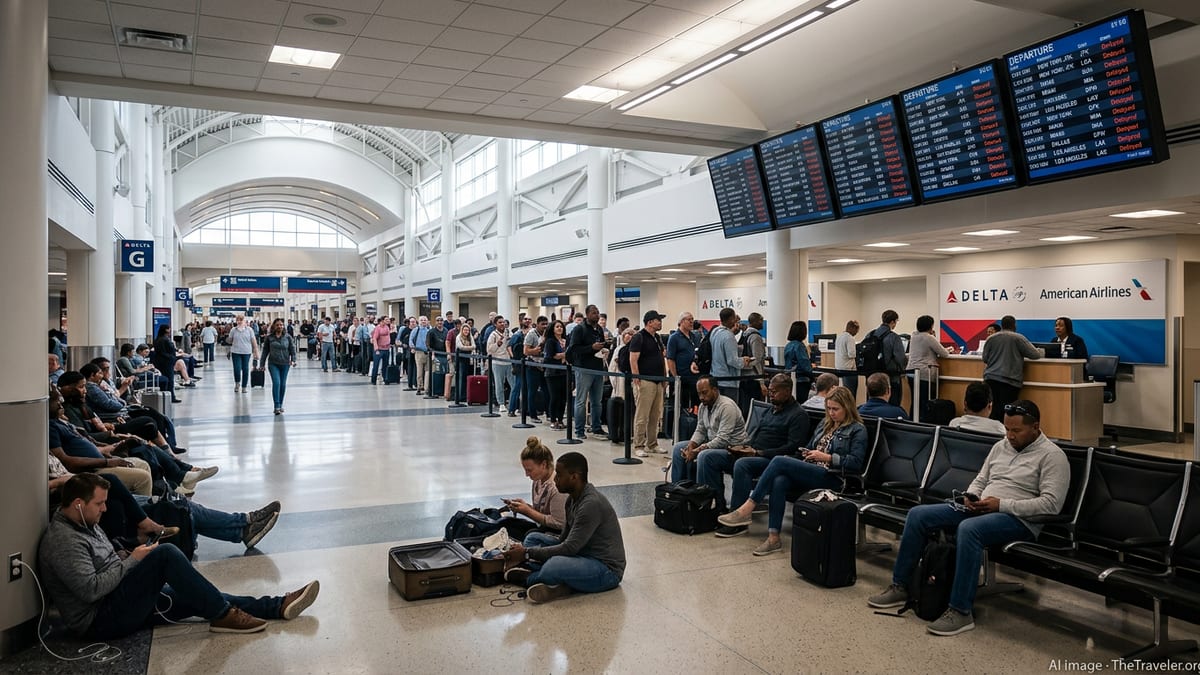
Storms trigger ground stop and rolling disruption
Thunderstorms moving across metro Atlanta on Friday, September 11, prompted air traffic managers to halt flights bound for Hartsfield-Jackson, temporarily freezing many departures while storm cells passed over key approach and departure corridors. According to published coverage and flight operations data, the ground stop covered a mid- to late-afternoon window and was later converted into a structured ground delay program once the most intense weather shifted away from the airport.
Publicly available FAA advisories show that the Atlanta ground stop was linked to convective weather and route constraints, with controllers limiting the number of airplanes entering the region as lightning, heavy rain, and reduced visibility affected arrivals and departures. The measures were part of a broader set of national traffic management initiatives that also included restrictions at Orlando, Miami, Dallas-Fort Worth, and several other large airports experiencing thunderstorms and wind.
Once the initial stop was lifted, flights into and out of Atlanta began moving again, but not at normal pace. Network data cited in recent coverage indicate that the disruption quickly evolved into rolling delays for both inbound and outbound services, with the knock-on effects extending into the evening travel peak.
Average delays near two hours as backlog clears
By early Friday evening, airline and aviation-tracking tools showed average departure delays from Atlanta climbing close to the two-hour mark, with some individual flights waiting considerably longer for takeoff clearance. One widely cited report put the average delay for inbound flights during the ground delay period at around 100 minutes, with maximum waits exceeding four hours on the most affected routes.
Separate tallies compiled from FAA traffic management logs and industry analysis describe how the ground stop at Atlanta lasted roughly two and a half hours, after which a delay program kept many flights in holding patterns on the ground at their origin airports. Under such programs, flights are assigned controlled departure times designed to meter traffic into constrained airspace, which can lead to extended gate or taxi waits even after the official stop has ended.
For passengers, the distinction between a ground stop and a ground delay program is largely academic. In practical terms, travelers at Atlanta and at outstations feeding into the hub continued to see departure times pushed back by an hour or more, with airport dashboards and airline apps showing clusters of flights delayed between 60 and 120 minutes well into the evening.
Part of a wider pattern of weather-driven disruption
The Atlanta disruption on September 11 formed part of a broader pattern of late-summer thunderstorms affecting major hubs across the southeastern United States. According to sector-wide summaries, the FAA had active delay or ground stop programs at more than a dozen airports that day, with Miami, Orlando, Dallas-Fort Worth, and Austin all reporting extended restrictions tied to storms or other operational constraints.
Atlanta’s role as a connecting megahub magnified the impact. Even relatively short local weather events can ripple outward across an airline’s network, leading to misaligned aircraft rotations and crew schedules hours later and thousands of miles away. Data referenced in industry coverage suggest that hundreds of flights nationwide experienced secondary delays associated with the Atlanta constraints, including routes that did not touch Georgia but relied on aircraft coming from the region.
Travel-analysis platforms tracking disruption alerts ranked the Atlanta ground stop among the most significant U.S. airport delay events of the day, noting high impact scores due to the volume of flights, the duration of the programs, and the timing during busy afternoon and evening travel banks.
What travelers flying via Atlanta should expect
Public traveler advisories issued in the wake of the disruption stress that schedules may remain fragile even after the formal ground stop and delay programs expire. Airlines frequently need additional time to reposition aircraft and crews, and evening flights can inherit delays from earlier legs that passed through Atlanta during the height of the storm-related restrictions.
Passengers flying through Hartsfield-Jackson over the next several cycles are being encouraged, through airline channels and airport communications, to check their flight status frequently and to allow extra time for connections whenever possible. Same-day rebooking options may be limited on certain routes where aircraft utilization is tight and weather disruptions have already filled later departures.
Travelers already at the airport are being advised by public-facing information sources to remain near their assigned gates, as revised departure times can move in either direction once air traffic flow improves. In some cases, flights that were heavily delayed during the stop can be issued earlier slots if capacity opens unexpectedly, while other departures may slip further as airlines sequence aircraft for longer-haul routes.
How this compares with previous Atlanta ground stops
Weather-related ground stops at Atlanta are not uncommon during peak thunderstorm seasons, and past events have produced similar patterns of cascading delays. Aviation case studies and passenger accounts from earlier years describe scenarios in which a one- to two-hour halt on flights into the hub translated into multi-hour disruptions for travelers whose itineraries depended on tight connections.
In March and July of previous years, for example, Atlanta ground stops tied to severe thunderstorms or recovery operations generated average delays of around an hour, with reported maximum waits more than double that figure on certain banks of flights. Publicly available FAA advisories and historical traffic reports show that these events often end with a shift from an outright stop to a structured delay program, much as occurred on September 11.
Analysts note that while modern traffic management tools help prevent gridlock in the skies above Atlanta, they do not fully shield passengers from the experience of prolonged gate holds, missed connections, and rebooked itineraries. The latest disruption, with average delays nearing two hours even after the ground stop formally ended, illustrates how sensitive hub operations remain to fast-developing storm systems over the southeastern United States.
CBS News Atlanta coverage of the Atlanta ground stop