


More news on this day
Operations have resumed at Hartsfield-Jackson Atlanta International Airport after a weather-related ground stop, but travelers are still facing rolling delays that aviation data show are approaching two hours on some routes.
Get the latest news straight to your inbox!
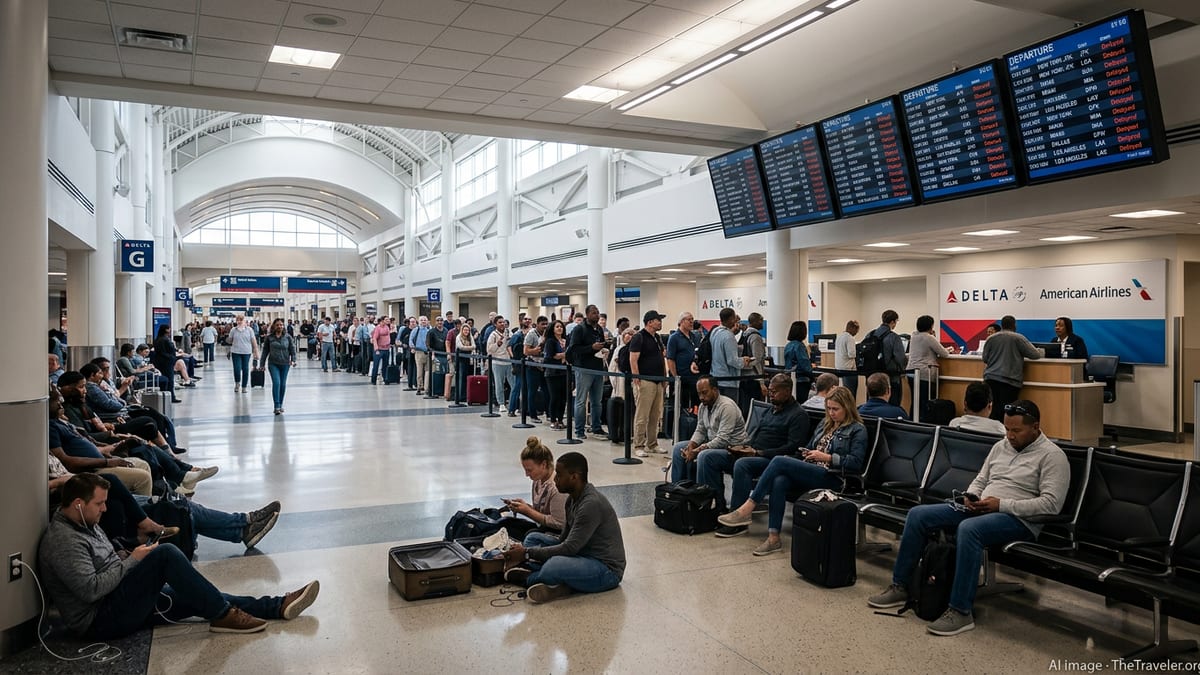
Storms Trigger Ground Stop and Prolonged Disruption
Thunderstorms moving across metro Atlanta on Friday, September 11, led air traffic managers to halt many flights bound for Hartsfield-Jackson, temporarily stopping departures while storm cells moved over the region’s busiest approach and departure corridors. Publicly available advisories from the Federal Aviation Administration list multiple weather-related constraints around Atlanta, including convective activity and limited usable routes into the airport’s airspace.
One FAA operations plan advisory notes that the Atlanta ground stop was adjusted facility by facility as routing options shifted, with controllers “looking at options to release more facilities to ATL” as conditions evolved. That same advisory highlights thunderstorms affecting a swath of major hubs across the Southeast, underscoring how regional weather can quickly ripple through the national network.
According to published coverage, the formal ground stop period for selected departure facilities ran for roughly two and a half hours into the evening, after earlier, shorter restrictions earlier in the afternoon. Once the halt ended, the FAA transitioned to delay programs designed to meter the flow of traffic into Atlanta, effectively trading a complete stop for tightly controlled arrival and departure slots.
Industry-focused outlets tracking Friday’s disruption report that delays at the peak of the event reached more than an hour in many cases, with maximum waits of well over an hour for certain flights. Together with the official advisories, these reports confirm that the combination of thunderstorms and constrained routing produced one of the more severe single-day weather impacts at the airport so far this month.
Delays Average Around 90 Minutes and Climb Toward Two Hours
By Saturday, September 12, updated figures compiled from FAA traffic tools and airline data showed average departure delays at Atlanta trending near the 90-minute mark during the busiest periods, with individual disruptions in some cases approaching two hours. A travel-disruption tracking service that aggregates airline and airport alerts flagged Atlanta with a “critical airport delay” status and directed passengers to confirm flight status before heading to the airport.
Separate reporting from local and national outlets paints a similar picture. One regional news report cited an FAA alert indicating that flights headed to Atlanta under an evening ground delay program were delayed an average of around 107 minutes, with the longest waits extending beyond four hours, while outbound flights were seeing rising hold times in the 75-minute range and above. These figures illustrate how quickly conditions can deteriorate once storms settle over a high-volume hub.
Aviation news sites that specialize in operational data add further detail, noting that earlier in the afternoon some Atlanta-bound departures were held for 30 to 70 minutes, before delays broadened and lengthened later in the day. Those early figures, combined with the later averages above 90 minutes, suggest that the tail of the disruption stretched well beyond the official end of the ground stop as airlines worked through the backlog of aircraft and crews.
For travelers on tight connections, even a delay closer to the lower end of that range can trigger missed onward flights, overnight stays and wholesale itinerary changes. Travel forums and passenger accounts from previous Atlanta ground stop episodes describe how a one or two hour hold during a morning or afternoon leg can cascade into much longer disruptions later in the day, especially on multi-stop journeys.
From Ground Stop to Ground Delay: How the System Responded
The sequence of events in Atlanta follows a pattern seen across the United States during intense weather days. A ground stop, which keeps affected aircraft on the ground at their departure airports, is often the first step when storms sharply reduce the capacity of a major hub. Once conditions improve modestly, air traffic managers can replace the stop with a ground delay program that meters flights into the airport using controlled departure times.
Operations plan advisories from the FAA’s Air Traffic Control System Command Center for September 11 show Atlanta listed among several airports dealing with convective weather, with explicit references to the ground stop being revised as routing options changed. Elsewhere in the same advisory, other hubs including Orlando and Miami appear under similar constraints, indicating a broader weather system stretching across the Southeast and Gulf regions.
Analysis by aviation trade publications of FAA data for September 11 indicates that Atlanta’s thunderstorms were part of a wider day of disruptions that saw 18 U.S. airports subject to delay programs or ground stops. In that reporting, Hartsfield-Jackson is listed with a ground stop tied to thunderstorms over a roughly 2-hour-and-40-minute window, placing it among the more significantly affected facilities.
Once the ground stop lifted, the active delay programs meant that flights could technically operate again, but only at rates that the airspace and runway system could safely handle. That balancing act is reflected in the continued long delays into the evening, even as radar imagery showed the most intense cells starting to move away from the core approach paths.
Network Effects Reach Beyond Atlanta
Because Atlanta functions as one of the world’s busiest connecting hubs, disruption there rarely remains local. Published coverage and operational analyses note that the September 11 event quickly propagated through airlines’ national networks, affecting flights whose only connection to the storms was a planned stop at Hartsfield-Jackson.
Travel data services tracking same-day impacts highlighted that delay programs influenced departures from airports within roughly 1,000 nautical miles of Atlanta, with aircraft receiving revised departure times to control the volume of traffic inbound to the hub. This had knock-on consequences at many origin airports, where passengers encountered pushbacks and boarding holds even under clear skies.
Industry reports on Friday’s operations point out that other major hubs, including Dallas Fort Worth and Miami, were simultaneously contending with their own weather and operational constraints, compounding the challenge for airlines trying to reposition aircraft and crews. For travelers, that meant the possibility of facing disruptions even on itineraries that did not pass through Atlanta but depended on aircraft cycles tied to the airport.
Commentary in aviation forums and recent passenger accounts from earlier events also underline how recovery can take many hours. Once aircraft and crews fall out of their planned rotations, schedules often require incremental adjustments over the rest of the day, and in some cases into the following morning, before operations stabilize.
What Travelers Can Expect in the Coming Hours
As thunderstorms continue to move through parts of the Southeast, operational tools and published airport updates suggest that delays at Atlanta are likely to remain elevated in the near term, even with the ground stop lifted. The latest FAA daily air traffic reports emphasize the potential for “arrival and departure delays, ground stoppages and airport closures” whenever convective weather lingers around major hubs, a category that clearly applies to the conditions facing Hartsfield-Jackson this weekend.
Airlines and airport communication channels are urging travelers with flights into or out of Atlanta to monitor their flight status frequently and to allow extra time at the airport. Online flight trackers and FAA status pages show that many carriers are still adjusting departure times and aircraft assignments, especially for evening and late-night banks of flights.
For passengers with flexible plans, industry observers often recommend considering rebooking options that avoid the most heavily impacted peak periods or, where feasible, routing around Atlanta entirely until delays ease. However, with thunderstorms affecting multiple hubs across the region, suitable alternatives may be limited, particularly on short notice.
For now, the Atlanta ground stop has technically ended, but the operational picture on the ground and in the air around the airport remains challenging. With average delays hovering near 90 minutes and some flights approaching the two-hour mark, the September 11 storms have once again demonstrated how vulnerable even the most sophisticated air traffic systems can be to fast-changing summer weather.
CBS News Atlanta coverage of the Atlanta ground stop
FAA operations plan and advisory database