


More news on this day
A national strike by Belgian trade unions on Monday 23 November 2026 brought regular air traffic at Brussels Airport and Brussels South Charleroi Airport to an almost complete halt for much of the operating day, forcing the cancellation of hundreds of flights and disrupting travel plans for tens of thousands of passengers across Europe.
Get the latest news straight to your inbox!
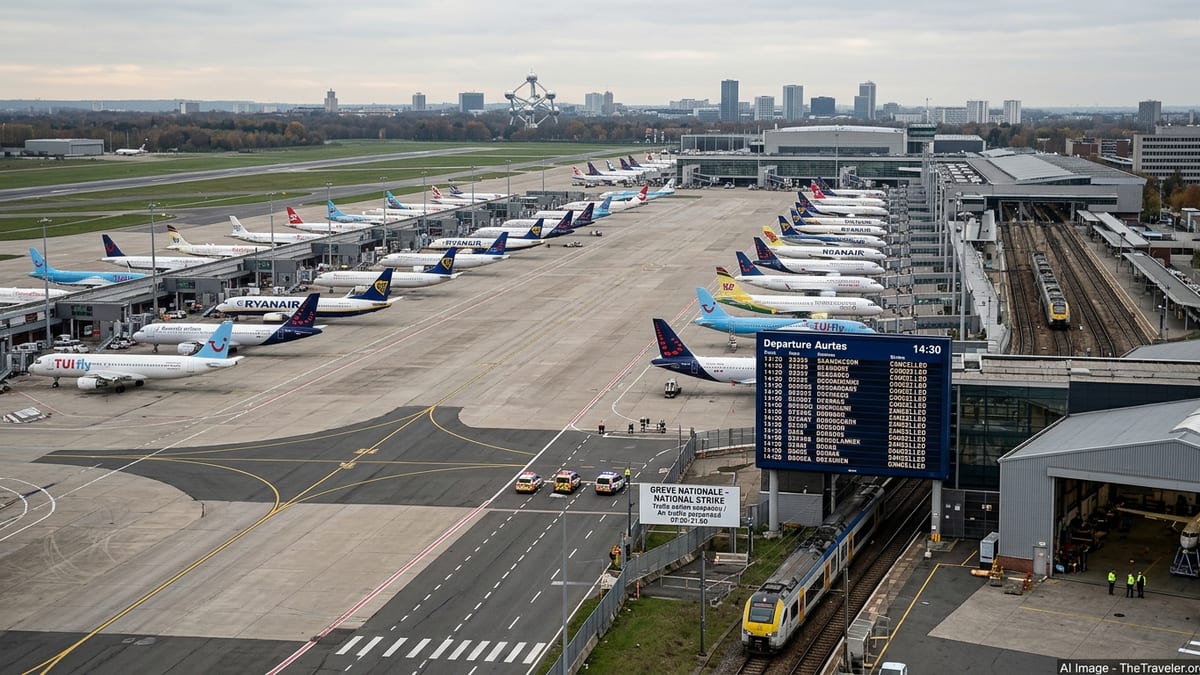
How the 23 November strike shut down Belgian airspace
The 23 November action formed part of a nationwide day of protest by Belgium’s main union federations against federal government austerity and budget plans. As part of the wider movement, air traffic controllers at skeyes, Belgium’s air navigation service provider, filed a strike notice covering that date. Once participation by a portion of controllers was confirmed, skeyes said it would not be able to provide normal services between 07:00 and 21:00 local time, reserving Belgian airspace in that window mainly for emergency and safety-critical flights.
In response, Brussels Airport announced ahead of the strike that virtually all commercial passenger departures and arrivals scheduled between 07:00 and 21:00 on Monday 23 November would need to be cancelled. Airport projections cited around 59,500 passengers booked on 429 flights for the day, with later tallies by industry outlets indicating that 404 passenger flight movements were ultimately removed from the schedule as airlines completed their operational planning.
Because skeyes manages Belgian airspace as a whole rather than individual airports, the impact extended beyond the country’s main hub. Brussels South Charleroi Airport, which handles a large share of low cost and leisure traffic, also warned in advance that it expected no regular commercial flights during the core strike window. Local reporting and airport advisories on the day described operations as effectively at a standstill, aside from limited non-scheduled or exempt movements.
Airlines’ operational response and passenger disruption
Once the scale of the air traffic control participation in the strike became clear over the weekend of 21–22 November, airlines using Brussels and Charleroi began cancelling services in large blocks. Brussels Airlines, TUI fly Belgium, Ryanair and other European and intercontinental carriers withdrew most or all of their Brussels Airport programmes for 23 November, adjusting timetables and aircraft rotations to route aircraft through alternative hubs where possible.
The cancellations were spread across short haul and long haul networks. European point-to-point links, such as frequent services to major cities like London, Paris, Frankfurt and Amsterdam, were removed alongside transatlantic and other long distance routes. Several carriers arranged rebookings that combined air and rail, in particular using domestic and international trains to connect passengers from Brussels to other airports where onward flights could operate as planned.
For travellers, the primary options depended on the fare rules and the policies of each carrier. In line with European passenger rights regulations, most airlines offered a choice between rebooking on the next available service, including via alternative routings, or a refund of the unused ticket. Carriers also provided meals and, where necessary, hotel accommodation for passengers stranded overnight, although reports from affected travellers suggest that availability varied depending on how quickly they were able to contact their airline and whether they were already en route when the cancellations were confirmed.
Wider transport impact across Belgium
The national strike disrupted much more than air travel. In Brussels and other major cities, public transport operators reported heavily reduced services. The capital’s STIB network ran only a limited number of metro lines and reduced frequencies on trams and buses. Regional bus operator De Lijn said it expected around 40 percent of its services to be cancelled, while national rail company SNCB indicated that it aimed to maintain a basic timetable, although some local and commuter trains were dropped from the schedule.
International rail operators adapted their timetables to the strike conditions. High speed services such as Eurostar and Thalys continued to run, but with timetable adjustments and warnings to passengers to check train numbers and departure times on the day. For air passengers rebooked via neighbouring hubs in France, the Netherlands, Germany or the United Kingdom, these rail and coach disruptions sometimes complicated same-day connections, particularly for those travelling from smaller Belgian towns.
With flights grounded for most of the day and ground transport operating below normal capacity, hotel occupancy around Brussels and key rail hubs increased as some travellers opted or were obliged to stay overnight. While comprehensive figures have not yet been published, individual hotel groups and booking platforms reported a short-term rise in last-minute reservations for the nights of 22 and 23 November from customers affected by the strike-related cancellations.
Industrial context and reaction from the aviation sector
The 23 November action occurred against a backdrop of repeated industrial disputes in the Belgian transport sector over the past year. Airline associations noted that it was the eleventh strike in eleven months to affect Belgian airspace in some form, ranging from targeted actions at specific airports to wider stoppages involving air traffic control or ground handling services. Industry bodies representing airlines in Belgium reiterated calls for clearer minimum service rules during strikes affecting critical national infrastructure such as air navigation services.
Airlines and airport operators criticised the relatively short notice between the confirmation of significant air traffic control participation and the strike date. Statements from carriers described the timing as operationally and economically damaging, arguing that more predictable notice periods would reduce the need for last-minute schedule overhauls and make it easier to organise alternative transport and accommodation for affected passengers.
Unions, in turn, framed the 23 November national day of action as a necessary response to government cost-cutting policies that they say threaten public services and workers’ purchasing power. For air traffic controllers and aviation staff, union communications emphasised concerns about staffing levels, working conditions and the long-term funding of critical infrastructure. Full details of any subsequent negotiations between unions, employers and the federal government have not yet been made public, but union leaders have signalled that they may call further actions if talks do not lead to changes in policy.
What travellers need to know now and for future trips
By Tuesday 24 November, skeyes had resumed normal staffing and Belgian airspace reopened to regular traffic. Brussels Airport and Charleroi both returned to standard passenger operations, although some residual delays and aircraft repositioning were reported as airlines worked through the backlog created by the previous day’s cancellations. Airport and airline systems indicate that flights scheduled for dates after the strike are operating according to their published timetables unless otherwise notified.
Passengers whose flights were cancelled on 23 November should continue to work with their airline, booking site or travel agent if they have not yet been rebooked or refunded. Under European air passenger rules, travellers are generally entitled to a choice between rerouting at the earliest opportunity, rerouting at a later date convenient to the passenger, or a refund of the unused ticket. Because the disruption resulted from an air traffic control strike, which is usually treated as outside the airline’s direct control, additional cash compensation is not typically payable, although carriers remain responsible for providing care such as meals and accommodation while passengers wait for replacement transport.
Looking ahead, Belgian strike monitoring services report that new strike notices have been filed by some unions at skeyes covering a potential period in December and early January, but without specific action days yet announced. This means that further industrial action remains a possibility rather than a confirmed plan. Travellers with flights to, from or via Belgium in the coming weeks should monitor direct communications from their airline, along with operational updates from Brussels Airport, Charleroi Airport and skeyes, which normally publish passenger advisories once any future strike is formally confirmed.
For upcoming trips, practical steps include checking booking details a few days before departure, ensuring airlines have up-to-date contact information for email and text alerts, and verifying flight status on the day of travel through airline apps or websites rather than relying solely on third-party tools or printed itineraries. When a new strike date is officially announced, airlines usually outline specific options for free date changes or cancellations once they adjust their schedules. For itineraries that combine flights with trains or buses, travellers should also watch for separate strike notices affecting Belgian public transport and international rail, as these can influence the feasibility of alternative routings or connections even when flights themselves are operating.