


Dugi Otok, the “Long Island” west of Zadar, concentrates some of the Adriatic’s biggest highlights into one sweep of limestone and pine: the white sand of Sakarun, the cliffs and salt lake of Telašćica Nature Park, nearby Kornati National Park, and a constellation of caves, coves and snorkeling stops. From Zadar you can visit them on relaxed wooden excursion boats, fast RIB speedboats, or fully private charters. This guide explains what each route actually looks like on the water in 2026, what you can realistically see in one day, and how to pick the right tour for your budget and travel style.
Get the latest updates straight to your inbox!
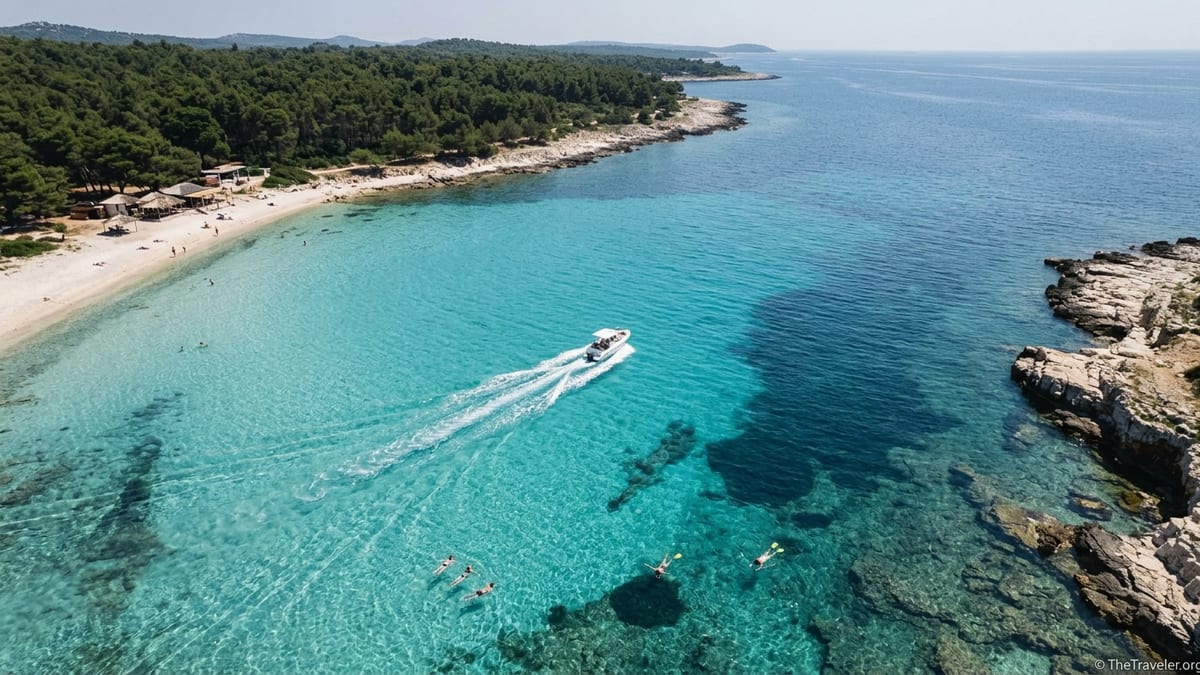
Understanding Dugi Otok, Telašćica and Kornati from Zadar
If you stand on Zadar’s promenade and look west, almost everything you see on the horizon is part of the wider Zadar archipelago. Dugi Otok sits furthest out, around 60 to 90 minutes by speedboat depending on sea conditions. Its northern half is home to Sakarun Beach and several sea caves, while the southern tip is protected as Telašćica Nature Park, right next to the island maze of Kornati National Park.
Most visitors base themselves in Zadar and join organized boat tours. A typical Dugi Otok day trip by speedboat covers two or three headline stops, such as a shipwreck snorkeling site near the islet of Lagnići, Golubinka sea cave and “Dragon’s Eye” cove near Brbišćica, plus Sakarun Beach. Other itineraries run further south and combine Kornati National Park with the quiet bay and cliffs of Telašćica, usually on a larger excursion boat with lunch on board.
In practice, that means you rarely do “all of it” in one outing. A full loop from Zadar to northern Dugi Otok, down past Telašćica and deep into Kornati, then back to Zadar would be a very long, fuel‑intensive day and is usually only offered as a premium private charter. Most travelers choose either a Dugi Otok focus (Sakarun and caves with snorkeling) or a Kornati focus (Kornati and Telašćica with a swim stop), and then decide between a group tour and a private boat.
Because these waters are protected, operators must follow speed limits and rules about where they can anchor, disembark and snorkel. In Kornati and Telašćica, every commercial tour boat needs a valid park ticket, and private boaters either buy their own permit or book a charter that includes it in the price. This is one reason you see such a wide range of prices between simple Dugi Otok fun trips and full Kornati day cruises with park fees and meals included.
Sakarun Beach and Classic Dugi Otok Boat Routes
Sakarun is one of Croatia’s best known sandy bays, a wide horseshoe of pale sand and shallow turquoise water on the northwest of Dugi Otok. In season, multiple operators from Zadar run dedicated Sakarun boat trips. Some, such as local outfits that market themselves as “Sakarun Beach Boat Tour” or “Best of Dugi Otok,” use fast RIBs or small speedboats and limit capacity to around 10 to 12 passengers. Others use larger, slower excursion boats that combine Sakarun with a stop in a village harbor.
A typical modern speedboat tour from Zadar to Sakarun runs eight to nine hours. Boats usually depart from Zadar’s new marina or the pier along Obala kneza Branimira around 8:00 to 9:00 in the morning. On the way out, many tours stop at a shallow shipwreck site in crystal water, where guests jump in to snorkel above the hull. Later in the morning they may visit Golubinka cave by swimming in from the boat, or drop anchor near the Dragon’s Eye sinkhole at Brbišćica for cliff views and another swim.
Time on Sakarun itself is often around two to three hours. Some tours anchor just outside the swimming zone and let you wade ashore. Others, especially lower‑priced group excursions, dock at the small harbor in Soline and transfer passengers the short distance to the beach by local shuttle bus. Once there, you can rent sunbeds, buy a simple lunch from beach bars, or walk a few hundred meters along the pines to find a quieter patch of sand and pebbles.
Expect realistic 2026 prices for a full‑day Sakarun and cave speedboat tour from Zadar to sit in the region of 80 to 120 euros per person in peak summer, depending on boat type, inclusions and group size. Cheaper wooden excursion boats with a slower schedule can drop closer to 60 to 70 euros per adult including a basic lunch, while fully private speedboat charters for a couple or family often start around 500 to 700 euros for the day plus fuel.
Telašćica Nature Park: Cliffs, Salt Lake and Quiet Bays
Telašćica Nature Park occupies the southern part of Dugi Otok and is famous for two striking features: the calm, fjord‑like bay of Telašćica itself and the vertical cliffs that drop into open Adriatic on the park’s outside edge. Near the center of the bay lies Lake Mir, a small saltwater lake often a few degrees warmer than the sea. Many excursion boats dock at one of several piers inside the park and give passengers one to two hours to walk the marked paths between the lake and the cliff viewpoints.
Group tours from Zadar that focus on Telašćica often combine it with Kornati National Park, because the two protected areas share a boundary. A typical itinerary on a larger boat leaves Zadar around 8:00, threads through the outer islands of the archipelago, reaches Kornati’s islets by late morning, stops for a swim in a sheltered bay, and then enters Telašćica for lunch and a walking break. Onboard you might get a simple grilled fish or meat platter with salad, plus wine or juice.
Compared with Sakarun tours, Telašćica and Kornati excursions feel less like a beach day and more like a slow cruise through dramatic landscapes. Instead of extended time ashore, the highlight is the boat ride itself: dry stone terraces lining Kornati’s slopes, tiny fishermen’s houses tucked into coves, and the sense of crossing open channels between sparsely inhabited islands. Swimming and snorkeling still feature, but usually at one or two short stops rather than a long afternoon on the sand.
Because park tickets are bundled into the price, rates for a full‑day Kornati and Telašćica tour in 2026 often fall in the 70 to 100 euro range per adult for shared boats, again depending on the operator, included meals and drink, and whether the boat has a contracted arrangement with the park that lowers ticket costs. Children sometimes pay a reduced rate, and many operators run seasonal discounts outside July and August.
Kornati National Park by Boat: What to Expect
Kornati National Park is a ragged cluster of more than 80 islands and reefs south of Dugi Otok. On maps it looks close to Zadar, but once you are on the water you feel the distance: even a reasonably fast excursion boat usually needs around two hours to reach the outer islets, and slower wooden vessels can take longer. For that reason, most Kornati tours from Zadar are full‑day affairs, often running nine to ten hours total.
Passengers generally board in Zadar’s main port or at nearby marinas in the early morning. After leaving the shelter of the inner islands, many captains choose a route that loops around the outer Kornati islets, giving you views of the park’s signature “crown” cliffs, which fall almost vertically into the sea. Somewhere along the way, the boat will stop in a bay such as Telascica’s Mir Bay area or one of the quiet inlets on the island of Kornat itself, where a small restaurant or konoba serves a prearranged lunch of grilled fish, meat or vegetarian plates.
Snorkeling on Kornati tours is usually improvised around these swim stops. The water is typically very clear, with rocky seabeds, seagrass, small fish and the occasional starfish. However, unless you book a dedicated diving or snorkeling charter, you should not expect coral‑reef levels of marine life or long hours in the water. Most mainstream Kornati boats carry some masks and snorkels, but serious snorkelers tend to bring their own gear for comfort and hygiene.
Entrance fees to Kornati and associated nature park zones are calculated per boat, based on vessel length and season. For independent boaters in summer 2026, a combined three‑day ticket for Kornati and Telašćica for a small motorboat in the under‑7‑meter category costs on the order of a little over one hundred euros when bought in advance through official channels. Commercial tour operators spread the cost across passengers and often benefit from contracts that give them more favorable pricing, which is why a group tour ticket can feel relatively good value compared with the cost of taking your own rental boat into the park.
Caves, Snorkeling Stops and “Adventure” Style Tours
Dugi Otok’s western shore has become known in recent years for a string of caves, coves and snorkeling spots that suit smaller, faster boats. The best known are Golubinka sea cave and the nearby Dragon’s Eye, a collapsed sinkhole filled with sea water near Brbišćica. In calm conditions, speedboat tours anchor outside Golubinka and let guests swim into the cave, where shafts of light pierce the water at certain times of day. At Dragon’s Eye, some visitors swim and float inside the natural pool while others stay on the rocks and take in the view.
Many Dugi Otok adventure tours pair these cave stops with the aforementioned shipwreck near the islet of Lagnići, snorkeling over shallow reefs, and a break at Sakarun or another beach, such as Veli Žal further south. These routes are especially popular with younger travelers, couples and small groups of friends who prefer a more active day on the water with several short swim sessions rather than a single long beach stay.
Conditions are important. In windy weather or with a swell running, captains may skip certain caves for safety or shorten swim stops because climbing back onto a small RIB can be challenging in choppy seas. When comparing offers on the harbor promenade or online, look carefully at how operators describe their “cave tour.” The more reputable companies clearly state that access to caves depends on weather and sea state on the day and that alternative stops will be offered if needed.
Prices for such adventure‑style Dugi Otok speedboat tours in 2026 tend to cluster in the 80 to 110 euro range per person, often including water, some basic snorkeling equipment, and a small snack. Drinks and proper meals are usually at your own expense in a village harbor or beach bar. Because capacities are limited, these trips can sell out quickly in July and August; advance booking is sensible if you have a specific date or are traveling in a group.
Private Boats vs Group Tours from Zadar
Choosing between a private boat and a group tour from Zadar largely comes down to budget, comfort expectations and how much control you want over the itinerary. Group tours on larger excursion boats are generally the most economical. They might take 40 to 80 passengers in summer, include welcome drinks and lunch, and run fixed routes to Kornati and Telašćica or, less often, Sakarun. They are social, straightforward and forgiving if you simply want to be looked after without making many decisions.
Smaller group speedboat tours sit in the middle ground. With perhaps 10 to 12 guests on board, they feel more intimate and can reach coves and caves that larger vessels cannot. These tours typically stick to a Dugi Otok focus, visiting Sakarun, caves and snorkeling spots, or occasionally a shorter loop that skips Sakarun in favor of more time in the sea caves and at a village like Božava. They cost more per person than the big boats but are still far cheaper than hiring a boat privately.
Private speedboat charters and small motor yachts give you maximum flexibility. In 2026 it is common to see daily charter rates from Zadar to Dugi Otok and Kornati starting somewhere in the 500 to 900 euro range for the boat and skipper, with fuel either included up to a certain limit or charged separately based on actual consumption. A couple might find that expensive, while two families traveling together and sharing the cost can bring the per‑person rate into line with, or even below, higher‑end group tours.
If you hold a valid boat license recognized in Croatia, renting a bareboat from Zadar and captaining it yourself is another option for exploring nearer islands. However, reaching Dugi Otok’s caves or Kornati’s exposed channels demands local knowledge, attention to weather forecasts and confidence with navigation. Many visitors who like the idea of independence but lack experience opt instead for a skippered private trip, where a local captain proposes a realistic plan for the day based on wind, swell and your preferences.
Is a Day Tour Enough or Should You Stay on Dugi Otok?
For many travelers, a single long day out from Zadar is enough to get a satisfying taste of Dugi Otok or Kornati. A well‑run Sakarun and caves speedboat tour lets you swim in bright blue water, see sea cliffs and caves up close, and spend a couple of hours on a notably sandy Croatian beach before cruising back towards Zadar as the sun lowers. Likewise, a full‑day Kornati and Telašćica cruise delivers a broad overview of the archipelago’s wild, sparsely inhabited landscapes, filtered through the slow rhythm of a traditional excursion boat.
However, if you are drawn to quieter evenings, empty coves at sunrise and unhurried coastal walks, staying on Dugi Otok for a few nights changes the feel completely. Villages like Sali in the south and Božava or Veli Rat in the north act as low‑key bases, with small guesthouses, apartments and a handful of konobas. From Sali you can more easily explore Telašćica at different times of day, perhaps visiting Lake Mir early in the morning before day‑trippers arrive. From Božava or Veli Rat, it is a shorter hop to Sakarun and the shipwrecks and reefs nearby.
Another argument for staying overnight is logistics outside peak season. In shoulder months like May, June, September and October, public catamarans and island buses run with limited frequency. That can make it tricky to fit a DIY visit to both Sakarun and Telašćica into a single day using scheduled services alone. In contrast, booking a local boat from a village harbor for a few hours to reach a nearby bay or cliff viewpoint is relatively straightforward when you are already on the island.
In simple terms, if your time in the region is tight and you want “the best you can do in one shot,” a full‑day organized tour from Zadar is absolutely worthwhile and efficient. If you have more time and value slower travel, consider pairing one boat excursion with two or three nights on Dugi Otok, using a mix of local buses, hiking trails and shorter boat hops from Sali or Božava to deepen the experience.
Practical Tips, Costs and Booking Advice for 2026
When planning Dugi Otok boat tours for summer 2026, think of prices as banded rather than fixed. Shared wooden excursion boats to Kornati and Telašćica with a simple onboard lunch often fall around 70 to 90 euros per adult in high season. Faster, smaller shared speedboats doing Dugi Otok loops that include Sakarun and several snorkeling stops tend to sit around 80 to 120 euros. Private speedboat charters typically start near 500 euros for the boat and skipper, with fuel and park fees potentially adding a couple of hundred euros more for longer routes or if you venture deep into Kornati.
Booking ahead is strongly advised for July and August, when operators report that popular departure days, especially weekends and small‑group excursions, can fill a week or more in advance. In shoulder season you have more flexibility and can sometimes decide a day or two before once you have seen the forecast. Walk‑up offers sold at kiosks on Zadar’s waterfront can be convenient but vary in quality; it pays to read recent reviews and ask specific questions about maximum group size, included stops, and what happens if weather forces a change of plan.
On the day itself, pack as if you were going hiking under a hot sun with added salt water. That means a wide‑brim hat or cap, reef‑safe sunscreen, a light long‑sleeved shirt, water shoes if you have sensitive feet for rocky entries, and a dry change of clothes for the ride back. Many boats have shade, but you will still spend hours in intense Adriatic light, especially on open decks and swim platforms. Basic masks and snorkels are often provided, yet frequent snorkelers usually bring their own for comfort and hygiene.
Finally, stay flexible. Even in peak summer, the captain may tweak the order of stops or swap one cove for another based on wind, waves and crowd levels. A good operator will explain these choices and make sure you still get a mix of scenery, swimming and shore time. The more you approach the day as a shared adventure rather than a rigid checklist, the more you are likely to enjoy the unplanned details that often become the most memorable parts of a Dugi Otok or Kornati tour.
The Takeaway
From Zadar, Dugi Otok and its neighbors are close enough for a memorable day trip yet wild enough to feel like a proper sea voyage. Sakarun offers soft sand and shallow turquoise shallows, Telašćica layers quiet bays with high cliffs and a warm salt lake, and Kornati stretches a dramatic necklace of almost bare islands across the horizon. Whether you choose a budget‑friendly group excursion, a nimble adventure speedboat, or a tailored private charter, you will spend much of the day surrounded by clear water, stone and sky.
If you only have one day, decide whether your priority is a beach focus with several snorkeling stops around Dugi Otok, or a scenic cruise through Kornati and Telašćica’s protected landscapes. Either can be deeply rewarding and does not require you to arrange your own boat or navigate park permits. If you have more time, consider staying on Dugi Otok itself to experience its coves and trails at a slower pace, perhaps adding a second, shorter boat outing from Sali or Božava.
Above all, remember that these islands still live on the rhythm of wind, waves and working harbors. Give yourself permission to slow down, talk to your crew, watch the coastline change as you move, and treat the swimming spots and caves as a bonus rather than the whole point. Framed that way, a day on the water around Dugi Otok, Sakarun, Telašćica and Kornati becomes less of a checklist and more of a quietly memorable slice of Adriatic life.
FAQ
Q1. Is a single day tour from Zadar enough to see Dugi Otok and Kornati?
A one day tour is enough to get a strong first impression of either Dugi Otok or Kornati, but not both in depth. Most travelers choose between a Dugi Otok focused route with Sakarun and caves or a Kornati and Telašćica cruise. If you want to experience Sakarun, Telašćica and a deeper Kornati loop, consider combining one full‑day tour with an overnight or two on Dugi Otok.
Q2. How much do Dugi Otok and Kornati boat tours from Zadar cost in 2026?
Shared wooden excursion boats to Kornati and Telašćica with lunch generally fall around 70 to 90 euros per adult in peak season. Small group speedboat tours to Dugi Otok, Sakarun and snorkeling caves often cost about 80 to 120 euros per person. Private speedboat charters from Zadar commonly start near 500 euros for the day, with fuel and park fees extra depending on the route.
Q3. Do I need to buy my own Kornati or Telašćica ticket if I join a tour?
No. Legitimate tour operators include the necessary park tickets in the excursion price and handle the paperwork. Independent boaters and bareboat renters must purchase their own Kornati and Telašćica permits, usually priced by boat length and season, which is one reason organized group tours can be good value compared with going entirely on your own.
Q4. What is the difference between Sakarun tours and Kornati tours?
Sakarun tours focus on Dugi Otok’s northwest coast and usually feature a few hours on Sakarun Beach plus stops at caves and snorkeling spots. They feel like an active beach and swim day. Kornati tours spend more time cruising past chains of largely uninhabited islands and often pair Kornati with Telašćica Nature Park, giving you dramatic landscapes and shorter swim breaks rather than a single long beach stay.
Q5. Are the sea caves and Dragon’s Eye always visitable?
Access to caves such as Golubinka and to the Dragon’s Eye pool depends on sea and wind conditions. In calm weather, speedboat tours often allow guests to swim into the cave and float in the sinkhole. When there is swell or strong wind, captains may skip or shorten these stops for safety. Reputable operators explain this clearly and offer alternative coves or viewpoints if conditions are unsuitable.
Q6. Is snorkeling around Dugi Otok and Kornati worth it if I have snorkeled elsewhere?
Snorkeling here is more about exceptionally clear water, rocky seabeds and seagrass meadows than about dense coral or large fish. You can expect schools of small fish, interesting rock formations and occasional starfish, but not tropical reef levels of color. Many visitors still enjoy the chance to cool off repeatedly in clean water, especially when combined with caves, cliffs and island scenery.
Q7. Should I book a private boat or join a group tour?
If you are on a tighter budget, a group tour on a larger excursion boat offers the best price per person and a simple, sociable day out. Small group speedboats suit travelers who value speed, smaller groups and access to coves and caves. Private boats cost more but give you control over departure time, stops and pace, which works well for families, groups of friends or travelers with specific interests such as photography or longer snorkeling sessions.
Q8. When is the best time of year to take Dugi Otok boat tours?
Late May, June, September and early October usually balance warm air and sea temperatures with fewer crowds and slightly lower prices. July and August bring the hottest weather and the most frequent departures, but also the busiest beaches and boats. In shoulder seasons, check schedules carefully, as some operators reduce frequency and may cancel tours if there are too few bookings or if the weather turns unsettled.
Q9. Can I visit Sakarun or Telašćica without booking a boat tour?
Yes, it is theoretically possible to reach Dugi Otok by public ferry or catamaran from Zadar and then use local buses or taxis to get to Sakarun or Telašćica. However, services are limited and timetables may not line up well for a same day visit to multiple sites. For most short term visitors, an organized boat excursion remains the easiest way to see these highlights in one day.
Q10. What should I bring on a boat tour to Dugi Otok or Kornati?
Bring strong sunscreen, a hat, sunglasses, swimwear, a light long sleeve layer, a towel, and water shoes if you prefer not to walk on rocks. A dry bag or waterproof pouch protects phones and cameras during swim stops. While many operators provide basic snorkeling gear and water, carrying your own mask and an extra bottle of drinking water adds comfort, especially on long, hot summer days.