


Greece has more spectacular beaches than most travelers can fit into a lifetime, but not all stretches of sand are created equal. Some islands are about calm, shallow turquoise coves perfect for families; others are better if you want Fuerteventura style trade winds, long dunes and serious wave action. This guide focuses on the Greek islands that consistently stand out for their beaches: Crete, Naxos, Milos, Zakynthos, Lefkada, Kefalonia, Skiathos and Rhodes, plus a look at Greek spots that feel closest in character to Fuerteventura. For each island you will find a practical sense of sand type, water color, typical wind and how easy it is to actually reach the best shores once you are there.
Get the latest updates straight to your inbox!
How to Choose the Right Greek Island Beach for You
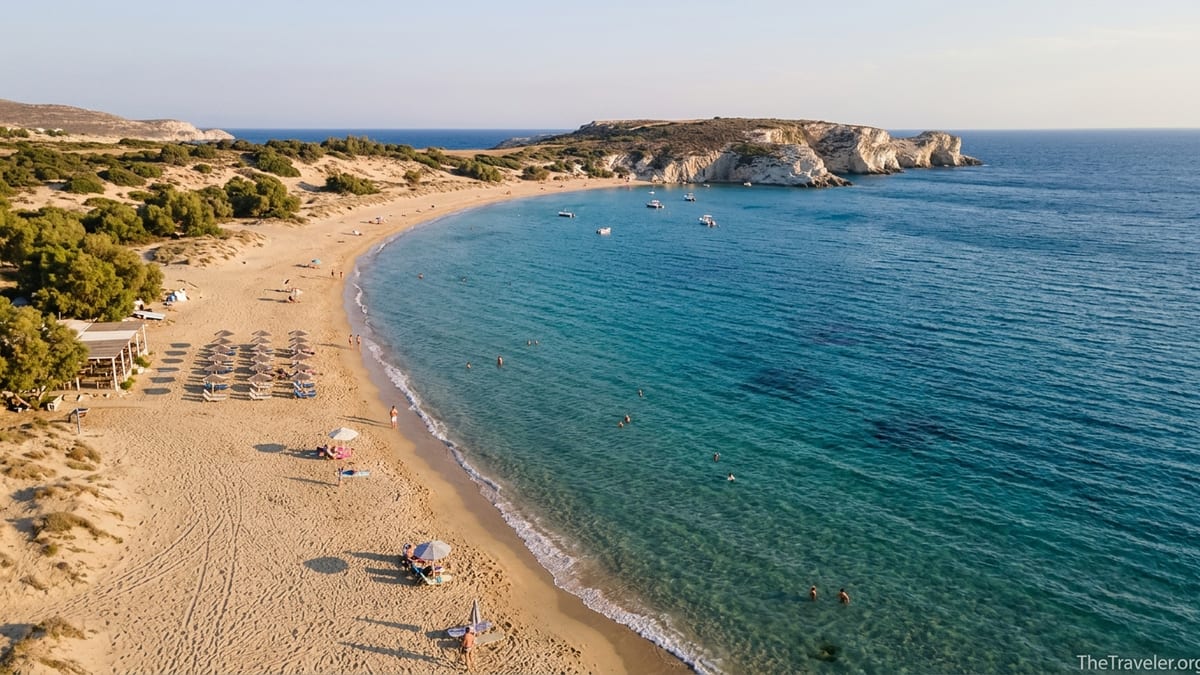
Before you lock in ferry tickets or flights, it helps to be clear about what kind of beach holiday you want. A family with small children looking for shallow, sheltered water and tavernas right on the sand will have a very different experience on Naxos than on the windier stretches of Crete. In high season, a sunbed and umbrella in Greece can cost anything from roughly 10 to 40 euros per day for two people, depending on how fashionable and serviced the beach is, so choosing the right setting can also help control your budget.
Sand and water color are the first things many visitors notice. Islands like Milos and Zakynthos have photogenic, electric blue coves with bright white rock or sand that makes the water look almost unreal. Naxos and parts of Crete lean toward long, golden beaches with water that shifts from pale turquoise in the shallows to deep sapphire offshore. In the Ionian Sea, especially around Lefkada and Kefalonia, steep white cliffs meet deep cobalt water that turns a milky turquoise where waves churn up limestone sand.
Wind is the factor many people underestimate. July and August bring the Meltemi, a strong north wind that can roughen the sea and make exposed beaches feel cooler. That is ideal if you want to windsurf or kiteboard, less so if you are set on calm, glassy water. Naxos and some northern Cretan beaches can be breezy in peak season, while many Ionian beaches, shielded by mainland mountains, tend to be calmer. If your ideal day looks like Fuerteventura style kitesurfing on long dunes, you will want those breezes. If you are traveling with toddlers and inflatable unicorns, you may prefer a more protected bay.
Access also matters more than it seems on a map. On Crete, a beach like Balos Lagoon is world famous but involves either a bumpy dirt road and steep walk or a day boat from Kissamos, while Elafonisi has coach and public bus connections. On Zakynthos, the iconic Navagio Shipwreck Beach is currently closed to landings because of landslide risk, so you can only see it from boat or clifftop viewpoints. By contrast, many of Naxos’s best beaches are simply the next bus stop away from the main town, which changes the feel of a beach holiday completely.
Crete: Big Island, Big Variety of Beaches
Crete is almost a country unto itself and offers some of the most varied beach experiences in Greece. Around Chania in the northwest you find famous names like Balos, Elafonisi and Falassarna that often appear on global “best beaches” lists. Balos Lagoon is known for its shallow, luminous turquoise water over white sand and crushed shells, but you pay for the beauty with logistics: most visitors either take a day cruise from Kissamos or tackle a rough track in a rental car, then walk down a rocky path for around 20 minutes to the sand. In July, expect the main part of the lagoon to be busy by late morning.
Elafonisi, on Crete’s southwest tip, is easier to reach, with summer buses running from Chania and plenty of parking if you drive. The sand has a subtle pink tint in places from crushed shells, and the water stays shallow and warm far out, making it popular with families. It can be windy, but the lagoon layout offers some shelter. Sunbed sets with umbrellas here typically cost in the region of 15 to 25 euros in high season, while there is still space to lay a towel further away from the main concessions if you prefer a wilder feel.
On the north coast near Chania, beaches like Agia Marina and Platanias mix broad sandy stretches with a livelier resort scene and more consistent wind, which can suit light windsurfing and paddleboarding in the afternoons. Further east, beaches near Rethymno and Heraklion tend to be long and sandy with shallow entries and a mix of organized sections and quiet patches. On the south coast, places like Preveli and the palm lined river mouth at Agios Pavlos require more effort to reach and are less developed, with pebbles in some areas and clearer, slightly cooler water flowing from mountain springs.
Wind on Crete varies strongly by area and day, but in summer you should plan for at least a moderate afternoon breeze on north facing beaches. For a Fuerteventura style combination of wind and sand, many experienced visitors head to stretches of the north coast around Ammoudara or the wide bay of Kouremenos in eastern Crete, where regular winds support windsurf and kitesurf schools. If you simply want to swim in calm water, either go early in the day before the wind builds or choose more sheltered south coast coves.
Naxos: Golden Sands and Family Friendly Shelters
Naxos has built a reputation as one of the most balanced islands for beach lovers, especially if you like wide golden sand with clear, shallow water. The west coast south of Naxos Town is essentially one long sequence of beaches: Agios Georgios, Agios Prokopios, Agia Anna, Plaka and beyond. You can often reach them using the same local bus that starts from the port, making it one of the easiest islands for car free beach hopping. A one way bus ticket typically costs only a few euros, and the ride from town to Plaka is usually under half an hour.
Sand on Naxos’s main west coast beaches is mostly fine and golden, with some patches of slightly coarser grains and dunes backing parts of Plaka. The sea here tends to be shallow for many meters, an advantage for children or nervous swimmers. Color ranges from pale turquoise near the shore to a deeper blue further out, especially on days with strong sun and light wind. Most of these beaches have a mix of organized sections offering sunbeds and shade, as well as free zones where you can simply put down a towel.
Wind is the only real caveat, especially in July and August when the Meltemi can blow steadily from the north. That often means small, playful waves and whitecaps by mid afternoon, which appeals to windsurfers at spots like Mikri Vigla further south along the same coast. If you want a more sheltered swim on a windy day, locals sometimes point visitors toward smaller coves on the east side of the island or to early morning dips before the breeze peaks. Compared with Fuerteventura, Naxos is breezy rather than extreme, but you will feel the wind on exposed beaches at the height of summer.
Access on Naxos is straightforward. Many visitors book accommodation within walking distance of Agios Georgios or Agios Prokopios and then day trip further along the coast. Car rental costs are broadly in line with the rest of the Cyclades, often starting from around 40 to 60 euros a day in peak season, which lets you reach remoter spots like Alyko with its low dunes and more rugged feel. Overall, Naxos offers perhaps the best combination in Greece of easy logistics, soft sand, clear water and a range of wind levels depending on which spot you choose.
Milos: Photogenic Coves and Varied Shores
Milos has fewer long sandy strands than Naxos but compensates with some of the most distinctive coastline in Greece. Sarakiniko is the island’s poster beach: a moonscape of smooth white volcanic rock dropping into luminous turquoise water. There is very little sand here, so it is more about swimming and cliff jumping than classic sunbathing, and in midsummer it can be very hot under the sun, with limited natural shade. Families often bring their own umbrellas or visit early or late in the day for softer light.
For sand and swimming, beaches like Firiplaka, Paliochori and the southern arc from Provatas to Agia Kiriaki offer more conventional setups, often with beach bars, sunbeds and access via paved or reasonable dirt roads. The sand at Firiplaka is a mix of coarse and fine grains with colored pebbles, and the cliffs behind show bands of red, orange and white rock, which change color throughout the day as the sun moves. Water clarity is usually excellent, and on calmer days the sea can look almost clear over a pale sandy bottom, similar in tone to parts of Zakynthos or Kefalonia.
Because Milos sits in the Cyclades, it is also affected by the Meltemi. Certain north facing bays can be very windy and choppy on strong days, while the south coast often remains relatively sheltered, which is why many boat tours adapt their route based on which side of the island is calmer. Sailings to the famous Kleftiko sea caves, for example, may leave from different small ports depending on conditions. When winds are moderate, they add a welcome freshness to hot days without preventing swimming.
Access to Milos’s best beaches is a mix of easy drives and more adventurous approaches. Pollonia and the port town of Adamas have small, walkable beaches, but to reach Kleftiko you must join a boat excursion, which typically runs as a half or full day trip from Adamas or nearby harbors. Prices vary by vessel size and season, but travelers often report paying in the range of 60 to 100 euros per person for a full day that includes lunch and several swim stops. For independent beach hopping, a small rental car or quad is almost essential, as public buses serve only the main settlements and a limited set of beaches.
Zakynthos, Lefkada and Kefalonia: Ionian Color and Clifftop Drama
The Ionian Islands on Greece’s west side feel quite different from the Cyclades. They are greener, with pines and cypresses descending almost to the shore, and have some of the country’s most dramatic combinations of cliffs and sea. Zakynthos is perhaps the most famous thanks to Navagio, known as Shipwreck Beach, with its rusting freighter on a white pebble strip framed by high limestone walls. However, due to landslide risk the authorities currently prohibit boat landings on the actual beach, so most visitors now experience it from clifftop viewpoints or by taking boat trips that pause outside the cove for photos rather than anchoring on the sand.
Beyond Navagio, Zakynthos has plenty of accessible beaches. The southern and eastern coasts offer wide sandy bays like Laganas and Tsilivi, with shallow, warm water and a fully developed holiday infrastructure of hotels, tavernas and water sports. Portions of Laganas Bay are protected as nesting grounds for loggerhead turtles, so beach behavior and boat activity are regulated in some zones. West coast spots such as Porto Limnionas and Porto Roxa are rock platforms with exceptionally clear, deep blue water, better for strong swimmers and cliff jumping than paddling with children.
Lefkada and Kefalonia share the same brilliant Ionian color palette. On Lefkada, beaches such as Porto Katsiki, Egremni and Kathisma combine fine pebbly sand with towering white cliffs and turquoise to cobalt water. Access can involve long staircases or winding roads, and in high season parking lots can fill by late morning, especially on weekends. On Kefalonia, Myrtos Beach is the signature view: a sweeping white arc under high cliffs with incredibly vivid turquoise water where suspended limestone particles catch the light. Like Lefkada’s west coast, it is exposed to swell and can have strong shore break when the sea is up.
Wind in the Ionian tends to be gentler than in the central Aegean. You still get afternoon breezes, but the sea is often calmer, especially in the mornings. Sailing and sea kayaking are popular, and the water can feel slightly warmer than in the Cyclades at the same time of year. Access to beaches ranges from straightforward, such as the drive down to Antisamos on Kefalonia with its organized loungers and beach bars, to more challenging, such as Egremni where a very long staircase descends from the cliffs. Renting a car is highly recommended on all three islands if you want to sample multiple bays in a short trip.
Skiathos and Rhodes: Classic Resorts and Hidden Coves
Skiathos, in the Sporades, is smaller than Crete or Rhodes but packs in more than 60 beaches along a compact coastline. The south and southwest shores are lined with sandy bays, many of them backed by pine forest and reachable by the island’s single main bus line that runs from Skiathos Town toward Koukounaries. This makes it easy to stay in town and simply ride the bus to a different beach each day, hopping off at stops like Vromolimnos, Agia Paraskevi or Banana Beach. Koukounaries itself is a broad horseshoe of fine sand with shallow water, usually calm in summer due to its sheltered position.
The north coast of Skiathos is more rugged and exposed, with beaches like Lalaria accessible only by boat in suitable conditions. Here you find pebbles and more dramatic rock formations, and the sea can be wilder and cooler. Overall, Skiathos feels less windy than the central Cyclades, which suits travelers seeking relaxed swimming and easy access over serious wind sports. Beach bars and tavernas are common on the south shore, with sunbed prices comparable to other popular islands.
Rhodes, one of Greece’s largest islands, combines long resort beaches with a scattering of quieter coves. The east coast between Rhodes Town and Lindos has many broad, sandy or sand-and-pebble bays such as Faliraki, Kolymbia and Tsambika. Water here is generally calm and warm in summer, and development ranges from simple family run apartments to full service resorts. Lindos itself overlooks several beautiful coves with clear turquoise water, some framed by whitewashed buildings climbing the hillside toward the acropolis.
On the west coast, Rhodes feels more windswept and is popular with windsurfers and kitesurfers around areas like Ixia and Prasonisi. Here you will find stronger onshore wind and choppier seas, along with rental centers offering boards, sails and kites for those who want to ride. Access is straightforward by road, and many visitors combine a few days in Rhodes Town or Lindos with day trips to more remote coves by rental car. The island’s size means you can almost always find a beach with conditions to suit the day: calm and shallow on the east, or breezy and energetic on the west.
Fuerteventura Style Alternatives in Greece
Travelers who love Fuerteventura’s combination of long sandy beaches, consistent wind and relaxed, surf centric atmosphere often ask whether there is a direct Greek equivalent. No Greek island mirrors it exactly, but certain areas come close in feel. The north and east coasts of Crete, for example, have stretches where summer trade like winds blow most days, especially around spots such as Ammoudara near Heraklion and Kouremenos in the far east. Here you find windsurf and kitesurf schools, equipment rental and relatively uncrowded sand, though the landscape is more mountainous and less desert like than in the Canary Islands.
Naxos is another good candidate for those who want a mix of beach life and wind sports. Mikri Vigla, on its southwest coast, is a known windsurfing and kitesurfing hub, with a long sandy bay facing the prevailing north wind. On a typical July afternoon the water here might be dotted with colorful kites and boards, while a short walk around the headland brings you to a more sheltered bay for swimming. Local centers offer multi day equipment rental and beginner lessons, often priced in the region of a few hundred euros for a course spread across several sessions.
Rhodes, particularly around Prasonisi at its southern tip, also has a Fuerteventura like vibe when the wind is up. A sand spit there separates two seas, creating a flat water lagoon on one side and waves on the other, depending on conditions. This setup appeals to mixed ability groups, where some want to learn the basics in calmer water while others chase stronger wind and chop. Seasonal rental operations line the beach in summer, and while the area can feel busy in July and August, the bay is large enough to spread out.
If your priority is endless dunes and semi desert scenery more than specific Greek culture, you might still find the original Fuerteventura hard to beat, but the Greek alternatives offer the advantage of traditional tavernas, historic towns and often warmer, more swimmable water outside the windiest spots. When planning, pay attention to wind statistics for July and August and consider visiting in June or September if you want a compromise between reliable breezes and more moderate conditions for swimming.
Planning Your Beach Time: Season, Costs and Access
Seasonality shapes the experience on all of these islands. July and August bring the warmest water and most reliable sunshine but also the strongest winds and largest crowds. On beaches like Elafonisi, Balos, Naxos’s west coast and Skiathos’s Koukounaries, arriving before 10 in the morning can make the difference between finding front row loungers with space around you and squeezing into the last available spot. Shoulder months such as late May, June, September and early October often provide a sweet spot of warm seas, lighter winds and more relaxed prices for accommodation and sunbeds.
In terms of costs, most organized beaches offer tiered options. A basic pair of loungers with an umbrella at a family run taverna might be included if you order food and drinks, or charged at around 10 to 15 euros per day. Trendier beach bars on islands like Mykonos can charge far more, but on the islands covered in this guide, prices usually stay more reasonable, even in peak season. Boat excursions to marquee sights like Balos or Kleftiko often run in the 30 to 100 euro per person range depending on duration and boat size, and are an efficient way to sample otherwise hard to reach coves.
Access to the islands themselves has improved in recent years, with many offering direct seasonal flights from European cities as well as frequent ferries from mainland ports. Crete, Rhodes, Skiathos, Zakynthos, Kefalonia and Lefkada’s nearby airport at Aktion typically receive charter or low cost flights in summer, while Naxos and Milos are more commonly reached by ferry from Piraeus or by smaller domestic flights in some seasons. Once on island, public buses serve the main tourist beaches on Naxos, Skiathos and parts of Crete and Rhodes, but for maximum flexibility in exploring lesser known coves, renting a car remains the most practical option for most visitors.
Finally, safety and local rules are worth noting. On islands with high cliffs and landslide risk, such as Zakynthos and Lefkada, authorities may close or restrict access to certain beaches or viewpoints when conditions warrant. Obeying posted signs and instructions from local operators is important both for your own safety and to avoid fines. In marine protected areas, such as turtle nesting zones on Zakynthos, adhere to guidelines about beach chairs, lighting and boat distances from shore. With a bit of planning and respect for the environment, you can enjoy some of Europe’s most beautiful coastal scenery while helping to preserve it.
The Takeaway
No single Greek island can claim to have the country’s “best” beaches, because what counts as best depends heavily on what you value. If you want sheer variety and a sense of exploration, Crete’s mix of lagoons, long strands and hidden south coast coves is hard to beat. For effortless days cycling between soft, family friendly sands on local buses, Naxos and Skiathos excel. Travelers chasing dramatic cliff and turquoise water combinations will likely gravitate to Zakynthos, Lefkada and Kefalonia, while those seeking a Fuerteventura style blend of wind and sand will find solid alternatives on parts of Crete, Naxos and Rhodes.
What unites all these islands is the quality of light, water and coastal landscapes. Even a simple, unnamed cove on Kefalonia or Milos can serve up water clarity and colors that would be highlights anywhere else. By matching your own preferences for sand type, water conditions, wind level and ease of access to the strengths of each island, you can turn a generic beach holiday into something more tailored and memorable. Whether you spend your days floating in calm Ionian bays, hiking down to wild Cretan headlands or learning to ride the Meltemi on a kiteboard, Greece’s beaches offer more variety than you might expect from a country so often reduced to a single postcard image.
FAQ
Q1. Which Greek island is best for long sandy beaches with easy access?
Naxos is one of the best for long, walkable sandy beaches that are easy to reach without a car, especially along the west coast from Agios Georgios to Plaka, all connected by regular local buses from Naxos Town.
Q2. Where can I find Greek beaches with Fuerteventura style wind for kitesurfing?
Parts of Crete’s north and east coasts, Naxos’s Mikri Vigla area and Rhodes’s Prasonisi peninsula all offer regular summer winds, sandy beaches and on site windsurf and kitesurf schools that feel closest in spirit to Fuerteventura.
Q3. Is Navagio Shipwreck Beach on Zakynthos currently open for swimming and landing?
Due to ongoing landslide risk on the surrounding cliffs, authorities currently restrict or prohibit direct landings on Navagio Beach, so most visitors experience it from boat just offshore or from designated clifftop viewpoints rather than swimming ashore.
Q4. Which islands are best if I am traveling with small children?
Naxos, Skiathos and parts of Crete and Rhodes are especially family friendly, thanks to their wide, gently shelving sandy beaches, generally calm water in sheltered bays, and good access to facilities like shade, toilets and nearby tavernas.
Q5. Are the beaches on Lefkada and Kefalonia sandy or pebbly?
Many of Lefkada and Kefalonia’s most famous beaches, such as Porto Katsiki, Egremni and Myrtos, are made up of fine white pebbles or coarse sand that looks almost white, which helps create their intense turquoise and cobalt water color.
Q6. Do I need a car to enjoy the beaches on these islands?
A car is strongly recommended on Crete, Rhodes, Milos, Zakynthos, Lefkada and Kefalonia if you want to explore multiple coves, while on Naxos and Skiathos it is quite feasible to rely mainly on local buses for the main sandy bays.
Q7. When is the best time of year for a Greek beach holiday with calmer seas?
Late May, June, September and early October often offer a good balance of warm water, plenty of sunshine, lighter winds and smaller crowds compared with the peak Meltemi and visitor season of July and August.
Q8. Are sunbeds and umbrellas free on Greek beaches?
On most organized beaches you pay for a pair of loungers and an umbrella, often around 10 to 25 euros per day, although some family run tavernas include basic sets if you order food and drinks, and there are always free areas where you can use your own towel.
Q9. Which island has the clearest water for snorkeling?
Water clarity is excellent across much of Greece, but rocky coves on Milos, Zakynthos, Lefkada and Kefalonia, as well as parts of southern Crete and Rhodes, often stand out for particularly transparent water and interesting underwater rock formations.
Q10. How windy are Greek beaches compared to Fuerteventura?
In July and August the Meltemi can make exposed Aegean beaches on Naxos, parts of Crete and Rhodes quite breezy, but overall winds are usually less extreme and more variable than Fuerteventura’s, with many sheltered bays available for those who prefer calmer conditions.