


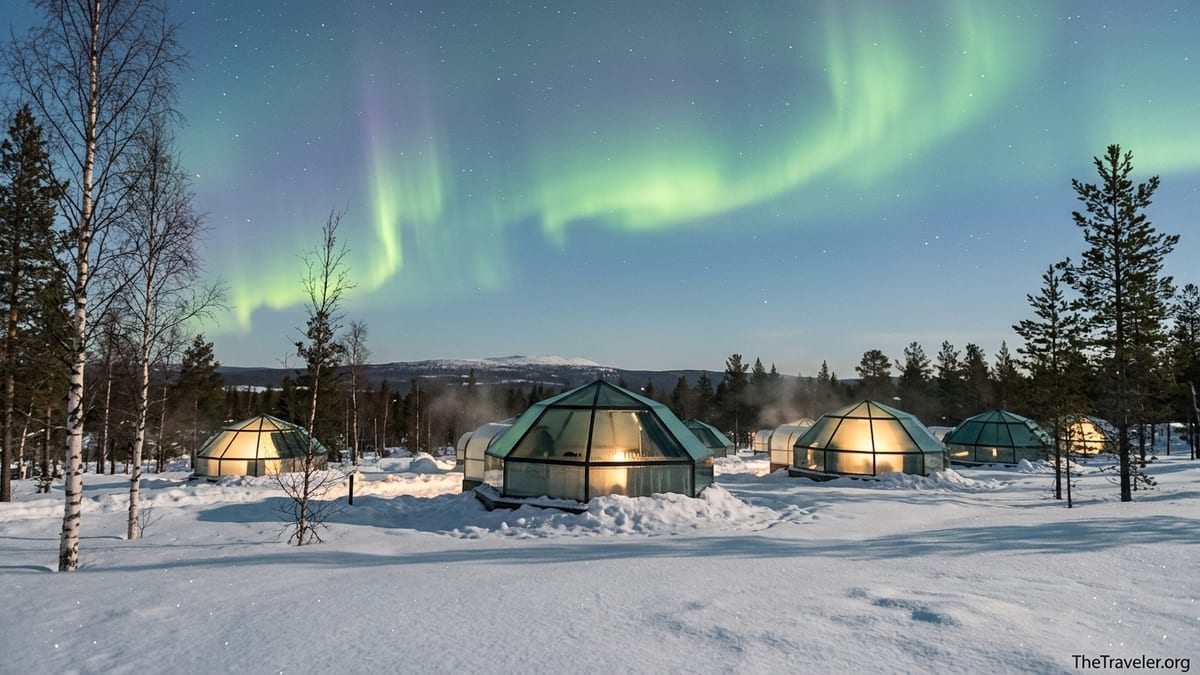
Few travel experiences feel as otherworldly as lying in a warm glass igloo while the Aurora Borealis ripples across the Arctic sky. Lapland, stretching across northern Finland, Sweden and Norway, has become the global capital for glass-roofed cabins and Northern Lights safaris. With new properties and tours opening every winter season, choosing the right trip can be the difference between a magical, well-organised Arctic escape and an expensive disappointment. This guide looks at the best glass igloo tours and Northern Lights experiences in Lapland right now, with concrete examples of where to stay, what it really costs and how to maximise your chances of seeing the aurora.
Get the latest updates straight to your inbox!
Why Lapland Is Ideal for Glass Igloos and Northern Lights
Lapland sits largely above the Arctic Circle, in the so-called “auroral zone,” where Northern Lights activity is most frequent. From roughly late August to early April, long dark nights and relatively low light pollution mean you can often see the aurora several times a week when skies are clear. In practice, many visitors booking 3 to 5 night stays in peak season report at least one good display, though no operator can ever guarantee it.
Glass igloos make the most of these conditions by combining insulated, heated accommodation with wide sky views. Modern igloo cabins are usually built with thermal glass and underfloor heating so you can sleep in regular nightwear while temperatures outside drop far below freezing. Properties in Finnish Lapland around Rovaniemi, Levi and Saariselkä, as well as Kiruna in Swedish Lapland and select sites in northern Norway, all market themselves as aurora viewing bases, often set a short drive from town to reduce light pollution.
Tourism bodies and regional operators increasingly package glass igloo nights with guided Northern Lights hunts, husky safaris and snowmobile tours. For example, specialist Lapland tour companies now advertise 2025–26 winter packages that combine glass igloo stays, aurora chasing and daytime Arctic activities across Finnish Lapland, typically over 4 to 7 days at mid-range to premium prices. These packages respond to strong demand from international travellers seeking a “done-for-you” Arctic holiday rather than piecing together separate bookings.
At the same time, growth in visitor numbers has raised concerns about overtourism in some sensitive Arctic regions. Investigations by European media have highlighted how resort developments, including glass-igloo style hotels in northern Finnish municipalities, are encroaching on previously untouched wilderness. Travelers booking Lapland trips now have more choice than ever, but also carry more responsibility to choose experiences that respect local environments and Sámi culture.
Iconic Glass Igloo Resorts to Know in Finnish Lapland
Finnish Lapland remains the best developed region for glass igloo stays, with a dense cluster of properties around Rovaniemi, Levi and Saariselkä. One of the best-known examples is the Arctic SnowHotel & Glass Igloos, about half an hour from Rovaniemi. Current winter packages marketed through Scandinavian specialists typically include one night in an ice room, two nights in a glass igloo, a welcome dinner, a husky safari and a visit to Santa Claus Village. Recent advertised prices start from around 1,700 US dollars per adult for a 4 day self-guided stay, excluding international flights.
Closer to Rovaniemi airport, Santa’s Igloos Arctic Circle offers premium glass-roofed igloos a short drive from both SantaPark and Santa Claus Village. The heated glass ceilings and hotel-style amenities are designed to feel more like a boutique hotel room than a cabin. Tour operators promoting this property describe it as “optimal for spotting the Northern Lights in the Arctic sky,” and often include it as the accommodation base in short aurora-focused itineraries tied to Christmas and New Year travel.
Further north in Finnish Lapland, classic destinations such as Levi and Saariselkä offer more remote aurora viewing with less light pollution. Dedicated booking platforms that track glass igloo hotels for the 2026–27 aurora season now highlight properties ranging from 360 degree glass pyramids near Levi to cubic glass houses on the outskirts of Rovaniemi, all marketed as Northern Lights stays. Prices vary widely, but for winter 2025–26 a realistic expectation for a mid-range glass igloo in high season is often in the region of 350 to 600 euros per night for two people, more for the most luxurious suites.
Travelers looking for something more off the beaten track are also turning to ultra-remote resorts in municipalities near the Norwegian border, where glass-igloo style rooms overlook rivers and birch forests far from major towns. These properties appeal to visitors who value quiet, deep snow landscapes and darker skies, though they usually require longer transfers and cost accordingly.
Beyond Finland: Swedish and Norwegian Lapland Igloo Experiences
While Finland popularised the glass igloo concept, Swedish and Norwegian Lapland have caught up with a smaller but fast-growing collection of domes and glass-roofed cabins. Near Kiruna in Swedish Lapland, for instance, Aurora Glass Igloos Camp offers riverfront glass igloos that were fully renovated in 2022. Guests stay on the banks of the Torne River, can build fires at outdoor firepits and watch the sky on clear nights while waiting for the aurora to appear. The setting emphasises low light pollution and the feeling of being in a small, intimate camp rather than a large resort.
Norway has focused more on glass domes and panoramic cabins rather than classic igloos, but the experience is similar: a fully heated structure with wide sky views that feels part hotel room, part observatory. Travel guides highlighting “glass igloos Norway 2025” generally point to around ten standout locations spread across northern Norway, with some sited on fjords and others inland in forested valleys. These spots are typically marketed as romantic or family-friendly Aurora retreats, often paired with Northern Lights minibus chases that can cross the Finnish border if cloud conditions are better there.
Because Norwegian fjord regions can be cloudier, many tour companies based in Tromsø and nearby towns include “chase to Finland” as part of their strategy. Travellers on recent winter tours have described evenings where the group drove several hours across the border into Finnish Lapland to find clear skies, then watched extended aurora displays long after midnight. For travellers, this means a glass igloo stay in Finland can pair well with an active minibus chase in Norway, especially on itineraries that combine both countries.
Costs in Swedish and Norwegian Lapland are broadly comparable to Finland at the mid to high end, though Norway in particular can feel expensive once food and alcohol are factored in. Many visitors therefore alternate one or two nights in premium glass igloos with simpler cabins or guesthouses to keep overall budgets in check.
Best Northern Lights Tours to Pair with a Glass Igloo Stay
Booking a glass igloo gives you a comfortable base, but guided Northern Lights tours dramatically improve your chances of both seeing and photographing the aurora. Around Rovaniemi, regional operators specialise in small-group aurora hunting, often with guarantees or “no lights, no fee” policies. One Rovaniemi-based company, for example, advertises a guaranteed Northern Lights group tour with professional photography support at about 99 euros per person, with payment only taken if the group actually sees the aurora. Another charges around 179 euros for a more extended small-group tour focused on weather-based cloud chasing and photo tuition.
Elsewhere in Finnish Lapland, companies run snowmobile-based aurora safaris that combine light adventure with sky watching. A typical example near Rovaniemi is a small-group snowmobile tour marketed as “Amazing Northern Lights with Snowmobiles,” which includes thermal overalls, boots, gloves, wool socks, snacks and all snowmobile equipment. Groups ride over frozen rivers and up forested fells roughly 30 kilometres away from city lights, stopping at viewpoints to watch for aurora activity. Such tours tend to start around early evening and return close to midnight, and are usually priced at a premium compared with simple minibus chases because of the vehicles and gear involved.
New entrants are also appearing in less publicised Lapland regions such as Ruka and Kuusamo in eastern Finland, where specialist operators now promote “100 percent Aurora Guarantee” trips. These firms emphasise expert local guides, small groups, nightly route planning based on cloud and solar forecasts and bundled activities like husky safaris and sauna experiences in addition to glass igloo stays. While no one can genuinely promise that nature will perform, customer reviews suggest that intensive cloud chasing over several nights does produce a very high success rate, especially during periods of strong solar activity.
When combining a glass igloo stay with tours, it is worth checking start and end times carefully. Many igloo properties sit 10 to 40 minutes driving time from town centres where tours depart. In practice, that can mean a hotel transfer into town in the evening, a tour that runs until after midnight and then a return transfer back to the igloo. If your priority is watching the lights from your bed, focus on properties with on-site aurora alarms and darker surroundings; if you care more about dramatic photographs and expert explanation, allocate at least one night to a guided chase by van or snowmobile.
How Much to Budget and When to Book
Lapland glass igloo holidays are firmly in the premium bracket. For winter 2025–26, specialist tour operators advertising “glass igloo and Northern Lights” packages in Finnish Lapland typically price 4 day itineraries from around 1,700 US dollars per person based on two sharing, including accommodation, some meals and activities but excluding international flights. Longer multi-country tours that add Norway or Sweden, or that target older small-group markets with a higher level of service, can cost several thousand dollars per person for 7 to 10 days.
If you book accommodation and tours independently, a realistic mid-range budget for two people might look like this: 3 nights in a glass igloo at 350 to 500 euros per night, one or two minibus aurora tours at roughly 100 to 180 euros per person, and perhaps a snowmobile or husky safari of similar cost. Once airport transfers, winter clothing rental (if needed) and meals are factored in, a 4 night trip can easily reach 2,000 to 3,000 euros for a couple, even with some nights spent in simpler cabins to save money.
Peak demand centres on December, late January and February, especially over Christmas, New Year and school holiday weeks. Many of the best-known glass igloo resorts around Rovaniemi, Levi and Saariselkä report selling out of weekends and prime-view igloos several months in advance. For travel during major holiday periods, booking 9 to 12 months ahead gives you a much better choice of room types and tour dates. Shoulder months like November and March can offer slightly lower prices and quieter resorts, with long nights still suitable for aurora viewing.
One cost that travellers sometimes forget is winter clothing. Many Northern Lights tour operators include thermal overalls, boots, gloves and hats in the tour price, but not all do. If you are travelling independently from a milder climate, budget for either high-quality cold weather clothing at home or rental gear on arrival. In midwinter, temperatures around Rovaniemi and further north can drop below minus 20 degrees Celsius, and prolonged standing outdoors to watch the sky becomes challenging without proper insulation.
Responsible Travel and Cultural Sensitivity in Lapland
Rapid growth in Lapland tourism has brought economic benefits to remote communities but has also raised concerns about environmental impact and respect for local Sámi culture. Investigations published in 2025 by European newspapers, including the Guardian and others, described how resort developments such as glass-igloo style hotels in remote parts of Finnish Lapland are encroaching on once-pristine landscapes. These reports pointed to construction deep in birch forests and along riverbanks, sometimes in areas that Sámi herders use for reindeer migration.
For travellers, this context makes it important to look beyond glossy marketing images when booking a glass igloo stay. Questions worth asking include whether the resort operates in partnership with local communities, how it manages light pollution, and whether activities such as reindeer sled rides are run by Sámi-owned businesses rather than purely for show. In practice, some higher-end tour operators now advertise close collaboration with Sámi guides and stress small-group experiences on traditional lands, while others sell more generic “Santa” themes with limited cultural grounding.
Environmental footprint is another consideration. Glass igloo resorts by their nature consume energy for heating and often require new infrastructure in fragile Arctic ecosystems. Some properties have invested in renewable energy sources, careful waste management and minimal exterior lighting to reduce their impact. When reading tour descriptions, look for mentions of sustainability measures, limited group sizes and efforts to stay away from sensitive wildlife areas.
Ultimately, choosing a responsible Lapland tour often means accepting slightly higher prices and smaller-scale operations in exchange for a more thoughtful experience. Many travellers who have taken small-group Northern Lights trips in recent winters report that intimate groups and local guides made just as much of an impression as the aurora itself, particularly when guides shared personal stories about living year round in the Arctic.
Planning Tips: Maximising Your Chances of Seeing the Aurora
Even in Lapland, seeing the Northern Lights is never guaranteed. Success depends on three main factors: solar activity, cloud cover and darkness. Solar activity follows an approximately 11 year cycle, and recent seasons have seen heightened activity ahead of the current solar maximum, which has contributed to strong displays not just in Lapland but much further south. For travellers, this means the coming winters should remain promising for aurora hunting, but any given week can still be quiet.
Cloud cover is the factor that most often frustrates visitors. Coastal Norway can be particularly cloudy in winter, which is why many tours based in Tromsø drive inland or across into Finnish Lapland to escape overcast skies. In Finland’s interior, conditions are more stable, but passing weather systems can still block the sky for several nights in a row. Booking a stay of at least three or four nights, and ideally longer, significantly raises your chances of catching a clear window.
Darkness is more straightforward: you need genuinely dark skies, which Lapland has in abundance from roughly early September until early April, with the deepest darkness and snow cover from November to February. During this period, choosing glass igloo resorts set away from town centres helps reduce light pollution. Many properties now offer aurora alarms that buzz in your room if lights appear while you sleep, which can be especially valuable on nights when you are too tired to stay outside until the small hours.
Finally, set expectations. Some nights bring spectacular curtains of green and purple light, bright enough to reflect off snow and illuminate entire landscapes. Others may offer only a faint grayish arc or brief bursts of activity. Guests writing reviews of recent glass igloo tours in Lapland often mention that their most memorable moments were not always the strongest aurora displays but the quiet of the snow, the warmth of outdoor fires and the chance to share the experience with only a handful of other people.
The Takeaway
Lapland’s glass igloos and Northern Lights tours have evolved from niche novelty to bucket-list staples, supported by a mature network of regional tour operators and resorts across Finland, Sweden and Norway. Whether you choose a classic Finnish glass igloo outside Rovaniemi, a small riverside camp near Kiruna or a remote cabin complex on the Finland–Norway border, the core appeal is the same: the chance to watch the Arctic sky from a warm, comfortable bed.
To get the most from the experience, combine at least one or two nights in a glass igloo with guided aurora hunts by van or snowmobile, budget realistically for premium winter pricing, and book well ahead for peak dates. Balance comfort and spectacle with a degree of responsibility by favouring small-group tours, local guides and properties that take sustainability and Sámi culture seriously.
With thoughtful planning and a little solar luck, your Lapland trip can deliver far more than photos. For many travellers emerging from a long night under the aurora, the lasting memory is a sense of perspective that only the Arctic sky seems able to provide.
FAQ
Q1. When is the best time to book a Lapland glass igloo for the Northern Lights?
For Finnish, Swedish and Norwegian Lapland, the main Northern Lights season runs from roughly late August to early April. For glass igloo stays, most travellers target November to March for the combination of darkness and snow. If you want to travel at Christmas, New Year or during February school holidays, it is wise to book 9 to 12 months in advance, as the most popular igloo resorts around Rovaniemi, Levi and Saariselkä often sell out early.
Q2. How many nights should I stay in a glass igloo to have a good chance of seeing the aurora?
A stay of three nights gives you a reasonable chance of at least one clear night, but four to five nights is better if your schedule and budget allow it. Weather and solar activity are both unpredictable, so building in extra nights increases the odds that one evening will provide the right conditions. Some travellers alternate glass igloo nights with cheaper cabins to keep costs manageable over a longer stay.
Q3. Are glass igloos warm enough in midwinter?
Yes. Modern glass igloos in Lapland are built with insulated, often triple-layer thermal glass and typically include underfloor heating and modern bathrooms. Even when outside temperatures drop below minus 20 degrees Celsius, the interiors are kept at normal room temperatures, and most guests sleep in regular nightwear. If you choose a snow room or ice hotel for one night, you will be given specialist sleeping bags and clear instructions to stay comfortable.
Q4. How much does a Lapland glass igloo trip usually cost?
Prices vary by location, season and comfort level, but in winter 2025–26 many mid-range glass igloo properties charge roughly 350 to 600 euros per night for two people during peak months. Adding one or two guided Northern Lights tours at about 100 to 180 euros per person, plus husky or snowmobile safaris and transfers, means a four night trip for two can easily reach 2,000 to 3,000 euros before flights. Fully packaged itineraries with multiple activities can cost more, especially on small-group escorted tours.
Q5. Do I need a guided Northern Lights tour if I am already staying in a glass igloo?
You can certainly see the aurora from your igloo if conditions are right, but a guided tour improves your chances. Professional guides monitor cloud forecasts and solar activity and are prepared to drive long distances to find clear skies. They also help with photography and provide thermal clothing if you need it. Many travellers choose at least one guided aurora hunt by minibus or snowmobile in addition to relying on their igloo’s aurora alarm.
Q6. Which Lapland area is best for combining glass igloos with other activities?
Rovaniemi is popular for first-time visitors because it combines glass igloo resorts with easy access to Santa Claus Village, reindeer farms and husky safaris, all within a short drive of an international airport. Levi and Ylläs appeal to skiers who want to mix slopes with aurora viewing, while Saariselkä and Inari offer a quieter, more remote feel. In Swedish Lapland, Kiruna and nearby camps combine well with the Icehotel and dogsledding, and in Norway, Tromsø serves as a base for fjord excursions and long-range aurora chases.
Q7. Is it better to base myself in Finland, Sweden or Norway for a glass igloo holiday?
Finland offers the widest choice of dedicated glass igloo resorts and purpose-built aurora villages, making it the simplest option if a glass roof is your main priority. Sweden and Norway have fewer classic igloos but do feature stylish glass domes and panoramic cabins, often in very scenic locations. Norway is especially strong for fjord landscapes and guided “chase” tours that may cross into Finland to find clear skies. Many travellers choose one country for their base, then add a side trip or tour that briefly crosses borders.
Q8. What should I pack for a winter Northern Lights trip to Lapland?
Plan on very cold, sometimes windy conditions, especially if you will stand outside for long periods at night. Pack thermal base layers, a warm mid-layer such as fleece or wool, a windproof insulated jacket, insulated trousers, thick wool socks, a warm hat, scarf or buff, and good gloves or mittens. Many tour operators provide additional thermal overalls and boots, but it is still important to arrive with solid personal layers. Do not forget spare camera batteries, as cold temperatures drain them quickly.
Q9. Are Northern Lights tours suitable for children and older travellers?
Most minibus-based Northern Lights tours in Lapland are designed to be accessible to a wide range of ages and fitness levels, with frequent warm-up breaks and no serious hiking. Children are usually welcome, though very late nights can be challenging for younger kids. Seniors commonly join these tours as long as they are comfortable walking short distances on snow and ice. More active options such as snowmobile safaris or extended snowshoe hikes require a higher level of mobility and may have age limits.
Q10. How can I choose an ethical Northern Lights and glass igloo operator?
Look for companies that keep group sizes small, work with local guides and Sámi-owned businesses, and are transparent about their environmental practices. Responsible operators often highlight measures such as minimising light pollution, using renewable energy where possible, and avoiding sensitive wildlife and reindeer herding areas. Reading recent traveller reviews and checking how a company responds to questions about sustainability can also reveal how seriously it takes its responsibilities in the Arctic environment.