


Rijeka’s coastline is compact but surprisingly varied. Within a 15 to 20 minute drive from the city center you can move from quiet coves shaded by pines to lively concrete sun decks below a football stadium, or family friendly promenades lined with simple grill restaurants. This guide focuses on the main city and nearby beaches used by locals Sablićevo, the Pećine cluster including Glavanovo, Kantrida and Ploče in the west, plus the popular stretch in Kostrena just southeast of town. It looks at how they compare for swimming quality, beach bars, parking, and which spots work best for different types of travelers.
Get the latest updates straight to your inbox!
Sea quality and when to swim in Rijeka
Rijeka is a working port, so visitors often worry about water quality. In practice, the main city beaches between Preluk in the west and Pećine in the east are regularly monitored during the bathing season from May to September, with samples taken several times each month at multiple points along the coast. Recent public health reports for 2024 show that a clear majority of measurements on Rijeka beaches fall into the top "excellent" category, with a smaller share marked as good. This reflects Croatia’s strong record in EU bathing water assessments, where the country consistently ranks near the top for coastal water quality.
For swimmers, that monitoring means that on most summer days the water at city beaches such as Kantrida, Ploče, Sablićevo and Glavanovo is considered suitable for bathing by European standards. Short term dips in quality can still happen after heavy rain, when runoff temporarily affects near shore conditions. Locals usually respond by skipping a day or two and checking municipal notices, which are typically posted at access paths to the bigger beaches and shared in local media.
The sea temperature follows a fairly classic northern Adriatic pattern. By late June it is usually warm enough for long swims, and from early July through late August it often stays around the mid 20s Celsius in the afternoon. Outside the high season, hardy locals use spots like Glavanovo and Kostrena for winter or shoulder season dips, taking advantage of their sheltered positions and quick access to changing areas or parked cars.
If you are visiting in high summer and want the cleanest and calmest experience, aim to swim earlier in the day, ideally before 11 am. At that time the light winds have usually not yet picked up, the water feels clearest, and city beaches are less crowded, which helps families keep an eye on children and valuables on shore.
Sablićevo: classic city beach with a local feel
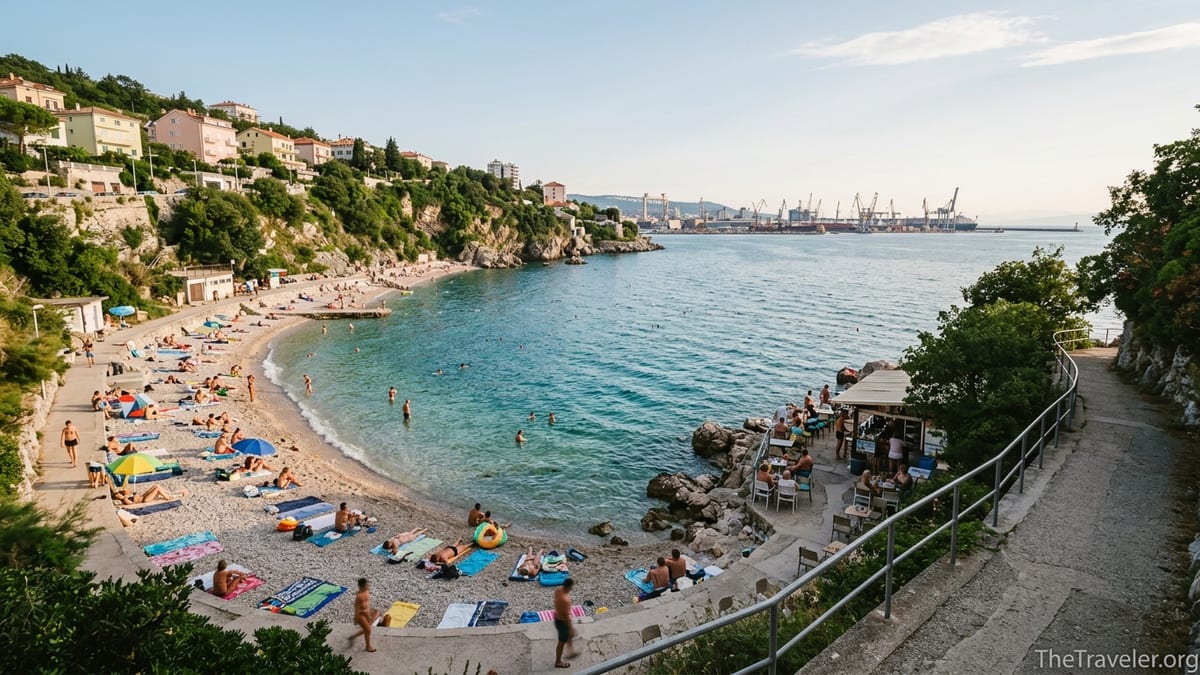
Sablićevo is one of Rijeka’s oldest and best known urban beaches. Tucked below a steep, green cliff in the Pećine district, it has a mix of fine shingle and rocky ledges, with the kind of stone stair access that immediately feels very central European Adriatic. It sits only a few minutes east of the city center by car or bus, which makes it a natural choice for visitors staying in downtown apartments or hotels who want a quick swim without leaving town.
Facilities are simple but adequate for a half day at the sea. In summer you can expect outdoor showers, some changing cabins, rubbish bins and a small beach bar or kiosk offering coffee, soft drinks, beer and basic snacks like chips or simple sandwiches. The bar typically operates on a seasonal schedule and can keep irregular hours at the very start and end of summer, so do not rely on it for full meals. Many locals instead bring a picnic or pick up a burek or bakery sandwich in town before heading down.
Parking is one of Sablićevo’s pressure points. There is a small parking area above the beach and on nearby streets, but on hot days spaces fill quickly and the road down to Pećine can become busy. Visitors without a car often have an easier time, using the city bus lines toward Pećine and walking a few minutes from the stop, or taking a short taxi ride from Korzo and then descending the steps. Families with strollers should be aware that the access is relatively steep and includes multiple stair flights.
Sablićevo suits travelers who like a compact, social beach with a distinctly local atmosphere. The swimming area is relatively narrow, framed by rocky walls, so it can feel crowded in peak season, but it offers attractive views back towards the port and out over the Kvarner Gulf. For families with small children it works best early in the day before the main crowd arrives, while couples and solo travelers often enjoy late afternoon swims followed by a drink at the bar or a walk along the Pećine coastline.
Pećine & Glavanovo: a string of coves close to town
East of the center, the Pećine neighborhood forms a chain of small beaches and bathing platforms, several of which have been formally designated and maintained by the city. Among them, Glavanovo stands out as a favorite with locals who swim regularly, partly thanks to its sheltered position and sunny exposure. Recently upgraded sun decks and paths make access easier than in the past, and its setting, enclosed by cliffs and greenery, helps protect it from wind, giving the sea a calmer, lagoon like feel on many days.
Glavanovo is especially appealing if you like to spend the whole day by the water without a long commute. The beach offers a mix of concrete slabs for sunbathing and narrow shingle strips where you can enter the sea. Shade is limited on the main decks, so many regulars arrive with lightweight pop up sun shelters or umbrellas. A small beach bar typically operates in summer, serving cold drinks and ice cream, though food options remain simple. Toilets and showers are oriented to day use rather than late night socializing, so this is more of a swimming beach than a party spot.
Elsewhere in Pećine, smaller beaches such as Vila Olga, Park Hotel and Ružićevo give variation along the same coastal strip. Some are little more than concrete terraces with ladders directly into the deeper water, which older children and confident swimmers often enjoy because they can jump from low walls and avoid the shingle. Families with toddlers tend to favor spots where there is at least a short shallow entry and some space for buckets and spades, often alternating between Sablićevo, Glavanovo and the more open beaches further east along the same path.
Parking across Pećine can be challenging in July and August. Local residents often recommend using a multi story car park at the edge of the neighborhood or arriving on foot and by bus. Once on the coastal path, however, you can easily move between different coves in 10 to 15 minutes, which makes this area a good choice if you want flexibility. If one small beach feels too busy, simply continue along the walkway until you find a quieter entrance to the sea.
Kantrida & Ploče: sport complex beaches with big sea views
On the western side of Rijeka, below the sports complexes of Kantrida swimming pools and the football stadium, the coast opens into a sequence of beaches that feel more spacious than most Pećine coves. The best known here are Ploče and the Kantrida beaches, which combine wide concrete sun terraces, shingle sections and accessible ramps. From the decks you look directly across the water to the island of Cres and, on clear evenings, can watch the sunset behind the hills on the Istrian side of the gulf.
Ploče in particular has been recognized in the past with Blue Flag awards for water quality and facilities, and it was singled out nationally for the way it integrates sports infrastructure and a public beach. The beach zone stretches for several hundred meters and connects to a seaside promenade, making it popular with joggers and locals walking dogs in the cooler parts of the day. For swimmers there are ladders into deeper water, steps down shallow entries, and sections suitable for longer laps parallel to the shore.
Families often appreciate Kantrida and Ploče for the relatively easy access compared with some of the cliff backed Pećine beaches. The area offers multiple parking areas associated with the sports facilities, though these can fill on match days when the local football club plays at home. The terrain around the pools and stadium has been adapted with ramps and wider paths, which helps visitors with strollers or limited mobility. During the main season, temporary kiosks and bars usually operate along the seafront, serving standard beach fare like grilled meat, fries and ice creams, alongside coffee and beer.
In the evening, Kantrida takes on a more atmospheric character. Locals gather on the terraces as the stadium lights glow above and the sky turns pink over the islands. While it is not a nightlife hub in the sense of all night parties, it is one of the few parts of the Rijeka shoreline where you can combine a late swim with a casual drink in an open air setting and relatively open views, which appeals to couples and groups of friends staying in the western suburbs.
Kostrena: long seaside promenade for families and active travelers
Technically a separate municipality just southeast of Rijeka, Kostrena feels like a natural extension of the city’s coastline. A car ride of roughly 10 to 15 minutes from the center brings you to a string of coves connected by a several kilometer seaside path, with numerous small beaches such as Svežanj, Žurkovo, Anić, Kostrenka and others. The setting is more open and residential than Pećine, with low houses, pine trees and a clear sense that this is where many local families go for their regular summer swims.
The main advantage of Kostrena is choice. Along the promenade you will find concrete platforms with ladders into deeper water, shingle coves with gentler entries, and a few areas with slightly sandier patches suitable for children to play. Several beaches host simple tavern style restaurants and beach bars selling grilled fish and meat, basic pasta dishes, cold drinks and ice cream. Prices are typically moderate by Croatian coastal standards, with a casual grilled dish and a drink often costing less than a mid range restaurant meal in the city center.
Parking in Kostrena is generally easier than in the inner city, though still busy in peak season. There are multiple designated parking areas near major access points, some of which charge a modest daily or hourly fee in summer. From these lots, short paths or steps lead down to the sea. Because the promenade runs along the water for quite some distance, many visitors park once and then wander between beaches during the day, stopping at different bars for coffee in the morning and a drink at sunset.
Kostrena suits travelers who like to be active. It is ideal if you want to combine swimming with running, walking or even a bit of snorkeling around the rocky headlands. Older children and teenagers appreciate the opportunities for low key cliff jumps at certain natural rock platforms, while younger families appreciate the pedestrian only nature of the path, which makes it safer for kids on scooters or bicycles. For visitors staying several days in Rijeka, a half or full day in Kostrena offers a broader sense of local summer life than any single city beach can provide.
Beach bars, atmosphere and practical tips
Rijeka is not a classic all inclusive resort destination, so most of its beach bars and kiosks are informal spots with relatively short menus. Still, they play a big role in the city’s coastal culture. In Pećine, beach bars at Sablićevo and Grčevo are popular meeting points for students and young locals, offering affordable drinks, occasional themed evenings and music that runs later into the night than most family orientated spots. These bars are casual and open to everyone, more like extended living rooms than polished cocktail lounges.
On the western side, small bars around Kantrida and Ploče cater to a mixed crowd of families, sports fans coming from matches or swimming training, and groups of friends meeting after work. The offer tends to center around coffee, soft drinks, beer and simple mixed drinks, with food options often limited to grilled meat, fries and snacks. Prices are usually a bit lower than in the main tourist centers elsewhere on the Adriatic, reflecting Rijeka’s character as a working city rather than a mass tourism hotspot.
For travelers focused on beach bars, the most natural strategy is to treat the coast like a bar crawl by sea. Start with an afternoon swim and drink at Sablićevo, continue east along Pećine to a second stop at Glavanovo or Grčevo, then on another day try the more relaxed bars scattered along the Kostrena promenade. None of these places are high glamour, but they are excellent for people watching, sunsets and getting a sense of local daily rhythms.
Whichever beach area you choose, bring practical basics. Public shade is limited on most concrete terraces, so a small pop up beach tent or travel umbrella can make a significant difference in July and August. Reef shoes are useful if you plan to explore rocky sections or are worried about sea urchins, which are a natural part of the Adriatic ecosystem. For cashless payments, many beach bars now accept cards, but smaller kiosks and paid parking machines may still expect coins or local debit cards, so it is wise to carry some cash during the day.
Choosing the best beach by travel style
With several distinct zones, Rijeka’s coastline can match different travel styles if you know where to look. For first time visitors staying downtown without a car, Sablićevo and the Pećine beaches are the easiest to reach. A short bus ride or ride share from Korzo followed by a walk down the steps brings you to the sea in under 20 minutes. These beaches work well for quick morning dips before sightseeing or for spontaneous late afternoon swims when the heat in the streets becomes too much.
Families with children often gravitate toward Kantrida, Ploče and parts of Kostrena. The wider terraces, better ramp access and generally easier parking make it simpler to handle strollers, inflatables and beach bags. At Ploče, the combination of sports facilities and beach gives older kids things to look at, while parents appreciate the relatively clear lines of sight across the swimming area. In Kostrena, the long promenade allows children to explore on bikes or scooters without heavy traffic, and parents can choose coves with more gradual entries into the water.
Couples and solo travelers looking for a more atmospheric or romantic setting may prefer Glavanovo or the outer coves of Pećine, especially outside the very peak of the season. These beaches feel more enclosed and natural, with greenery behind and rock formations framing the water. A common pattern for locals is to swim in the late afternoon, stay for the golden hour light, then head back into town for dinner. Because Rijeka’s nightlife is more concentrated in the center than along the beaches, sea days and city evenings blend easily.
For visitors who define a good holiday by the quality of their swims, it makes sense to spend at least one day exploring multiple spots. Start early at Kantrida for longer laps in open water, head to Sablićevo or Glavanovo when the sun is high but the cliffs offer some shade, and finish in Kostrena where the sun sets across the gulf. This kind of informal coastal circuit shows why locals value their shoreline, not as one grand beach resort but as a patchwork of everyday places suited to different moods and needs.
The Takeaway
Rijeka’s beaches will not match the postcard wide sands of some Croatian islands, but they offer something else: an authentic slice of coastal city life where the sea fits naturally into daily routines. From the historic steps down to Sablićevo to the modern terraces of Ploče and the long family promenade in Kostrena, the shoreline reflects the city’s mix of industry, sport and tradition.
For swimmers, regular water quality monitoring and generally good results across the main beaches provide reassurance that the port skyline does not automatically mean polluted seas. For families, areas like Kantrida, Ploče and Kostrena balance access and space, while Pećine’s coves add charm once you accept the stairs and limited parking. Travelers drawn to low key beach bars will find enough small spots for sunset drinks and DJ nights without the excess of larger party resorts.
In practice, the best approach is not to search for a single "best" beach but to match each part of the coast to a particular day. Use Sablićevo and Pećine for quick dips from the city, Kantrida and Ploče for easy access and big views, and Kostrena for long walks and family outings. Taken together, they form a coastal circuit that rewards curiosity and makes Rijeka a more compelling summer base than many travelers expect.
FAQ
Q1: Is it safe to swim in Rijeka given that it is a port city?
Yes, swimming is generally considered safe at designated beaches. The sea is regularly monitored during the bathing season and most measurements at main beaches such as Kantrida, Ploče, Sablićevo and Glavanovo are typically rated good or excellent. Water quality can temporarily dip after heavy rain, so checking local notices and choosing official bathing areas is advisable.
Q2: Which Rijeka beach is best for families with small children?
Kantrida, Ploče and several coves in Kostrena are particularly good for families. They offer wider terraces, easier access ramps, relatively straightforward parking and clearer lines of sight over the swimming zones. Many parents appreciate the promenade in Kostrena, where children can ride scooters or bikes away from traffic between dips in the sea.
Q3: Where can I find the liveliest beach bars near Rijeka?
The liveliest beach bars usually cluster around the Pećine area, especially at Sablićevo and Grčevo, and at a few spots along the Kostrena promenade. These are informal places with affordable drinks, relaxed music and a mostly local crowd. On the western side, small bars near Kantrida and Ploče are popular after sports events or evening swims but are generally more low key.
Q4: How difficult is parking near Sablićevo and the Pećine beaches?
Parking near Sablićevo and other Pećine coves can be challenging in July and August. Spaces along the narrow streets above the cliffs fill quickly, and traffic becomes slow at peak times. Many visitors find it easier to come by bus or taxi and walk down the steps, or to use larger car parks at the edge of the neighborhood and continue on foot along the coastal path.
Q5: Are there sandy beaches in Rijeka?
Most Rijeka beaches are a mix of concrete sun decks, rocks and coarse shingle rather than fine sand. Some stretches in Kostrena and certain small coves have slightly sandier or finer pebble sections that are more comfortable underfoot, but visitors should not expect long sandy strands. Reef shoes can be helpful, especially for children or anyone with sensitive feet.
Q6: Which beach is best if I do not have a car?
Sablićevo and the other Pećine beaches are the most convenient without a car. They are just a short bus ride or taxi journey from the city center, followed by a walk down stairways. You can also reach Kantrida and Ploče by public transport, but Pećine’s proximity and the ability to move between several coves on foot make it ideal for travelers relying on buses or walking.
Q7: What should I bring for a day on Rijeka’s beaches?
Bring strong sun protection, a hat, plenty of water, and if possible a compact umbrella or pop up shade because public shade is limited. Reef shoes are useful for rocky entries, and a light beach mat or thin foam pad makes long spells on concrete terraces more comfortable. While many beach bars accept cards, carrying some cash is helpful for small kiosks and parking machines.
Q8: When is the best time of day to swim to avoid crowds?
The quietest times are usually early in the morning and later in the evening. Between roughly 8 am and 11 am, beaches are cooler, the sea is calm and there is more space, which is ideal for families and serious swimmers. Late afternoon and sunset can also be pleasant, especially in Kantrida, Ploče and Kostrena, although summer evenings at popular bars may be busier.
Q9: How does Kostrena compare to Rijeka’s city beaches?
Kostrena offers a longer, more continuous promenade with many small coves, slightly more relaxed parking and a strong family atmosphere. Compared with the compact coves of Pećine or the sports oriented terraces of Kantrida, Kostrena feels more like a local seaside resort, with several grill restaurants and cafes spread along the shore. It is an excellent choice for a half day trip if you have a car or do not mind a short taxi ride.
Q10: Can I combine beach time with sightseeing in Rijeka in one day?
Yes, Rijeka’s compact size makes that easy. Many visitors spend the morning exploring the city center, the market and historic sites, then head to Sablićevo or Pećine for a few hours of swimming in the afternoon. Alternatively, you can swim early at Kantrida or Kostrena, return to town for lunch and museums, and finish with an evening drink at a beach bar. Distances are short enough that you can comfortably fit both city and sea into a single day.