


Rijeka is one of Croatia’s most intriguing coastal cities, a working port with grand Austro-Hungarian facades, lived-in neighborhoods and a growing creative scene. It is less polished than nearby Opatija or Split, which is exactly why many travelers fall for it. Base yourself here for a couple of days and you can stroll café-lined Korzo, climb up to Trsat Castle for sweeping bay views, wander a World War II tunnel under the Old Town, swim at city beaches and still have time for easy day trips to villas in Opatija or the islands of Kvarner Bay.
Get the latest updates straight to your inbox!
Strolling Korzo and the Old Town Heart of Rijeka
Korzo is Rijeka’s main pedestrian promenade and the city’s social living room. Running parallel to the harbor, it is lined with Habsburg-era buildings, banks, fashion chains, bakeries and a steady row of terrace cafés. Mornings revolve around coffee: you will see locals perched at small round tables outside places like Caffe Bar Nad Urom, sipping short espressos or macchiatos, often for the price of a few euros, and watching the bustle of shoppers and office workers glide past. In the evening the same terraces fill with people enjoying draft beer, local white wine from Istria or a spritz while children weave through the crowds with ice creams.
As you walk Korzo, look up at the pastel facades and the ornate details on balconies and cornices that hint at Rijeka’s Austro-Hungarian past. At one end, the 19th century Adria Palace dominates the corner with its classical columns, while side streets lead into a denser grid of older buildings. Slip off the main drag and within a minute you are in narrower lanes with laundry hanging overhead, small family-run shoe shops and kiosks selling newspapers and bus tickets. This quick shift from grand promenade to lived-in backstreets is part of the city’s appeal.
From Korzo it is easy to reach many of Rijeka’s key sights on foot. A short walk inland brings you to the baroque St. Vitus Cathedral, squeezed into the Old Town like a round stone drum. The surrounding streets carry layers of history: you might pass fragments of Roman walls built into later structures or glimpse courtyards that open onto small workshops. Walking slowly and pausing often is the best way to feel how Rijeka functions as both a port and a hometown for people who gather on Korzo every day.
City Tower, Rijeka Tunnel and the Waterfront
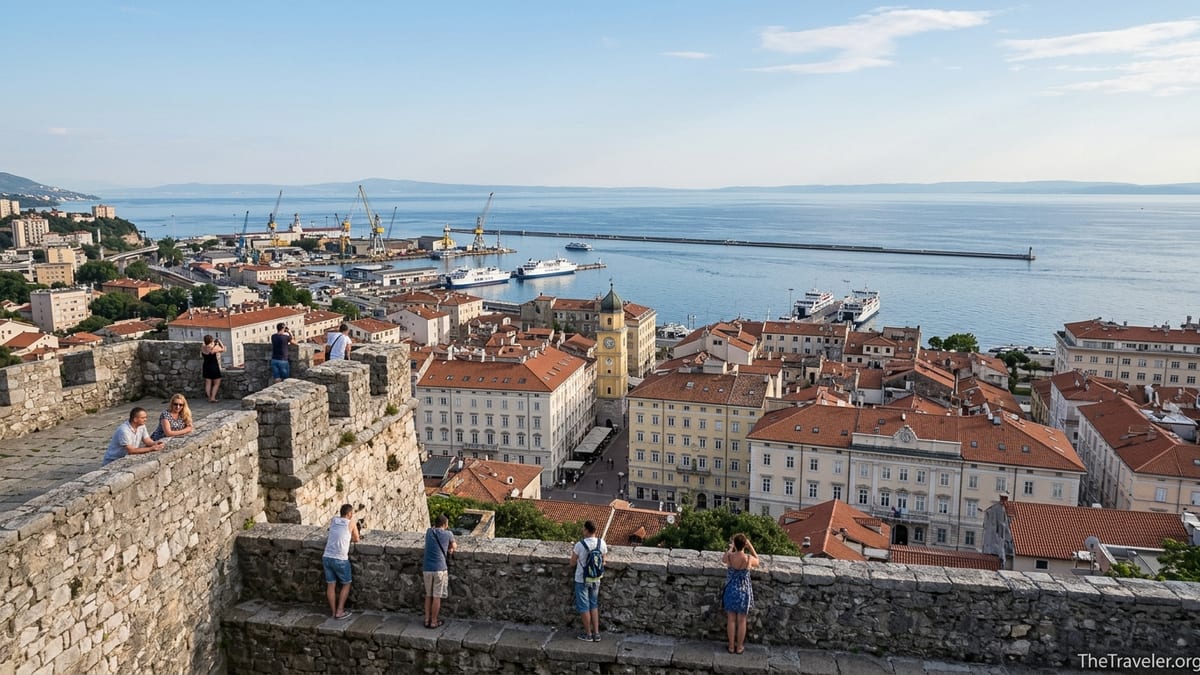
One of Korzo’s most recognisable landmarks is the City Tower, sometimes called the City Clock Tower. Standing over the main gate into the Old Town, this ochre-yellow structure with its clock and Habsburg double-headed eagle emblem is a natural meeting point. People arrange to “see you by the clock” and then disperse through the archway into a network of medieval lanes. If you step under the tower and look closely, you can spot coats of arms and stone reliefs that hint at Rijeka’s centuries under various rulers.
Just behind the cathedral lies one of Rijeka’s more unexpected attractions, the Rijeka Tunnel. This pedestrian tunnel was dug as an air-raid shelter in the late 1930s and runs under part of the Old Town. Today it is open for free, usually during daytime hours, and offers a cool, slightly eerie walk beneath the city. The walls still show rough concrete and wartime inscriptions in Italian in places. Many visitors simply enter near the cathedral and emerge a few hundred meters away near school buildings, using the tunnel as a shortcut and a glimpse into Rijeka’s 20th century story at the same time.
Back at street level, head toward the waterfront where Rijeka’s port character comes into focus. The long breakwater known as Molo Longo doubles as a jogging path and sunset promenade, stretching out into the bay with container cranes on one side and city views on the other. On clear days, locals take evening walks along the pier, sitting on the edge to watch ferries arriving from islands like Cres or Rab. Closer to Korzo, the Riva waterfront is edged with older port buildings and newer bars, where you can order a plate of grilled sardines or calamari and watch tugboats maneuver in the harbor.
Markets, Fish Pavilion and Café Culture
Rijeka’s City Market, often simply called the Placa, is one of the liveliest places in town and a must-visit for anyone who likes to see daily life up close. Just a few minutes’ walk from Korzo, the complex includes open-air produce stalls and three beautiful pavilions. The standout is the fish pavilion, an early 20th century structure with large arched windows and decorative details in stone and iron. Inside, rows of vendors lay out freshly caught fish from Kvarner Bay: silver anchovies, whole gilt-head bream, trays of squid, sometimes scampi from the deep waters offshore. The smell is strong, but the scene is full of character.
The market is busiest in the morning, especially before midday, and slows down after lunch. If you are staying in self-catering accommodation, this is the place to pick up ingredients for dinner: tomatoes and peppers from inland farms, local cheeses from the region of Gorski Kotar, and olive oil sold in unlabelled plastic bottles from small producers. Visitors who are not cooking can still enjoy the market by grabbing a quick snack at bakeries nearby or sitting at the simple bars around the perimeter where workers stop for coffee and a sandwich during their break.
Café culture in Rijeka extends well beyond Korzo. Throughout the city you will find neighborhood bars with modest interiors, TV screens tuned to football matches and a constant clink of small ceramic espresso cups. Prices are generally lower than in Croatia’s more famous tourist towns, which encourages lingering. Order a bijela kava, the local version of a latte, and watch how easily people drift between work and social life. In the early evening some cafés transform into casual cocktail spots, with music turned up and outdoor heaters rolled out in cooler months so people can stay outside.
Trsat Castle, Shrine and Sweeping Bay Views
High above the city center on a 138 meter hill sits Trsat Castle, Rijeka’s most atmospheric lookout point. The stone fortifications here stand on a site used since Roman times to control access along the Rječina River. Today the castle’s walls encircle a courtyard with a café terrace, viewing platforms and a small exhibition space. On a clear day you can see the outlines of Krk Island, cargo ships moving through Kvarner Bay and the red rooftops of Rijeka spilling down toward the waterfront. It is an ideal place to come for late afternoon light when the sea and city turn gold.
Reaching Trsat is part of the experience. You can take local bus line 2 from the center up the hill, which is useful in heat, or you can climb the Petar Kružić staircase, a historic stone stairway that begins near the Rječina River. The climb involves several hundred steps punctuated by small chapels and viewpoints. Many locals treat it as regular exercise, pausing to catch their breath and admire the panorama as the city shrinks below. Wearing decent shoes and bringing water is advisable, especially in summer, but the sense of arrival at the top makes the effort worthwhile.
Next to the castle is the Shrine of Our Lady of Trsat, one of Croatia’s oldest Marian pilgrimage sites. The church and Franciscan monastery draw worshippers throughout the year, especially on major feast days, but even casual visitors are welcome to step inside and admire the interior and quiet courtyard. Nearby, Trsat Park offers shaded paths under pine and deciduous trees, with benches overlooking the city. A small cluster of cafés and simple restaurants around the Trsat plateau make it easy to extend your visit with coffee, cake or a plate of grilled meat on a terrace.
Beaches, Sea Swimming and Where to Relax by the Water
Rijeka is first and foremost a port, but it still offers several places to swim within or just beyond the city limits. The most historic city beach is Sablićevo, set in a small cove east of the center. Here stone steps and retaining walls frame a stretch of pebbles and clear, typically cool Adriatic water. Old villas sit on the cliffs above, giving the beach a slightly nostalgic feel. Facilities are basic, although in summer you can usually find a kiosk or small bar selling cold drinks and ice creams. Bring water shoes if you have sensitive feet, as the pebbles can be hard on bare soles.
A little further along the coast toward the suburb of Pećine, Grčevo Beach offers a similar mix of stone platforms and pebbled entry into the sea, along with a beach bar known for relaxed music and evening drinks. Families might prefer more modern and larger options such as Ploče Beach on the western side of the city, which has easier access, showers and a mix of concrete sunbathing areas and pebbly shallows. City buses connect these beaches with the center, and tickets can usually be bought at kiosks on Korzo or directly from drivers for a slightly higher price.
Water quality in this part of Kvarner Bay is generally good, and locals swim from late spring to early autumn, though exact dates depend on the year’s weather. Outside of high summer, you will see hardy swimmers in wetsuits or older residents calmly entering the water even when the air feels cool. If you want a quieter experience, aim for mornings or weekdays. Basic etiquette is similar to elsewhere on the Croatian coast: keep noise down near families, avoid glass on the beach and bring your trash back up to the bins by the road.
Museums, Culture and Rijeka’s Creative Edge
Rijeka has more cultural depth than many visitors expect from a mid-sized port. A good starting point is the Maritime and History Museum of the Croatian Littoral, housed in the former Governor’s Palace, an imposing building set slightly uphill from the center. Inside, you will find rooms displaying ship models, nautical instruments and artifacts from the region’s history, alongside grand staircases and ornate ceilings left from the palace days. Ticket prices are typically modest, making it an accessible stop even for casual museum-goers who want to understand the city’s role in Adriatic trade.
Closer to the harbor, the revitalised Benčić complex brings together several institutions in converted industrial buildings. The City Museum of Rijeka offers interactive exhibits on local industry, migration and everyday life, including displays that explain how the city changed under different states. Next door, the Museum of Modern and Contemporary Art hosts temporary exhibitions from Croatian and international artists that reflect Rijeka’s years as a European Capital of Culture. This area often feels like a symbol of the city’s ongoing reinvention, with old factory structures now lit up at night for performances and events.
For something more niche, technology enthusiasts can visit the Peek&Poke Computer Museum in the Old Town, where shelves of vintage computers, consoles and gadgets present an unexpectedly playful side of Rijeka’s museum scene. Children and adults alike enjoy pressing keys on old machines and spotting devices from their own childhood. Meanwhile, the Natural History Museum near the park showcases marine life from Kvarner Bay and the forests of nearby Gorski Kotar. None of these museums are enormous, which means you can comfortably visit one or two in an afternoon and still have time for a late coffee on Korzo.
Easy Day Trips: Opatija, Islands and Kvarner Hinterland
One of Rijeka’s biggest advantages for travelers is how many appealing destinations lie within an hour or so. Perhaps the most classic outing is to Opatija, about 20 minutes away by bus or car along the coastal road. Once a fashionable resort of the Austro-Hungarian elite, Opatija is lined with grand villas, manicured parks and the seafront Lungomare promenade. A half-day trip from Rijeka might include coffee at a waterfront café, a leisurely walk along the promenade to the fishing village of Volosko and a seafood lunch at one of Volosko’s small harborside restaurants, before returning to the grittier charm of Rijeka in the evening.
Island lovers can use Rijeka as a base to reach Krk and Cres, both connected by regular bus or ferry routes depending on the season. Krk, linked to the mainland by a bridge, offers sandy and pebbly beaches, small towns like Krk Town and Vrbnik, and vineyards producing local Žlahtina wine. Cres is wilder, with limestone cliffs, quiet stone villages such as Lubenice and chances to spot griffon vultures along the coast. Day trips typically involve an early departure and a late return, but even a single long summer day can be enough for a swim and a stroll through an island old town.
Inland, the hills of Gorski Kotar provide a refreshing contrast to the coast during hot months. Towns such as Fužine sit by lakes surrounded by forest, and can be reached in under an hour by car from Rijeka. Here you can walk shaded paths, rent small boats or simply breathe noticeably cooler air before heading back to the city. Closer at hand, the medieval hilltop town of Kastav overlooks both Rijeka and Opatija and rewards a short drive or bus ride with cobbled streets, old stone houses and occasional festivals, especially in summer. These easy excursions show how Rijeka sits at a crossroads between sea, islands and mountains.
The Takeaway
Rijeka is not a resort polished for postcard perfection. Instead it is a working city by the sea that gradually reveals its character as you walk its streets, ride its buses and join locals for coffee. Korzo gives you the pulse of everyday life, the City Tower and Rijeka Tunnel anchor you in the city’s layered history, and the waterfront and fish market remind you that this has always been a place of movement and trade. Climbing to Trsat Castle connects the harbor to the hills, with one of the best views on the northern Adriatic.
Stay long enough to visit a couple of museums, swim at Sablićevo or Grčevo and linger in the Benčić cultural district, and you will see why Rijeka has become known for its culture as much as its port. Use it as a springboard for day trips to Opatija, the islands of Krk and Cres or the forests of Gorski Kotar, and it becomes one of the most convenient and varied bases in northern Croatia. For travelers who enjoy cities with a bit of edge and authenticity, Rijeka rewards curiosity and a willingness to explore beyond the first impression.
FAQ
Q1. How many days do I need in Rijeka?
Most visitors find that two full days is enough to cover Korzo, Trsat Castle, the tunnel, a museum or two and a swim, while three or four days allows time for at least one relaxed day trip.
Q2. What is the best time of year to visit Rijeka?
Late spring and early autumn are ideal, when temperatures are pleasant for walking and swimming is often still possible, and the city is generally less crowded than peak summer.
Q3. How do I get from Rijeka to Trsat Castle?
You can take local bus line 2 from the city center up to Trsat or climb the historic Petar Kružić staircase from near the Rječina River, which involves a steep but rewarding walk.
Q4. Is the Rijeka Tunnel suitable for children?
The tunnel is pedestrian-only, relatively short and level, so most families with children manage it without trouble, though very young kids may find the dim light and echoes a bit spooky.
Q5. Where can I swim near Rijeka city center?
Sablićevo and Grčevo beaches to the east, and Ploče to the west, are the most popular options, all accessible by city bus and offering pebbled entries and clear sea water.
Q6. Are Rijeka’s museums suitable for a rainy day?
Yes, the Maritime and History Museum, City Museum, Museum of Modern and Contemporary Art and smaller places like the Peek&Poke Computer Museum all make good rainy-day activities.
Q7. Can I visit Opatija as a day trip from Rijeka without a car?
Regular local buses link Rijeka and Opatija in around 20 to 30 minutes, so many visitors comfortably explore Opatija’s villas and promenade on a half-day or full-day trip using public transport.
Q8. Is English widely spoken in Rijeka?
In hotels, most restaurants, museums and many cafés, staff usually speak at least basic English, and younger locals in particular are often comfortable conversing with visitors.
Q9. How expensive is eating out in Rijeka compared with other Croatian cities?
Prices in Rijeka are often slightly lower than in major tourist centers like Dubrovnik or Split, especially in local taverns and cafés away from the busiest central spots.
Q10. Is Rijeka a good base for exploring the Kvarner islands?
Rijeka works well as a base thanks to its bus and ferry links to Krk, Cres and other islands, allowing you to combine urban comforts with day trips or short overnight stays on the islands.