


Croatia’s Kvarner Bay is one of the most convenient corners of the Adriatic for a short trip, especially if you are flying into Rijeka Airport or arriving by bus or train from Central Europe. Two places usually stand out as potential bases: the working port city of Rijeka and the elegant Austro-Hungarian resort of Opatija just 15 kilometers down the coast. Both give you access to islands, hilltop towns and national parks, but the feel on the ground is very different. This guide compares Rijeka and Opatija in practical detail so you can decide where to unpack your suitcase.
Get the latest updates straight to your inbox!
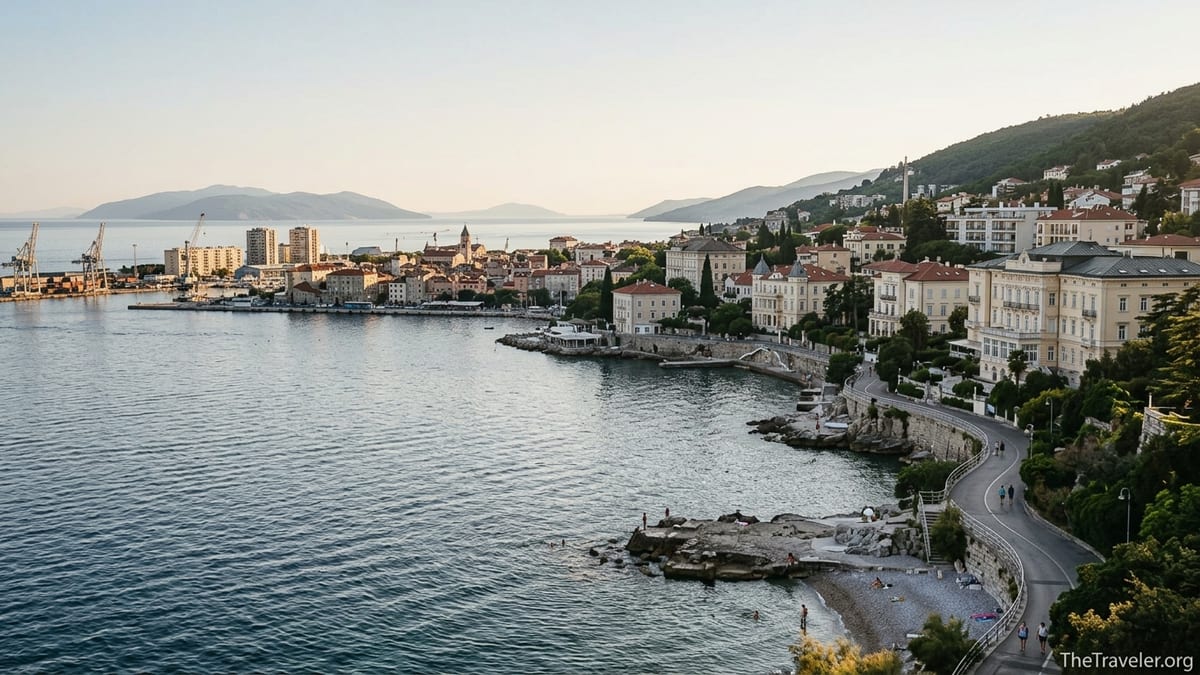
Overall Vibe: Gritty Port City vs Belle Époque Resort
Rijeka is Croatia’s third-largest city and still an active commercial port. The first impression as you drive in is cranes, shipyards and apartment blocks, not picture-perfect old streets. Spend a few hours in the center, though, and it feels more like a lived-in Central European city by the sea. The pedestrian Korzo, the old town lanes climbing towards Trsat Castle, and the fresh, mostly local crowd give it an authentic, non-resort character. It is a place where you are more likely to share a bar with students and port workers than tour groups.
Opatija, by contrast, was built precisely to be a resort. Its seafront villas and grand hotels date from the Habsburg era, when it was the winter playground for Viennese elites. The main impression today is manicured: palm-lined promenades, pastel facades, and terrace cafés facing the bay. Compared to Rijeka, it feels quieter, older and more polished, especially in the evenings when people stroll in neat clothes along the Lungomare promenade rather than heading for nightclubs.
If you like a slightly urban edge, street art and the sense of a real city going about its business, Rijeka will appeal. If your idea of holiday atmosphere is coffee on seafront hotel terraces, leafy parks and a constant low-level “holiday hum,” Opatija is closer to the mark. Many travelers end up visiting both, but the base you choose will shape your daily rhythm.
For a mixed group, a simple rule of thumb works: younger travelers and culture lovers tend to prefer sleeping in Rijeka, while couples, spa fans and those traveling with grandparents often settle more comfortably in Opatija.
Beaches and Swimming: City Coves vs Promenade Platforms
Neither Rijeka nor Opatija is a classic sandy-beach destination, but both offer plenty of places to swim. Around Rijeka, you get a string of pebble and concrete beaches spread out along the coast east and west of the center. Locals mention Sablićevo and Ploče as two of the city’s better-known urban beaches, while the stretch at Kostrena a short bus ride away offers a long walking path with multiple coves, beach bars and simple grill places. These feel lively on summer evenings and are a good fit if you want an informal, local scene with music and simple seafood or ćevapi after your swim.
Within the city itself, beaches like Kantrida, beneath the stadium and pool complex, are handy if you want to combine a morning of sightseeing with an afternoon dip without leaving town. Expect clear water but mostly concrete terraces and pebbles, with showers and kiosks rather than palm trees and beach clubs. They work well for travelers who prioritize convenience and do not mind a bit of urban backdrop.
Opatija’s coastline looks different. The town is built along a rocky shore, so most swimming spots are landscaped platforms and small pebble coves that you access directly from the Lungomare promenade. The main Slatina beach in the center is a large concrete-and-pebble area with umbrellas and sunbeds for rent, backed by cafés and ice-cream stands. Walking south or north along the promenade you will come across small hotel beaches like those in front of Hotel Savoy or family-friendly spots in neighboring Ičići and Ika, all reachable on foot.
If your dream is to stroll out of your hotel in flip-flops and be in the sea within a few minutes, Opatija wins. If you imagine more varied beach-hopping, including less groomed coves and a longer coastal walk with casual bars, Rijeka plus nearby Kostrena offers more range. For truly top-tier beaches, though, both towns are starting points for day trips to islands like Krk, Cres, Lošinj or Rab, where the scenery becomes dramatically more “postcard Croatia.”
Accommodation and Prices: Grand Hotels vs Urban Apartments
Opatija has one of the highest concentrations of historic seafront hotels in Croatia. Many of these former grand hotels have been renovated with spas, indoor pools and terrace restaurants. In high season, it is common to see mid-range seafront hotels quoting from roughly 170 to 250 euros per night for a double room with breakfast, with five-star properties often going higher. You are paying partly for the view and partly for the resort atmosphere: manicured gardens, live music in the evenings and easy seaside access.
Behind the front row of hotels, Opatija and its neighboring villages offer apartments and guesthouses at gentler rates. A simple self-catering apartment a few streets uphill from the sea might run anywhere from about 80 to 140 euros per night for two in July, depending on air conditioning, terrace and parking. Families who prefer space and kitchens often choose these hillside places and accept a short uphill walk at the end of the day.
Rijeka’s accommodation stock is more about apartments, rooms and a few business-style hotels than grand resorts. Near the Korzo and old town you can find modern one-bedroom apartments, often in renovated historic buildings, in the region of 70 to 130 euros per night in peak summer for two people. Hotels just outside the center, aimed at business travelers, sometimes price competitively on summer weekends, because their main corporate guests are away.
As a rough rule, if you want a full-service seaside hotel with a spa and on-site dining, Opatija has far more choice but at a higher average nightly rate. If you are happy in a city apartment, do not need a pool and would prefer to spend less on accommodation and more on day trips and restaurants, Rijeka usually comes out cheaper. Budget-conscious travelers who plan to move around a lot often find Rijeka the better financial base.
Nightlife, Dining and Atmosphere After Dark
Rijeka’s evenings reflect its role as a university and port city more than a resort. The Korzo and old town alleys fill with locals sitting at terrace bars, and there is a decent selection of pubs and small clubs. Recent local advice points to events like Tuesday bar nights in the old town and beach bars around Kantrida and Kostrena as the livelier summer options. You will not find the huge party scene of Split or Zrće Beach here, but you will find affordable drinks, casual live music and a predominantly local crowd.
Food in Rijeka ranges from classic grill restaurants and pizzerias to a handful of more creative bistros. Prices are generally reasonable by Croatian coastal standards. A pizza in the center might run around 9 to 14 euros, a plate of grilled fish perhaps 18 to 28 euros depending on species and size, and a glass of local wine 3 to 5 euros. Because Rijeka is less tourist-driven than southern hotspots, many places keep a neighborhood feel and regulars at the bar.
Opatija’s dining scene skews more towards hotel restaurants, waterfront terraces and a few fine-dining venues that emphasize Kvarner scampi, risottos and tasting menus. Expect fish and seafood mains in well-regarded restaurants to start around 25 to 35 euros, with surcharges for top-quality scampi or tasting courses. There are still simple konobas and pizzerias, especially in nearby Volosko and along the promenade, but the overall tone is more refined and occasionally formal.
Nightlife in Opatija is quieter than in Rijeka. Many visitors are content with a drink in a hotel bar, a stroll along the Lungomare and perhaps an ice cream on a bench by the sea. There are a few late-opening bars and occasional summer concerts, but if you want bar-hopping, student crowds and louder music, you are usually better served basing in Rijeka and visiting Opatija for an evening stroll rather than the other way around.
Old-Town Feel, Sights and Culture
Rijeka offers significantly more in the way of classic sightseeing. The compact old town behind the Korzo features the City Tower, churches, and the remains of medieval and Habsburg-era buildings. A climb up the many steps to Trsat Castle rewards you with a panoramic view over the port and Kvarner Bay, plus a café where you can linger over a drink. Former industrial spaces along the waterfront have been converted in recent years into cultural venues, galleries and event spaces as part of the city’s long-term reinvention after its stint as European Capital of Culture.
For travelers who like museums and context, Rijeka’s options, such as the city museum and maritime history exhibitions, can easily fill a day if the weather is unsettled. Street art and alternative culture also have a visible presence, especially in side streets and older neighborhoods. The net effect is that many visitors find more to “do” in Rijeka on a grey day than in most coastal resorts.
Opatija’s charm lies less in individual monuments and more in the overall ensemble. The Angiolina Park, the statue of the Maiden with the Seagull on the rocks, and the historic villas that line the shore all tell the story of its Habsburg spa-town past. The Croatian Museum of Tourism, housed in a historic villa, gives an overview of the town’s role in early Adriatic tourism, and small interpretive panels along the Lungomare highlight buildings and notable visitors.
If you enjoy wandering among grand old hotels, noticing intricate balconies and ironwork, and reading about imperial-era visitors, Opatija is delightful. If your priority is a dense, atmospheric old town with layers of history and everyday city life, Rijeka is the stronger choice. Many travelers choose to base in Rijeka for the culture and take an afternoon or evening in Opatija to enjoy its park, villas and promenade.
Transport, Practicalities and Getting Around
In practical terms, Rijeka is the transport hub of Kvarner Bay. The main bus station connects frequently with Zagreb and other Croatian cities, and local buses run along the coast and inland. A city bus line links Rijeka with Opatija and the villages beyond, taking around half an hour in typical traffic, so it is entirely possible to base in one and visit the other by public transport.
Rijeka is also a jumping-off point for ferries and catamarans to islands such as Rab and Pag, as well as for bus-and-ferry combinations to Krk, Cres and Lošinj via nearby ports like Valbiska and Brestova. In practice, this means that if you are planning a lot of independent island day trips or onward island stays, being close to Rijeka’s bus and port infrastructure saves both time and money. Schedules shift by season, so travelers usually check times and buy tickets a day or two ahead, especially in July and August.
Opatija does not have a major port for long-distance ferries, but its location on the coastal road makes it easy for day trips by car or organized excursion. The same local buses that run between Rijeka and Opatija continue further to places like Lovran and Ičići, so you can use the regular network for short hops along the Riviera. Many hotels in Opatija also offer their own transfers from Rijeka Airport or organize small-group tours to attractions like Plitvice Lakes or Istrian hill towns, which can simplify logistics if you prefer not to plan every detail yourself.
Within each town, getting around on foot is straightforward. Rijeka’s center is mostly flat until you climb towards Trsat, and Opatija’s core runs parallel to the sea, with a level seafront promenade. Streets behind the promenade rise fairly steeply toward the hills, so if you stay higher up in Opatija you should be prepared for an uphill walk home or factor in occasional taxis.
Costs, Crowds and Seasonal Considerations
Since Croatia adopted the euro, many visitors have noticed that prices, particularly in heavily touristed destinations, can feel comparable to parts of Italy or Spain. In this context, Rijeka and Opatija are still relatively good value compared to Dubrovnik or Hvar, but there are differences between them. Everyday costs such as coffee, bakery snacks and public transport are similar in both towns, with an espresso often around 1.50 to 2 euros and a city bus ticket a few euros depending on distance.
Where you see clearer divergence is in accommodation and dining at the top end. A waterfront à la carte dinner with seafood and a bottle of wine can easily reach 80 to 120 euros for two in Opatija’s smarter restaurants, especially in peak season. In Rijeka, eating well at local places can be significantly cheaper, and there are more fast-food and budget options. Travelers watching their budget closely often self-cater by shopping at Rijeka’s markets and supermarkets and use Opatija more for daytime or evening visits rather than frequent upscale meals.
In terms of crowds, Opatija receives a steady stream of tour groups and holidaymakers, particularly from Central Europe. July and August evenings on the promenade can feel busy, though rarely packed to the point of discomfort. The vibe is more strolling families and older couples than partygoers. Rijeka, despite being a larger city, can feel less touristy because visitors blend into the resident population. The exception is during major events, such as Rijeka Carnival in winter, when the city fills with visitors from across the region.
Shoulder seasons in April, May, late September and October suit both bases. In spring and autumn, Opatija’s park and promenade are especially pleasant for walks, and hotel rates drop from high-summer peaks. Rijeka in shoulder season is good for culture, food and day trips when the sea may still be too cool for long swims but hiking in nearby Učka Nature Park or exploring islands without crowds is rewarding.
Best Day Trips From Rijeka and Opatija
From Rijeka, the range of independent day trips is impressive. Buses and catamarans make it realistic to visit Rab for a day, wander its medieval town and swim at nearby beaches before returning in the evening. With an early start, you can also combine a bus to the island of Krk with a local ferry onward to Cres or Lošinj, or simply spend the day exploring Krk Town’s old streets and coves. Inland, buses head toward Gorski Kotar, a forested region that offers a cooler escape from summer heat and a completely different landscape of lakes and pine forests.
Rijeka-based travelers can also join organized tours to Plitvice Lakes National Park or even down the coast to places like Zadar, though these longer days mean early departures. The city’s tourist office and many local agencies advertise day trips in summer that can be booked a day or two ahead. Because of Rijeka’s centrality, many one-day itineraries start and end here.
Opatija has its own strengths for day tripping, especially if you prefer shorter travel times and more comfort. Boats and small excursion ships from Opatija’s waterfront offer half-day or full-day cruises around Kvarner Bay, often including swims and simple lunches on board. Organized bus tours from hotels commonly visit Istrian hill towns such as Motovun and Grožnjan, the Roman amphitheater in Pula, or Učka Nature Park for hiking and viewpoints over the bay. These trips usually pick guests up directly from their hotels, which appeals to less independent travelers.
If you have a rental car, the difference narrows. Both Rijeka and Opatija sit on the same coastal corridor and are only about 20 minutes apart in normal traffic, so driving times to larger destinations like Krk, Cres or Plitvice are similar. Without a car, Rijeka’s bus and ferry infrastructure makes it the more flexible base for frequent and spontaneous day trips, while Opatija’s strength is in pre-arranged excursions and relaxing boat outings rather than last-minute exploration.
The Takeaway
Choosing between Rijeka and Opatija as a base is really a question of what you want your everyday surroundings to feel like. Rijeka gives you an energetic, lived-in city with good-value apartments, local nightlife and easy access to buses and boats for ambitious day trips. It is the better fit if you value culture, authenticity and flexibility over sea views from your bedroom window.
Opatija provides the classic Adriatic resort experience: seafront hotels, an elegant promenade, manicured parks and a calmer pace. It is ideal for travelers who prioritize comfort, short walks to the sea, spa facilities and organized excursions over late-night buzz or gritty urban charm. You will spend a bit more on accommodation and upscale dining, but many visitors feel the atmosphere is worth the premium.
For a week in Kvarner Bay, a popular compromise is to split time: start with two or three nights in Rijeka to explore its city culture and use the transport connections for day trips, then move to Opatija for a few quieter days by the sea. If your schedule or budget only allows for one base, consider this summary: solo travelers, backpackers and younger groups generally do better in Rijeka; honeymooners, spa lovers and multi-generational families tend to be happier in Opatija. Either way, the real highlights of this coast often lie on the surrounding islands and hills, which both towns can help you reach.
FAQ
Q1. Is Rijeka or Opatija better if I do not have a car?
Without a car, Rijeka usually works better because it is the main bus and ferry hub for Kvarner Bay, making independent day trips to islands and nearby towns easier.
Q2. Which place has better beaches, Rijeka or Opatija?
Opatija offers easier hotel-to-sea access via its promenade and many swimming platforms, while Rijeka gives you more varied beaches and nearby coastal walks, especially around Kostrena.
Q3. Where will I spend less on accommodation and food?
Rijeka is generally more budget friendly, with many mid-range apartments and local restaurants. Opatija, with its seafront hotels and upscale dining, tends to cost more per night and per meal.
Q4. Is Opatija too quiet for younger travelers?
Opatija has a relaxed, resort feel with limited nightlife. Younger travelers looking for bars, live music and a student crowd usually prefer to base in Rijeka and visit Opatija for an evening walk.
Q5. Can I easily visit one town from the other?
Yes. Regular local buses link Rijeka and Opatija in about 30 minutes, so it is simple to base in one and spend afternoons or evenings in the other without a car.
Q6. Which base is better for island day trips?
Rijeka is better for spontaneous island hopping thanks to its catamarans and bus connections to ports on Krk and Cres. Opatija has more organized boat excursions but fewer direct public-transport options.
Q7. Is Rijeka safe to walk around at night?
Rijeka generally feels safe, especially in the central areas around the Korzo and old town, where locals are out late. Normal city precautions with valuables still apply.
Q8. Does Opatija have a historic old town?
Opatija does not have a dense medieval old town like some Croatian cities. Its charm comes from grand villas, parks and seafront hotels rather than compact ancient streets.
Q9. Which place is better for a short romantic break?
For most couples, Opatija is better for romance, with seafront hotels, spa facilities and sunset walks on the Lungomare. Rijeka suits couples who enjoy city culture and nightlife more.
Q10. If I only have three days, where should I stay?
If your focus is relaxed seaside time and easy strolling, choose Opatija. If you want to maximize varied day trips and experience a Croatian city as well as the sea, choose Rijeka.