


Petersburg is a working fishing town framed by glaciers, dense forest, and whale-rich waters. It feels quieter and more lived-in than many Southeast Alaska ports, which makes it an excellent base if you want time to actually experience the landscape and everyday life rather than rush through a checklist. This guide focuses on what to do with one to three days on the ground, highlighting activities that are either unique to Petersburg or realistically accessible to visitors. All tour operators, schedules, hours, and prices mentioned should be rechecked for the current year, and a verification date noted before publication. Information in this article was last cross-checked in November 2026.
Get the latest updates straight to your inbox!
At a Glance: Top Experiences and How Long They Take
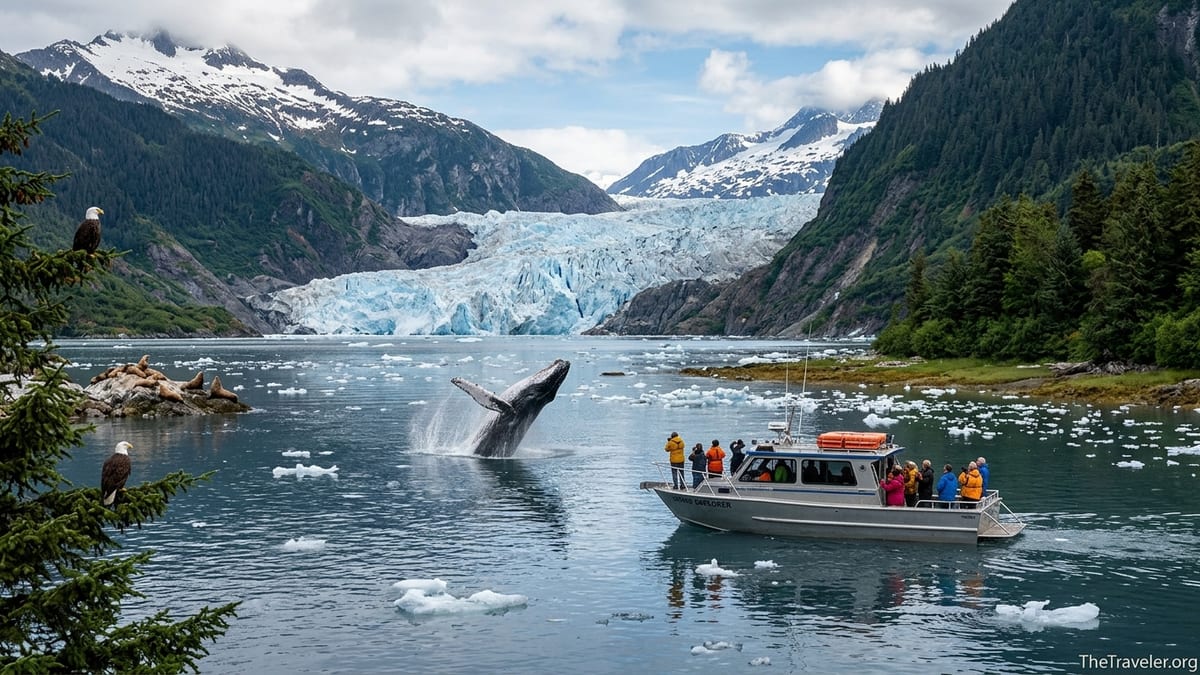
If you have limited time, a few experiences stand out in and around Petersburg. The classic full day is a small-boat trip into Frederick Sound for whale watching, sometimes combined with LeConte Glacier sightseeing. Typical whale-focused charters run about six to eight hours, use vessels carrying roughly six to a dozen passengers, and operate primarily in summer when humpback whales gather in huge numbers to feed. Exact durations and departure times vary by operator and conditions, and trips may sell out well ahead of peak July and August dates, so advance booking is strongly recommended.
Closer to town, an easy half day combines the Narrows Viewing Platform on North Nordic Drive with a stroll or short drive out Sandy Beach Road to Outlook Park and Sandy Beach Park. These stops offer views over Wrangell Narrows and Frederick Sound, with chances of seeing marine mammals from shore on a clear, calm day. They work well if you have a morning or afternoon free, limited mobility, or are visiting with children.
For gentle hiking, the Blind River Rapids boardwalk and nearby muskeg and forest trails on Mitkof Island are realistic half-day outings. The Blind River Rapids Trail itself is a short, mostly flat boardwalk that leads about a quarter mile to rapids and salmon habitat, with additional informal paths and viewing areas nearby. Expect to spend around three to four hours including the drive from town, time at viewpoints, and photo stops, adjusting for weather and fitness.
Cultural time in town requires less commitment but adds valuable context. The Clausen Memorial Museum, small galleries, Norwegian heritage touches in downtown, and a wander along the working harbor can easily fill two to three hours. Seasonal events, most notably the May Little Norway Festival, are worth planning a trip around if current-year dates and programming are confirmed. With careful planning, visitors can blend one long day of boating with a second day of shorter walks and museum time, or stretch activities into a relaxed three-day stay.
Marine Wildlife and Whale Watching in Frederick Sound
Petersburg sits at the north end of Mitkof Island where Wrangell Narrows meets Frederick Sound, close to one of Southeast Alaska’s most productive summer feeding grounds for humpback whales. State wildlife viewing resources and local visitor information note that hundreds of humpbacks regularly feed in nearby waters in peak season, particularly where Frederick Sound meets Stephens Passage. This concentration, along with relatively uncrowded waters compared to larger ports, is what makes Petersburg such an appealing base for whale watching and marine wildlife trips.
In season, typically late spring through early fall with a peak in roughly July and August, visitors may see humpback whales, orcas, Steller sea lions, Dall’s and harbor porpoises, and a variety of seabirds. Many tours also pass haul-outs where sea lions rest on rocks, as well as shorelines frequented by bald eagles and sometimes black bears. Operators often carry hydrophones so guests can listen to whale vocalizations when conditions allow, and some trips are specifically marketed to photographers, with an emphasis on slower, more deliberate positioning and fewer passengers.
Petersburg-based charters include small-boat operators that run dedicated whale watching and combined LeConte Glacier and Frederick Sound itineraries. Local visitor and port information highlight that multiple charter services and boat rental businesses are active in town, and independent directories list family-run outfits offering trips to LeConte Glacier along with whale watching in the sound. However, company names, schedules, and offerings change, so any article should consult the Petersburg chamber of commerce business directory and official tourism listings shortly before publication to verify which operators are running in the upcoming season, what months they operate, and their approximate prices.
Most trips last at least four to eight hours and are highly weather dependent, with wind, rain, and sea conditions sometimes forcing route changes or cancellations. Guests should ask operators about refund or rescheduling policies, minimum passenger requirements, and how far in advance high-summer departures typically sell out. For clothing and gear, waterproof outer layers, warm insulating layers, hats, gloves, and non-slip footwear are essential, even on sunny days. Binoculars dramatically improve wildlife viewing, though many companies also provide them. No special permits are required for passengers, but operators follow federal marine mammal viewing regulations, and guests should expect the captain to keep respectful distances from whales and other wildlife.
Local Scenic Walks and Easy Viewpoints Near Town
One of the pleasures of Petersburg is how quickly you can step from town streets to shoreline viewpoints. A good first outing on foot is the Narrows Viewing Platform, reached by a short walk from downtown along North Nordic Drive. Borough and visitor information describe this as a small park with a viewing platform, picnic tables, benches, and landscaping overlooking Wrangell Narrows. It is close enough to town for a casual stroll, and the platform sits near the road, so it is generally suitable for visitors with limited time or lower fitness. Parking is usually available along the roadside, but visitors with mobility needs should confirm current conditions with local parks staff.
Following Sandy Beach Road out of town opens up a string of easy-access viewpoints. Outlook Park sits roughly halfway between downtown and Sandy Beach Park. Borough parks documentation lists its address along Sandy Beach Loop Road and notes that the park includes a gazebo, benches, a covered picnic structure, fixed binoculars, interpretive panels about humpback and orca whales, and a restroom added in 2015. The park faces Frederick Sound and often provides views of whales in season. The walk from town is several kilometers and moderately hilly, so many visitors choose to drive, especially in wet weather, but it remains a low-effort stop once you arrive, with short gravel paths and a compact viewing area.
A bit farther along the same road is Sandy Beach Park, sometimes simply called Sandy Beach. Local and state visitor materials describe the area as a borough park with a wide intertidal zone, picnic areas, and access to tidelands that contain ancient petroglyphs and remnants of indigenous fish traps. It is roughly three miles from town, which makes it a reasonable bike ride or a quick drive. Trails within the park are generally short, with informal paths along the shoreline and through trees. Accessibility features, such as parking areas, maintained paths, and restroom facilities, are present but can be affected by weather and maintenance cycles, so travelers with specific needs should confirm the latest details with the Petersburg parks and recreation department before visiting.
For all these local walks, sturdy, water-resistant footwear is helpful even on sunny days, as surfaces can be slick from rain or sea spray. Light rain gear, a hat, and binoculars make lingering at viewpoints more comfortable. Time-wise, combining Narrows Viewing Platform, Outlook Park, and Sandy Beach Park can fill half a day at a relaxed pace, or two to three hours for those moving quickly by car. None require technical hiking skills, but visitors should still be prepared for sudden showers and cool breezes off the water.
Hikes, Muskeg Trails and Boardwalk Adventures
Beyond town, Mitkof Island offers a network of short trails through muskeg, spruce-hemlock forest, and salmon streams. These routes provide an accessible introduction to Tongass National Forest hiking without requiring full-day commitments, although they still demand caution and preparation. Many trails feature boardwalk sections over muskeg, which is a sponge-like wetland dotted with stunted trees and thick moss. These planked paths keep feet dry but become extremely slick in persistent rain, a common reality in Southeast Alaska.
The Blind River Rapids area is one of the most popular half-day excursions. Alaska Department of Fish and Game describes a flat boardwalk of roughly a quarter mile leading to rapids where salmon migrate and eagles often feed. More detailed trail databases list the Blind River Rapids Trail as about 0.8 miles round trip with negligible elevation gain, beginning near the end of the Mitkof Highway south of town. It is often combined with short walks to viewing decks and nearby forest paths. Between the drive from Petersburg, time at the viewpoints, and possible stops at other roadside pullouts, most visitors should plan at least three hours for the outing, more if traveling with children or photographers who like to linger.
Additional hikes on Mitkof Island, including routes near Ohmer Creek and other muskeg and forest trails, are commonly described in local visitor guides and the Tongass National Forest Petersburg Ranger District materials. Distances range from less than a mile to several miles, with elevation gains that are usually modest but can feel more strenuous thanks to wet roots, mud, and slippery planks. Because official trail conditions and any closures or wildlife advisories can change from season to season, writers should consult the latest ranger district updates and state wildlife viewing information before recommending specific distances, drive times, or open status.
Safety is a central concern on all these trails. Weather shifts quickly, so hikers should carry waterproof jackets and pants, warm layers, gloves, and a hat, even on short walks. Non-slip hiking boots are strongly recommended on boardwalks and muddy forest paths. This is bear country, and state guidance stresses hiking in groups when possible, making noise in dense vegetation, carrying bear spray and knowing how to use it, and following food storage rules at trailheads and picnic areas. At sites near streams or tidelands, visitors should be aware of tides and avoid venturing onto unfamiliar shoreline ledges as the water rises. None of the commonly recommended hikes around Petersburg require technical mountaineering skills, but they do demand respect for the environment and a conservative approach to time and distance.
Fishing, Licenses and Other Water-Based Activities
Petersburg’s identity is closely tied to commercial fishing, and visitors have several ways to sample the area’s angling and water-based recreation. Shore-accessible spots, such as the Blind River fishing area and certain hatchery-adjacent locations, often allow casting for salmon or trout from banks or small shorelines. State wildlife viewing and fishing information highlight Blind River as a salmon migration corridor where anglers and bears may both target the same fish, underscoring the need for situational awareness, secure fish storage, and strict adherence to local regulations.
For a more structured experience, guided fishing charters based in Petersburg offer day trips for salmon, halibut, and other species. Operators typically provide tackle, bait, and safety gear, and may clean and sometimes process or coordinate shipment of the catch. Trip formats range from half-day local outings to full-day runs farther into Frederick Sound or adjacent waters. Because charter availability, target species, and pricing vary significantly between businesses and seasons, prospective guests should confirm what is included in the fare, whether a minimum number of participants is required, and what weather or mechanical cancellation policies apply.
All anglers, including non-residents, must follow current Alaska Department of Fish and Game licensing requirements. As of 2026, non-resident sport fishing licenses are required for most visitors older than a specified age, with options for single-day, multi-day, and annual licenses, and separate stamps or validations for species such as king salmon in some areas. Regulations on retention, size limits, and open or closed seasons differ by region, species, and even specific river or shoreline segments around Petersburg. Some sites that are easily reached from the road system may have restrictions intended to protect local stocks or reduce user conflicts. Writers should direct readers to consult the latest Southeast Alaska sport fishing regulations and confirm that their chosen spot is open to non-resident anglers before casting a line.
Beyond fishing, visitors may be able to rent kayaks or join guided paddling trips in the sheltered waters around Mitkof Island. Local business directories and the Petersburg chamber of commerce mention boat rental and tour companies that sometimes offer kayaks, small motorboat rentals for experienced boaters, or guided paddle excursions. Because paddling services come and go, any current-year guide should verify which providers are active, what safety equipment they supply, and whether they require demonstrated experience in cold, tidal waters. Paddlers should be prepared with immersion-appropriate clothing, personal flotation devices, tide charts, and conservative route plans that respect changing wind and current conditions.
Culture, Town Life and Seasonal Events
Spending time in town reveals a side of Petersburg that many quick cruise visits miss. The Clausen Memorial Museum on Fram Street is the natural starting point. Museum and statewide listings describe it as a local history museum dedicated to the stories of Petersburg and surrounding waters, including Tlingit presence, Norwegian settlement, and the evolution of commercial fishing. Recent information notes a modest admission fee structure, with general admission in the single-digit dollar range and discounts for military and certain community members. Exhibits change periodically but typically include historic photographs, fishing gear, household artifacts, and displays about nearby LeConte Glacier and regional ecosystems. Plan on at least an hour to explore at an unhurried pace.
Before publication, writers should confirm the museum’s current hours, which traditionally vary by season and may include expanded opening days in summer and reduced winter schedules. Some years include special programs, temporary exhibits, or guided nature or history walks associated with the museum or collaborating organizations. Because details evolve, any mention of specific exhibit titles, program times, or admission prices should be verified directly with museum staff or the latest official notices.
Outside the museum, downtown Petersburg offers a compact grid of streets with small shops, art galleries, cafes, and a waterfront that still functions primarily as a working harbor. A slow walk along the docks and adjacent boardwalks gives insight into daily life in a fishing town: seiners and trollers at the moorings, gear being mended, and occasional processing activity. Visitors should remain clear of clearly marked restricted or industrial zones and be mindful that much of the harbor is a workplace, not a theme park, but respectful curiosity is generally welcome.
Culturally, Petersburg is known for its Norwegian heritage, which shows up year-round in architecture and public art and most visibly during the Little Norway Festival, usually held around Norwegian Constitution Day in mid-May. Tourism and community sources highlight the festival as a multi-day event with traditional costumes, dancing, food booths, parades, and other community-centered activities. However, exact dates, programming, and whether the festival will run in any given year depend on local organizers. A current guide should confirm the next one to two years of planned events through official community calendars or festival organizers, and avoid promising specific performances or schedules beyond what is confirmed. Smaller events, from fishing derbies to concerts or farmers markets, may also occur during summer and should likewise be verified close to travel dates.
Day Trips and Nearby Excursions
For travelers with extra time, Petersburg can serve as a jumping-off point for a handful of memorable day trips. The most iconic is an excursion to LeConte Glacier, the southernmost tidewater glacier in North America. Travel Alaska and local tourism information describe day-long small-boat cruises from Petersburg that navigate through LeConte Bay’s icebergs to views of the calving glacier face, often pairing the experience with whale watching in Frederick Sound. Floatplane operators sometimes offer flightseeing trips over the glacier and surrounding peaks. These experiences typically occupy most of a day, especially when factoring in safety briefings, transit to the dock or airstrip, and time on the water or in the air, and they can be among the higher-priced local outings.
Regional transport links also make it possible, though not always convenient, to visit neighboring communities such as Wrangell or Juneau. The Alaska Marine Highway System operates ferries that call in Petersburg several times a month, with schedules that vary widely by season and funding. Small-ship cruise itineraries also use Petersburg as a port of call, though these are packaged trips rather than day excursions a visitor can book locally. Limited regional flights connect Petersburg’s airport to other Southeast hubs. Because ferry and flight timetables, as well as fares, change regularly and may be subject to last-minute adjustments, travelers should treat inter-community day trips as tentative ideas and consult current schedules before counting on a same-day return.
In addition to glaciers and neighboring towns, extended wildlife viewing routes described in state wildlife viewing publications point to other road-accessible spots on Mitkof Island where visitors can scan for birds, deer, and sometimes bears. Pullouts along Mitkof Highway, viewpoints at muskeg edges, and small recreation sites provide gentle alternatives to more committed hikes. As with any wildlife-focused outing, success is never guaranteed, and visitors should avoid crowding animals or blocking narrow roads while stopped for photos.
Across all day trip options, cost and accessibility vary. Boat and flight-based outings tend to be expensive but require relatively little physical effort if guests can navigate docks, steps, and small aircraft cabins. Self-guided drives out the road to trailheads and viewing sites are far more affordable but demand more planning, navigation, and personal responsibility for safety. In every case, travelers should build extra time into itineraries for weather delays and be prepared with snacks, water, rain gear, and warm layers, even if the outing is marketed as easy.
Comparing Key Activities: Time, Cost and Accessibility
When comparing Petersburg activities, it is helpful to think in terms of time commitment, typical cost range, and how you get there. Full-day whale watching and LeConte Glacier boat tours usually sit at the top end of both time and price, often occupying six to eight hours and commanding higher per-person rates reflective of fuel costs, vessel size, and the specialized expertise of captains and crew. They are, however, accessible to most reasonably mobile travelers, since participants spend the majority of the time on deck or in a cabin rather than on foot. Reaching the dock normally requires only a short walk or vehicle transfer from lodging.
Moderately priced, half-day experiences include combinations of local scenic walks, short drives to viewpoints, and lower-cost fishing or paddling options, where available. These might run two to four hours and range from free or low-cost park visits to mid-range tour prices for simpler boat or fishing outings. Such activities are often walkable from downtown or require only a brief car ride along Sandy Beach Road or the Mitkof Highway. They suit visitors who want structured experiences but prefer not to commit an entire day or budget to a single tour.
At the lower-cost, maximum-flexibility end are self-guided visits to Narrows Viewing Platform, Outlook Park, Sandy Beach Park, Blind River Rapids boardwalk, and in-town cultural stops like the Clausen Memorial Museum and harbor strolls. Many of these, aside from museum admission, are free to access and can be combined in various ways based on weather and energy levels. Some are walkable from downtown for fit visitors, while others are best reached by car or taxi, especially in heavy rain or for those with mobility limitations.
Because precise prices and availability for individual operators, rentals, and charters change from year to year, any comparison should emphasize relative cost categories rather than fixed amounts. Prospective travelers should be encouraged to confirm current rates directly with businesses or through official visitor centers, ask what is included in quoted prices, and check whether taxes, fuel surcharges, or gratuities are additional. Likewise, accessibility details such as restroom availability, paved paths, and dock configurations should be verified ahead of time for travelers with specific mobility needs.
Sample 1–3 Day Itineraries and Final Planning Tips
For visitors with a single full day in Petersburg who prioritize marine life over everything else, a straightforward plan is to book a full-day Frederick Sound whale watching trip, or a combined whale watching and LeConte Glacier excursion if offered in the current season. Before or after the tour, a short harbor walk and a quick stop at Narrows Viewing Platform or Outlook Park provide shore-based perspectives on the same waters. Packing rain gear, warm layers, and motion-sickness remedies if needed will help ensure the long day on the water remains comfortable.
With two days, one appealing approach is to dedicate the first day to a marine wildlife or glacier trip and reserve the second for trails and culture. Start day two at the Clausen Memorial Museum to ground your understanding of the community, then drive or arrange a ride out the road to Outlook Park, Sandy Beach Park, and, if conditions and time allow, the Blind River Rapids boardwalk. Fit hikers can add another short muskeg or forest trail recommended by the ranger district, while those seeking lower exertion can linger at picnic tables and viewpoints instead. Families with children may want to keep hikes short, focus on tidepooling at Sandy Beach, and return to town early for ice cream or a casual dinner by the harbor.
Travelers with three days have room for a slower pace. They might combine one full day on the water, one day of local walks and museum time, and a third day reserved as a weather buffer or for a second major outing, such as another wildlife-focused boat trip, a guided fishing charter, or a flightseeing tour. Alternatively, day three could be used to explore more of the Mitkof road system, stopping at additional pullouts, muskeg boardwalks, or birding sites highlighted in state wildlife viewing materials. Building flexibility into the plan allows for the reality that weather can cancel or shift tours with little notice.
Across any itinerary, a few planning principles hold: verify all operator details, museum hours, ferry or flight schedules, and fishing regulations shortly before travel; pack for frequent rain and cool temperatures even in midsummer; and budget extra time for unhurried observation. Petersburg rewards those who slow down, whether that means waiting for a humpback to surface again in Frederick Sound, watching eagles patrol the harbor, or listening to local stories in a small museum gallery. Before publication, writers should note the date on which all operating details were last confirmed and clearly encourage readers to recheck for the latest information before finalizing their own plans.