


Krk is the closest big Adriatic island to Rijeka, connected by a bridge and packed with beaches, old towns and hiking trails. Because it is so easy to reach, many visitors wonder whether Krk works better as a relaxed base for several nights or as a simple day trip from Rijeka. This practical guide walks through the real transport options, what travel days feel like in midsummer, and how to plan time in Krk Town, Baška and the island’s main beaches.
Get the latest updates straight to your inbox!
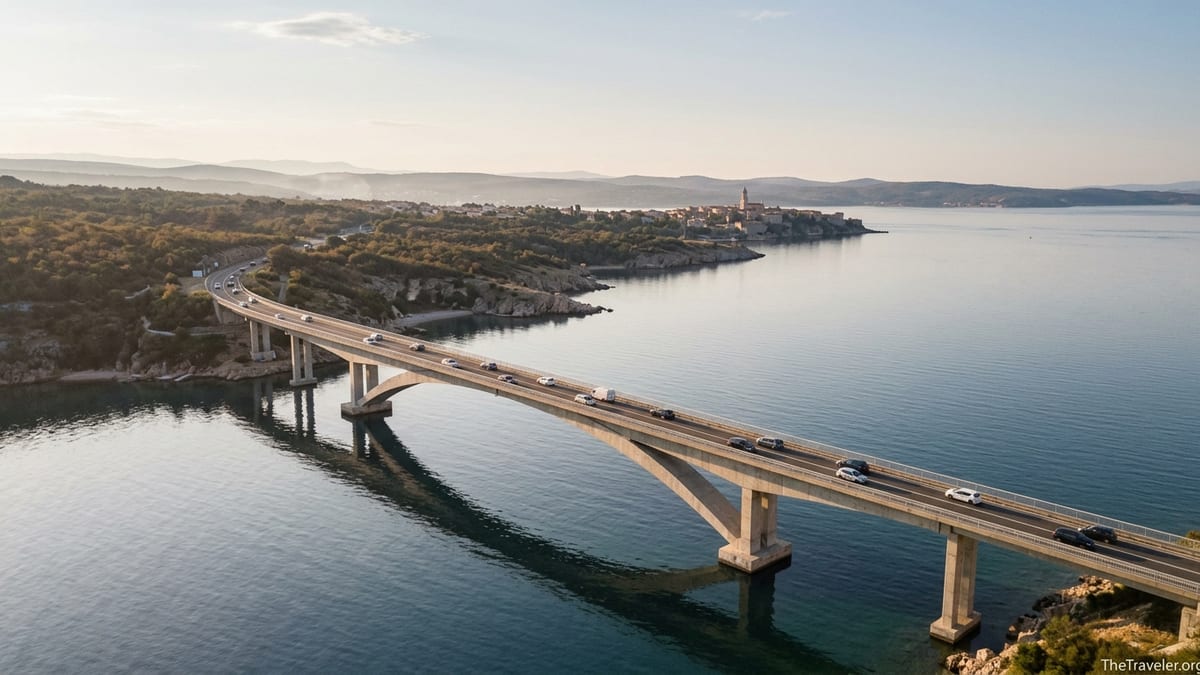
Understanding the Rijeka to Krk Island Route
The link between Rijeka and Krk Island is straightforward: you either drive or take a bus across the Krk Bridge and then follow the main island road, the D102, which runs from the bridge all the way to Baška at the southern tip. The distance from central Rijeka to Krk Town is roughly 45 to 50 minutes by car in light traffic, and to Baška around 1 hour 15 minutes. In July and August, those times often stretch by 15 to 30 minutes because of holiday traffic and queues at roundabouts and village entrances.
The Krk Bridge itself has been toll free since 2020, which makes spontaneous trips between the city and the island cheaper and encourages locals to commute for beach days. That is also why on sunny summer weekends you will find a slow procession of cars leaving Rijeka mid-morning and returning in the early evening. If you are planning a beach day, think in terms of leaving Rijeka before 9:00 and returning after sunset, not in the tight middle of the day.
Once you are on the island, navigation is simple. From the bridge you continue on D102, with signposted turn offs for Omišalj and Rijeka Airport near the northern tip, then Njivice and Malinska along the northwest coast, and finally Krk Town further south. From Krk Town the same road continues inland across a bare, rocky plateau before dropping down in wide curves to Baška and, beyond it, smaller coves like Stara Baška accessed by narrow local roads. This linear layout makes it easy to string together multiple stops on one day, such as a swim near Malinska in the morning and an afternoon stroll in Krk Town.
Bus Connections: Getting to Krk Without a Car
If you prefer not to drive, regular buses connect Rijeka Bus Station with Krk Town and onward to other island settlements. Operators such as Autotrans by Arriva run several departures daily in summer, with schedules that can reach dozens of buses a day on the Rijeka to Krk corridor. Typical online listings in mid 2026 show one-way fares starting around 8 to 10 euros for the standard Rijeka to Krk Town route, with the ride taking around 60 to 90 minutes depending on intermediate stops.
Buses usually depart from Rijeka’s main bus station close to the city center. On board you will find air conditioning and luggage space under the coach, which is helpful if you are bringing a suitcase for a longer stay on Krk. For example, a traveler staying in Baška may take a Rijeka to Krk Town bus, get off at the central Krk bus station, and then transfer to a local bus to Baška or a pre-booked taxi waiting at the station. In high season, local lines along the island often run at least every couple of hours, but exact times change from year to year and are best checked close to travel dates.
Dogs and surfboards on buses are technically possible but not always comfortable. Locals often comment that summer buses can be crowded and hot, which can be stressful for pets. If you are traveling with a dog, a rigid kennel and a quieter departure time, such as an early morning bus around 6:30, can make the journey easier. For a simple day trip with beach bags and a towel, buses are perfectly workable, but if you plan to hop between remote coves and viewpoints, a car gives you noticeably more freedom.
Driving and Car Rental: Flexibility for Beach Hopping
For most visitors wanting to explore several villages and beaches in one day, having a car is the most flexible option. The drive from Rijeka to the Krk Bridge follows the A6 and then connecting regional roads, and the signage to “Krk” is clear well before the bridge. Many Rijeka hotels and guesthouses can arrange small local car rentals if you did not hire a vehicle at the airport. Expect summer prices that are higher than inland Croatia; compact cars often start around 50 to 70 euros per day in late July, depending on demand, with discounts for longer rentals.
Once on the island, the main D102 road is in good condition and suitable for nervous drivers. The approach to Baška features a series of sweeping bends with strong crosswinds on some days, but the lanes are wide and there are regular lay-bys where you can pull over to enjoy the view of the surrounding limestone ridges and the blue Kvarner Bay. Side roads to smaller places like Stara Baška or some of the hidden beaches west of Krk Town narrow considerably and often have limited passing places. If you are not used to Croatian island roads, it is wise to drive slowly, especially in the late afternoon when traffic returning from the beach can be heavy.
Fuel is available at several petrol stations, for example near the bridge approach and on the outskirts of Krk Town, so there is no need to fill up in Rijeka unless prices look better there. Parking fees across the island are typically charged by the hour and are paid at ticket machines or via local apps. In busy areas such as Baška’s waterfront, full-day parking in high season can add up to a noticeable part of your day trip budget, so factor this in when comparing costs with taking the bus.
Rijeka Airport: Using Island Flights and Ground Transfers
Rijeka Airport technically counts as the city’s airport, but it sits on the island of Krk near the town of Omišalj, around 17 kilometers from central Rijeka. If you are flying into the region for a beach break, you can land on Krk itself and then decide whether to stay on the island, head into Rijeka, or combine both. Seasonal flights usually link the airport with several European cities, so in summer it is common to see holidaymakers roll their luggage out of the arrivals hall straight into island accommodation.
The main ground transport option at Rijeka Airport is its own shuttle bus. The official price list introduced in 2025 sets a one-way fare of approximately 15 euros from the airport to central Rijeka and around 8 euros to closer stops like Omišalj or Kraljevica. The timetable is not a regular city line; instead, the shuttle runs in connection with scheduled flights, with an updated schedule published monthly. If your plane lands late at night or at an off-peak time with no shuttle, you will usually find licensed taxis waiting in front of the terminal and several private transfer companies that can be booked in advance.
The shuttle bus focuses on the Rijeka corridor and does not continue down the island to Krk Town or Baška. So if your goal is an immediate island holiday, you will generally take a taxi or pre-booked transfer directly to your accommodation. To give a practical example, a family landing in the afternoon might book a transfer van from Rijeka Airport to Baška, load their suitcases and beach toys straight into the vehicle, and be on the beach in roughly an hour. For solo travelers on a budget staying in Krk Town, a taxi from the airport to Krk is usually cheaper than going all the way to Rijeka and then back by bus.
Krk Town vs Baška: Which Base Works Best?
Krk Town sits roughly in the central-western part of the island and feels like a compact historic harbor town with a fortified old core, waterfront promenade and several beaches within walking distance. Staying here is convenient if you want a mix of swimming, evening strolls, and easy day trips to places like Malinska, Punat or the ferry port at Valbiska for Cres and Lošinj. Buses from Rijeka typically terminate or pass through here, and the town has a small but busy bus station, taxi rank and multiple car rental desks.
Baška lies at the southern end of the island in a dramatic bay framed by white limestone mountains. Its signature Vela Plaža beach is a long arc of pebbles with shallow, clear water, perfect for families, rental pedalos and SUP boards. From the promenade you can book boat trips to nearby coves or to the small island of Prvić. The surrounding hills have well-marked hiking and biking trails, including routes used in the Krk Outdoor events, which makes Baška a good base for active travelers who want both beach time and mountain views directly from their accommodation.
As a base, Krk Town offers more centrality. If you are planning to explore multiple corners of the island or use the ferries to other islands, staying in Krk means you generally drive shorter distances in all directions. Baška, by contrast, sits at the end of the road, so every excursion begins and ends with the same curving climb out of the valley. However, that very setting makes Baška excellent for visitors whose priority is a classic beach holiday and occasional trips to smaller coves like those around Stara Baška rather than daily island touring.
Beaches, Parking and Summer Traffic Realities
On paper, distances on Krk seem short, but in peak season travel can slow dramatically. Approaches to major beaches like Baška’s Vela Plaža, Krk Town’s Dražica and Ježevac beaches, or Malinska’s central bay are controlled by parking capacity. On hot August weekends, it is normal for waterfront parking lots in Baška to fill by late morning. Drivers then circulate the streets behind the seafront looking for a private driveway or field offering paid parking, often advertised with handwritten signs. Prices vary, but a typical full day in a central Baška lot in high summer might cost the equivalent of 10 to 15 euros.
For more peace of mind, many travelers aim for designated municipal car parks slightly back from the water and then walk 10 to 15 minutes to the beach. In Krk Town, for example, parking areas marked near the town entrance and by the larger supermarkets often have better turnover than the tiny lots right next to the old town walls. From there it is an easy stroll down narrow stone streets to the harbor and beaches. In Baška, some visitors deliberately choose accommodation that includes reserved parking just behind the seafront so they can leave the car in one place for several days and explore on foot or by boat.
Traffic on the D102 is busiest in two daily waves. The first wave is between about 10:00 and 12:00 when holidaymakers drive toward the beaches, particularly on Saturday and Sunday when new guests arrive and old ones depart. The second wave is after 17:00 when day trippers and beachgoers return to their apartments or head back toward the bridge. Returning to Rijeka in the early afternoon or waiting to drive back after dinner and sunset can significantly reduce your time in queues. If you are heading only as far as Krk Town from Rijeka for a walk and dinner, leaving the city around 15:00 and coming back after 22:00 usually avoids the worst congestion.
Is Krk a Good Day Trip from Rijeka?
Krk works as a classic day trip from Rijeka, but how satisfying it feels depends on your expectations. On the positive side, the journey time is short enough that you can leave Rijeka after breakfast, have a full afternoon of swimming or wandering old streets, and still be back in the city by night. This is exactly what many locals already do on hot summer days. For example, a typical itinerary might be: 8:30 departure from Rijeka, 9:30 coffee in Krk Town, late morning swim at one of the town beaches, a long lunch in the harbor, and then either a late afternoon drive back or a sunset stop at a viewpoint on the road toward Baška.
However, Krk is larger and more varied than many visitors expect. If you want to combine Krk Town, Baška and one or two smaller coves in a single day from Rijeka, you will likely spend as much time in the car as on the beach. In midsummer, parking hunts and slow traffic can cut into your hours on the water. Travelers who only have one spare day in their Rijeka schedule might be happier choosing either Krk Town and nearby beaches or Baška and its surroundings, but not both. With two or three days to spare, it makes more sense to stay overnight on the island.
Day tripping by bus is also very possible, as long as you pick connections that give you enough time on the island. For example, an early departure around 6:30 or 7:00 from Rijeka to Krk Town, a full day exploring beaches and the old town, then a return bus in the evening still creates a relaxed schedule. You do need to be disciplined about catching your return departure, as missing the last evening bus could mean an expensive taxi ride back over the bridge.
Suggested Itineraries: One Day vs Several Days
For a single day trip by car from Rijeka, a realistic plan is to focus on one area. A Krk Town focused day could look like this: morning drive straight to Krk, park in a municipal lot near the town entrance, stroll the old streets and the cathedral area, then spend midday swimming at town beaches like Dražica or Ježevac. In the late afternoon, walk the coastal path toward Punat for quieter swimming spots, then finish with dinner in the harbor before driving back to Rijeka after dark when the road is calmer.
A Baška focused day from Rijeka might involve leaving the city by 8:00, heading directly down the D102 to Baška, and aiming to arrive before the main parking areas fill. Once parked, you could spend late morning on Vela Plaža, rent a pedal boat, and take a short boat excursion along the coast to smaller coves. In the afternoon, a short hike along the marked trails above the town provides sweeping views back across the bay. After an early dinner on the seafront, you would then drive back up the valley and across the island to catch the last colors of sunset near the bridge.
If you can spend three or four nights on Krk, you gain much more flexibility. For instance, you might base yourself in Krk Town, use the first day to settle in and explore local beaches, the second day for a full excursion to Baška or Stara Baška, and the third day for a ferry hop from Valbiska to Cres or a boat trip from Punat to the islet of Košljun. Having the island as your base also turns Rijeka into an easy city day trip in reverse: you could drive over for museums, markets and dinner and then return to your quiet seaside apartment that night.
The Takeaway
Travel between Rijeka and Krk Island is refreshingly straightforward compared with many Adriatic islands, thanks to the toll free Krk Bridge, a solid bus network and the presence of Rijeka Airport on the island itself. Whether you choose Krk Town with its central location and compact old center or Baška with its spectacular bay and long beach, you can shape a visit around either a relaxed multi day stay or a focused day trip from the city.
For travelers who value spontaneity, beach hopping and exploring smaller coves, renting a car remains the most flexible option, especially in high summer when buses can be crowded and parking near the water fills early. On the other hand, budget conscious visitors and those happy with one main destination can rely on regular buses and airport shuttles, planning around published timetables and allowing generous time for connections.
Ultimately, Krk works both as a day trip and as a base in its own right. If your schedule is tight, choose one centerpiece, such as Krk Town or Baška, and accept that you will only get a taste of the island. If you have spare days, give Krk the time it deserves; the combination of approachable distances, diverse beaches and easy access back to Rijeka makes it one of the most practical and rewarding island detours in northern Croatia.
FAQ
Q1. How long does it take to travel from Rijeka to Krk Island?
The drive from central Rijeka to Krk Town usually takes about 45 to 50 minutes in light traffic, and to Baška around 1 hour 15 minutes. In July and August, you should plan for an extra 15 to 30 minutes each way, especially on weekends and during the late afternoon return from the beaches.
Q2. Is there a toll on the Krk Bridge?
No. The Krk Bridge has not charged a toll since mid 2020, so you can drive between Rijeka and Krk Island without paying a specific bridge fee. You still pay regular motorway tolls if you use Croatia’s A6 and other highways to approach Rijeka, but the bridge itself is free to cross in both directions.
Q3. How much does the bus from Rijeka to Krk cost?
In mid 2026, typical one way fares on the Rijeka to Krk Town route start at roughly 8 to 10 euros for standard coaches, with higher prices on peak departures or for journeys that continue further down the island. Precise fares vary by operator and date, so it is wise to check and book close to your travel day, especially in July and August.
Q4. Can I visit both Krk Town and Baška in a single day trip from Rijeka?
It is possible, but it makes for a long day and a lot of driving. You would spend at least 3 to 4 hours on the road in total and risk hitting heavy traffic and parking delays at both ends. Many travelers find it more enjoyable to choose either Krk Town or Baška for a day trip and save the other for a future visit or an overnight stay.
Q5. Is Krk Island suitable for travelers without a car?
Yes, but with some compromises. Regular buses link Rijeka with Krk Town and other island villages, and Rijeka Airport has a shuttle to the city and nearby stops. Without a car you can comfortably explore Krk Town, Baška’s main seafront and several local beaches. Reaching remote coves or combining multiple spots in one day is more difficult, and you might need taxis or organized boat trips to fill the gaps.
Q6. What is parking like on Krk in summer?
Parking near the main beaches and old town centers is limited and fills early on sunny days in July and August. In Baška and Krk Town, waterfront lots often reach capacity by late morning, after which drivers circle side streets or use private paid parking in fields or driveways. A practical strategy is to aim for official municipal car parks slightly away from the seafront and walk 10 to 15 minutes to the beach.
Q7. How do I get from Rijeka Airport to Krk Town or Baška?
Rijeka Airport’s official shuttle bus runs primarily between the terminal and central Rijeka with intermediate stops such as Omišalj or Kraljevica, and its schedule is synchronized with flights. To reach Krk Town or Baška directly, most travelers book a taxi or private transfer, or arrange a rental car from the airport. This way you avoid backtracking to Rijeka and can be on the beach on Krk within about an hour of landing.
Q8. When is traffic heaviest between Rijeka and Krk?
Traffic is heaviest in the high summer months, particularly in late July and August and on weekends. The main peaks are mid morning toward the island and late afternoon toward Rijeka when day trippers and holidaymakers move in the same direction. Leaving Rijeka before 9:00 and returning after sunset, or traveling on weekdays instead of Saturdays, usually results in smoother journeys.
Q9. Which is better as a base, Krk Town or Baška?
Krk Town is a better base if you want a central location for exploring the entire island, easy access to ferries and a compact old town with several beaches. Baška is ideal if your priority is a long, lively beach, dramatic scenery and hiking trails right on your doorstep, and you are content to make fewer long excursions around the island.
Q10. Is Krk Island good for families on a short holiday?
Yes, Krk is very family friendly, particularly for short breaks. The short travel time from Rijeka, gentle pebble beaches like Baška’s Vela Plaža and the family focused waterfronts of Krk Town and Malinska make it easy to settle in quickly. With two to four days you can combine relaxed beach time, a boat trip and a simple excursion to another village without long drives or complex logistics.