


Saskatchewan rewards travelers who look beyond a single city. The prairie province stretches from boreal forest and shimmering lakes in the north to eroded badlands and wide open grasslands in the south, with two lively cities anchoring the experience. This curated guide focuses on what to actually see and do once you have decided to visit, helping you combine urban culture, national and provincial parks, and classic prairie landscapes into one satisfying trip.
Get the latest updates straight to your inbox!
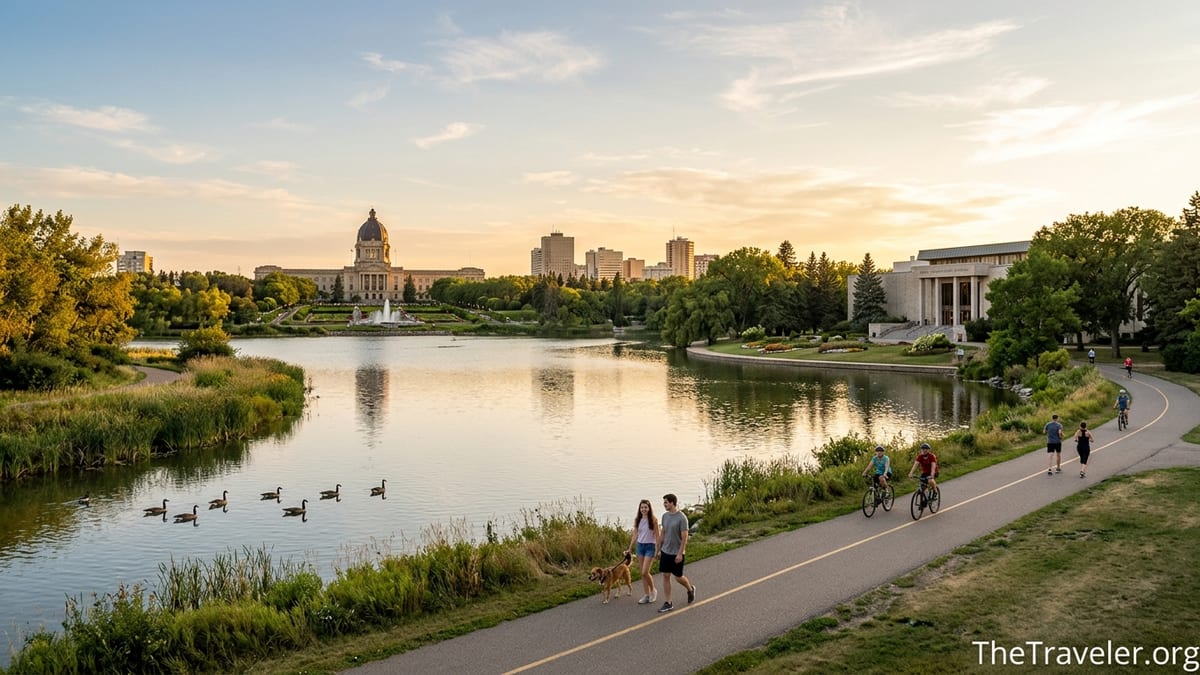
Regina’s Wascana Centre and Lakeside Institutions
Regina’s greatest asset is Wascana Centre, a large urban park wrapped around Wascana Lake near the heart of the city. Pathways trace the shoreline and connect lawns, memorials and picnic spots, creating an easy place to stretch your legs after a long drive. Visitors can walk or cycle lakeside sections between Albert and Broad Streets, or simply find a bench to watch geese and local joggers with the skyline beyond. The park also functions as a cultural campus, with several of Regina’s key attractions set directly along the water.
On the north side of the lake, the Royal Saskatchewan Museum introduces the province’s natural and human history, from prairie ecology to First Nations stories. Recent visitor information shows regular daytime opening hours for independent visits, with rotating exhibits that often highlight regional paleontology and the famous Tyrannosaurus rex fossil known as Scotty. Travelers should confirm current hours and any timed entry requirements with the museum before arriving, especially outside peak summer.
Farther around the lake, the Saskatchewan Science Centre occupies a former powerhouse building in Wascana Centre and is paired with the Kramer IMAX Theatre. Tourism Saskatchewan notes more than 180 hands on exhibits along with changing science shows, plus a separate schedule of large format IMAX films. Families should check the Science Centre’s official site for up to date details on operating days, film lineups and any special event pricing, since programming changes through the year.
Art and architecture round out the lakeside circuit. The MacKenzie Art Gallery sits at the edge of Wascana Centre and is recognized as Regina’s leading public art museum, with a strong focus on contemporary and Indigenous work. Nearby, the Saskatchewan Legislative Building faces ornamental grounds and fountains and is open to the public with security screening and visitor passes. Prospective visitors should review the Legislative Assembly’s current tour times, identification requirements and any changes to public access before visiting, as procedures can shift with legislative sessions or security needs.
Saskatoon’s Riverbank, Wanuskewin and Cultural Core
Saskatoon feels immediately tied to the South Saskatchewan River. The Meewasin Valley, promoted by Tourism Saskatchewan, protects a long ribbon of riverbank parkland threaded with more than 100 kilometers of multi use trails in and around the city. Visitors can start with a simple stroll across one of the downtown bridges and along the paved paths, watching paddlers on the water and locals commuting by bike. Portions of the trail network also pass naturalized areas and interpretive signage, so it is easy to tailor a short urban walk or a longer day of cycling.
Just outside the city, Wanuskewin Heritage Park provides one of the most important cultural experiences in the province. Designated a National Historic Site and proposed UNESCO World Heritage Site, Wanuskewin preserves archaeological sites and landscapes that reflect over 6,000 years of Northern Plains Indigenous culture. Current descriptions highlight walking trails, interpretive galleries, cultural performances, and a restaurant that showcases Indigenous inspired cuisine. Before visiting, travelers should consult Wanuskewin’s official site for the latest details on guided programs, seasonal events, admission fees and restaurant hours, since programming varies across the year.
Back downtown, art lovers gravitate to Remai Modern, a contemporary art museum on the river at River Landing. Recent visitor information notes its central location along the walking and cycling routes and easy access by city bus. Exhibitions change regularly, often pairing international contemporary art with work from across Saskatchewan and Western Canada. Guests should confirm current opening hours, ticketing options and any major exhibition surcharges directly with the museum before planning their day.
The Western Development Museum in Saskatoon adds a different lens on the province, interpreting the history of transportation and settlement on the prairies with full scale street scenes, rail equipment and agricultural machinery. It is one of several locations in the Western Development Museum system, and it tends to appeal to families and anyone curious about how prairie cities grew. Check the Saskatoon branch’s current schedule, admission structure and any special demonstrations, as hours can differ between summer and shoulder seasons.
Prince Albert National Park: Lakes, Forest and Backcountry Adventures
North of Saskatoon and Prince Albert, the landscape transitions to boreal forest and lake country. Prince Albert National Park protects this environment around the resort community of Waskesiu, offering a strong contrast to the open grasslands further south. The park’s core experiences revolve around hiking, paddling, swimming and wildlife viewing, with opportunities ranging from short family friendly trails near town to multi day backcountry routes.
Lakeside trails allow visitors to experience classic boreal scenery without straying far from services. Boardwalks and forest paths skirt wetlands and sand beaches, and summer rentals typically make it easy to explore the near shore by canoe, kayak or stand up paddleboard. Moose, white tailed deer, loons and beavers are often seen, although sightings are never guaranteed and depend on timing and luck. Travelers should consult Parks Canada’s current trail status reports and bear safety advisories before setting out, as flooding, windfall or wildlife activity can lead to temporary closures.
More committed hikers and paddlers often set their sights on Grey Owl’s cabin, a historic backcountry site on Ajawaan Lake associated with the early conservationist known as Grey Owl. Parks Canada documentation notes that reaching the cabin involves a multi day trip either by canoe route or by hiking trail that starts near the north end of Kingsmere Lake, with backcountry camping en route. At the time of writing, visitors are required to obtain appropriate backcountry permits, pay overnight camping fees and follow specific rules for campsite use and food storage. Any writer or planner working with this route must verify the latest trail conditions, route descriptions, camping quotas and seasonal closures directly with Parks Canada before recommending a detailed itinerary, since requirements can change with weather, fire risk or infrastructure work.
Within and around Waskesiu, services include frontcountry campgrounds, lodging, restaurants and basic supplies, but the range of facilities varies by season. Many services operate on a shortened schedule outside peak summer, and some backcountry routes are best attempted only during ice free months. Visitors should always check the official Prince Albert National Park site for current opening dates, reservation systems, water safety notices and any regional fire bans when planning their trip.
Grasslands National Park: East and West Block Experiences
In southern Saskatchewan near the United States border, Grasslands National Park protects one of Canada’s few remaining large tracts of undisturbed mixed grass prairie. The park is divided into two distinct areas, known as the West Block near Val Marie and the East Block near Wood Mountain. Together they offer scenic drives, hiking among coulees and buttes, dark sky viewing and the chance to see plains bison, yet each block has its own character and logistics.
The West Block, reached most easily from the village of Val Marie, is known for open prairie vistas and the Frenchman River Valley. Parks Canada highlights the Ecotour Scenic Drive, a mostly gravel loop with pullouts and interpretive panels where visitors can stop to scan for a free roaming herd of plains bison, pronghorn and prairie dogs. Frontcountry camping is centered at Frenchman Valley Campground, which offers designated sites and views over rolling hills. Backcountry camping is permitted in certain zones beyond the main road network for experienced parties who obtain appropriate permits and are prepared for exposure, wildlife and changeable weather. Travelers must review the most recent Parks Canada maps, fire bans and camping regulations before planning any off road or overnight excursion.
The East Block, accessed south of Wood Mountain, features a different landscape of badlands and deeply eroded prairie hills. Here, the Badlands Parkway provides a paved scenic drive with multiple lookouts over coulees and distant buttes. Typical visitor experiences include short hikes from these viewpoints, photography at sunrise or sunset and simply sitting in the remarkable quiet. Backcountry routes in the East Block venture further into the badlands for experienced hikers, but they require careful navigation, preparation for heat and limited water sources. Current Parks Canada information should always be consulted for route descriptions, seasonal access limits and any wildlife advisories, especially since conditions in the badlands can shift after storms.
Across both blocks, Grasslands is recognized as a dark sky preserve, and nighttime visits reward patient sky watchers with clear views of stars and sometimes the Milky Way. While aurora borealis can occasionally be visible this far south, sightings are never guaranteed and depend heavily on solar activity and cloud cover. Campgrounds, including Frenchman Valley in the West Block and Rock Creek in the East Block, typically require reservations during the main camping season made through Parks Canada’s centralized booking system. Before committing to dates, travelers should verify current opening periods, any special event weekends, active fire bans and road access updates, as these can affect both frontcountry and backcountry plans.
Provincial Parks, Lakes and Prairie Getaways
Beyond the two national parks, Saskatchewan’s provincial and regional parks provide an accessible way to experience lakes, forests and prairie valleys without leaving road access far behind. The province maintains a broad network of sites, so this guide focuses on a few that appear consistently in current tourism materials and have clearly documented facilities, campgrounds and day use areas.
Lake Diefenbaker, a large reservoir southwest of Saskatoon, is a major hub for boating, fishing and beach holidays. Several provincial parks and recreation sites line its shores, including Douglas, Danielson and Saskatchewan Landing Provincial Parks, each with serviced campgrounds, boat launches and trails. Facilities vary by park but generally include designated swimming areas, picnic sites and seasonal concessions or marinas. Travelers interested in Lake Diefenbaker should confirm which specific park best matches their needs and then review the official Saskatchewan Provincial Parks information for that park’s current services, camping reservation system and any advisories related to water levels or algae blooms.
East of Regina, the Qu’Appelle Valley cuts a chain of long lakes through hills and coulees, creating an appealing contrast to the flat prairie above. Beaches and campgrounds at parks such as Echo Valley Provincial Park or the community resort of Regina Beach are frequently recommended in regional guides for summer swimming, paddling and cottage stays. These areas offer designated day use beaches, basic services and in some cases equipment rentals, but operating dates and lifeguard coverage can change year by year. Visitors should always check up to date details on beach conditions, parking fees and overnight options through Tourism Saskatchewan and the relevant park or community before setting off.
For a different kind of prairie retreat, Moose Mountain Provincial Park in the southeast sits at higher elevation and supports mixed forest, wetlands and small lakes. Current descriptions emphasize its network of walking and cycling paths, golf course, lake based activities and a mix of camping and cabin style accommodations. As with other provincial parks, travelers should verify seasonal opening dates for campgrounds, the availability of equipment rentals and any special restrictions such as fire bans or off season closures of secondary facilities. Numerous additional regional and provincial parks dot the province, but writers should be cautious about highlighting smaller sites unless their facilities and public access are clearly documented by official sources.
Culture, History and Indigenous Experiences
Cultural and historical stops add essential depth to a Saskatchewan itinerary, especially when combined with time outdoors. In Regina, the RCMP Heritage Centre sits near the national training academy for the Royal Canadian Mounted Police and showcases the force’s history through exhibits, artifacts and multimedia displays. Recent references describe it as a key museum attraction for visitors interested in law enforcement history and its role in shaping Canada. Anyone planning a visit should check the centre’s current operating hours, admission fees and whether guided tours or special demonstrations are offered on the day they intend to go.
Wanuskewin Heritage Park near Saskatoon is central to understanding the long Indigenous presence on the Northern Plains. Archaeological evidence at the site spans thousands of years, and today the park offers interpretive trails, cultural performances, educational workshops and art installations that share Cree, Saulteaux, Dakota and other Indigenous perspectives. Programming evolves from season to season, and some activities, such as dance performances or special guided walks, may only run on certain days. Writers and travelers should rely on Wanuskewin’s own schedule to confirm which programs are operating, the timing of guided tours and the current admission structure.
Across the province, smaller museums and local heritage sites complement the major institutions. The Western Development Museum system recounts aspects of transportation and settlement history in several locations, including Saskatoon, and many communities maintain local history museums that interpret farming, railways or immigration stories. Parks Canada and the Government of Saskatchewan also manage historic sites that preserve trading posts, battlefields or early settlement landscapes. Because opening hours and staffing at smaller sites can be highly seasonal, especially outside larger cities, it is important to confirm whether a given museum is open, whether tours are self guided or led at fixed times, and what fees apply before building them into a tight itinerary.
When exploring cultural sites, especially those tied to Indigenous history and contemporary communities, visitors should approach with respect and a willingness to listen. Participation in formally offered cultural programming, such as guided walks or craft workshops, generally supports local employment and helps ensure that stories are shared in an accurate and appropriate way. Checking for any photography guidelines, ceremony protocols or restricted areas in advance can help avoid misunderstandings and enhance the experience for both visitors and hosts.
Seasonal Highlights and How to Plan Around Them
Saskatchewan’s climate shapes travel choices as much as its geography. Summer brings long daylight hours that favor hiking, paddling and festival visits in cities and smaller towns. Many communities host outdoor events, concerts and cultural celebrations in July and August, and waterfront parks such as those on Lake Diefenbaker or in the Qu’Appelle Valley see their busiest months. Campgrounds in Prince Albert National Park, Grasslands National Park and popular provincial parks often require advance reservations at this time, so travelers should monitor opening dates for booking systems and be flexible on specific campgrounds or nights if possible.
Spring and autumn offer quieter trails and milder temperatures in many parkland areas. September can be an especially appealing month for walking among fall colors in mixed forest regions like the aspen parkland around Prince Albert or Moose Mountain, and for watching migrating birds along lakes and wetlands. Services such as boat rentals, guided tours and some food outlets begin to scale back after Labour Day, so those shoulder season visits require closer attention to which facilities remain open. Official park and tourism sites usually update these details as schedules change, and travelers should cross check them shortly before departure.
Winter transforms much of Saskatchewan into a destination for snow based activities. Several provincial parks and urban parks groom cross country ski and snowshoe trails when conditions allow, and communities around Prince Albert and Regina sometimes offer fat biking or winter walking routes. Operating patterns can be closely tied to snowfall and temperature, and some access roads or secondary facilities may close for the season. Prospective winter visitors should verify which trails are groomed, whether equipment rentals are available, and what safety precautions are advised for cold weather travel.
Throughout the darker months, and even on some summer nights, skies in Saskatchewan can be remarkably clear. Designated dark sky areas such as Grasslands National Park regularly attract stargazers who appreciate the low levels of light pollution and, during meteor showers, memorable displays overhead. The aurora borealis occasionally appears at these latitudes, but it is important not to promise travelers that they will see Northern Lights on any given trip. Solar activity, cloud cover and local conditions are too unpredictable for guarantees. For both stargazing and any night travel on rural roads, visitors should plan conservatively, check local forecasts and follow current park guidance on nighttime access and safety.
Bringing It All Together
A rewarding Saskatchewan itinerary weaves together time in Regina and Saskatoon with outings to at least one national park and one or two provincial or regional parks that fit your interests. Start by deciding whether you are more drawn to boreal lakes, open grasslands or badlands scenery, then match those preferences to Prince Albert National Park, Grasslands National Park or key provincial parks like Lake Diefenbaker, Echo Valley or Moose Mountain. Layer on cultural experiences such as Wanuskewin Heritage Park, the RCMP Heritage Centre, major museums and local festivals to gain a deeper sense of the province’s history and contemporary life.
Because conditions in parks and cultural sites change with seasons, staffing and weather, any detailed plan should be finalized only after checking the latest information from Parks Canada, Tourism Saskatchewan, regional tourism boards and the institutions themselves. Confirm opening hours, reservation systems, trail and road closures, backcountry permit requirements and admission fees shortly before you travel. With that diligence, you can move confidently between city riverbanks, lakeside forests and vast prairie horizons, assembling a trip that reflects both Saskatchewan’s landscapes and its layered human stories.