


Getting into Canada’s most popular national parks has never been more competitive. Campgrounds routinely sell out minutes after reservations open, and shuttles to headline spots such as Moraine Lake and Lake O’Hara book up just as fast. Yet with a clear understanding of how Parks Canada’s systems work, you can secure shuttle seats, campsites and park access without the last‑minute panic. This guide walks you through using the Parks Canada Reservation Service for shuttles and campgrounds, and explains how that connects with park passes and on-the-ground logistics.
Get the latest updates straight to your inbox!
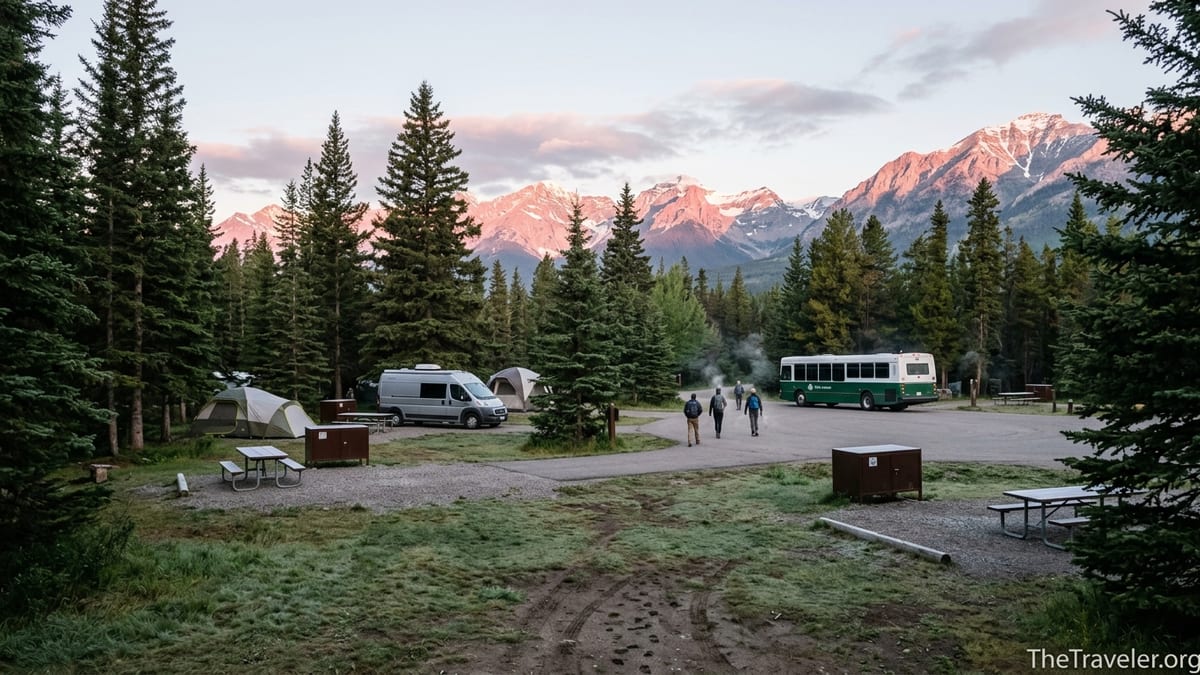
Understanding the Parks Canada Reservation Service
Parks Canada centralizes most reservations for campgrounds, shuttles and some roofed accommodation through the Parks Canada Reservation Service. The same online portal and call centre handles frontcountry camping in parks like Banff, Jasper and Prince Edward Island, backcountry permits in places such as Yoho or Gros Morne, and high-demand shuttles like those serving Moraine Lake and Lake O’Hara. Once you create a user profile, you use a single login to manage nearly all your national park bookings across the country.
The system operates on fixed seasonal launch dates that vary by park and service type. For example, backcountry camping in Banff, Yoho and Kootenay may open on one January morning, while frontcountry camping for Banff’s Tunnel Mountain Village or Jasper’s Whistlers Campground opens on a different March date. Lake O’Hara’s day-use shuttle in Yoho National Park is now handled through a random-draw system, with applications accepted during a specific March window. Knowing these dates in advance is crucial, because peak-season weekends and long weekends can disappear within minutes of launch.
You can book online 24 hours a day once reservations for a given park have opened for the season, or by calling the reservation line during business hours. The call centre uses local park time, which matters if you are phoning from another time zone. In practice, most travelers use the online system because it allows them to enter the virtual waiting room before launch time, watch availability in real time and grab specific sites or shuttle departures on their own screens.
For a typical multi-park road trip, you might book a frontcountry campsite in Jasper, a backcountry permit for Banff, and shuttle seats to Moraine Lake and Lake Louise, all within the same account. Understanding that everything routes through the same Parks Canada Reservation Service helps you plan your bookings strategically and avoids the common mistake of assuming each park has an entirely separate system.
Campground Reservations: Frontcountry and Backcountry
Parks Canada divides camping into frontcountry and backcountry, each with its own reservation nuances. Frontcountry camping covers vehicle-accessible sites like Tunnel Mountain Village in Banff, Whistlers and Wapiti in Jasper, or Cavendish Campground in Prince Edward Island National Park. These campgrounds often have amenities such as flush toilets, showers and playgrounds, and are especially popular with families and RV travelers. Backcountry camping covers sites that require a hike, paddle or other non-motorized approach, such as the Skyline Trail in Jasper or multi-day treks in Yoho.
To reserve frontcountry sites, you select “Camping” in the reservation portal, then choose your park, campground and dates. The system shows a map or list of available sites and lets you filter for vehicle size, power hookups or oTENTik-style roofed accommodations where offered. For example, if you are driving a 24-foot rental motorhome and want electricity near Lake Louise, you might focus on the Lake Louise Hard-Sided Campground and filter for serviced sites. The portal will indicate the maximum length and whether the pad is back-in or pull-through so you do not accidentally book an unsuitable site.
Backcountry reservations work differently. Instead of individual site numbers, you usually book a specific backcountry campground or a route with fixed night-by-night itineraries. In Banff and Yoho, this is mandatory for popular areas such as the Lake O’Hara backcountry and some sections of the Great Divide. For a classic trip like Banff’s Skyline Trail, you would select your trail, pick a starting date and then assign each night to a designated backcountry campground along the route. The system enforces maximum lengths of stay and limits group sizes to protect sensitive environments.
A practical example: a family from Ontario planning a July Rockies trip might log in on Banff’s frontcountry launch day to grab four nights at Tunnel Mountain Village I, then later that morning pivot to Jasper’s launch time to secure three nights at Whistlers. A month later, once backcountry bookings open, they return to the portal to reserve a two-night backpacking trip near Yoho. All of these reservations appear under the same profile, which makes it easier to modify or cancel segments if travel plans change.
Booking High-Demand Shuttles to Iconic Spots
Parks Canada operates shuttle buses to manage traffic and protect fragile areas at several marquee destinations, most notably Lake Louise and Moraine Lake in Banff National Park and Lake O’Hara in Yoho National Park. Private vehicles are now prohibited at Moraine Lake and heavily restricted at Lake Louise, so a shuttle, public transit or commercial tour is the only practical way for most visitors to reach these lakes during peak season. Shuttle seats are booked through the same reservation portal as campgrounds, but they behave more like timed tickets than overnight stays.
For Lake Louise and Moraine Lake, the system typically opens a block of seats for the main summer period, with additional inventory sometimes released closer to the date. You choose your origin, such as the Lake Louise Park and Ride east of the village, and then select a 30-minute arrival window. The shuttle booking covers your outbound trip to the lake and allows you to return on a first-come basis within operating hours. A couple staying at Lake Louise’s frontcountry campground might book a mid-morning departure from the Park and Ride on their hiking day, allowing time to drive from the campground, park, and board the shuttle without rushing.
Lake O’Hara is handled even more tightly due to its sensitive alpine environment. Instead of first-come online bookings, Parks Canada now runs a random draw for day-use shuttle seats. During a defined March application period, you log in and submit one or more date preferences for the upcoming summer season. After the draw closes, successful applicants are notified and must confirm and pay for their seats. If you are not selected, your main alternatives are hiking the 11-kilometre access road on foot or booking accommodation at Lake O’Hara Lodge, which has its own limited allocation of shuttle spots.
In practice, this means that for a Rockies itinerary centered on Banff and Yoho, you might be juggling campground launch days in winter, a shuttle lottery application in early spring, and final shuttle bookings for Moraine Lake in late spring. Travelers who understand these timelines and treat shuttle reservations as essential components of their trip planning are far less likely to be disappointed upon arrival.
How Shuttle Bookings Interact with Campgrounds
One of the most common points of confusion is how campground reservations and shuttle bookings interact. A campsite reservation inside a national park does not automatically grant you a seat on any Parks Canada shuttle, and a shuttle booking does not replace the need for a separate park pass. They are three distinct items: your campground or accommodation booking, your shuttle reservation, and your park entry pass.
That said, campgrounds and shuttles are often designed to complement one another. For example, campers at the Lake Louise Tent Campground or the nearby trailer campground can use local transit or walking paths to reach the Park and Ride, where they board the official shuttles up to Lake Louise or Moraine Lake. Similarly, visitors staying at Yoho National Park’s Kicking Horse Campground might plan a specific day to use their Lake O’Hara shuttle booking, driving the short distance to the Lake O’Hara parking area in time for their morning departure.
Consider a concrete scenario: a couple from Seattle books three nights at Lake Louise’s hard-sided campground in mid-August. On the same day, they secure a morning Moraine Lake shuttle on their second day and an early Lake Louise shuttle on their third morning. Their campsite guarantees them a base, but without those shuttle tickets they would not be able to drive directly to Moraine Lake or rely on last-minute seats, especially during a busy week. By aligning shuttle departure times with their camping dates, they build a realistic, car-light itinerary that avoids early-morning parking hassles.
Backcountry itineraries can also hinge on shuttle logistics. A hiker planning a series of day trips from Lake O’Hara’s backcountry campground must match the dates of their camping permit with the limited shuttle schedule, since the bus runs only on specific days and at specific times. Missing the outbound shuttle could mean hiking the long access road with a full backpack, while missing the return bus can add several hours of walking to an already full hiking day. When you set up your bookings in the Parks Canada system, it is wise to keep a written or digital calendar where campsite dates, shuttle times and travel days are laid out together.
Securing Park Access Passes and Understanding Fees
Beyond campsites and shuttles, most national parks require a valid park pass that covers entry for individuals or vehicles. This is separate from your reservation costs. In Banff, for example, visitors can purchase a daily pass that is valid until 4 p.m. the day after purchase, or an annual Discovery Pass that covers multiple Parks Canada sites across the country for a year. Campers often buy their passes at staffed park entry gates or at large campgrounds such as Lake Louise, Tunnel Mountain or Kicking Horse.
Passes are priced per person or per vehicle, depending on the park and pass type, and are in addition to nightly camping fees and any shuttle reservations. A family of four might pay for a family-vehicle park pass covering their entire week in Banff and Jasper, then nightly frontcountry camping fees for Tunnel Mountain, plus per-person shuttle tickets to Moraine Lake. While this can add up, being clear that each fee covers a different service helps avoid surprises at check-in or trailheads.
Some travelers assume that because they hold an annual Discovery Pass, they do not need a shuttle booking or a campground reservation. In reality, your park pass waives only the entry fee; it does not give you parking at Moraine Lake, a campsite in Jasper, or automatic access to quota-controlled lakes such as O’Hara. Think of the pass as the price of admission to the national park system, while campgrounds, backcountry permits and shuttles are premium services layered on top.
In practical terms, if you are budgeting a two-week Canadian Rockies road trip with a rental car, you should calculate the cost of a family Discovery Pass, your planned camping or hotel nights, and your expected use of high-demand shuttles. Booking these in advance through official channels allows you to lock in your core costs and reduces the temptation to rely on costly last-minute commercial tours simply to reach a lake or trailhead that you could otherwise access with a modest shuttle ticket.
Step-by-Step: Using the Online System Effectively
Using the Parks Canada Reservation Service is straightforward once you understand its quirks. The first step is to create a user account well before any launch dates that matter to you. During sign-up, you enter basic contact details and agree to reservation policies. This profile becomes the home for all your bookings, which is especially helpful if you plan to camp or use shuttles in more than one park or year.
On launch day for a popular service, such as Banff frontcountry camping, you can usually join an online waiting room about 30 minutes before reservations open. At the official opening time, the system assigns you a place in a virtual queue at random. From there, you wait until it is your turn to enter the booking interface. Travelers serious about securing specific dates often log in with time to spare, keep payment details handy, and have backup options written down. For instance, if you cannot get your first-choice weekend at Tunnel Mountain, you might be ready to pivot to a weekday or to a different campground in Yoho or Kootenay.
Once you are in the booking screen, work quickly but carefully. For a campground, select your park and campground, enter your dates, then review the site map. Many experienced users zoom in on a handful of desirable loops or sites beforehand by studying campground maps so that on launch day they are not comparing every site from scratch. For shuttles, you choose the route and then select time windows and the number of passengers. Double-check the date and time before paying, since change and cancellation fees often apply and inventory can be very tight.
After payment, the system issues a confirmation email and a reservation number. Save this email offline if you will be traveling in areas with limited reception, and consider printing a hard copy. At check-in, campground staff may ask for your reservation number and identification, while shuttle drivers or on-site staff may require you to show a printed or digital copy of your ticket. Keeping all your Parks Canada confirmations in a dedicated folder on your phone can make these interactions fast and stress-free.
On-the-Ground Logistics: From Camp to Shuttle Stop
Even with perfect reservations, your trip can feel chaotic if you do not plan how to move between campgrounds, shuttle stops and trailheads. In many parks, private vehicle access to signature areas is limited specifically to reduce congestion in small parking lots. That makes it essential to know exactly where your shuttle departs, what time to be there, and how long it takes to reach the departure point from your campsite or hotel.
In Banff, for example, the main park-and-ride facility for Moraine Lake and Lake Louise shuttles sits several kilometres from Lake Louise village and its campgrounds. A camper at Lake Louise’s hard-sided campground might decide to walk or cycle to the park-and-ride in 20 to 30 minutes, or drive and park there if space is available. Similarly, Jasper visitors staying at Whistlers Campground need to account for the time to reach the townsite if they plan to use local transit or commercial shuttles to popular day-use areas like Maligne Lake.
In Yoho, Lake O’Hara day-use shuttle passengers must be at the Lake O’Hara parking lot well before their scheduled departure. Travelers staying at nearby campgrounds such as Kicking Horse may underestimate how long it takes to break camp, drive through construction zones, or navigate summer traffic on the Trans-Canada Highway. Building a buffer of at least 30 to 45 minutes before your scheduled shuttle departure is prudent, particularly if you are traveling with children or a larger group.
A useful tactic is to treat shuttle departures as hard deadlines in your trip plan, then organize your meals, packing and driving around them. For example, if your Moraine Lake shuttle is at 7:30 a.m., plan to have breakfast ready the night before, set out daypacks, and confirm your route from the campground to the park-and-ride. Those small details can be the difference between a relaxed sunrise at Moraine Lake and a missed bus followed by hours of improvised rearranging.
The Takeaway
Parks Canada’s reservation systems for campgrounds, shuttles and park access are designed to protect fragile environments while still welcoming millions of visitors each year. For travelers, that means spontaneity has to be balanced with careful planning. Understanding that campsite bookings, shuttle seats and park passes are three distinct pieces of the puzzle is the foundation of a smooth trip.
By learning how the Parks Canada Reservation Service works, tracking launch dates, and thinking through on-the-ground logistics from your tent or trailer to the shuttle stop, you greatly increase your odds of actually standing on the shores of Moraine Lake or Lake O’Hara rather than staring at “sold out” screens. With realistic expectations, a few calendar reminders and a clear booking strategy, Canada’s most sought-after national park experiences are still very much within reach.
FAQ
Q1. Does a Parks Canada Discovery Pass include shuttle reservations?
No. A Discovery Pass covers your park entry fees but does not include campground stays or seats on shuttles like those to Moraine Lake or Lake O’Hara.
Q2. If I have a campsite in Banff, can I drive my own car to Moraine Lake?
No. Private vehicles are generally not allowed at Moraine Lake during the main season, regardless of where you are staying. You must use a shuttle, public transit or an authorized tour.
Q3. How early do I need to book campgrounds in popular parks?
For peak summer dates in Banff, Jasper and Yoho, plan to book as soon as reservations open for the season. Prime weekends often sell out within minutes on launch day.
Q4. What happens if I miss my Parks Canada shuttle time?
If you miss your booked departure, staff will try to accommodate you on a later bus only if space allows, which is not guaranteed. On heavily booked days, you may lose the ride entirely.
Q5. Can I show my reservations on my phone, or do I need printed copies?
Phone confirmations are usually accepted, but printed copies are strongly recommended in case of poor mobile reception or a dead battery at the departure point or campground gate.
Q6. Do I need separate reservations for frontcountry and backcountry camping?
Yes. Frontcountry campgrounds and backcountry itineraries are booked as different products in the Parks Canada system, often with separate launch dates and rules.
Q7. Is the Lake O’Hara shuttle really a lottery, and can I apply more than once?
Yes. Day-use seats are allocated through a random draw, and you can generally submit multiple date preferences in one application, subject to Parks Canada’s current rules.
Q8. Are there any walk-up options if I fail to get a shuttle reservation?
For ultra-popular routes like Lake O’Hara, standby spaces are rare to nonexistent. Elsewhere, limited same-day or last-minute seats may appear, but you should not rely on them.
Q9. Can I change the date of my campsite or shuttle after booking?
Often you can, as long as space is available and you pay any applicable change fees. However, changes are subject to Parks Canada’s reservation policies and can be limited close to arrival.
Q10. Do I need a Parks Canada account if I am booking by phone?
Yes. Call centre staff will create or access your Parks Canada profile so your reservations, contact information and payment history are stored under a single account.