


More news on this day
China and a growing group of Eurasian partners are accelerating efforts to knit together rail corridors, customs procedures and border infrastructure, laying the foundations for a new mobility architecture that could reshape how people and goods move between East Asia, Central Asia and Europe.
Get the latest news straight to your inbox!
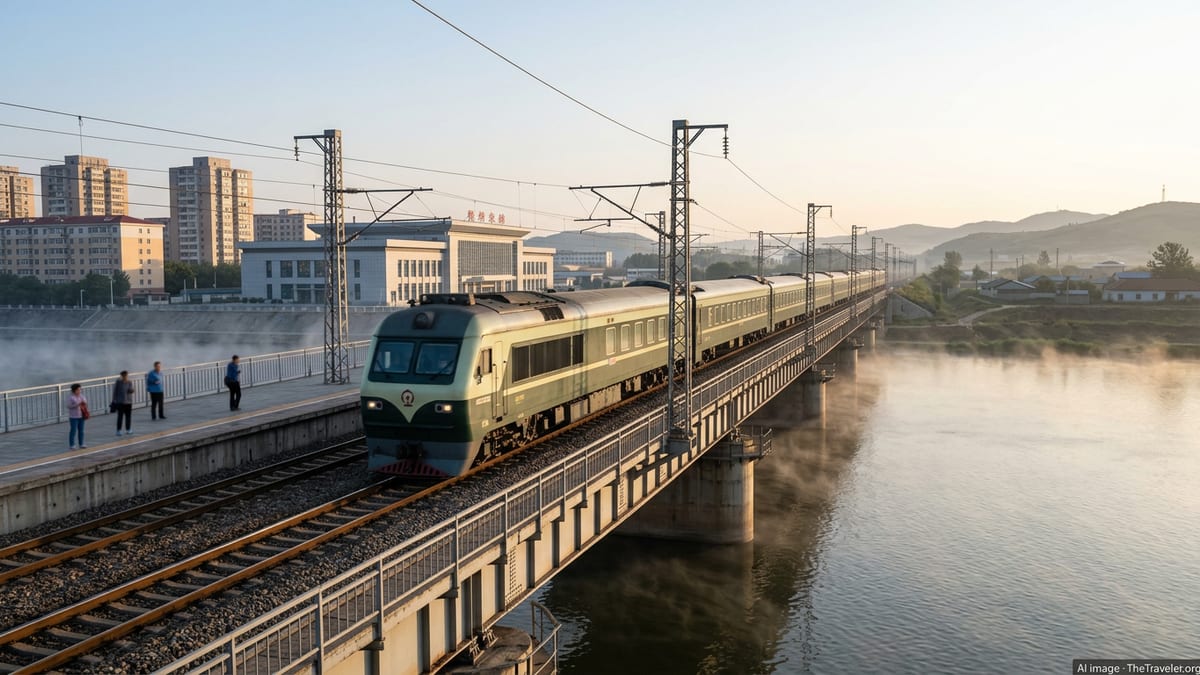
Freight Corridors Mature Into Integrated Eurasian Arteries
China’s role in building a denser grid of rail links across Eurasia continues to expand, with recent services underscoring how freight routes are turning into structured transport corridors. In June 2025, Beijing launched its first China–Europe freight train service that crosses the Caspian Sea, using a rail–sea–rail chain between Beijing, Kazakhstan, the Caspian and Baku. Publicly available information indicates that the multimodal route can shorten door-to-door transit from about 50 days to roughly 15, underlining how new alignments are competing with traditional ocean shipping.
Central Asia is emerging as a core hub in this evolving network. Data released by Kazakhstan’s State Revenue Committee for the first 10 months of 2025 point to continued growth in rail transit from China through Kazakh territory toward the Eurasian Economic Union, Europe and Central Asia. Authorities in Astana highlight digitalization of procedures and faster processing at rail border crossings, signaling that software and customs coordination are becoming as important as steel and concrete in capturing transit flows.
Farther north, Mongolia’s rail system is being reshaped to handle rising China–Europe and China–Russia flows. Official figures show that freight trains transiting Mongolian territory on Asia–Europe and China–Russia routes reached 3,850 in 2025, an increase of more than 700 trains compared with 2024. The country’s government has bundled cross-border rail links and freight terminals into a multi-year action plan, positioning Mongolia as a land bridge between northern China, Siberia and European markets.
Customs Unions and Digital Transit Systems Redraw the Rules
Behind the visible growth in trains and terminals, Eurasian customs and regulatory frameworks are shifting to support more seamless rail movement. The Eurasian Economic Union, grouping Armenia, Belarus, Kazakhstan, Kyrgyzstan and Russia, functions as a customs union with a common external tariff and harmonized customs rules. According to trade policy summaries, the EAEU’s legal framework sets common import tariffs, transit rules and non-tariff measures, so that goods shipped across member borders move under a single customs space rather than facing separate checks in each country.
Transit modernization extends beyond the former Soviet region. Guidance from United Nations bodies on Euro-Asian transport links highlights digitalization of corridor procedures and the reduction of paper-based processes as key priorities for making inland Eurasian routes competitive. Working papers note that several rail segments still face bottlenecks linked to limited corridor-wide integration of electronic systems, prompting renewed focus on interoperable data platforms and coordinated border facilities from Eastern Europe through Central Asia.
Customs technology is also being upgraded within overlapping regional systems. Documentation on the World Customs Organization’s transit tools describes how modern computerized transit procedures aim to streamline movements of goods under customs control, while maintaining guarantees and risk-based security. In Europe, the New Computerised Transit System allows traders to submit a single electronic declaration covering both transit and safety information, and similar concepts are increasingly referenced in discussions of Eurasian rail corridors, where fragmented paperwork has traditionally slowed trains at borders.
Border Rail Infrastructure Connects China With Central Asia and Mongolia
Physical rail links at key border crossings are being expanded in parallel with customs reforms. Mongolia has placed cross-border railways at the heart of its 2024–2028 government action program, including new lines that plug directly into northern China’s infrastructure. A bilateral agreement signed in February 2025 between Mongolia and China paved the way for construction of the Gashuunsukhait–Gantsmod cross-border railway, with building works launching in June 2025. Project documents indicate that the line is designed to carry large volumes of coal and other bulk goods, while also creating capacity to connect additional crossings such as Shiveekhuren and Khangi by rail.
These new connections build on older links like the Zamyn Uud–Erenhot line, but their scale and modern standards point to a more integrated rail grid. Long-term transport contracts tied to the new infrastructure, stretching out to the 2040s, suggest that both Chinese and Mongolian operators view the corridor as a strategic channel for commodities and manufactured goods. As these cross-border lines come online, they are expected to ease bottlenecks at heavily used road checkpoints and reinforce the north–south axis linking China with Russia via Mongolia.
Similar patterns are visible to the west, where China’s freight trains reach Kazakhstan through gateways such as Horgos. Official Chinese coverage of the Beijing–Caspian–Baku service describes Horgos as the rail exit point for the new Middle Corridor route, tying inland Chinese origins directly into Central Asian and Caucasus networks. Coupled with Kazakhstan’s investments in digital customs procedures along its east–west spine, these projects are knitting together what had previously been a patchwork of national railways into more predictable logistics chains.
Passenger Rail and Overland Travel Slowly Rebuild After Disruptions
While freight has led the way in the new Eurasian mobility architecture, international passenger rail is also gradually returning, though unevenly. Timetables for 2025 show that passenger services between Beijing and Ulaanbaatar on the Trans-Mongolian route resumed on 3 June 2025 after a lengthy suspension. This reopening restored a longstanding rail link that supports tourism and cross-border mobility between China and Mongolia, and forms part of the wider chain between northern China, Siberia and Europe.
Other classic overland routes are recovering more slowly. Travel planning discussions and informal compilations of international train services from China indicate that through passenger services between Russia and China via Mongolia remain limited or have yet to return to pre-2020 patterns. Travelers looking to cross Eurasia entirely by rail must often combine domestic segments, buses or flights, reflecting the gap between the rapid normalization of freight corridors and the more cautious resumption of cross-border passenger flows.
Nevertheless, the broader trajectory is toward restored and diversified mobility options. As border rail facilities are upgraded and customs controls become more digitized, industry observers expect that additional passenger services could be reinstated or newly introduced on some of the same alignments that freight trains have popularized. This would further entrench rail as a viable alternative to long-haul air and sea travel across parts of Eurasia, particularly for travelers seeking slower, overland journeys.
Toward a Coherent Eurasian Mobility Architecture
Collectively, these developments point to a more structured Eurasian mobility architecture in which China, the EAEU, Central Asian states and partners in the Caucasus and Europe are aligning infrastructure and procedures. Regional economic agreements and customs unions establish shared rules of the game, while technical projects on border posts, data systems and transit guarantees are translating those rules into everyday operations.
International organizations tracking Euro-Asian transport links argue that completing this integration will require not only new tracks and terminals but also harmonized digital platforms and corridor-wide standards for customs, safety and security. As successive waves of investment bring additional rail links and upgraded checkpoints online, the geography of how goods and, gradually, travelers move between East Asia and Europe is changing, with inland Eurasian routes gaining prominence alongside traditional maritime gateways.
For now, freight remains the primary beneficiary of this integration, yet the architecture being built is fundamentally multimodal and dual-use. The same customs systems and rail nodes that speed container trains from Beijing to Baku or from Inner Mongolia to Russian Siberia can, in time, support a richer menu of overland mobility options. The result is a more interconnected Eurasian landmass, in which rail corridors, customs unions and travel networks increasingly operate as parts of a single, evolving system.
China’s first China–Europe freight train via the Caspian Sea
Mongolia–China Gashuunsukhait–Gantsmod cross-border railway project
UNECE Euro-Asian Transport Links overview