


More news on this day
Delta Air Lines says it has restored a critical automation system after a brief technology outage on Sunday triggered significant flight delays at its Atlanta hub, raising fresh concerns for travelers relying on smooth operations at the world’s busiest airport ahead of the peak holiday period.
Get the latest news straight to your inbox!
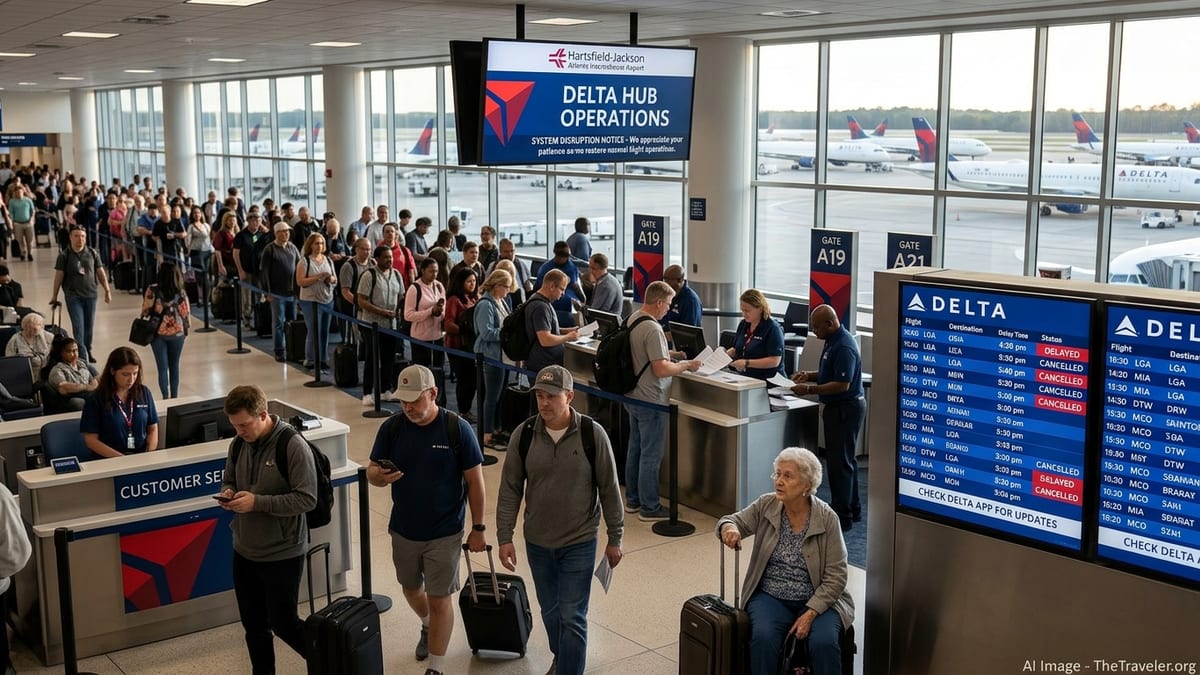
What Delta says happened to its systems
Delta confirmed that a technology problem affecting one of its core operational systems led to delays across its network, including at Hartsfield-Jackson Atlanta International Airport, the carrier’s largest hub. According to the airline, the issue involved an automated system used to support safe aircraft dispatch and performance planning. When that system malfunctioned, some flight departures were temporarily paused while teams switched to manual workarounds and worked to restore normal automation.
The disruption was relatively short in duration, with Delta indicating that the affected system was restored the same day. The airline has not publicly identified the precise technical cause, nor has it suggested that the incident was the result of a cyberattack or security breach. Available statements instead frame it as a malfunction of internal automation that required a controlled slowdown in departures until standard processes could safely resume.
While the outage was resolved within hours, the resulting schedule impacts were more prolonged. Data from flight-tracking services showed that a substantial share of Delta’s daily departures experienced delays as the carrier worked through a backlog of aircraft and crews that had fallen out of position during the pause in operations.
Impact at Hartsfield-Jackson and on travelers
Atlanta’s Hartsfield-Jackson airport, which serves as Delta’s primary hub and one of the world’s busiest passenger airports, saw a particularly heavy concentration of disruption. Flight-tracking tallies indicated that a significant percentage of the day’s Delta services were delayed, and a smaller number were canceled outright as the carrier adjusted its schedule. Because Atlanta is so central to Delta’s route network, delays there tended to cascade outward to connecting flights across the United States.
For travelers on the ground, the issue translated into longer waits at departure gates, changing boarding times and, in some cases, missed connections. Passengers reported receiving a mix of automated rebooking messages and instructions to seek assistance from airport agents when onward itineraries no longer worked as originally planned. Crowded customer service lines and busy phone channels were a recurring feature of similar events earlier in the year, and while early indications suggest this outage was shorter, the experience for some travelers was still one of uncertainty and extended travel days.
The timing of the disruption was especially sensitive because it occurred during a period of strong travel demand heading into the U.S. Thanksgiving travel window. Federal officials have projected tens of millions of passengers moving through airports nationwide over the holiday period, with Atlanta expected to handle several million travelers on its own. An operational hiccup at a major hub so close to those peak days raised understandable concern among passengers about the system’s resilience and about the potential for small glitches to cause outsized impacts when airports are already near capacity.
How this compares to earlier technology outages
This latest malfunction follows a series of high-profile technology incidents across the aviation sector over the past year. In July 2024, a faulty software update from a third-party cybersecurity vendor triggered widespread outages of Windows-based systems worldwide. Delta was among the U.S. airlines most heavily affected, with its internal crew-tracking tools significantly disrupted. The carrier ultimately canceled more than 5,000 flights over several days and required nearly a week to bring its operation back to normal, drawing scrutiny from regulators over its handling of passengers caught up in the delays.
Compared with that earlier event, Delta’s latest technology issue was narrower in scope and shorter in duration. There is no indication that it was linked to any external vendor or broader global outage, and other major U.S. airlines did not report parallel problems in their own systems on the same day. The pattern instead resembles a localized failure inside a specific operational tool that forced Delta to slow departures while reverting to more manual procedures for key safety calculations.
Nonetheless, the incident fits into a broader pattern of growing reliance on automation and complex IT systems for day-to-day airline operations. Tools that manage aircraft weight-and-balance, route planning, crew assignments and maintenance schedules allow carriers to operate dense schedules out of large hubs such as Atlanta. When even one of those systems fails, the knock-on effects can be substantial because there is limited slack in the schedule to absorb disruption, particularly during busy travel periods.
Lessons and unresolved questions for passengers and regulators
For travelers, the immediate lesson from the latest Delta outage is that even relatively short-lived technology problems can disrupt a day’s plans, especially when traveling through a major hub. Passengers with tight connections through Atlanta are among the most vulnerable when operations slow, because a brief delay on an inbound flight can easily cause a missed onward departure. Those connecting to the last flight of the day on a given route face additional risk, since there may be no same-day alternatives once a disruption occurs.
Regulators, including the U.S. Department of Transportation, have signaled growing interest in how airlines prepare for and recover from technology failures. Past DOT investigations have examined whether carriers properly adhered to passenger protection rules, such as those covering refunds when flights are canceled, as well as whether airlines provided timely and accurate information to affected customers. While there is not yet a public indication of a new investigation tied to this specific outage, Delta’s prior experience after the 2024 global IT incident suggests that regulators will be paying close attention to how major airlines are managing their operational technology risks and contingency plans.
Key open questions include the precise root cause of the malfunction, whether Delta has identified changes needed to prevent a recurrence, and how quickly the airline’s backup processes can be activated when systems go offline. Travelers are unlikely to receive detailed technical explanations, but they do have a direct stake in how reliably critical automation performs, because the stability of these systems now underpins everything from departure times to baggage connection handling.
What travelers should do next time a tech issue hits
With Delta now reporting that the affected automation system has been restored and that operations at Atlanta are stabilizing, the immediate disruption from this outage is easing. However, residual delays can persist for several schedule cycles after any significant interruption, as aircraft and crews are repositioned and as incomplete rotations are rebuilt. Travelers booked on Delta in the days following a disruption should pay close attention to flight status updates and consider allowing extra connection time, particularly through Atlanta and other major hubs.
Before heading to the airport, passengers are advised to check the live status of their flights using Delta’s official channels, such as the airline’s mobile app or website, as these typically receive updates earlier than third-party aggregators. If a connection appears particularly tight after a schedule change, it can be worthwhile to explore alternative routings or earlier departures, either online or by contacting Delta directly. Same-day changes are sometimes possible without additional fees when a disruption is caused by the airline’s operations, but specific policies can vary by fare type and circumstances.
Looking ahead to the remainder of the holiday season, travelers may wish to build in additional buffers around key events, such as family gatherings or cruise departures, and to consider travel insurance or flexible tickets where the cost is justified by the importance of the trip. While technology enables airlines to run complex and efficient networks under normal conditions, recent outages at Delta and other carriers serve as a reminder that even advanced systems are not infallible. Being prepared for occasional disruption, and knowing how to respond when it happens, can make a significant difference in how a travel day ultimately unfolds.