


Urho Kekkonen National Park in Finnish Lapland is the opposite of an instant-gratification destination. There is no single famous viewpoint, no gondola to a glass skywalk. Instead, it offers 2,500 square kilometers of wild fells, bogs, spruce forests and silence. That remoteness is exactly what makes it magical, but it also means the park is much less forgiving of poor planning than many travelers expect. Before you book that flight to Ivalo or that cabin in Saariselkä, it pays to understand the most common mistakes visitors make and how to steer around them.
Get the latest updates straight to your inbox!
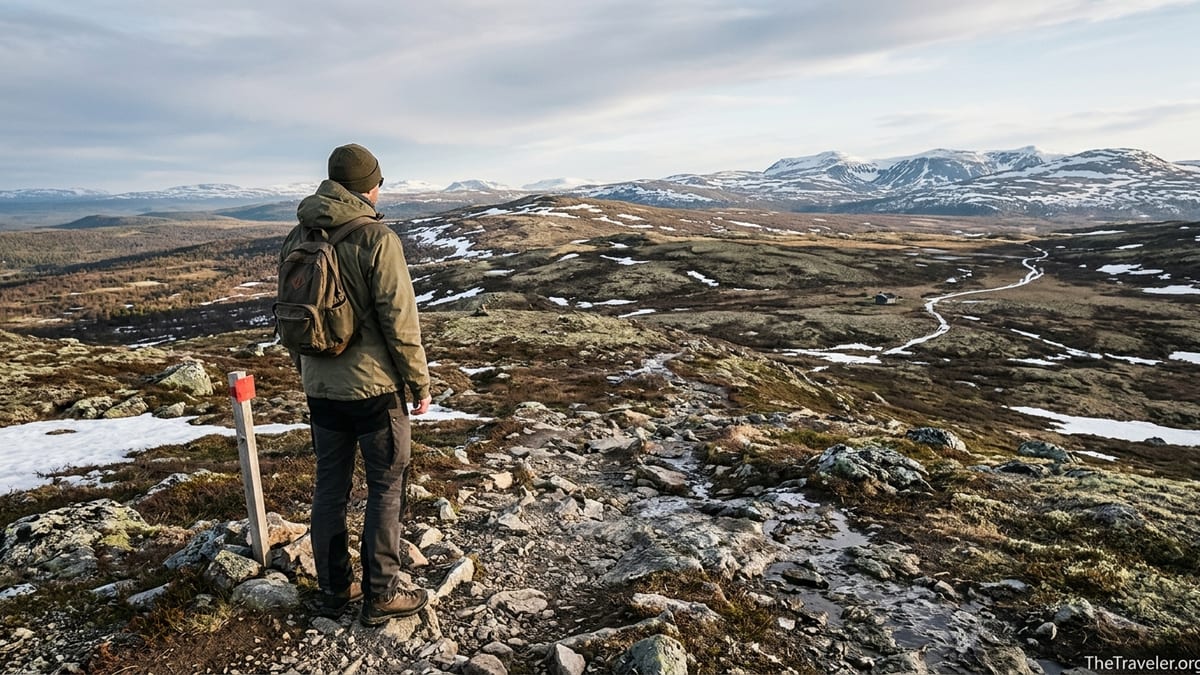
Underestimating the Scale and Wildness of the Park
One of the biggest shocks for first-time visitors is the sheer size and emptiness of Urho Kekkonen. Many people arrive in Saariselkä or Kiilopää imagining a compact national park with a handful of viewpoints and cafés sprinkled along the trails. In reality, this is one of Finland’s largest national parks, stretching all the way to the Russian border. Once you leave the day-hiking loops near Saariselkä, Tankavaara or Kiilopää, you are in genuine Arctic wilderness where you might not see anyone else for hours, sometimes days, particularly outside peak holiday weeks.
This mismatch between expectation and reality can cause serious problems. A common scenario is the visitor who sets out on what they think will be a three-hour loop from Saariselkä, only to discover that the “short” trail they picked is 12 to 15 kilometers and crosses exposed fell terrain. Distances that look small on a map feel entirely different when you are trudging through wet bog or soft spring snow. In autumn or winter you may also be dealing with icy boardwalks and strong wind on top of the fells, which slows your pace even more.
Another frequent mistake is assuming that marked routes guarantee easy walking. Even the popular trails leading from Kiilopää Fell Centre toward Niilanpää or along the Suomujoki valley include rocky sections, sudden climbs, and stretches of duckboard over marsh. For someone used to manicured paths in Central European or American parks, the uneven tundra can be surprisingly demanding. If you have limited hiking experience, it is wiser to start with one of the clearly signed 3 to 7 kilometer loops around Kiilopää, Tankavaara or Saariselkä before venturing on a multi-day trek deeper into the park.
Travelers also tend to underestimate how quickly conditions change. On a July afternoon you might begin your hike in sunshine wearing a T-shirt near the Saariselkä ski area and find yourself walking into a chilly wind and horizontal rain on the open fell two hours later. In March, snowshoers often discover that a groomed trail leaving Kiilopää can turn into an unbroken, wind-packed surface where every step sinks deep if you wander off the main route. Taking the park seriously as remote wilderness, even when you start from a modern resort village, is the first step to avoiding trouble.
Arriving Unprepared for Arctic Weather and Light
Visitors often focus so much on chasing the northern lights or midnight sun that they forget the less glamorous reality of Arctic weather. In winter, temperatures in the park commonly drop well below -15°C, and cold snaps around -25°C are not unusual, especially away from the slightly milder Saariselkä valley. In September and early October, overnight frost can coat boardwalks and rocks in ice even when the sun still feels warm at midday. Yet every year, hikers show up at Fell Centre Kiilopää wearing fashion sneakers, cotton hoodies and thin gloves that are more suited to city parks than an Arctic fell plateau.
Dress mistakes go beyond clothing choices. Many travelers underestimate how much moisture management matters. Cotton base layers, fashionable wool coats and non-breathable rain jackets may feel fine at the trailhead, but once you start climbing Kiilopää or trekking toward Luirojärvi, they trap sweat. When you stop for a snack at a windswept viewpoint, that dampness accelerates heat loss and can make you dangerously cold. A far better approach is a classic layering system: synthetic or merino wool base layer, a light fleece or wool midlayer, and a windproof, water-resistant shell you can easily vent or remove as you warm up.
Light conditions trip up many visitors as well. In December and early January, there are only a few hours of usable daylight. It is completely realistic to start a snowshoe trip from Saariselkä at 10:30 in the morning and find dusk falling by mid-afternoon. Hikers with no headlamp, power bank or plan for navigating at twilight end up rushing back along icy paths or relying on the faint glow from hotel lights in the distance. Conversely, in June and early July, the midnight sun can make it hard to judge time and fatigue. Travelers from central Europe routinely start “one last walk” after dinner, only to realize at Kiilopää summit that it is 1 a.m. and they are exhausted, even though the sky is still bright.
Finally, many visitors fail to realize how quickly wind can transform conditions. A calm, -10°C day on the sheltered forest trails near Tankavaara can feel reasonably comfortable. On the open plateau around Niilanpää or in the fell country east of Saariselkä, that same day with a moderate wind can feel like -20°C or colder. Exposed skin, especially on faces and hands, is at risk of frostnip during longer breaks. Packing windproof gloves, a proper hat that covers your ears, and a buff or balaclava can make the difference between a memorable day and an early, miserable retreat.
Misunderstanding Services, Huts and Costs
Another recurring mistake is assuming that the national park works like a serviced Alpine area with frequent staffed huts, restaurants and cable cars. Urho Kekkonen is closer to classic Scandinavian wilderness. There is no entrance fee, and wild camping is broadly allowed in designated zones, which can give travelers the impression that everything will be simple and cheap. In reality, while staying in your own tent or using open wilderness huts is free, getting to Lapland, buying food, and paying for any transport or guided services can make a trip more expensive than many expect.
The hut system in particular is often misunderstood. The park has a mix of open wilderness huts, day-use shelters, and reservation huts. Open wilderness huts, such as those at Luirojärvi, are free to use on a first come, first served basis, primarily as emergency and short-stay shelters for one or two nights. Reservation huts, common in the busier western parts near Saariselkä and along popular ski routes, require a paid booking that guarantees a bunk, often at a modest fee per person per night. Travelers who imagine they can simply “show up” at any hut and expect space for a large group are sometimes forced to pitch a tent outside in poor weather.
There are also subtle rules about where you can camp. In the basic and recreational zones near Saariselkä, Kakslauttanen and the Nuortti river area, camping is typically restricted to marked campfire sites and areas around shelters and open huts, in order to protect fragile vegetation and manage impact. Deeper in the wilderness zones, you have more flexibility to pitch a tent. Many visitors arrive with only a rough sense of these distinctions and assume they can put their tent wherever they like as soon as they cross a park boundary. Taking a few minutes at a visitor centre, such as Kiilopää Fell Centre or the Koilliskaira Visitor Centre in Tankavaara, to clarify current rules saves headaches and potential fines.
Cost expectations can also be unrealistic. While sleeping in a tent or free hut keeps accommodation costs low, almost everything else in Lapland is expensive by many travelers’ standards. Groceries in Saariselkä supermarkets typically cost more than in southern Finland, and restaurant main courses in resort hotels, such as in the Saariselkä village or around Kakslauttanen, are commonly priced above what many backpackers expect. Public buses from Rovaniemi to Ivalo or Saariselkä, though not outrageously priced, still add a noticeable line to the budget, especially for families. Failing to budget for these basics leads some visitors to cut corners on safety essentials like an extra gas canister, a proper map or adequate snacks.
Relying Too Much on Technology and Too Little on Local Advice
Smartphones and online maps have made trip planning much easier, but in Urho Kekkonen they can create a dangerous sense of security. Travelers frequently arrive with a route planned entirely in a navigation app, downloaded from a blog, or traced from someone’s ski track on a social platform. On the ground, they sometimes discover that the “route” they have chosen crosses a major river at an unmarked ford, passes through a restricted border zone, or follows a winter-only ski trail that is swamp in summer. Because there is patchy mobile coverage once you move away from the main valleys, you cannot always correct mistakes with a quick search.
Paper maps and a simple compass remain extremely useful. Topographic maps for the park, commonly sold in outdoor stores in Helsinki and at local shops in Saariselkä and Tankavaara, clearly indicate official summer trails, winter routes, open wilderness huts, reservation huts, and recommended camping areas. Unlike phone screens, they do not run out of battery at -20°C. Yet every winter and autumn, park staff encounter visitors with no physical map who are navigating solely by an almost-empty smartphone, sometimes protected by nothing more than a thin case in a jacket pocket where cold drains the battery in an hour.
Ignoring local advice is another repeated mistake. The staff at Kiilopää Fell Centre, the park’s visitor centres and local guiding companies around Saariselkä see the conditions every day. They know whether the river ice is fragile, whether a certain bridge is under repair, or whether bear hunting in a nearby wilderness area means you should wear high-visibility clothing. Despite this, many guests rush past the information boards or skip a short chat at reception. A simple five-minute conversation could have told them, for example, that a planned crossing near Raja-Jooseppi is risky due to high water, or that a popular winter trail has been rerouted because of avalanche risk on a steep slope.
Technology also creates false expectations about emergency response. While Finland has well-organized rescue services, reaching someone in the middle of Urho Kekkonen still takes time, especially in poor weather. Travelers who picture quick helicopter evacuations like in some Alpine areas may be surprised to learn that in bad visibility, rescue teams might have to reach them on skis or snowmobiles from Saariselkä or Sodankylä. Carrying a basic emergency kit, including a bivy bag, extra food, and a backup navigation method, is not optional here, regardless of how confident you feel in your phone’s capabilities.
Choosing the Wrong Season or Activities for Your Experience Level
Urho Kekkonen is beautiful year-round, but not every season suits every traveler. Many people book winter trips lured by photos of auroras over snow-covered fells, without fully understanding what winter travel entails. Cross-country skiing hut to hut from Saariselkä toward Luirojärvi or the Russian border is a demanding undertaking, requiring navigation skills, cold-weather camping or hut experience, and the ability to manage risk on partially frozen lakes and rivers. Yet each year, guides and rangers encounter visitors who treat multi-day ski tours here as if they were gentle resort outings on groomed loops.
Spring and autumn pose their own traps. In April and early May, daytime temperatures can soften the snowpack, making skis or snowshoes alternately sink and glide. Streams begin to open, and snow bridges weaken. Someone inexperienced may set off from Kiilopää on what looks like a firm, well-established track and suddenly encounter a slushy, collapsing snow bridge over a creek. In September and early October, the ruska season brings warm colors and relatively mild days, but nights can already be freezing, and snowfall is possible. Summer-focused hikers who are comfortable in 15°C rain in central Europe may be caught off guard by sleet, thin ice on puddles, and the first powder dusting on summits.
Summer, while generally safer in terms of temperature, introduces different challenges. Mosquitoes can be intense in July, especially in boggy valleys and around lakes such as Luirojärvi. Travelers who decide to camp there without head nets or effective repellent often end up hiding in their tents in the evening instead of enjoying the midnight sun on the shore. Navigation can also be trickier once winter trail markers are removed, leaving only low cairns or painted symbols in some areas. People who are used to broad, gravelled national park paths may find themselves pushing through brush or hopping from tussock to tussock over wet ground.
The key is to match your plans to your experience level and risk tolerance. Families with children or first-time Arctic visitors generally do best with short day hikes from Saariselkä, Tankavaara or Kiilopää, possibly combined with a guided outing. Those with extensive winter camping or backcountry skiing experience can enjoy multi-day tours that link remote huts and tent camps deeper in the park. Problems arise when travelers put themselves into the second group based solely on gym fitness or limited winter hiking in much milder climates.
Logistics, Transport and Border Zone Surprises
Because Urho Kekkonen feels remote, many travelers assume getting there will be complicated, then compensate by oversimplifying the details. In practice, access is straightforward but requires attention to schedules and geography. Most international visitors fly into Ivalo or Rovaniemi. From Rovaniemi, long-distance buses run up the E75 highway to Saariselkä, Kiilopää and Ivalo on regular schedules, but not necessarily late at night or very early in the morning. People sometimes arrive on an evening flight to Rovaniemi assuming they can connect directly to Saariselkä, only to find that the last bus has already departed and they must pay for an unplanned hotel night or a costly private transfer.
Another common oversight is failing to align trailheads and accommodations. Many popular day routes start directly from Saariselkä or Kiilopää, which makes them easy to reach on foot from local hotels, rental cabins and hostels. Longer treks, however, may begin or end at more remote access points such as Aittajärvi or Raja-Jooseppi. Hikers sometimes discover too late that there is no simple bus back to their starting point from these trailheads and that arranging a taxi over long distances in Lapland is expensive. Planning point-to-point routes without considering return transport can transform an otherwise well-conceived hike into a logistical headache.
The park’s proximity to the Russian border also introduces a layer of complexity that some visitors overlook. A designated border zone runs along the frontier, and entering it without a permit is strictly forbidden. Travelers using online maps sometimes draw routes toward the dramatic Korvatunturi area without realizing their track crosses into this restricted strip. The authorities take violations seriously, and “just following a GPS line” is not considered an excuse. Official materials and visitor-centre staff can help you understand where the border zone lies and which viewpoints, such as Korvatunturinmurusta, give a sense of the frontier landscape without any legal risk.
Finally, many visitors assume that once they reach a village like Saariselkä, they will not need cash or advance bookings. While card payments are widely accepted in Finland, certain small-scale services, such as local saunas, some taxis or privately run shuttle transfers, may prefer or require advance reservations, especially at busy times like Christmas and New Year. Failing to book early can mean missing out on activities you have been looking forward to, or paying a premium for last-minute arrangements. Treating logistics as part of the adventure, not an afterthought, will make your time in Urho Kekkonen far smoother.
Disregarding Local Culture and Environmental Rules
For all its feeling of emptiness, Urho Kekkonen is not an untouched wilderness free from human influence. Reindeer herding is an active livelihood in the region, and much of the park forms part of Sámi cultural landscapes. Travelers focused solely on scenery sometimes forget that the fells and forests are working lands where herders move animals, maintain fences and rely on peace and predictability. Chasing reindeer for photographs, flying drones near herds, or letting dogs run off-leash may stress the animals and create tension with local communities.
Environmental rules are another area where small misunderstandings can have outsized impacts. Finland’s generous “everyman’s rights” allow wide freedom to roam, but national parks layer on extra protections. Lighting fires, for instance, is generally allowed only at official campfire sites and often depends on current forest fire warnings. Visitors who decide to build a “small, careful fire” on bare rock or beside a lake simply because they are cold or want a picturesque photo may scar the landscape for decades. In summer and early autumn, unauthorized fires also risk spreading through dry vegetation.
Littering is relatively rare compared with many other countries, but problems still appear in high-use areas near Saariselkä and Kiilopää. Wet wipes, cigarette butts and food packaging left at popular viewpoints undercut the feeling of wildness that draws people to the park in the first place. There are no large waste-collection systems in the backcountry; the standard expectation is that you pack out everything you bring in, including organic scraps. Burying or leaving food waste can attract animals to huts and shelters, which in turn can create safety issues.
Noise pollution is an often overlooked form of impact. Bluetooth speakers at lean-tos, drones buzzing low over quiet valleys, or loud conversations late into the night at shared wilderness huts all erode the silence that many visitors value most about Urho Kekkonen. Remembering that others may have travelled thousands of kilometers precisely for that silence is part of responsible travel here. By tuning into local customs and regulations, you not only help protect a fragile Arctic environment but also enrich your own experience of the park.
The Takeaway
Urho Kekkonen National Park rewards those who approach it with curiosity, humility and realism. The most common visitor mistakes share a common thread: treating the park as an extension of a ski resort or city park rather than a serious Arctic wilderness shaped by weather, distance and living culture. Underestimating scale, arriving poorly equipped, relying too heavily on technology, choosing activities that do not match your skills, glossing over logistics and overlooking local customs can all turn a dream trip into a stressful or even dangerous experience.
With a bit of forethought, the same factors that cause problems for some travelers become the ingredients of an unforgettable journey. Studying maps before you go, talking with visitor-centre staff upon arrival, packing for real cold and sudden weather shifts, and being honest about your fitness and backcountry skills will let you enjoy everything from easy day hikes above Saariselkä to multi-day ventures into the park’s silent interior. Respecting reindeer herding and Sámi culture, following environmental rules, and embracing the park’s quiet rather than trying to conquer it will deepen your connection to the landscape.
In the end, Urho Kekkonen is not about ticking off sights; it is about feeling the breadth of the Arctic sky above you, the crunch of snow or heather under your boots, and the rare luxury of genuine remoteness. Avoid the mistakes that others make, and you will give yourself the best chance of discovering why so many visitors consider this vast, understated national park one of Europe’s most special wild places.
FAQ
Q1. Do I need to pay an entrance fee to visit Urho Kekkonen National Park?
There is no entrance fee to the park itself, but you may pay for accommodation, transport, guided tours or reservation huts, and overall costs in Lapland can still be high.
Q2. Is Urho Kekkonen suitable for beginners or families with children?
Yes, if you stick to short, well-marked day trails around Saariselkä, Tankavaara or Kiilopää and prepare for changing weather. Multi-day hikes and winter tours are best left to experienced visitors.
Q3. Do I need to book wilderness huts in advance?
Open wilderness huts are free and cannot be reserved, while reservation huts near busy areas require advance booking and a fee. In peak seasons, relying solely on open huts is risky.
Q4. Can I visit the park without a rental car?
Yes, many visitors use buses that connect Rovaniemi, Ivalo, Saariselkä and Kiilopää. However, schedules are limited, especially early or late in the day, so planning ahead is essential.
Q5. What is the best season to visit for hiking?
Late June to early September is generally best for snow-free hiking, though mosquitoes can be intense in mid-summer and early autumn nights can already be cold and frosty.
Q6. How cold does it really get in winter?
Winter temperatures often fall below -15°C and can drop closer to -25°C or lower away from villages, especially with wind on exposed fells, so proper winter clothing is crucial.
Q7. Can I camp anywhere I like inside the park?
No. While wild camping is widely allowed, in certain zones near Saariselkä, Kakslauttanen and Nuortti you must stay near official campfire sites, shelters or huts to protect sensitive nature.
Q8. Is mobile phone coverage reliable throughout the park?
Coverage is usually good near villages and some main valleys but becomes patchy deeper in the wilderness. You should not rely solely on a phone for navigation or emergencies.
Q9. Are there dangers from wildlife such as bears or wolves?
Large carnivores are present but encounters are rare and attacks on people are extremely unusual. The main wildlife issues for most visitors are insects in summer and reindeer on roads.
Q10. Do I need a special permit because the park is near the Russian border?
You do not need a permit to hike most of the park, but entering the restricted border zone is forbidden without authorization, so routes must be planned to avoid that narrow strip.