


More news on this day
A rapidly expanding Ebola outbreak caused by the Bundibugyo virus in the Democratic Republic of the Congo has now surpassed 10,000 confirmed cases, triggering tighter screening and targeted travel restrictions across parts of Africa and the Middle East even as major health agencies continue to rate the overall risk to most international travelers as low.
Get the latest news straight to your inbox!
Where the outbreak stands now
According to recent situation reporting from United Nations agencies and partner organizations, the Bundibugyo‑strain Ebola outbreak in the Democratic Republic of the Congo had reached more than 10,400 confirmed cases and just over 5,100 deaths by 31 October 2026, with transmission documented in at least 67 health zones across eight provinces in the east and north of the country. Photo‑led field reporting published the same week described roughly half of all confirmed patients dying, making the event one of the deadliest Ebola epidemics on record for Central Africa.
The World Health Organization’s most recent rapid risk assessment notes that the outbreak, first detected in May 2026, has expanded steadily from initial clusters in Ituri and North Kivu into additional provinces as surveillance and laboratory capacity improved. While numbers may have risen further since the end‑October consolidated figures, readers should recheck the latest WHO or national situation reports on publication day for updated totals and any newly affected health zones.
Imported cases have been confirmed in Kenya and Nigeria, all linked epidemiologically to travel from affected areas of Congo. As of mid‑November, Kenya had reported nine laboratory‑confirmed Bundibugyo Ebola cases and two deaths, with authorities stating that every case could be traced back to a single index patient who flew in from Congo via Uganda.
How and where the 2026 outbreak began
WHO and regional health agencies trace the start of the current epidemic to unexplained deaths in Ituri Province in early 2026, with genetic analysis later confirming Bundibugyo ebolavirus as the cause. Congo’s government declared the outbreak in mid‑May 2026, and on 17 May the WHO Director‑General accepted the advice of an emergency committee to classify it as a Public Health Emergency of International Concern, citing rapid geographic spread, insecurity hampering response teams and a lack of licensed vaccines or therapeutics for this virus species.
Through the northern summer the number of affected health zones increased across Ituri, North Kivu, South Kivu and adjacent areas as surveillance intensified. By mid‑August, WHO estimated more than 4,500 confirmed cases and over 2,100 deaths across six provinces, a figure that more than doubled in the following two and a half months as the epidemic extended into additional zones including Kayna in North Kivu.
Trials of several candidate Bundibugyo vaccines and treatments, including protocols sometimes referred to as the “Bravo” studies, are under way under emergency and research frameworks in Congo and neighboring countries. Results remain preliminary and no product has yet received full regulatory approval specifically for Bundibugyo Ebola, meaning that standard supportive care and infection‑prevention measures continue to be the primary tools for reducing mortality and transmission.
Targeted border measures and travel advisories
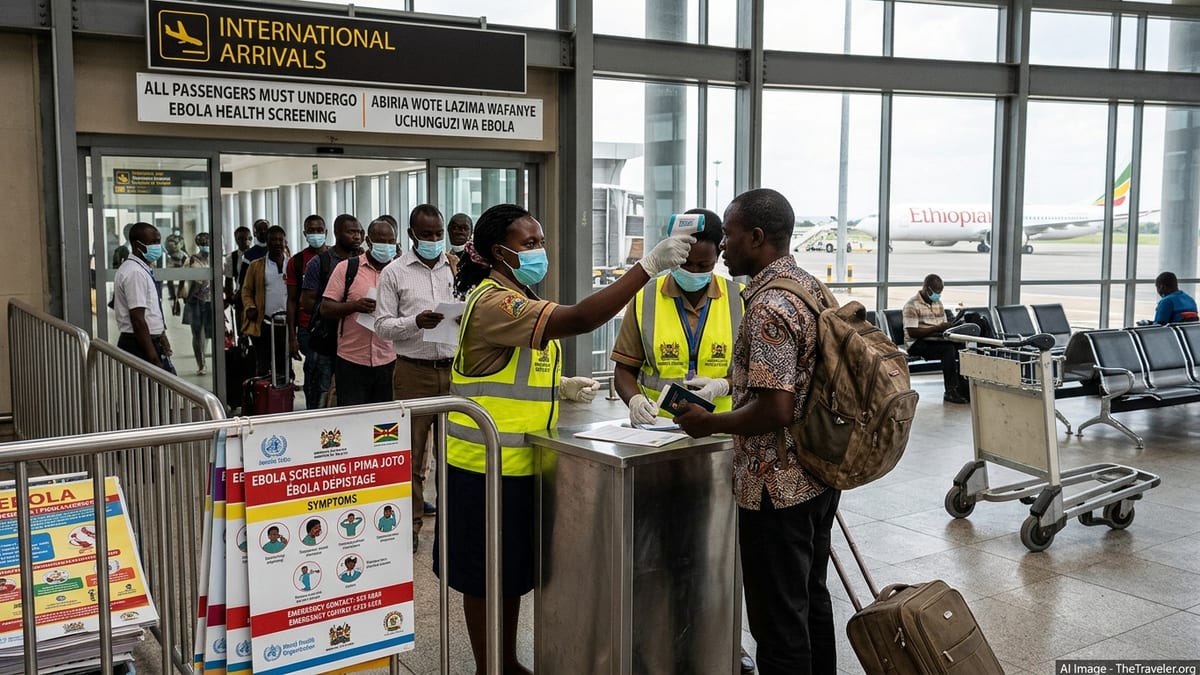
The growth of the outbreak and confirmation of imported cases has prompted tighter but selective travel and entry rules rather than blanket flight bans. Within Africa, Congo, Kenya and Nigeria have implemented exit or entry screening at key airports and ground crossings for travelers arriving from affected provinces, typically combining temperature checks, symptom questionnaires and verification of recent travel history.
Kenya’s Ministry of Health reports that more than 700,000 travelers had been screened for Ebola symptoms at points of entry by late October, with hundreds of samples tested in national and mobile laboratories. Following Kenya’s nine October cases, all linked by officials to a single imported index case and his close contacts, the country has maintained active contact tracing and isolation protocols but has not imposed nationwide movement bans or suspended scheduled international air services.
Saudi Arabia has gone further with precautionary measures. Since June 2026 it has suspended travel by Saudi citizens to the Democratic Republic of the Congo, Uganda and South Sudan and paused visa issuance and entry for travelers who have recently been in those countries. On 30 October 2026, the kingdom extended restrictions to Kenya, halting visas for travelers arriving from Kenya and barring entry to anyone who has been in Kenya or another country with an active Ebola outbreak within the previous 21 days. These steps have immediate implications for tourism, labor migration and religious pilgrimage, particularly for Kenyan residents planning Umrah or future Hajj trips. Travelers should verify on the day of booking whether any of these country lists, look‑back periods or exemptions have changed.
Risk levels for travelers beyond Central Africa
Despite rising case numbers in Congo and limited importations elsewhere, WHO, the European Centre for Disease Prevention and Control and the United States Centers for Disease Control and Prevention all currently assess the risk of infection for most international travelers as low, provided they avoid direct contact with sick individuals, bodies, blood or other bodily fluids and comply with local public health instructions.
For travelers who must visit affected parts of eastern and north‑eastern Congo, as well as neighboring areas handling imported cases, health agencies emphasize strict hygiene, awareness of local outbreak information and adherence to movement or gathering restrictions imposed by national authorities. Human‑to‑human transmission occurs via direct contact, so staying away from health‑care settings treating Ebola patients, from traditional burial rituals and from bushmeat or wildlife carcasses is essential.
There is currently no recommendation for routine Ebola vaccination of travelers for Bundibugyo strain, and no self‑administered preventive medication is available. Agencies continue to discourage nonessential travel into active outbreak zones but do not advise against transit through unaffected African hubs, and there is no generalized warning against travel to Africa as a continent.
What travelers should check before departure
Anyone planning travel to, from or through Central and East Africa in the coming weeks should first review the latest advisories from WHO, ECDC, their national foreign ministry and the destination country’s health authorities. Key items to recheck on the day of travel include current case and death totals in Congo and any newly affected countries, modifications to Saudi or other states’ entry rules, and any new airline, airport or land‑border screening requirements.
Passengers departing from or connecting via affected countries should allow extra time for health screening and be prepared to complete health‑declaration forms or provide detailed recent travel history. Some carriers and tour operators may adjust schedules or routing to comply with local rules, so travelers are advised to monitor booking systems and airline communications for last‑minute changes rather than assuming normal operations.
Finally, travelers should confirm what their travel insurance and any medical evacuation coverage will and will not cover in the context of an Ebola outbreak, including potential exclusions for quarantine periods or government‑ordered movement restrictions. Outside the defined outbreak areas, the direct infection risk remains low, but understanding screening procedures, entry rules and contingency plans before departure can help avoid unexpected disruption as authorities respond to one of the most complex Ebola emergencies yet recorded in Central Africa.