


Landing at Alejandro Velasco Astete International Airport in Cusco is both exhilarating and disorienting. One moment you are at sea level in Lima, and an hour later you step off the plane into thin Andean air at more than 3,300 meters, surrounded by mountains and a crush of tour groups heading for the Sacred Valley and Machu Picchu. This guide walks first-time visitors through what to expect at Cusco’s compact CUZ airport, how to navigate arrivals and transport, and how to start your high-altitude trip safely and smoothly.
Get the latest updates straight to your inbox!
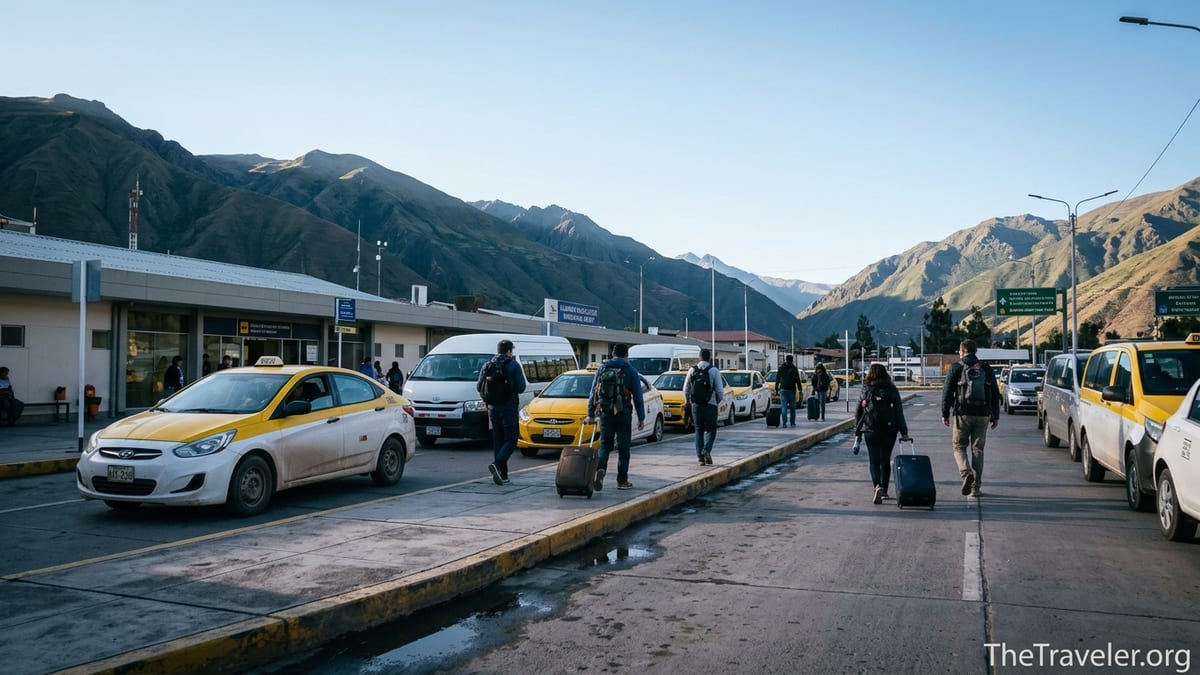
Understanding Cusco’s Airport and Layout
Alejandro Velasco Astete International Airport (code CUZ) sits within the city of Cusco, just a 10 to 15 minute drive from the historic center in light traffic. The airport is relatively small compared with Lima’s Jorge Chávez, with a single main terminal handling both domestic and limited international flights. Most travelers arrive from Lima on airlines such as LATAM, Sky Airline and JetSMART, often early in the morning to connect with Sacred Valley tours or Machu Picchu trains.
The terminal itself is straightforward. After disembarking via jet bridge or stairs and walking through a short corridor, you reach the arrivals level, where immigration (for international flights) and baggage claim share the same general area. There is one primary baggage hall with a few carousels, public restrooms, and basic services such as ATMs and currency exchange desks. It can feel crowded during the morning rush from Lima, but the distances are short; many travelers are outside the terminal within 20 to 30 minutes of landing on routine days.
Departures and arrivals use different sections of the same building. Check-in counters and security are on the upper level, while arrivals and ground transport are on the lower level. You do not need to worry about multiple terminals, trains, or buses inside the airport. For a first-time visitor, the biggest challenges are not the layout but the altitude and the number of taxi and tour representatives vying for your attention once you exit customs.
Because CUZ is surrounded by mountains and neighborhoods, operations can be affected by weather, early-morning fog, and short periods of runway congestion. It is common for flights to operate mostly in daylight hours, and you should allow generous connection times if you have a same-day international flight onward from Lima. Many tour operators recommend arriving in Cusco a full day before any trek or time-sensitive Machu Picchu entry.
Arrivals, Baggage and Money: First Steps Off the Plane
On arrival, follow signs to immigration if you are coming from another country such as Chile or Bolivia, otherwise you will be funneled directly to baggage claim from your domestic flight. Immigration at Cusco is typically straightforward, but queues can form around mid-morning. Have your passport, completed entry form if used, and proof of onward travel ready. Most visitors clear formalities in 10 to 30 minutes, depending on how many flights have landed at once.
In baggage claim, carousels are clearly labeled with your flight number. Delays of 10 to 20 minutes are common during busy periods, so use this time to visit the restroom or hydrate. There are a few ATMs in or near the arrivals hall, often from major Peruvian banks. Because machines sometimes run out of cash or temporarily go offline, it is wise to arrive with at least a small amount of Peruvian soles in hand, or be prepared to try a second ATM if the first one fails. Currency exchange counters are available, but their rates are generally less favorable than exchanging money in central Cusco or using an ATM.
Customs screening is usually quick, with random bag checks. After customs, you walk directly into a compact arrivals corridor. Here, you will see official airport taxi desks, hotel representatives holding signs, and sometimes tour agencies offering immediate Sacred Valley transfers. Ignore anyone who pressures you to decide on the spot. Take a moment to adjust to the altitude, step aside to the wall or seating area, and check your plans before engaging with transport providers.
If your checked bag does not appear, locate the airline baggage desk inside the arrivals area. Staff can help you file a missing bag report. For essential items like prescription medication, always carry them in your cabin bag, because same-day delivery from Lima to Cusco is not guaranteed, especially when flights are full or affected by weather.
Taxis, Ride Apps and Getting into Central Cusco
Once you exit customs into the public arrivals zone, you have three main ways to reach your hotel: official airport taxis booked at the counter, pre-booked private transfers, or local taxis and app-based rides outside. The easiest and safest for a first-time visitor is usually an official taxi or a previously arranged transfer through your hotel or a reputable company.
Official airport taxi counters sit inside the arrivals hall. Staff quote a fixed price to different zones of the city, typically more expensive than street taxis but predictable and paid at the counter or directly to the driver. Recent traveler reports suggest that a ride to hotels near the Plaza de Armas can cost roughly the equivalent of 8 to 15 US dollars with official taxis, depending on the company and time of day, with prices shown in soles. In exchange for the higher fare you get a marked vehicle, a registered driver, and assistance with luggage.
Outside the terminal doors you will encounter a line of independent taxis. Many are perfectly legitimate, but they are not regulated at the same level as airport-contracted services. Drivers may start with a higher quote, expecting you to negotiate. For example, a driver might begin at 30 to 40 soles for a ride to the historic center and quickly agree to 20 to 25 soles if you politely bargain and confirm the price before getting in. This can save money if you are comfortable negotiating in Spanish, but first-time visitors arriving tired at altitude often prefer the simplicity of a fixed-rate service.
App-based rides such as in-region services and newer local apps like Turismo Cusco Pasajero are active around the city and sometimes at the airport. These can offer competitive rates, but pickup zones may be just outside the main exit to avoid conflicts with official taxis. Connections are not always reliable on crowded networks, and drivers may cancel if they cannot find you quickly. If you want to use an app, check that you have mobile data, request the ride only after exiting the terminal, and verify the license plate and driver before boarding. Whether you choose a taxi or an app, keep your small daypack on your lap, confirm that the driver knows your hotel by name and street, and ask them to drop you at the door rather than at a nearby square.
Altitude, Health and Smart First-Day Planning
Cusco’s altitude, around 3,400 meters above sea level, is often the first real shock of the trip. Walking up a short flight of stairs can leave you short of breath. Mild symptoms of acute mountain sickness such as headache, fatigue, light nausea, or poor sleep are common in the first 24 to 48 hours for travelers who fly directly from sea level. Health agencies emphasize that acclimatization over several days is the best protection, and that your body adjusts most rapidly during the first three to five days at altitude.
Practical steps begin before you leave the airport. Move slowly through the terminal, avoid sprinting for luggage, and sip water regularly. Many hotels in Cusco serve coca tea and oxygen in their lobbies; while coca tea is a traditional remedy and may help you feel better, the most evidence-supported measures are gradual ascent, rest, and hydration. Some travelers with a history of altitude issues or tight schedules use acetazolamide prescribed by their doctor before travel; this is a medical decision that should be made in advance with a professional.
If you are especially concerned about altitude or have heart or lung conditions, consider going directly from the airport to a lower-elevation town in the Sacred Valley, such as Urubamba or Ollantaytambo, to sleep for the first two nights. Many seasoned visitors report feeling significantly better at these altitudes, which are roughly 600 to 1,000 meters lower than Cusco, while still being close enough for day trips and train departures to Machu Picchu. Private transfers can pick you up right outside arrivals and take you directly to your Sacred Valley hotel, turning your first day into a scenic drive through the Andes rather than a strenuous city day at full altitude.
Regardless of where you sleep, keep your arrival day gentle. Avoid alcohol, heavy meals, and intense exertion such as climbing steep streets or joining a long walking tour. A realistic first afternoon might involve a slow lunch near your hotel, a short stroll around the Plaza de Armas, and an early night. Save demanding outings like Rainbow Mountain, which reaches more than 5,000 meters, until you have had several days to acclimatize.
Getting from Cusco Airport to the Sacred Valley
For many travelers, the goal on landing at CUZ is not central Cusco but the Sacred Valley. Towns such as Pisac, Urubamba and Ollantaytambo sit along the Urubamba River and offer lower altitude along with easy connections to Machu Picchu. The distance from Cusco airport to Urubamba is around 60 kilometers by road, often taking 1.5 to 2 hours depending on traffic and roadworks, while Cusco to Ollantaytambo can take around 2 hours on the winding mountain roads.
The most convenient option for a first-time visitor is a pre-booked private transfer. Numerous companies and hotels arrange door-to-door vehicles that meet you in the arrivals hall with a sign and handle luggage. Recent sample rates advertised by local transport companies list prices around 50 to 80 US dollars per vehicle for an airport-to-Ollantaytambo transfer, depending on vehicle size and whether you include sightseeing stops en route. Families or small groups find this cost-effective when split between three or four people, and the driver can stop at viewpoints or small markets along the way.
If you are traveling solo on a tight budget, you can combine local taxis and colectivos. A typical route might involve taking a taxi from the airport to the colectivo departure area near Calle Pavitos in Cusco, then boarding a shared van to Urubamba or Ollantaytambo. These colectivos are inexpensive, often costing only a few US dollars equivalent per person, and leave when full. This system is widely used by locals but can be confusing with luggage and offers less legroom, so it is less ideal if you have large bags or limited Spanish. Additionally, some travelers feel the combination of altitude, travel fatigue and winding roads makes a calm, private ride a worthwhile investment.
Regardless of your mode of transport, ask the driver if he expects any road issues, landslides or protests that could delay the journey; temporary disruptions occasionally affect roads in the region, and local drivers are usually aware of conditions. Pack a warm layer, since the temperature can drop quickly once the sun dips behind the mountains, even if the afternoon felt pleasantly mild on arrival.
Connecting to Machu Picchu: Trains, Tickets and Timing
Cusco airport is the starting point for nearly all trips to Machu Picchu, but no commercial flights go directly to the ruins and there is no train station at the airport. To reach Machu Picchu, you typically combine road travel from the airport to a rail station, followed by a train ride to Aguas Calientes, the gateway town at the base of the site. The most commonly used train stations for visitors are in Poroy, Ollantaytambo and sometimes the San Pedro or Wanchaq stations in central Cusco, depending on the season and operator.
Two main railway companies, long established on the route, run various classes of train from the Cusco area to Aguas Calientes. Services range from budget tourist cars with simple seating to panoramic glass-roof trains and high-end experiences with dining and music. Journey times vary from about 1.5 hours from Ollantaytambo to around 3.5 hours from Poroy. Most trains require advance booking, especially in high season from May to September, and they operate on fixed schedules that may not sync with every incoming flight.
Because of this, many travelers do not go directly from their arriving flight to a train the same day, especially if landing after mid-morning. A typical plan is to arrive at CUZ in the morning, transfer to Ollantaytambo or Urubamba, sleep there, and catch a mid-morning train to Aguas Calientes the next day. This approach builds in a buffer for any flight delays and gives you time to adjust to the altitude before visiting Machu Picchu. For those with very limited time, some tour agencies arrange tight same-day sequences such as a dawn flight into Cusco, immediate transfer to Ollantaytambo, and an afternoon train, but this leaves little room for mishaps.
Remember that reaching Machu Picchu also requires entry tickets and, in many cases, timed-slot reservations booked well in advance. Same-day ticket availability is limited, and regulations around circuits and time windows have tightened in recent years. If your dream is to climb Huayna Picchu or Machu Picchu Mountain, you must secure those permits months ahead and then build your flight, train and hotel schedule around the specific time slot on your ticket. Treat your arrival at Cusco airport as the first link in a carefully planned chain rather than an isolated flight.
Practical First-Time Tips for Cusco and CUZ
Beyond transport logistics, a few simple habits at and after the airport can dramatically improve your first days in Cusco. First, pack your carry-on with the essentials you will want immediately on landing at altitude: a reusable water bottle, light snacks, a warm fleece or jacket, basic medications, and copies of your reservations. That way, even if your checked bag is delayed, you can still travel comfortably to the city or Sacred Valley.
Second, keep your arrival day flexible. Avoid booking a nonrefundable afternoon activity that depends on exact timing, such as a guided walking tour with fixed start time or a same-day train departure, on the assumption that your flight will be perfectly on schedule. Weather and traffic can introduce delays of an hour or more, particularly in the rainy season from roughly November to March. Aim for low-stress goals such as checking in, having a light meal, and taking a short orientation walk.
Third, treat airport transport as part of your safety planning. Only get into marked taxis or pre-booked vehicles, note the license plate, and share your ride details or estimated arrival time with a friend or family member at home. Keep valuables such as passports, electronics and cash in a small bag you can keep in sight; do not place them in the trunk or on an overhead shelf in shared vans. While most visitors transit CUZ without any trouble, petty theft can occur in crowded areas or when travelers are distracted and fatigued.
Finally, use your first airport encounter with locals as a chance to tune your expectations. Notice how quickly the afternoon temperature drops, how sun exposure feels stronger at altitude, and how short distances can still leave you winded. These small observations at CUZ will help you pace yourself over the coming days, whether you are exploring Inca ruins around Cusco, heading to the Sacred Valley, or preparing for a trek to Machu Picchu.
FAQ
Q1. How long does it usually take to get from Cusco airport to the historic center?
In light traffic the drive is often 10 to 15 minutes, but at busy times, especially mornings and late afternoons, it can stretch toward 30 minutes, so allow extra time.
Q2. What is a typical taxi price from Cusco airport to hotels near the Plaza de Armas?
Official airport taxis often quote the equivalent of about 8 to 15 US dollars, while independent taxis outside may charge less if you negotiate a fixed price in soles before getting in.
Q3. Is it better to stay in Cusco or go straight to the Sacred Valley after landing?
Many travelers worried about altitude choose to go directly to lower towns like Urubamba or Ollantaytambo to sleep, while others enjoy spending their first night in Cusco for its restaurants and atmosphere. The best choice depends on your health history and schedule.
Q4. How early should I arrive at CUZ for my departing flight?
For domestic flights most airlines and local operators recommend arriving about 2 hours before departure, and for international flights at least 3 hours, as queues at check-in and security can be uneven.
Q5. Can I buy a SIM card or get mobile data at Cusco airport?
Availability changes, but you may find kiosks from major Peruvian carriers near arrivals on some days. Many travelers, however, prefer to arrange eSIMs or roaming in advance, then visit a full carrier store in central Cusco for better options.
Q6. Are there reliable ATMs at the airport, or should I wait until the city?
There are ATMs in the arrivals area and just outside, but they occasionally run out of cash or decline foreign cards. It is wise to test one machine on arrival and, if necessary, plan to withdraw more in central Cusco where there are multiple bank branches.
Q7. How far is Cusco airport from the train stations for Machu Picchu?
By car, the airport is roughly 15 to 25 minutes from central stations like Wanchaq or San Pedro, and about 1.5 to 2 hours from the Ollantaytambo station in the Sacred Valley, depending on traffic and road conditions.
Q8. Do I need to book a Sacred Valley transfer before I arrive, or can I arrange it on the spot?
You can often find drivers and agencies offering same-day transfers in the arrivals area, but in high season pre-booking with a reputable company or through your hotel gives you clearer pricing and peace of mind after a long flight.
Q9. What should I do if I feel sick from the altitude soon after landing?
Rest, hydrate, avoid alcohol and heavy food, and keep your first day gentle. If symptoms are severe, worsening or include shortness of breath at rest, seek medical care promptly; many larger hotels can connect you to local clinics familiar with altitude issues.
Q10. Is it realistic to fly into Cusco and visit Machu Picchu on the same day?
It is technically possible with very early flights and perfectly timed train connections, but it leaves almost no margin for delays and offers a rushed experience. Most visitors prefer at least one night in Cusco or the Sacred Valley before continuing to Machu Picchu.