


More news on this day
Severe thunderstorms and torrential rain around Newark Liberty International Airport have triggered flash flooding, widespread cancellations and hours long delays that rippled across airline networks nationwide on Monday.
Get the latest news straight to your inbox!
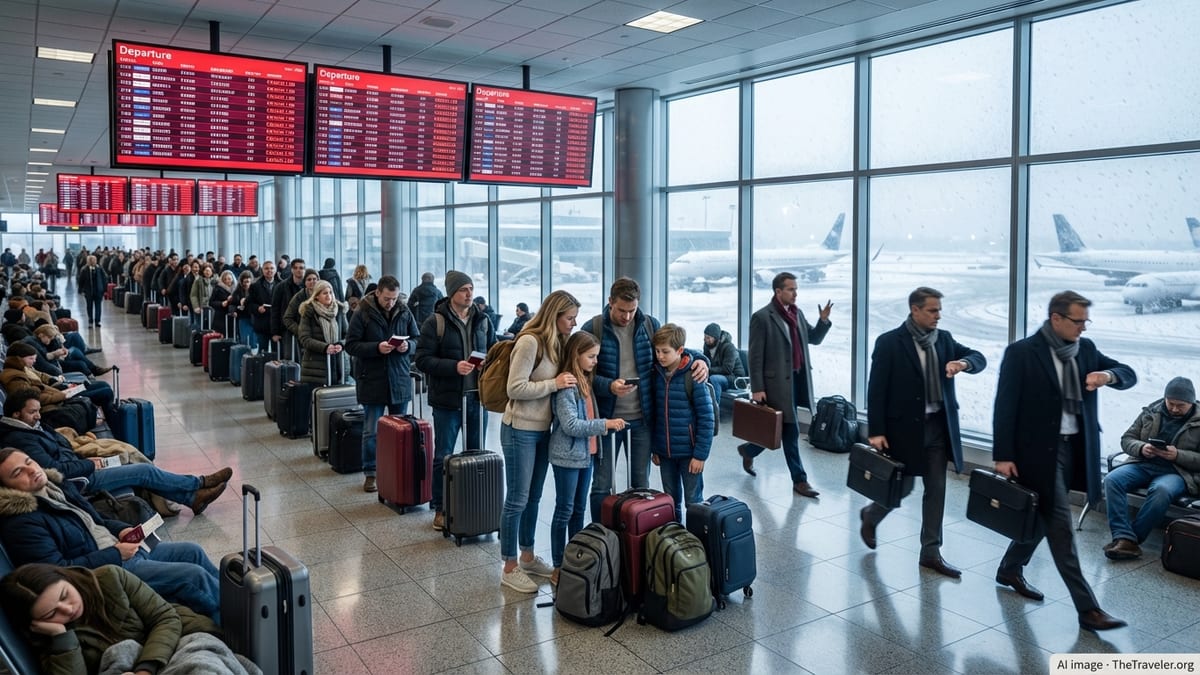
Flash flooding hits Newark after weekend deluge
The latest round of disruption follows a weekend of intense storms across the New York metropolitan area, where videos and images shared on social platforms showed water pooling on airport access roads and low-lying sections of nearby highways. Local television coverage described vehicles stranded in floodwaters around parts of northern New Jersey and New York City, as drainage systems struggled to keep up with sudden downpours.
National Weather Service data from the Newark Liberty International Airport station indicates that more than 2 inches of rain fell on Saturday alone, with additional rain on Sunday compounding saturated ground conditions. By Monday afternoon, forecasters had posted a flood watch for the area, citing the risk that any new thunderstorms could quickly overwhelm storm drains and trigger additional flash flooding in urban and airport-adjacent zones.
The combination of standing water and lightning risks has periodically slowed ground operations, including ramp work and baggage handling, according to airline operational updates. Even when runways remain open, reports indicate that aircraft movements are sometimes limited while lightning is in the vicinity, contributing to lengthening queues of departures and arrivals.
Publicly available information from New Jersey transit agencies also shows knock-on effects for surface transport links, including some trains diverting around the airport station at the height of the flooding. That has further complicated travel for passengers trying to reach or leave the airport during breaks in the storms.
Ground stops and flow controls trigger mass delays
Federal aviation traffic management advisories for Monday show a patchwork of ground delay programs and flow restrictions centered on Newark, reflecting the constrained capacity in stormy conditions. When heavy cells move through the approach and departure paths, arrival rates are reduced and departures are held on the ground, effectively metering the number of aircraft that can safely use the airport.
As those limits tighten, airlines have been forced to push back departure times repeatedly, sometimes holding passengers on board for hours as crews wait for new takeoff slots. Travelers posting from Newark on Sunday night and Monday morning described sitting through multiple delay notices before flights were eventually cancelled or rerouted to other hubs with available capacity.
Industry tracking services show that the three major New York-area airports, including Newark, have collectively registered hundreds of delays and cancellations since late Saturday. Newark has borne a substantial share of the impact because it is a central hub for several domestic and international networks, meaning any slowdown quickly reverberates through connecting banks of flights.
While some flights have managed to operate between storm cells, the uneven tempo of arrivals and departures has created long lines at check-in counters and customer service desks. Airlines have encouraged travelers to use digital tools and rebooking platforms to avoid crowding terminal areas during peak disruption periods.
Nationwide ripple effects from a key Northeast hub
Because Newark serves as a major connecting point between transatlantic routes and domestic services, disruptions there tend to spread far beyond the New York region. Data from national flight-tracking dashboards on Monday showed delays and cancellations tied to Newark affecting schedules at airports as distant as Los Angeles, Denver and Houston, as aircraft and crews fell out of position.
Once an inbound flight to Newark is significantly delayed or diverted, the aircraft often cannot turn around in time to operate its next leg, creating a chain reaction across the carrier’s route map. Crews may also run up against federally mandated duty time limits if they spend hours on the ground waiting for storms to clear, forcing airlines to cancel or reschedule onward flights even after weather conditions improve.
Published coverage from recent storm events in the region highlights how quickly such ripple effects can build. On earlier thunderstorm days this month and in late spring, Newark recorded hundreds of delayed operations and dozens of cancellations in a single afternoon, with recovery sometimes stretching well into the following day as airlines repositioned aircraft.
Travel analysts note that the peak summer travel season magnifies these disruptions. With planes flying close to full and spare aircraft in short supply, there is little slack in the system to absorb sudden schedule shocks from severe weather at a major hub.
Storm pattern underscores climate and infrastructure concerns
The latest flooding and operational strain at Newark have renewed attention on how increasingly intense rainfall events intersect with aging airport infrastructure. New Jersey emergency management and mitigation documents, reviewing past storms, describe how heavy downpours have repeatedly overwhelmed drainage around terminal roadways and low-lying apron areas, creating hazards for vehicles and ground crews.
Climate assessments for the Northeast point to a clear long-term trend toward heavier short-duration rainfall, raising the likelihood that flash flooding could become a more frequent threat to airports built along tidal rivers and coastal lowlands. Newark’s location near Newark Bay and the Passaic River leaves it especially vulnerable when strong thunderstorms coincide with high tides or saturated soils.
Airport operators in the region have outlined plans for upgraded pumping systems, improved stormwater management and resilience measures in response to past flooding from coastal storms and tropical remnants. However, the pace of implementation and the scale of investment required remain challenges, particularly as passenger volumes rebound and traffic growth strains existing facilities.
For airlines and passengers, the immediate concern remains the operational reliability of a hub that already faces chronic congestion and airspace constraints. The current storm sequence illustrates how even short-lived but intense cells can tip a tightly scheduled operation into widespread delay when combined with limited infrastructure headroom.
Travelers face long waits and evolving advisories
As thunderstorms continue to threaten the Mid-Atlantic and Northeast, airlines have issued flexible travel policies for customers booked through Newark and other affected airports on select dates. These waivers generally allow passengers to rebook within a limited time window without change fees, provided they keep the same origin and destination and travel in the same cabin.
Carriers and aviation agencies are urging passengers to check flight status frequently on mobile apps or carrier websites, as departure and arrival times remain subject to rapid change in response to evolving radar imagery and air traffic control programs. Many travelers over the weekend reported last-minute gate changes and rolling delays, underscoring the importance of monitoring updates even after arriving at the airport.
Travel experts advise that those with flexible plans consider routing through alternative hubs or shifting travel to early morning or late-night departures, which can sometimes be less exposed to the most intense convective activity. However, with summer demand running high, open seats on replacement flights may be limited, especially for families and groups hoping to stay together.
With additional storms in the forecast and flood watches in effect into Tuesday, aviation planners expect the system to remain fragile in the near term. Even if conditions briefly improve, the backlog of displaced passengers, crew and aircraft means that residual delays from the Newark disruptions are likely to linger across the national network for at least another travel day.