


More news on this day
Plans for a high-speed “bullet train” corridor linking Delhi with major cities such as Lucknow, Varanasi and Patna are moving back into the spotlight, as fresh policy signals and preparatory work point to a substantial upgrade in long-distance connectivity across northern and eastern India.
Get the latest news straight to your inbox!
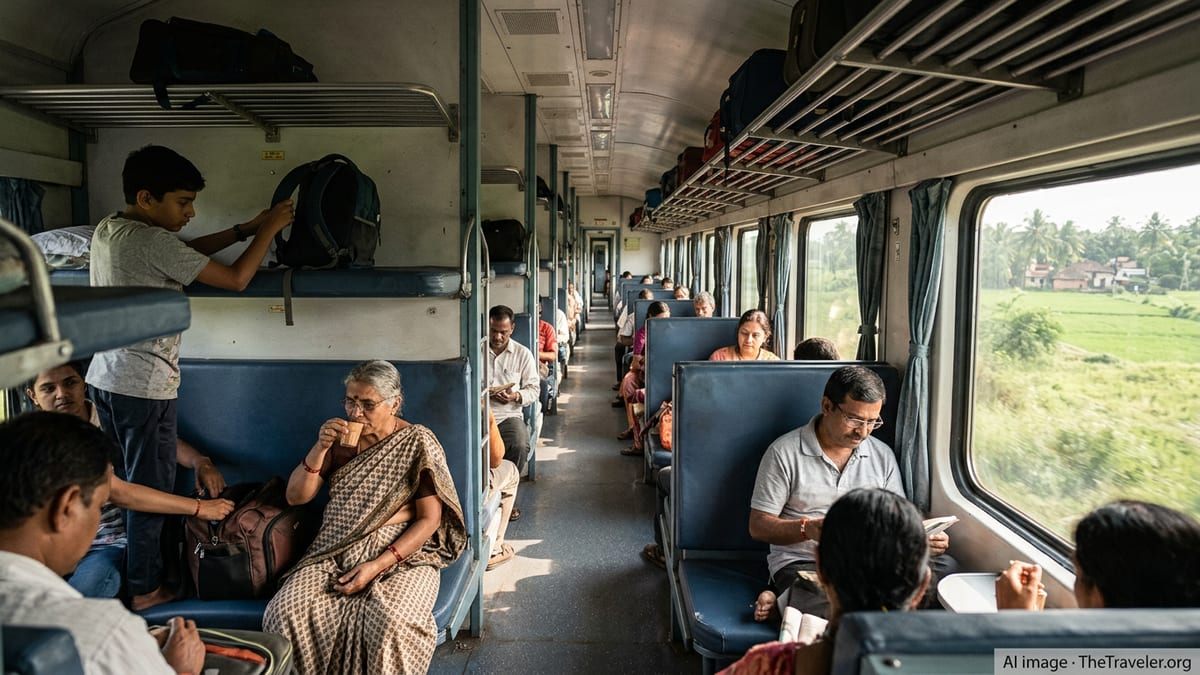
New Momentum for a Delhi–Lucknow–Patna Bullet Train Spine
Recent coverage of India’s rail modernisation drive highlights a renewed focus on a high-speed corridor radiating from Delhi towards Lucknow and onward to Patna, framed as a next big step after the Mumbai–Ahmedabad line. Reports indicate that the proposed bullet train alignment would pass through key Uttar Pradesh cities including Agra, Kanpur, Lucknow and Varanasi before turning east towards Bihar’s capital Patna, positioning the route as a spine for passenger movement across the Indo-Gangetic belt.
According to published accounts of a recent address by the Union railway minister, planners are working with indicative journey times of about two hours between Delhi and Lucknow and around four-and-a-half hours between Delhi and Patna once high-speed operations begin. ([hindustantimes.com](https://www.hindustantimes.com/cities/lucknow-news/bullet-train-project-s-next-phase-to-reduce-delhi-lucknow-travel-time-to-2-hrs-railway-minister-101788198760913.html?utm_source=openai)) These figures underscore the scale of change compared with current travel times by conventional express trains, which often exceed nine to ten hours on these sectors.
The corridor is being discussed as part of a wider national high-speed rail grid, sometimes referred to as the Diamond Quadrilateral, under which Delhi would be connected to Varanasi and further to Howrah via Patna, as well as to other regional hubs through separate corridors. ([en.wikipedia.org](https://en.wikipedia.org/wiki/Diamond_Quadrilateral?utm_source=openai)) Together, these routes are intended to shift a significant share of intercity travel from congested highways and conventional rail lines to dedicated, grade-separated high-speed tracks.
For travellers, the emerging blueprint suggests that Lucknow, Kanpur, Varanasi and Patna could evolve into major high-speed rail nodes, with faster links not only to Delhi but also to each other, encouraging more flexible weekend trips, business shuttles and multi-city tourism itineraries across north and east India.
From Feasibility Studies to Detailed Project Reports
The Delhi–Varanasi high-speed corridor, which forms the backbone of the Delhi–Lucknow–Patna concept, has been under examination for several years. A feasibility study and subsequent work on a Detailed Project Report (DPR) were assigned to National High Speed Rail Corporation Limited (NHSRCL), the state-backed company implementing India’s bullet train projects. ([pib.gov.in](https://www.pib.gov.in/Pressreleaseshare.aspx?PRID=1703806&lang=2®=48&utm_source=openai)) The alignment under study links Delhi with Varanasi via Noida, Agra, Lucknow and other cities, with a spur proposed towards Ayodhya.
NHSRCL has also undertaken advanced ground surveys, including the use of LiDAR-based aerial mapping, to refine the Delhi–Varanasi alignment and assess engineering challenges such as river crossings, built-up areas and environmentally sensitive zones. ([nhsrcl.in](https://nhsrcl.in/en/media/press-release/lidar-aerial-ground-survey-delhi-varanasi-high-speed-rail-corridor-starts-today?utm_source=openai)) Parallel work is in progress on a separate Varanasi–Howrah high-speed corridor via Patna, aimed at stitching together eastern Uttar Pradesh, Bihar and West Bengal into the national high-speed grid. ([sansad.in](https://sansad.in/getFile/loksabhaquestions/annex/1711/AU3613.pdf?source=pqals&utm_source=openai))
India’s National Rail Plan and related policy papers list the Delhi–Varanasi and Varanasi–Patna–Howrah corridors among the priority high-speed routes to be developed in phases up to 2050. ([static.investindia.gov.in](https://static.investindia.gov.in/s3fs-public/2024-08/national_rail_plan_2030.pdf?utm_source=openai)) Under this framework, routes are expected to move from feasibility studies to DPRs, followed by land acquisition, financing arrangements and ultimately construction, depending on techno-economic viability and funding options.
While no formal construction sanction has yet been publicly notified for the Delhi–Lucknow–Patna bullet train segment, the steady progression of studies and tenders, including recent procurement activity for environmental impact assessments on the Varanasi–Howrah section, suggests that key pre-construction milestones are being ticked off. ([etenders.gov.in](https://etenders.gov.in/eprocure/app?component=view&page=WebTenderStatusLists&service=direct&sp=SbVVr2%2B0EFblMNSbycQYQSg%3D%3D&utm_source=openai))
Travel Times and City Pairs Poised for Transformation
The travel time reductions being discussed for this high-speed corridor offer a glimpse of how mobility patterns could change. Projections of about two hours between Delhi and Lucknow and under five hours between Delhi and Patna imply cruising speeds up to 300–320 km/h, in line with international bullet train systems. ([hindustantimes.com](https://www.hindustantimes.com/cities/lucknow-news/bullet-train-project-s-next-phase-to-reduce-delhi-lucknow-travel-time-to-2-hrs-railway-minister-101788198760913.html?utm_source=openai)) That shift would make same-day business trips and short leisure breaks viable for a much wider segment of travellers.
Cities along the route, including Agra and Kanpur, would see their effective distance from the national capital shrink dramatically, potentially rivaling air travel on overall door-to-door time once station access and check-in processes are factored in. For Patna and other Bihar cities eventually linked via the Varanasi–Howrah corridor, the bullet train network promises a new level of connectivity with both Delhi and Kolkata.
Travel industry observers note that such corridors often reshape tourism flows by enabling multi-city itineraries. A single trip might combine Delhi’s historic districts, Agra’s Taj Mahal, Lucknow’s culinary and architectural heritage, the religious sites of Varanasi and the riverfront of Patna, all connected by high-speed services. Similar patterns have been documented on Japan’s Shinkansen and Europe’s high-speed rail grids, where cities formerly regarded as overnight stops transformed into easy same-day hops.
For domestic travellers who currently rely on overnight trains and long bus journeys, the proposed timings on the Delhi–Lucknow–Patna axis could significantly cut fatigue and increase the appeal of rail over short-haul flights, especially where stations are located close to city centres.
Integration with Wider Rail and Transit Plans
The bullet train proposals are unfolding alongside a broader set of rail and transit investments in and around the National Capital Region and north India. The National Rail Plan outlines a lattice of high-speed and upgraded conventional corridors, including Delhi–Agra–Kanpur–Lucknow–Varanasi and Varanasi–Patna–Guwahati, with an eye on both passenger mobility and freight decongestion. ([static.investindia.gov.in](https://static.investindia.gov.in/s3fs-public/2024-08/national_rail_plan_2030.pdf?utm_source=openai))
Within the Delhi region, the Regional Rapid Transit System (RRTS) is being developed as a separate high-speed commuter network connecting the capital to satellite cities such as Meerut, Gurugram, Alwar and Panipat, using semi high-speed trains designed for up to 180 km/h. ([pib.gov.in](https://www.pib.gov.in/Pressreleaseshare.aspx?PRID=1780907&lang=2®=48&utm_source=openai)) Although technologically distinct from 320 km/h bullet trains, these services are expected to complement the intercity high-speed corridors by distributing passenger flows and improving access to major rail hubs.
On the eastern side, the Varanasi–Howrah high-speed corridor’s proposed routing via Patna, Bodh Gaya and key industrial centres in Jharkhand and West Bengal is intended to support both tourism and regional development. ([en.wikipedia.org](https://en.wikipedia.org/wiki/Varanasi%E2%80%93Howrah_high-speed_rail_corridor?utm_source=openai)) This would place Patna at a junction of north–south and east–west high-speed routes, strengthening its role as a gateway city for eastern India.
As these networks mature, travel planners expect more seamless connections between high-speed rail, metro systems and airports. Delhi, Lucknow and Patna already have or are planning metro expansions, and published planning documents for the National Capital Region stress multimodal integration as a key design principle for new stations and corridors. ([ncrpb.nic.in](https://ncrpb.nic.in/pdf_files/DraftRegionalPlan-2041_English.pdf?utm_source=openai))
Opportunities and Uncertainties for Travellers
The potential benefits of a Delhi–Lucknow–Patna bullet train corridor are significant, but important uncertainties remain around timelines, phasing and station locations. Previous discussions over the Delhi–Varanasi high-speed line have involved route refinements and scrutiny of ridership projections, reflecting the high capital costs and complex land acquisition needs of such projects. ([en.wikipedia.org](https://en.wikipedia.org/wiki/Delhi%E2%80%93Varanasi_high-speed_rail_corridor?utm_source=openai))
Publicly available information underscores that high-speed rail projects in India move through multiple stages, from feasibility to DPRs and then to financing and sanction, before construction can begin. National policy documents emphasise that final decisions depend on techno-economic viability and funding models, including potential state participation and external borrowing. ([pib.gov.in](https://www.pib.gov.in/newsite/PrintRelease.aspx?lang=2®=48&relid=116560&utm_source=openai)) For travellers, this means that while projected time savings and route maps give a sense of what is coming, actual opening dates are still subject to change.
Nevertheless, the convergence of new ministerial statements, active survey work and continued references in long-term planning documents suggests that high-speed connectivity between Delhi, Lucknow, Varanasi and Patna remains a central piece of India’s future rail map. As the Mumbai–Ahmedabad line advances and operational experience with high-speed technology grows, attention is likely to intensify on how and when these northern and eastern corridors can be brought from paper to track.
For now, prospective passengers and the travel trade are watching closely as India’s bullet train ambitions move from coastal routes towards the heart of the Indo-Gangetic plain, promising to redraw the mental map of distance between some of the country’s largest and most historic cities.
Hindustan Times: Delhi–Lucknow–Patna bullet train coverage
PIB: High Speed Rail corridors in Indian Railways
NHSRCL: High-speed rail feasibility and DPR work