


More news on this day
Delta Air Lines is preparing for potential ground stops at its largest hub in Atlanta as a wave of weather and congestion related disruptions pushes the airport to the top of U.S. rankings for cancelled flights, raising fresh concerns for travelers at the height of the summer season.
Get the latest news straight to your inbox!
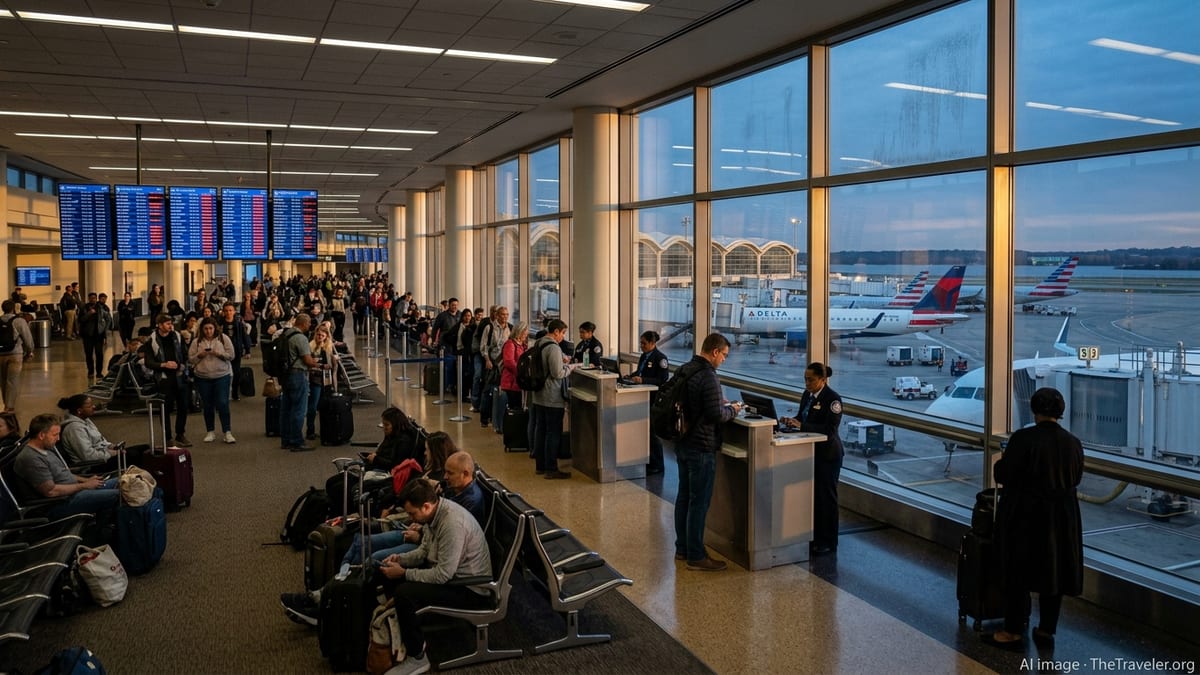
Atlanta Hub Strains Under Summer Disruptions
Publicly available flight tracking data for late July indicate that Hartsfield Jackson Atlanta International Airport, Delta’s primary megahub, has recently led U.S. airports in the number of cancelled departures and arrivals on several busy travel days. The disruptions have coincided with intense afternoon thunderstorms across the Southeast and heavy peak season traffic, a combination that has repeatedly slowed operations across the network.
Reports from aviation data providers show that when convective storms form over north Georgia, air traffic controllers often reduce arrival and departure rates into Atlanta, prompting rolling delays that can quickly evolve into cancellations. Because Delta concentrates a large share of its domestic and international schedule through carefully timed connection banks at the airport, even relatively short weather holds can create queues of aircraft and crews waiting for clearance.
Industry analysis of hub based scheduling practices notes that this model is efficient in stable conditions but vulnerable when a single large node experiences disruption. In Atlanta, where Delta operates hundreds of daily flights, the impact of a temporary ground stop or slowdown can spread rapidly, affecting travelers throughout the United States as missed connections and equipment imbalances ripple outward.
Travel forums and social media posts in recent weeks describe crowded concourses, long rebooking lines and same day cancellations on routes feeding into the Atlanta hub. While such accounts are anecdotal, their volume highlights the pressure on operations when a leading carrier faces repeated summer weather events at its main base.
Ground Stops: How a Local Hold Becomes a National Problem
A ground stop is an air traffic management tool that temporarily halts or severely restricts departures to a particular airport when capacity is constrained, while usually allowing aircraft already in the air to continue to their destinations. According to Federal Aviation Administration documentation, ground stops are typically ordered in response to thunderstorms, low visibility, runway closures or technology issues that sharply reduce how many aircraft can land or depart safely.
In the case of a carrier such as Delta with a highly centralized hub in Atlanta, the prospect of a ground stop carries particular significance. If flights from across the country are stopped from departing for the hub, passengers at outstations can be stranded even in clear weather, as aircraft and crews wait on the ground until the restriction is lifted. Once operations resume, the surge of delayed arrivals can overwhelm available gate space and push more departures past crew duty time limits, increasing the risk of further cancellations.
Analysts who study airline performance metrics point out that airlines can mitigate some of this risk by proactively trimming schedules ahead of forecast storms or by spreading out connecting banks to reduce peak congestion. However, the trade off is reduced network efficiency and fewer connection options, which can affect both revenues and customer choice in competitive markets.
The experience of recent nationwide IT and weather related events, including major system outages in 2024 that triggered ground stops at several large carriers, has underscored how quickly localized constraints can cascade through a tightly integrated hub and spoke network. For Delta, a new summer ground stop in Atlanta would test the resiliency improvements the airline has introduced since those earlier disruptions.
Cancellation Trends Put Delta and Its Hubs in the Spotlight
Monthly on time performance statistics published by the U.S. Department of Transportation have in the past frequently ranked Delta among the best major carriers for low cancellation rates. At the same time, recent consumer facing analyses and traveler reports point to stretches of elevated cancellations, particularly during severe weather episodes that concentrate over its main hubs in Atlanta, Detroit and Minneapolis.
Summer 2026 has followed a familiar pattern across the industry, with pop up storms, air traffic control constraints and crew availability issues producing pockets of high cancellation days. On several of those days, data shared by flight tracking platforms show Atlanta near or at the top of the list for total cancelled flights among U.S. airports, reflecting both the weather pattern and the sheer scale of Delta’s operation there.
Independent commentary has also highlighted how quickly a few cancellations on key feeder routes can compound for passengers. When aircraft and crews do not reach Atlanta as planned, downstream flights from the hub to smaller cities may lack either the plane or the legally rested crew required to depart, even after conditions improve. This dynamic has been visible in recent social media posts pointing to repeated cancellations on regional routes into the hub on consecutive days.
While the carrier continues to emphasize reliability in its public messaging, the current spike in disruptions at its largest hub has drawn attention from business travelers and frequent flyers who depend on tight connection windows. Many are watching closely to see whether cancellation rates stabilize as the peak storm period in the Southeast begins to ease later in the season.
Impacts on Travelers and Practical Steps to Reduce Risk
For passengers, the immediate consequence of a ground stop or a day of concentrated cancellations at Atlanta is uncertainty: departure times slide, connection windows shrink and available seats on later flights quickly disappear. Travelers with onward international connections or time sensitive itineraries are especially exposed when a large bank of flights from across the country is held out of the hub.
Travel experts commonly advise building additional buffer time into itineraries that route through major hubs during the summer, particularly in the late afternoon and evening when thunderstorms are most likely in the Southeast. Booking earlier departures, choosing longer connection windows and avoiding the last flight of the day on critical legs can increase the odds of reaching a destination even if disruption occurs at the hub.
Passengers are also encouraged to monitor their flight status closely through airline apps and third party trackers, which often reflect schedule changes before airport departure boards are updated. When forecasts show a strong likelihood of storms over Atlanta, some travelers opt to rebook in advance to alternate routings or carriers, using same day change options or flexible travel waivers when available.
As Delta braces for the possibility of further ground restrictions at its main base, the situation at Atlanta illustrates a broader challenge facing U.S. airlines: how to operate dense, highly banked hub schedules in a period of increasingly volatile summer weather and constrained air traffic control capacity. For now, the carrier’s performance at its key hub will remain a closely watched barometer of disruption risk across the U.S. air travel system.