


More news on this day
Hundreds of American Airlines passengers arriving at Philadelphia International Airport this week encountered growing piles of luggage and lengthy waits at baggage carousels after a brief technology outage disrupted the carrier’s systems and rippled through one of its busiest hubs.
Get the latest news straight to your inbox!
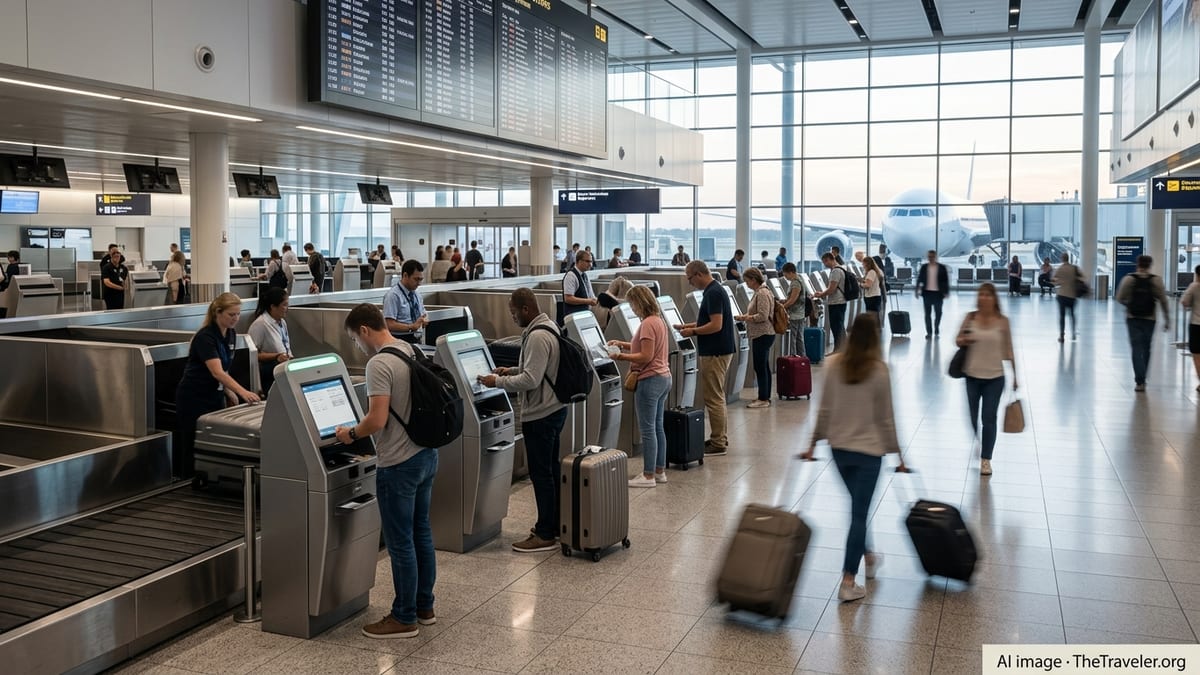
Tech outage compounds an already busy summer at a major hub
Published coverage indicates that American Airlines experienced a technology problem on Tuesday, July 28, that briefly affected connectivity for some of its systems and prompted a nationwide ground stop for the carrier. The disruption came during the peak of the summer travel season, when American is operating its largest schedule to date and handling record passenger volumes across its network, including at its Philadelphia hub.
Philadelphia International Airport has long been a key transatlantic and domestic connector for American, with hundreds of daily departures and a heavy concentration of connecting traffic. Publicly available airport and airline data show that American accounts for a majority of traffic at PHL, so even short-lived operational issues can quickly cascade through check-in, boarding and baggage handling.
While flights gradually resumed after the system issue was resolved, the timing and suddenness of the outage left aircraft, crews and baggage out of position. As operations restarted and aircraft began to arrive, luggage moved through the system more slowly than passengers, contributing to the visible buildup of suitcases across parts of the American baggage claim area.
The problems followed an already challenging stretch for travelers in the Northeast, marked by severe thunderstorms and air traffic management programs that slowed arrivals into Philadelphia and other major airports. That combination of weather disruption and system instability increased the strain on ground operations handling bags.
Luggage backlogs leave passengers waiting and carousels overflowing
Reports from travelers and images shared on social platforms describe scenes of luggage stacked near carousels and lined up along terminal walls at Philadelphia after the technology outage. Passengers arriving on delayed or rescheduled flights searched through rows of bags, while others reported leaving the airport without their checked luggage after waiting for extended periods.
Publicly available information suggests that some customers were separated from their baggage when flights were rerouted or crews timed out, forcing last-minute cancellations and rebookings. In those cases, luggage often continued toward its original destination or was held at connecting hubs, adding to the complexity of reuniting bags and passengers at PHL.
Ground handling at a large hub involves multiple tightly choreographed steps, from offloading containers and moving bags across the ramp to sorting, scanning and placing them on the correct carousel. Any interruption in scanning or tracking systems can slow those processes and force workers to rely on manual checks, which reduces throughput and increases the chances that luggage will temporarily accumulate in staging areas.
Travelers arriving in Philadelphia on Wednesday reported that some baggage delays persisted into the following day, even as American worked through the backlog. For passengers starting trips at PHL, long lines to check bags and uncertainty over delivery times added to the frustration.
Weather, staffing and system resilience under scrutiny
The events in Philadelphia are unfolding against a broader backdrop of questions about the resilience of airline and aviation technology. In recent weeks, severe weather across the Mid-Atlantic and Northeast prompted the Federal Aviation Administration to slow flights into airports including Philadelphia, redirecting traffic and contributing to rolling delays.
Industry observers note that when thunderstorms, staffing limitations and high summer demand collide, the system operates with reduced margin for error. A brief information technology failure, such as the one reported by American, can then trigger disproportionate operational impacts, especially at carrier-dominated hubs like PHL where a single airline controls a large share of flights and baggage handling.
Analysts also point to past large-scale disruptions at other carriers, where software outages or third-party technology failures produced widespread cancellations and similar scenes of piled-up luggage. Those events have prompted renewed calls from consumer advocates for more robust backup systems and clearer contingency plans for baggage when core platforms fail.
In Philadelphia, this week’s disruption is likely to draw attention to how quickly American and its partners can clear remaining backlogs, communicate with customers, and restore normal bag delivery times across domestic and international flights.
American’s response and guidance for affected travelers
According to statements published in news reports, American Airlines has acknowledged that a technology issue briefly affected some of its systems and said that it worked to restore operations and re-accommodate disrupted customers. The carrier has also been directing travelers to standard channels to file delayed or missing baggage reports and track delivery status.
For passengers who arrived at PHL to find no bags on the carousel, publicly available guidance from the airline recommends filing a claim before leaving the airport to ensure that luggage can be traced and routed to a preferred address or made available for pickup. In previous disruption events, American has arranged for courier delivery once bags are located, reducing the need for passengers to return to the airport.
Travelers with upcoming flights from Philadelphia are being advised, in media and consumer travel coverage, to arrive earlier than usual if they plan to check luggage, given the potential for lingering congestion at ticket counters and baggage drops. Allowing additional time can help mitigate the risk of missed departures if queues remain longer than normal as the system recovers.
Passengers who have not yet traveled are also being encouraged by travel experts to keep essential items, including medications and travel documents, in carry-on bags wherever possible. That long-standing recommendation has taken on new urgency for some PHL customers who have watched checked luggage become embroiled in this week’s disruption.
What it means for summer travelers through Philadelphia
The luggage buildup at PHL underscores how quickly a modern hub can become strained when technology, weather and demand collide. Even as American and airport teams work through the backlog, the episode serves as a reminder that the smooth movement of bags depends on a complex chain of systems and partners, any one of which can become a chokepoint.
For the remainder of the summer, passengers connecting through Philadelphia on American may see residual operational adjustments as schedules and staffing are fine-tuned. Industry data show that carriers often modify aircraft routings and crew pairings after major disruptions, which can temporarily shift where and when baggage volumes peak within a hub.
Travel advisors suggest that customers flying through PHL in the coming days closely monitor flight status, consider longer connection times when possible, and prepare for the possibility that checked luggage could arrive on a later flight. While most bags are likely to reach their destinations within hours, the visibility of piled-up suitcases this week has made baggage reliability a central concern for many American Airlines passengers at the airport.
As operations stabilize, attention will likely turn to what technological and procedural changes can reduce the chances of a repeat. For now, though, many travelers at Philadelphia International are focused on a more immediate goal: reuniting with their bags after a disruption-filled week.