


More news on this day
Delta Air Lines’ nonstop service between Lagos and Atlanta faced fresh scrutiny in late August 2026 after passengers reported being stranded at Murtala Muhammed International Airport when the same Lagos–Atlanta flight was cancelled twice within three days, with notices citing crew shortages and a separate maintenance-related delay.
Get the latest news straight to your inbox!
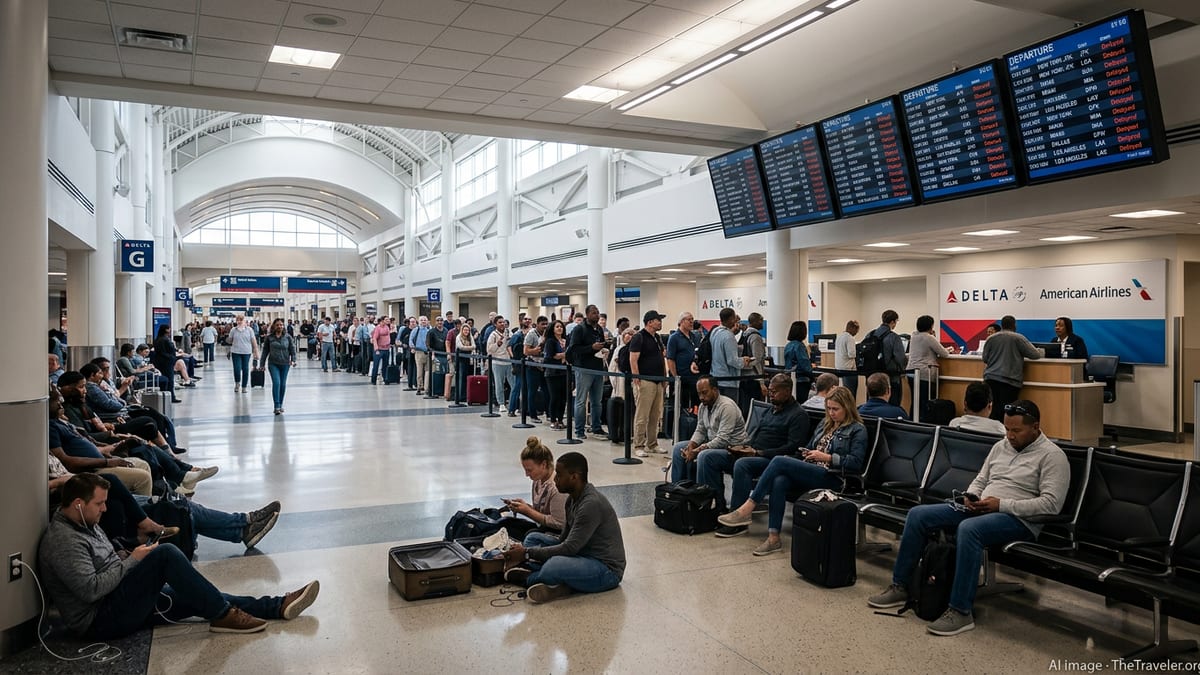
Back-to-back disruptions on a key transatlantic link
Publicly available flight information and Nigerian media reports indicate that Delta’s Lagos–Atlanta service, operated as flight DL9895 on some days, was first cancelled on Sunday, August 23, 2026, shortly before its scheduled departure from Lagos to Hartsfield–Jackson Atlanta International Airport. The flight, part of a route that typically runs several times per week linking West Africa with Delta’s largest U.S. hub, was then disrupted again when the rescheduled service did not operate as planned two days later.
Coverage from outlets including Punch and Vanguard describes passengers being left in terminal areas at Lagos after the Sunday flight did not depart and then facing renewed uncertainty when the subsequent operation was also cancelled or significantly delayed. Some travelers reportedly had to secure their own hotel rooms and rearrange onward connections to other U.S. cities as their itineraries unraveled over a period of days.
Separate reporting by local travel and business publications notes that the Lagos–Atlanta rotation has an outsized role for Nigerian and West African passengers heading to the United States, because it functions both as a nonstop transatlantic service and as a feeder into Delta’s domestic network at Atlanta. When the Lagos–Atlanta leg is cancelled or heavily delayed, many travelers lose same-day connections and face additional nights away from home.
Crew availability and technical issues cited
Notification messages shared by affected customers and referenced in Nigerian press accounts show that at least one of the late August cancellations was attributed to crew availability constraints rather than weather or airspace closures. In other words, the aircraft could not depart because Delta did not have a full, legal crew positioned to operate the flight, even though passengers and ground teams were ready.
In a separate instance around the same period, published coverage notes that a Lagos–Atlanta departure left behind schedule while technicians worked to resolve a maintenance issue on the aircraft. That delay followed the earlier cancellation for operational reasons, reinforcing traveler frustration that multiple, unrelated problems appeared in quick succession on the same long-haul route.
Industry analyses of Delta’s wider network in recent years point to crew-tracking and staffing challenges as a recurring vulnerability during periods of disruption. After the July 2024 CrowdStrike-related IT outage, for example, the airline acknowledged that some of its crew scheduling tools struggled to cope with widespread last-minute changes, complicating efforts to get pilots and flight attendants to the right aircraft at the right time. Observers note that long-haul international routes such as Lagos–Atlanta can be particularly exposed when those systems are under strain.
Passenger experience and questions over support
Accounts compiled by Nigerian newspapers and online platforms describe Lagos–Atlanta passengers waiting for extended periods with limited clarity about when or how they would be rebooked. Some travelers reportedly arranged and paid for hotel stays themselves in Lagos after learning that an evening departure would not operate, while others sought one-way tickets on alternative carriers to avoid missing work, family events, or school start dates in the United States.
Reports also highlight frustration over communication. Several passengers said that cancellation notices arrived close to planned departure times, making it difficult to change plans early in the day or adjust connecting itineraries. For those without U.S. visas valid for multiple entries or with strict travel windows, the disruption risked further complications beyond simply arriving late.
Consumer advocates in Nigeria have used the episode to renew calls for more robust enforcement of passenger rights on international services. Commentaries point out that under many aviation consumer regimes, including the European Union’s, cancellations attributed to controllable factors such as staffing and most technical faults can trigger compensation obligations on top of rebooking and care. Analysts say the Lagos disruptions are likely to fuel fresh debate about whether West African travelers receive comparable protections when flying with foreign carriers.
Persistent reliability concerns on the Lagos–Atlanta route
Even before the August 2026 cancellations, travelers had voiced concerns about the overall reliability of Lagos–Atlanta operations. Flight-tracking data and schedule tools used by frequent flyers show that the route has experienced sporadic cancellations and late departures over multiple seasons, including instances where the associated Atlanta–Lagos sector did not operate on its scheduled day.
Delta’s own winter transatlantic network documents list Lagos–Atlanta as a regular long-haul service, reflecting the carrier’s intent to maintain consistent coverage between Nigeria and its U.S. hub. However, recent Nigerian media coverage and traveler feedback suggest that operational challenges, particularly around staffing and aircraft readiness, have undermined confidence among some passengers who rely on the route for business, study, and family visits.
Analysts say that when a long-haul flight operates only a few times a week, any cancellation can cascade into lengthy disruptions. Unlike high-frequency routes, where passengers might be moved to another departure the same day, Lagos–Atlanta customers often face waits of 24 hours or more for the next available nonstop seat, or must accept complex rerouting options via Europe or the Middle East.
What stranded travelers can do next time
Travel advisors watching the Lagos disruptions note that passengers on long-haul, non-daily routes may benefit from taking extra precautions during busy travel periods. These steps can include monitoring flight status across multiple apps or websites, building longer connection buffers at hub airports, and securing travel insurance that explicitly covers missed connections and extended delays tied to crew or technical problems.
Experts also recommend that travelers on critical itineraries consider alternative routings with more frequent service, even if that means an extra connection. On the Nigeria–United States market, for example, many passengers already combine European or Middle Eastern hubs with U.S. feeder flights to reduce the risk of being completely stranded if a single nonstop leg is cancelled.
The repeated Lagos–Atlanta cancellations in late August 2026 are likely to keep attention focused on how major carriers manage crew resources and technology on long-haul routes that serve as vital economic and cultural bridges. For now, publicly available accounts from stranded travelers underscore the real-world impact when operational vulnerabilities intersect with limited schedule flexibility on a key transatlantic link.
Punch: Delta cancels Lagos–Atlanta flights twice
ThisDay: Passengers stranded as Delta cancels Lagos–Atlanta flights