


More news on this day
A sprawling storm system that disrupted Thanksgiving travel across the United States is still causing hundreds of flight delays and dozens of cancellations into Friday, with New York and Washington-area airports among those reporting ongoing problems even as national conditions gradually improve.
Get the latest news straight to your inbox!
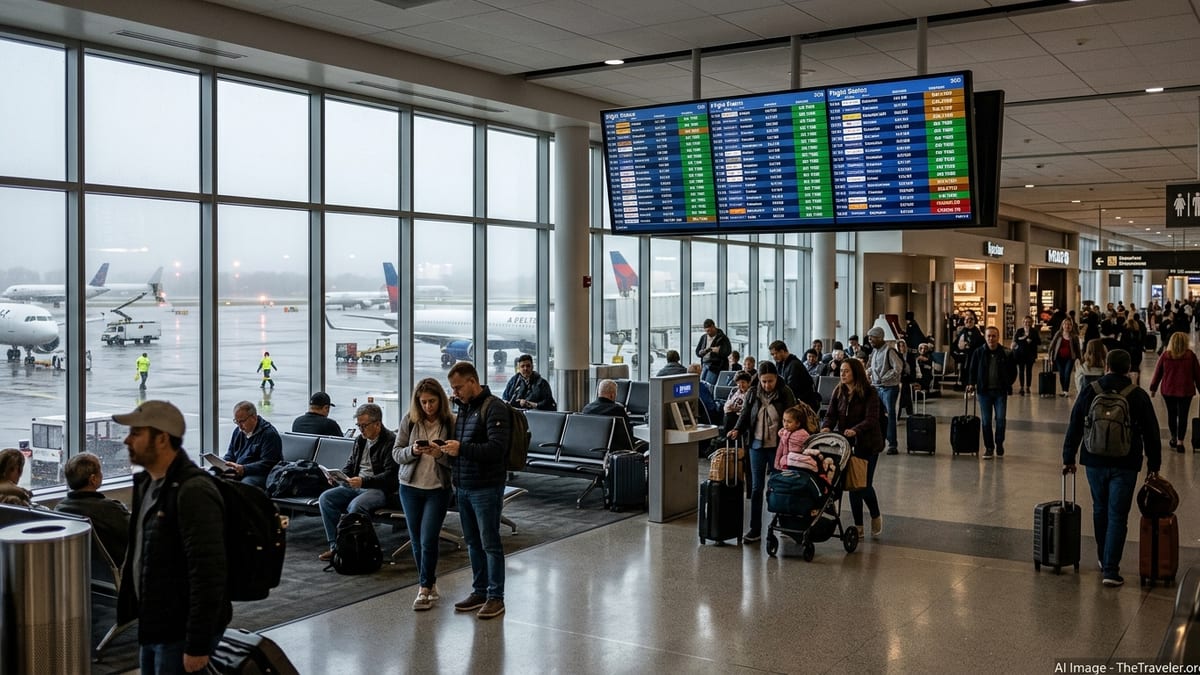
Latest numbers: disruptions ease but persist after Thanksgiving storm
As of early Friday 29 November 2026, more than 300 flights within, into or out of the United States had been delayed and 86 canceled, according to flight-tracking data summarized by CNN and local affiliates. Those figures mark a significant improvement on midweek disruption but show that the severe weather system that swept the country over Thanksgiving has not yet fully cleared the aviation network.
On Wednesday 25 November, more than 6,000 flights were delayed nationwide and nearly 150 were canceled as heavy rain, strong winds and low clouds affected multiple regions and complicated operations at major hubs. By Thanksgiving Day on Thursday 26 November, delays had fallen to more than 2,500 and cancellations had risen to more than 450, reflecting a combination of lingering weather issues and knock-on impacts from aircraft and crew displaced earlier in the week.
The Federal Aviation Administration reported weather-related constraints at several East Coast facilities on Thursday and into Friday morning, including arrival and departure delays as controllers spaced aircraft further apart in poor visibility and gusty winds. Live delay programs, such as ground delay initiatives and traffic management programs, have been implemented intermittently as conditions change, contributing to fluctuating wait times for passengers at different airports.
Key hubs still affected: New York and Washington report ongoing issues
New York City’s airports, which sit directly in the path of Atlantic weather systems and handle some of the country’s densest holiday traffic, have continued to experience operational challenges. At John F. Kennedy International Airport, early Friday data showed 29 delayed flights and eight cancellations, a small fraction of the airport’s total daily schedule but enough to cause local congestion at gates and baggage claim during peak periods.
Nearby, Ronald Reagan Washington National Airport reported six flight cancellations and 13 delays early Friday. The Washington-area airports were affected both by the East Coast portion of the storm system and by the cumulative effect of aircraft and crews arriving late from other parts of the country earlier in the week. At times, low clouds and rain along the Potomac River approach have required additional spacing between arrivals, slowing operations even when runways remained open.
Other major hubs, including airports around Boston, Philadelphia and the wider mid-Atlantic, have seen periods of slowing or holding as the system passed, though many were reporting improving conditions by late Thursday and early Friday. Local variations remain significant, and airlines have continued to adjust schedules, swap aircraft and reroute crews to restore normal operations ahead of the post-holiday return peak.
How the holiday weather system unfolded across the network
The latest wave of disruption follows several days of unsettled weather across large parts of the United States, compounding what is already one of the busiest travel weeks of the year. A series of low-pressure systems moved from the West Coast toward the central states before intensifying along the Eastern Seaboard, bringing heavy rain, strong crosswinds and localized flooding to key population centers from Wednesday into Friday.
On Thanksgiving Day, the storm produced particularly severe conditions in parts of the Northeast and mid-Atlantic, where strong winds and low ceilings triggered extended arrival delays at some East Coast hubs. FlightAware data cited by multiple outlets showed more than 2,200 delays and over 400 cancellations on U.S. flights during the worst of Thursday’s weather. In addition to direct weather effects, the same system caused widespread power outages across several states, disrupting airport access roads, public transport links and some terminal services.
While Friday’s early figures indicate a marked improvement from Wednesday and Thursday, aviation planners warn that weather disturbances of this scale can take days to clear from the system entirely. Aircraft and crews often end up out of position after successive rounds of delays and diversions. Even after skies brighten, those imbalances can continue to generate delays and occasional cancellations as operators work through backlogs and reposition resources.
Context: weather as a leading driver of U.S. flight delays
In the U.S. air traffic system, weather remains one of the strongest drivers of major nationwide disruption. Federal Aviation Administration data show that over recent years, the majority of system-impacting delays of more than 15 minutes have been associated with weather conditions that constrain how many aircraft can safely use the airspace and runways at a given time. Those include thunderstorms, low clouds, strong winds, icing conditions and reduced visibility that require increased separation or alternative routings.
Department of Transportation on-time performance reports indicate that in a typical month, extreme weather accounts for only a small share of all delay minutes compared with airline-related issues, late-arriving aircraft and broader air traffic system constraints. However, when large and slow-moving storm systems coincide with peak travel days, such as the Thanksgiving period, weather’s impact is concentrated, producing dramatic spikes in delays and cancellations that stand out from normal patterns.
Analyses of several years of flight records by independent data firms and the DOT show that Wednesdays often record some of the highest proportions of on-time departures in an average year, while Sundays tend to see more congestion and a higher rate of delays and cancellations. The current disruption illustrates how a single major weather event on a busy Wednesday or Thursday can temporarily reverse those typical patterns, pushing delay and cancellation rates far above seasonal norms for a short period.
What travelers should do as operations stabilize
Although Friday’s national totals for delays and cancellations are significantly lower than earlier in the week, airlines and airports caution that schedules remain vulnerable to residual disruption. Travelers flying on Friday 29 November and over the weekend are being advised to check their flight status frequently on official airline channels and airport information boards, as departure times and gate assignments may continue to change at short notice while operations are normalized.
Passengers with connections through New York-area airports, Washington National or other East Coast hubs should pay particular attention to minimum connection times, as even modest upstream delays can tighten already busy transfer windows. When misconnects occur, rebooking options may be more limited than usual in the immediate aftermath of a large-scale disruption, especially on popular routes that are already operating at or near full capacity for the holiday period.
Weather forecasts from the National Weather Service suggest that the core of the storm system will continue to move away from the most heavily traveled corridors along the East Coast, supporting further improvement in aviation conditions into the weekend. However, smaller pockets of adverse weather may linger or redevelop in some regions. For travelers, the most reliable approach is to build extra time into airport journeys, monitor official updates closely and confirm any changes directly with their airline before setting out.