


More news on this day
European aviation regulators have narrowed their conflict-zone guidance for the Gulf and wider Middle East, easing a sweeping regional warning even as Dubai forecasts some of its busiest months on record for long-haul traffic between Europe and Asia.
Get the latest news straight to your inbox!
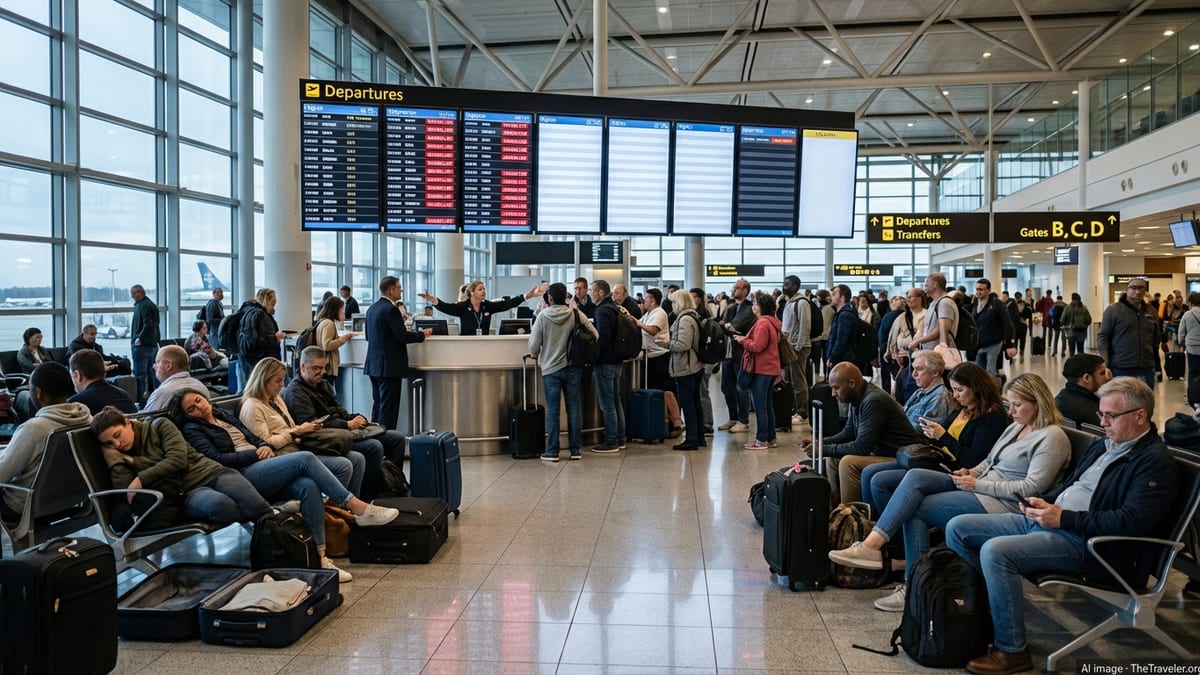
Europe reshapes risk guidance for Gulf skies
European aviation safety authorities have adjusted their approach to conflict-zone advisories over the Gulf and Middle East, replacing a broad regional warning with more targeted notices at a time when carriers are reassessing routings between Europe and Asia. According to published information from the European Union Aviation Safety Agency (EASA), a wide-ranging Conflict Zone Information Bulletin covering the Middle East and Persian Gulf expired in early July 2026 and was not renewed in its previous form.
The earlier bulletin treated the airspace of Bahrain, Iran, Iraq, Israel, Jordan, Kuwait, Lebanon, Oman, Qatar, the United Arab Emirates and Saudi Arabia as a single conflict area, highlighting heightened risk across multiple flight information regions from the eastern Mediterranean to the Arabian Gulf. The replacement framework splits that assessment. EASA now maintains specific bulletins for the airspace of Iran, Iraq and Lebanon, alongside a dedicated advisory for the Persian Gulf and Gulf of Oman, while handling residual regional concerns through an information note shared with national authorities.
Publicly available EASA material indicates that the active bulletins for Iran, Iraq, Lebanon and the Persian Gulf area run at least through the end of September 2026, advising operators to factor potential security risks into their own routing and risk assessments. Rather than imposing blanket restrictions, the documents underline that operators remain responsible for monitoring aeronautical publications, regional notices to air missions and national guidance when planning flights across the region.
From blanket Middle East warning to focused Gulf advisory
The shift from a single Middle East and Persian Gulf bulletin to individual country advisories marks a significant change in how European regulators communicate risk in the region. Earlier iterations of EASA’s regional bulletin, first issued in late February 2026, were repeatedly extended as tensions flared, with revisions in June 2026 highlighting additional risks in several Gulf and Levant airspaces. That broad document has since been withdrawn and replaced by narrower, scenario-based guidance.
Current listings on EASA’s conflict-zone portal show distinct bulletins for the airspace of Iran, Iraq and Lebanon, each identifying specific threats and recommending altitude or routing considerations where relevant. A separate bulletin covers the Persian Gulf and Gulf of Oman, with an effective period spanning July to September 2026. In parallel, an information note on the Middle East and Persian Gulf outlines medium-level residual risks but stops short of the more stringent language contained in full conflict-zone bulletins.
European network managers are incorporating these changes into broader airspace planning. Eurocontrol’s latest guidance on airspace utilisation and its Route Availability Document process describes how updated restrictions and recommended routings are embedded into the European network design several weeks before each aeronautical information cycle. While the conflict-zone assessments originate on the safety side, their operational impact is felt in the daily flow management of flights skirting sensitive areas between Europe, the Gulf and South Asia.
Dubai prepares for heavier traffic despite regional headwinds
The recalibrated European advisories arrive as Dubai International Airport expects to operate close to capacity on long-haul flows linking Europe and Asia via Gulf hubs. Industry reports from earlier in 2026 highlighted that Dubai handled more than 95 million passengers in 2025, its busiest year on record, and local forecasts point to traffic edging toward 100 million passengers in 2026 if demand holds.
That growth trajectory is playing out against a complex regional backdrop. Analysis from Eurocontrol in March 2026 estimated that the Middle East crisis and related airspace disruptions had cut overall flows between Europe and the region by more than half at the height of tensions, including flights that merely overflew affected areas en route to Asia or Africa. As ceasefire arrangements and evolving risk assessments allow some routings to resume, Gulf hubs such as Dubai are positioned to capture returning demand, particularly from European markets seeking one-stop links to South and Southeast Asia.
At the same time, Dubai’s reliance on overflight corridors above or near areas covered by European conflict-zone bulletins means that even incremental changes in risk perception can influence network planning. Airlines using the city as a hub continually weigh the operational cost of diversions against evolving security assessments, a calculation that can shift rapidly if conditions deteriorate in any of the surrounding flight information regions.
What the latest guidance means for travellers
For passengers booking trips between Europe and the United Arab Emirates in the coming months, the latest European advisories do not automatically translate into route bans but can affect flight times, routings and schedules at short notice. Conflict-zone bulletins and information notes are primarily aimed at operators and national regulators rather than consumers, but their practical impact is often visible in longer routings on flight-tracking maps and occasional schedule adjustments.
Publicly available guidance from both EASA and national regulators emphasises that operators retain responsibility for their own security assessments. As a result, European and Gulf-based airlines may take differing approaches to crossing or avoiding airspaces highlighted in the bulletins, even when drawing on the same underlying risk information. Some carriers may continue to route around specific regions, while others may resume selected corridors subject to altitude or timing constraints.
Travellers connecting through Dubai or other Gulf hubs are likely to see airlines build additional buffer into block times on routes that could be affected by rerouting, a pattern that has already emerged in past periods of heightened regional tension. While this can lengthen journeys, it also provides carriers with more flexibility to adjust operations if new notices are issued or existing bulletins are extended beyond their current end dates.
Europe’s network managers balance capacity and caution
Behind the scenes, Europe’s network management architecture is working to reconcile renewed long-haul demand with the constraints introduced by shifting security assessments. Eurocontrol’s airspace-utilisation function and its Flexible Use of Airspace manual describe how civil and military demands on European upper airspace are balanced, with dynamic route availability updates used to redirect flows away from constrained or sensitive areas.
Recent editions of Eurocontrol’s aviation trends papers show that the Middle East crisis has had measurable effects on European traffic patterns, from reduced flows to and from the region to a rebalancing of long-haul traffic via alternative hubs. As risk assessments for Gulf airspace evolve, planners are gradually reintroducing routings that were heavily curtailed earlier in 2026, while maintaining options to reactivate alternative corridors if conditions worsen.
For now, the combination of more nuanced European conflict-zone guidance and Dubai’s continued push toward record passenger volumes points to a cautious reopening of some of the fastest Europe–Asia connections. How sustainable that revival proves will depend on the stability of ceasefire arrangements in the wider region and on whether current medium-level risk assessments for the Gulf can be maintained through the rest of the year.