


More news on this day
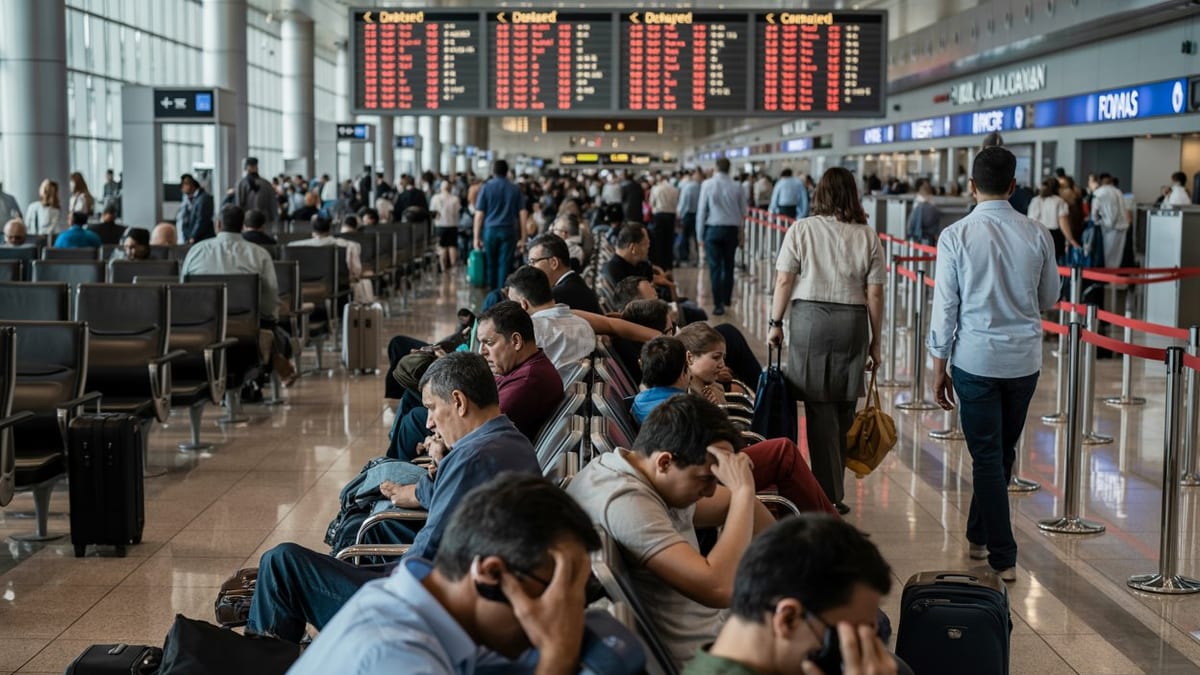
Hundreds of travelers were left sleeping on terminal floors and queuing for hours at Nairobi’s Jomo Kenyatta International Airport after a workers’ strike disrupted flights at Kenya’s busiest international gateway on August 30 and 31, 2026.
Get the latest news straight to your inbox!
Strike at Kenya’s main gateway disrupts regional travel
Industrial action by members of the Kenya Aviation Workers Union has slowed or halted operations at Jomo Kenyatta International Airport (JKIA), a key hub linking East Africa with Europe, the Middle East and the wider continent. Reports indicate that a go-slow that began on Sunday, August 30, escalated into a broader strike affecting air traffic control and ground services on Monday, August 31.
Published coverage from Kenyan and international outlets describes crowds of stranded passengers camping out in departure halls, some forced to spend the night at the airport as flights were delayed for several hours or canceled outright. Airlines operating through JKIA, including Kenya Airways and regional carriers, have reported extended delays while adjusting schedules and rerouting aircraft where possible.
Publicly available information shows that disruptions have not been confined to Nairobi. The action has also affected other Kenyan airports, complicating domestic connections and regional itineraries for travelers using Nairobi as a transfer point to safari destinations, coastal resorts and neighboring countries.
Union grievances center on pay, staffing and airport management
According to published coverage, the Kenya Aviation Workers Union has framed the strike as part of a long running dispute over pay, staffing levels and job security across the country’s aviation sector. Reporting from local media indicates that workers are pressing for finalization of a collective bargaining agreement and improved compensation for staff in critical safety and operations roles.
Union statements cited in Kenyan news outlets also object to the deployment of volunteers, including youth service personnel, in operational areas at JKIA. Worker representatives argue that relying on temporary or volunteer labor for key airport functions could undermine both job security for trained staff and service standards at one of Africa’s busiest hubs.
Recent analysis in regional media links this week’s action to previous walkouts and go slows at JKIA earlier in 2026 and in 2024, suggesting a pattern of unresolved tension over how Kenya’s main airport is staffed, funded and potentially restructured. Travel industry groups have previously expressed concern that repeated episodes of disruption risk damaging Nairobi’s reputation as a reliable transit point.
Passengers face missed safaris, connections and business meetings
For travelers, the immediate impact has been missed connections, shortened holidays and disrupted business trips. Coverage from Nairobi describes families bound for safari camps, backpackers en route to the coast and business travelers heading for Europe and the Gulf all caught in long lines at check in and security as reduced staffing slowed processes across the airport.
Some passengers with tight onward connections reportedly abandoned original itineraries in search of alternative routes via regional hubs such as Addis Ababa, Kigali and Johannesburg. Others have chosen to remain in Nairobi while waiting for rebooking, adding unplanned hotel stays and ground transport costs to already expensive long haul journeys.
Travel advisories circulated by airlines and airport authorities urge passengers to confirm flight status before heading to JKIA and to allow significantly more time for check in and security. Industry observers note that while many carriers are offering rebooking options, high seasonal demand and limited spare capacity across African and Middle Eastern networks are constraining alternatives.
Tourism and aviation sectors watch for wider economic fallout
JKIA’s role as a regional hub means that any prolonged disruption has implications beyond delayed flights. Publicly available data cited in previous industry reports estimate that aviation and tourism account for a significant share of Kenya’s GDP, with Nairobi serving as the main entry point for international visitors heading to national parks, beach resorts and conference venues.
Kenyan travel trade associations have warned in earlier statements about the cumulative effect of repeated airport stoppages on traveler confidence. If visitors perceive JKIA as prone to disruption, tour operators fear that itineraries could gradually shift toward competing hubs in neighboring countries, affecting hotel occupancy, safari bookings and conference business.
Analysts following the sector suggest that the latest strike could strengthen calls for a more durable framework to handle labor disputes in critical transport infrastructure. Published commentary in local outlets highlights the need to balance worker concerns over fair pay and job security with the requirement for predictable operations at a gateway that underpins much of East Africa’s international connectivity.
What travelers with upcoming flights to Nairobi should do
For travelers planning journeys through Nairobi in the coming days, airline and airport advisories recommend monitoring booking portals, mobile apps and email notifications closely. Many carriers have issued flexible travel policies for affected dates, allowing passengers to change travel without standard penalties, subject to fare conditions.
Travel planners advise allowing additional time between connecting flights involving JKIA, particularly for itineraries that combine separate tickets or mix full service airlines with low cost carriers. Where possible, passengers are encouraged to keep accommodation and safari arrangements flexible, especially on arrival days that might be affected by residual delays even after a formal strike ends.
Tourists already in Kenya and scheduled to depart via Nairobi are being urged in local reporting to remain in contact with their tour operators or hotel concierges, who often receive operational updates more quickly than individual travelers. While contingency plans are helping some passengers to move, ongoing industrial action means that schedules may remain fluid at short notice.
For now, publicly available information shows that negotiations between union representatives and government officials have been under way, and previous strikes at JKIA in recent years have typically ended with a return to work formula after several days of disruption. Until a similar agreement is reached, travelers transiting through Kenya’s main international airport should be prepared for potential changes to their plans.
AP News coverage of the JKIA workers’ strike
Washington Post report on stranded passengers in Nairobi
Kenya Broadcasting Corporation update on flight disruptions at JKIA