


More news on this day
Europe’s aviation regulator has updated its conflict-zone guidance for the Gulf region and Iran as renewed fighting between the United States and Iran raises the risk profile of key Middle East air corridors used by long-haul passenger and cargo flights.
Get the latest news straight to your inbox!
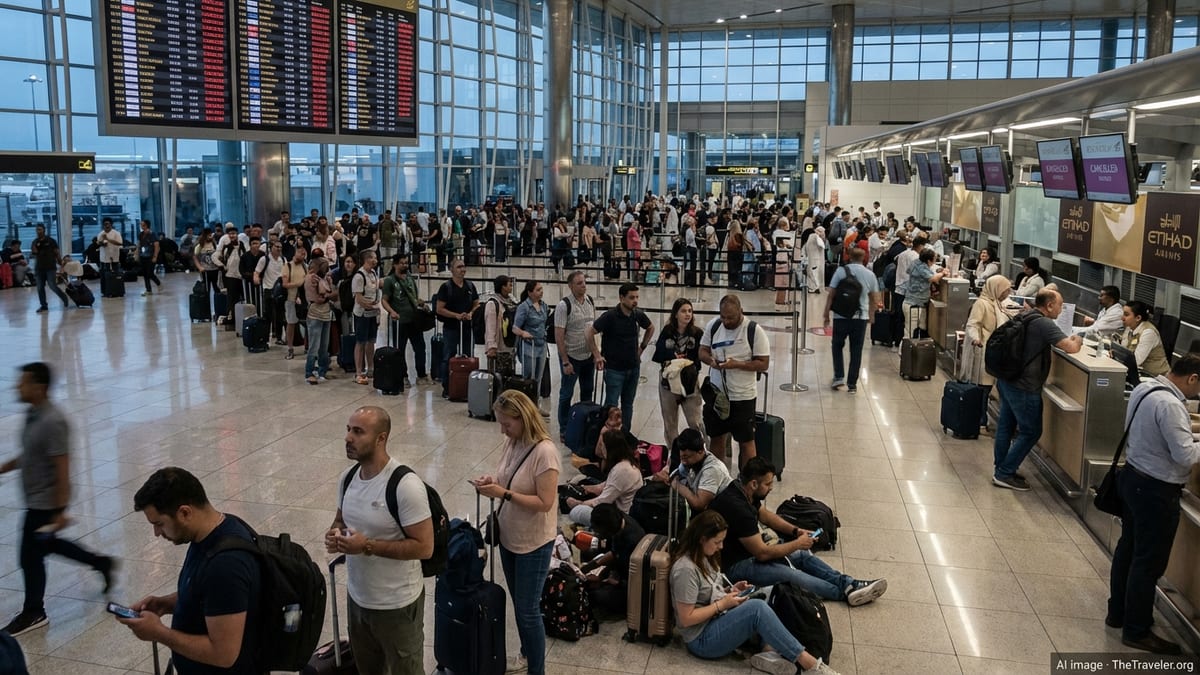
What Europe’s new Gulf airspace bulletin actually changes
The European Union Aviation Safety Agency (EASA) has issued a fresh Conflict Zone Information Bulletin (CZIB) covering the Persian Gulf and Gulf of Oman, replacing a broader Middle East advisory that expired earlier in July 2026. The new bulletin, designated CZIB-2026-07R2, is currently listed as active and focuses on specific Gulf airspace where the perceived danger to civil aviation has increased again.
According to publicly available EASA documentation, the bulletin advises air operators under European oversight to avoid operating in the airspace of Bahrain, Kuwait, Qatar and the United Arab Emirates, as well as over parts of the Gulf of Oman within the Muscat Flight Information Region west of 58 degrees east longitude. The guidance applies at all altitudes, reflecting concern that potential military activity and air defense actions could threaten both low and high level traffic. ([easa.europa.eu](https://www.easa.europa.eu/en/domains/air-operations/czibs?utm_source=openai))
The updated bulletin follows a period in which a wider advisory on the “airspace of the Middle East and Persian Gulf” had been in place, covering Iran and neighboring states. That earlier CZIB was allowed to lapse as a temporary ceasefire reduced short term tensions, but EASA has since shifted to more targeted bulletins for Iran, Iraq and Lebanon, alongside the new focus on Gulf and Gulf of Oman routes. ([easa.europa.eu](https://www.easa.europa.eu/en/conflict-zone-status/active?utm_source=openai))
While EASA’s notices are formally recommendations, they carry significant weight for European carriers and for non EU airlines that come under European regulatory oversight. Airlines typically reflect such guidance in their internal risk assessments and routing decisions, often choosing to reroute or suspend overflights in affected areas.
Why US–Iran tensions are driving fresh concern
The tightened Gulf and Iran related warnings come against the backdrop of an extended crisis that has periodically erupted into direct US–Iran confrontation. A conflict that began in February 2026 with large scale strikes on Iranian targets, followed by a naval campaign around the Strait of Hormuz, has produced recurring missile and drone attacks across the region. ([en.wikipedia.org](https://en.wikipedia.org/wiki/2026_Iranian_strikes_on_Arab_countries?utm_source=openai))
Reports from specialist risk consultancies and open source monitoring platforms describe renewed Iranian missile and drone launches towards Gulf states, as well as US and allied responses targeting Iranian infrastructure. Military activity has included strikes near key coastal hubs and air defense engagements over or close to busy air and sea routes, especially around the Strait of Hormuz and the Gulf of Oman. ([safeairspace.net](https://safeairspace.net/qatar/?utm_source=openai))
EASA’s own conflict zone material notes that the presence of military assets, recurrent air defense activity and operations by non state armed groups significantly increases the danger of misidentification or inadvertent targeting of civil aircraft. During earlier phases of the US–Iran confrontation, states in the region temporarily closed portions of their airspace or imposed restrictions, and the current advisories reflect concern that similar sudden measures may recur with limited warning. ([easa.europa.eu](https://www.easa.europa.eu/en/domains/air-operations/czibs/czib-2026-05-r1?utm_source=openai))
In parallel, separate CZIBs remain active for the airspace of Iran and Iraq, as well as for neighboring conflict-affected states, underlining that the risk is not confined solely to the Gulf littoral but extends across a wider Middle East arc frequently used by Europe–Asia traffic. ([easa.europa.eu](https://www.easa.europa.eu/en/conflict-zone-status/active?utm_source=openai))
How airlines are rerouting flights around the Gulf
Europe-based airlines and many other international carriers have already adjusted routings to reduce exposure to the most affected Gulf sectors. Public flight-tracking snapshots shared in regional coverage show long haul services that previously crossed Bahrain, Qatar or UAE airspace now skirting further south over the Arabian Sea or diverting north via Turkey and the Caucasus, depending on destination. ([gulfnews.com](https://gulfnews.com/business/aviation/europe-warns-airlines-to-avoid-uae-qatar-and-gulf-airspace-as-us-iran-tensions-escalate-1.500607649?utm_source=openai))
Risk advisories compiled by independent aviation safety platforms indicate that some operators have adopted a cautious approach by treating the EASA bulletin as effectively prohibitive for routine commercial flights, particularly passenger services. Others are using narrow corridors deemed lower risk, or limiting operations to certain airports while avoiding overwater segments near the Strait of Hormuz and western Gulf of Oman. ([safeairspace.net](https://safeairspace.net/qatar/?utm_source=openai))
Changes to routings can mean longer flight times, higher fuel consumption and more complex planning for crew and aircraft rotations. Airlines that heavily rely on Gulf hubs for connecting traffic may also face schedule reshuffles, as inbound and outbound waves are re-timed to account for detours or temporary gaps in available corridors.
Despite the operational disruption, publicly available information suggests that most major carriers continue to serve principal Gulf airports, using revised approaches and departures that keep aircraft clear of areas described in the bulletins as having elevated risk of military activity or air defense engagement.
What passengers flying to or via the region should expect
For travelers, the immediate impact of Europe’s updated Gulf and Iran related airspace guidance is more likely to be indirect than dramatic. The main effects tend to show up as slightly longer flight times, changed routings visible on in flight maps and occasional short notice schedule adjustments when airlines respond to new restrictions or information updates from regulators and air navigation authorities.
Airlines typically do not detail the full security rationale behind each route change, but publicly accessible travel security briefings recommend that passengers connecting through the region build in extra buffer time for transfers and check itineraries frequently in the days before departure. Same day connections that were once considered comfortable may now be tighter if routings lengthen due to conflict zone avoidance. ([safeairspace.net](https://safeairspace.net/qatar/?utm_source=openai))
Travelers may also notice aircraft taking wider arcs over water or over parts of the Arabian Peninsula instead of the more direct paths that previously crossed the central Gulf. For some journeys, particularly between Europe and South or Southeast Asia, routings that bypass much of the Gulf may lead to slight increases in journey time compared with pre crisis patterns.
Industry risk assessments emphasize that despite the elevated regional tensions, commercial aviation continues to operate under stringent safety frameworks. Airlines use a combination of regulator guidance, state-issued notices to airmen and internal intelligence feeds to determine whether to avoid, overfly at higher levels or continue normal operations in specific sectors at any given time.
How long the heightened warnings might stay in place
EASA conflict zone bulletins are typically time limited and subject to periodic review. The current Gulf and Iran related advisories list explicit validity dates, with review points scheduled over the coming months. The agency notes in its published material that changes, whether escalation or de-escalation, can trigger revisions, extensions or cancellations before those dates if the underlying threat picture shifts. ([easa.europa.eu](https://www.easa.europa.eu/en/domains/air-operations/czibs?utm_source=openai))
Earlier in 2026, a broader Middle East and Persian Gulf CZIB was scaled back after a temporary ceasefire eased immediate concerns, only for a new, more focused warning to be introduced once hostilities resumed. Observers of European airspace policy therefore view the current advisories as part of a dynamic process rather than as fixed, long term bans. ([studylib.net](https://studylib.net/doc/28323907/easa---airspace-of-the-middle-east-and-persian-gulf?utm_source=openai))
Travelers planning itineraries through late 2026 may find that routing patterns evolve several times, depending on whether the ceasefire initiatives under discussion between Washington and Tehran gain traction or whether the conflict spreads. For now, publicly available information from regulators and specialist risk trackers points to a cautious approach, with the expectation that airlines will continue to route around the highest risk areas of the Gulf and Iran’s neighborhood while maintaining key passenger and cargo links where conditions allow. ([easa.europa.eu](https://www.easa.europa.eu/en/domains/air-operations/czibs/czib-2026-05-r1?utm_source=openai))
EASA conflict zone status: active bulletins
EASA Conflict Zone Information Bulletins (CZIB) index