


More news on this day
Flights are gradually departing again across the United States after a rare nationwide ground stop was lifted late Friday, but passengers from Boston to Los Angeles continue to face long lines, packed terminals and a tangle of missed connections that are likely to stretch well into the weekend.
Get the latest news straight to your inbox!
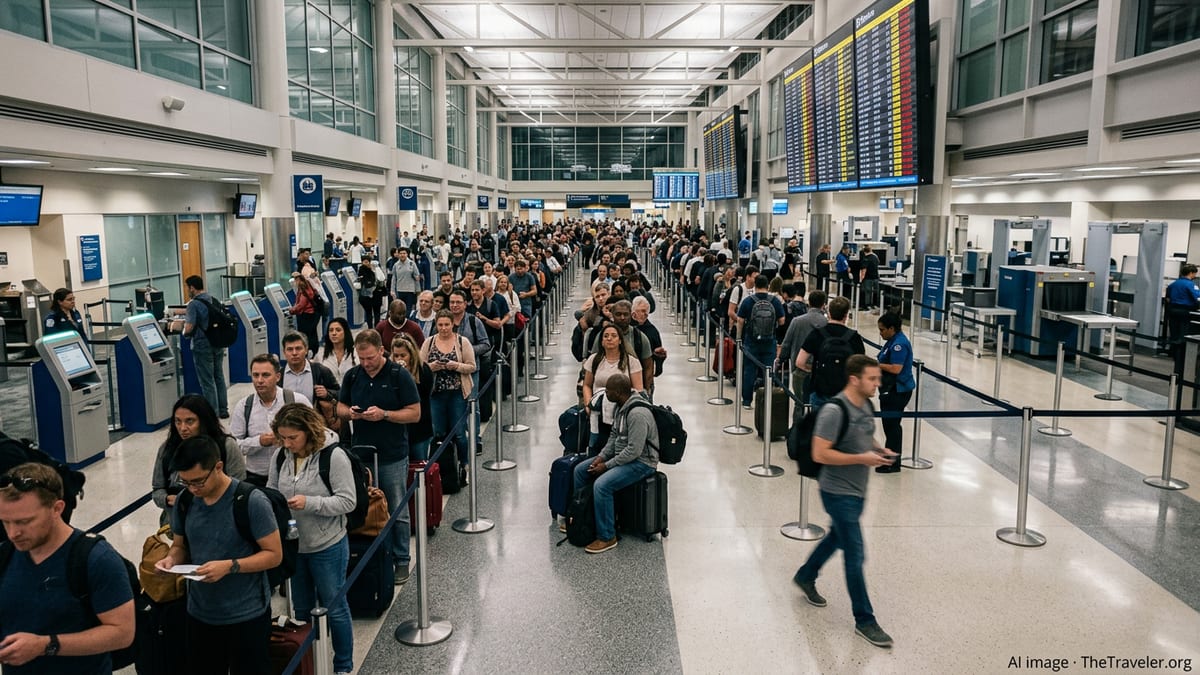
Ground stop ends after hours of halted departures
Publicly available information shows that the Federal Aviation Administration lifted the nationwide ground stop late Friday evening after ordering all U.S. departures paused earlier in the day because of what the agency described in advisories as a telecommunications or communication system outage affecting multiple air route traffic control centers. The halt applied to airports across the country, from major hubs such as Atlanta and Chicago to smaller facilities in the Mountain West and Midwest.
Coverage from national outlets indicates that the stoppage began in the midafternoon on November 13, freezing takeoffs nationwide for several hours while flights already in the air were allowed to continue to their destinations. Aviation tracking data cited in news reports show hundreds of departures were held at gates or on taxiways as the outage unfolded.
According to published coverage, the nationwide action was only the second time since the aftermath of the September 11, 2001 attacks that all U.S. departures were halted, and the first full ground stop since a major Federal Aviation Administration computer failure in January 2023. Commentators in the aviation community noted that the step underscored both the severity of the disruption and the system’s reliance on aging infrastructure the agency has been working to modernize.
By late evening, the formal ground stop order had been canceled, but airlines and airports were left to work through a heavily disrupted schedule. With aircraft and crews out of position and airport capacity constrained, the end of the ground stop did not bring an immediate return to normal operations.
Airports struggle with knock-on delays and cancellations
From Boston Logan and Atlanta’s Hartsfield-Jackson to Denver International and Los Angeles International, airport statements and local news coverage describe widespread delays and cancellations continuing after the Federal Aviation Administration lifted its order. Several airports urged travelers to arrive early and check flight status directly with airlines, warning that schedules remained fluid.
Regional airports also reported serious disruption. Central Illinois Regional Airport in Bloomington advised travelers on social media on Friday afternoon that departures were affected, while reports from Bloomington, Peoria and other smaller facilities in Illinois and the Mountain West described banks of delayed flights as the national system seized up. In Florida, Gainesville Regional Airport reported that all flights had been delayed as part of the national halt, leaving evening departures waiting on the tarmac or at gates once the stop was eased.
Even after the nationwide restriction was lifted, the backlog of aircraft awaiting departure created new bottlenecks. Aviation forums and flight tracking services cited in news reports showed some airports transitioning from “ground delay” programs, which meter takeoffs, to temporary closures for certain periods as air traffic controllers and airlines worked to safely reset operations.
With runway and gate space finite, carriers began prioritizing certain routes and aircraft rotations, a process that can trigger further cancellations when crews exceed duty-time limits or planes are needed elsewhere in the network. As a result, disruptions are expected to persist into Saturday and potentially Sunday on some carriers and routes, according to airline statements summarized in media reports.
Passengers face long waits, missed events and overnight stays
For travelers, the national halt translated into hours of uncertainty. Local coverage from airports including Chicago O’Hare and Pittsburgh International describes passengers learning of the ground stop only when they saw departure boards fill with delay notices. Some travelers were held onboard aircraft awaiting clearer guidance, while others were asked to deplane when it became clear departures would not resume quickly.
Reports from Gainesville, Florida, and other regional airports describe makeshift efforts to ease the strain, such as ordering food for stranded passengers and extending concession hours as crowds grew. Social media posts and traveler accounts collected by news outlets and aviation forums described families sleeping in terminal chairs, sports fans missing college football games, and business travelers scrambling to rebook for critical meetings.
College and professional sports schedules were also affected. National sports coverage noted that NBA, NHL and college teams traveling for weekend games were among those stuck at airports or forced to adjust charter plans. With the halt occurring on a Friday, the disruption rippled directly into one of the busiest travel windows for fans and athletes heading into weekend events.
Travelers with tight connections were particularly hard hit. Because the ground stop applied across the country, a delayed departure from a smaller city often meant a missed transcontinental or international connection at a hub, with limited remaining seats on later flights. Publicly available airline rebooking tools and call center wait times reported in the media indicated that some travelers were unable to secure alternative arrangements until at least Saturday or Sunday.
Questions over aging systems and future resilience
The incident has renewed attention on the resilience of U.S. air traffic infrastructure. Prior reporting on Federal Aviation Administration modernization efforts notes that the agency has been working to phase out older technologies, including legacy storage media in some air traffic systems, and to centralize certain functions in newer platforms. A recent agency memo to airports, cited in technology industry coverage, warned that fiber optic cable cuts and other telecommunications issues had already caused local ground stops in several locations this year.
Aviation analysts quoted in prior government reports have long pointed to the vulnerability of complex air traffic and airline information systems to single points of failure. A 2019 report by the U.S. Government Accountability Office highlighted how outages in reservation and flight-planning systems can cascade into nationwide disruption, even when safety is not compromised, largely because of the tightly coupled nature of airline and air traffic operations.
While early statements from federal officials and media briefings have emphasized that there is no public indication of a malicious attack in the latest event, the scale of the outage and the rarity of a national halt are expected to prompt closer scrutiny of both physical telecommunications infrastructure and software dependencies. Technology commentators have also linked the disruption to broader concerns about reliance on interconnected digital systems across critical infrastructure sectors.
Industry observers note that large-scale failures of this kind may remain infrequent but are likely to be highly disruptive when they occur. Calls for accelerated investment in modernization, redundancy and contingency planning are prominent in expert commentary following the latest ground stop, with particular focus on ensuring that communication breakdowns do not again require freezing the country’s entire departure schedule.
What stranded travelers can do now
Consumer advocates and travel experts quoted in recent coverage advise affected passengers to act quickly but methodically as operations slowly normalize. With aircraft and crew still out of place, same-day rebooking options may be limited on popular routes, especially from smaller regional airports that rely on a few daily departures. Travelers are being encouraged to use airlines’ mobile apps, websites and airport kiosks simultaneously to search for alternatives rather than waiting solely in long customer service lines.
Published guidance from the U.S. Department of Transportation explains that federal rules do not require airlines to provide compensation for delays caused by air traffic control or broader system issues. However, carriers may still offer meal vouchers, hotel discounts or fee-free changes as a matter of policy. Because these policies differ widely by airline and situation, travelers are being urged to review their carrier’s posted customer service commitments and to keep receipts for any out-of-pocket expenses that might later be reimbursed.
Travel insurance and credit card trip-interruption benefits may also come into play for some passengers. Policy documents and cardholder agreements typically list covered reasons and exclusions, which can include large-scale transportation disruptions. Consumer organizations recommend documenting all delay information, including flight numbers, scheduled and actual departure times, and any written notices provided at the airport.
With airlines still working through the backlog created on November 13, many airports are advising travelers with flexible plans to consider voluntarily shifting to later departures or alternative routings over the next couple of days. For those already en route or facing essential travel, officials and travel industry specialists consistently stress patience, frequent status checks and readiness for last-minute gate and schedule changes as the system slowly returns to regular rhythm.